

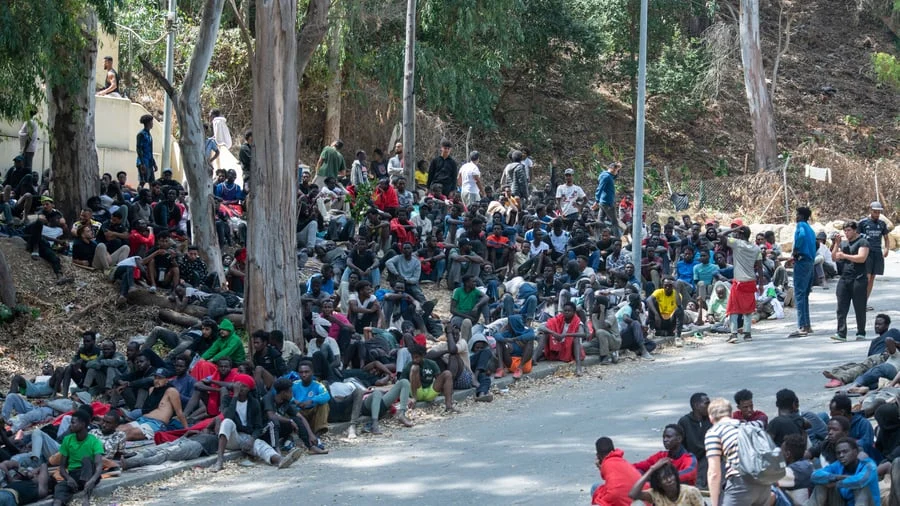
The images emanating from Ceuta, a Spanish enclave on the northern coast of Africa, have ignited a fierce debate across the European Union, highlighting the deep divisions and anxieties surrounding migration. While the immediate visual impact of thousands of migrants attempting to reach the Spanish territory is undeniable, a closer examination of the facts reveals a complex situation that is being weaponized by political factions to fuel anti-immigration narratives.
The Visuals and the Narrative
The sheer scale of the images from Ceuta, depicting migrants swimming towards the shore, clinging to rock formations, or enduring perilous journeys, undeniably captures attention. These scenes, often broadcast widely, have become potent symbols for those who advocate for stringent border controls and who frame immigration as an existential threat to European societies. This narrative, frequently propagated by far-right political groups, typically conjures fears of an uncontrolled "invasion" by impoverished individuals who will drain social welfare systems and displace native populations.
However, the reality on the ground in Ceuta, at least concerning the recent influx, presents a starkly different picture. As of the most recent reports, not a single migrant from this particular surge had successfully reached the European mainland from Ceuta. The city’s unique geographical position—accessible primarily by ferry or helicopter—and the rigorous control of travel documents by Spanish authorities have acted as significant barriers. This factual discrepancy between the dramatic imagery and the immediate on-the-ground reality is precisely what makes the situation in Ceuta so politically charged and, for some, so dangerous.
Political Ramifications and International Reactions
The events in Ceuta have provided ammunition for a range of political actors. Spanish Prime Minister Pedro Sánchez found himself at the center of international criticism following the surge. Various European leaders seized upon the situation to reinforce their own immigration policies.
Former US President Donald Trump, a vocal proponent of strict border enforcement, reportedly used the images to justify his own hardline stances on immigration. Similarly, Italian Prime Minister Giorgia Meloni, whose government has taken a firm stance on migration, faced pressure to respond to the perceived crisis. Meloni, along with like-minded leaders from Finland, the Czech Republic, Denmark, and Austria, reportedly even went so far as to advocate for the suspension of the Schengen Agreement with Spain. This extreme proposal underscores the depth of concern and the willingness of some EU member states to consider radical measures in response to perceived border security threats.
The Schengen Agreement, a cornerstone of European integration, allows for free movement of people across the borders of participating member states. Any suggestion of its suspension, particularly with a member state like Spain, signals a significant fracturing of the EU’s commitment to open borders and a potential return to more nationalistic border control policies.
Background and Chronology of the Ceuta Situation
Ceuta, along with the neighboring Spanish enclave of Melilla, has long been a focal point for irregular migration from sub-Saharan Africa and North Africa. These cities are geographically located on the African continent but are politically part of Spain and, by extension, the European Union. Their proximity to Morocco means they are often the first points of arrival for individuals seeking to enter Europe without authorization.
The recent surge in arrivals at Ceuta, while particularly intense, is not an isolated incident but rather an escalation of long-standing migration pressures. Historically, migrants have attempted to cross the heavily fortified border fences separating Ceuta from Morocco, often employing dangerous methods. The "temporary immigrant stay center" (CETI) in Ceuta, as depicted in accompanying visuals, is designed to house individuals who have managed to enter the territory pending their processing.
The specific events leading to the recent influx are multifaceted. Factors contributing to increased migration attempts typically include deteriorating economic and political conditions in countries of origin, improved weather conditions conducive to sea crossings, and perceived shifts in border enforcement policies in transit and destination countries. While specific details of the immediate triggers for the recent surge in Ceuta are subject to ongoing analysis, the underlying drivers of migration—poverty, conflict, and lack of opportunity—remain constant.
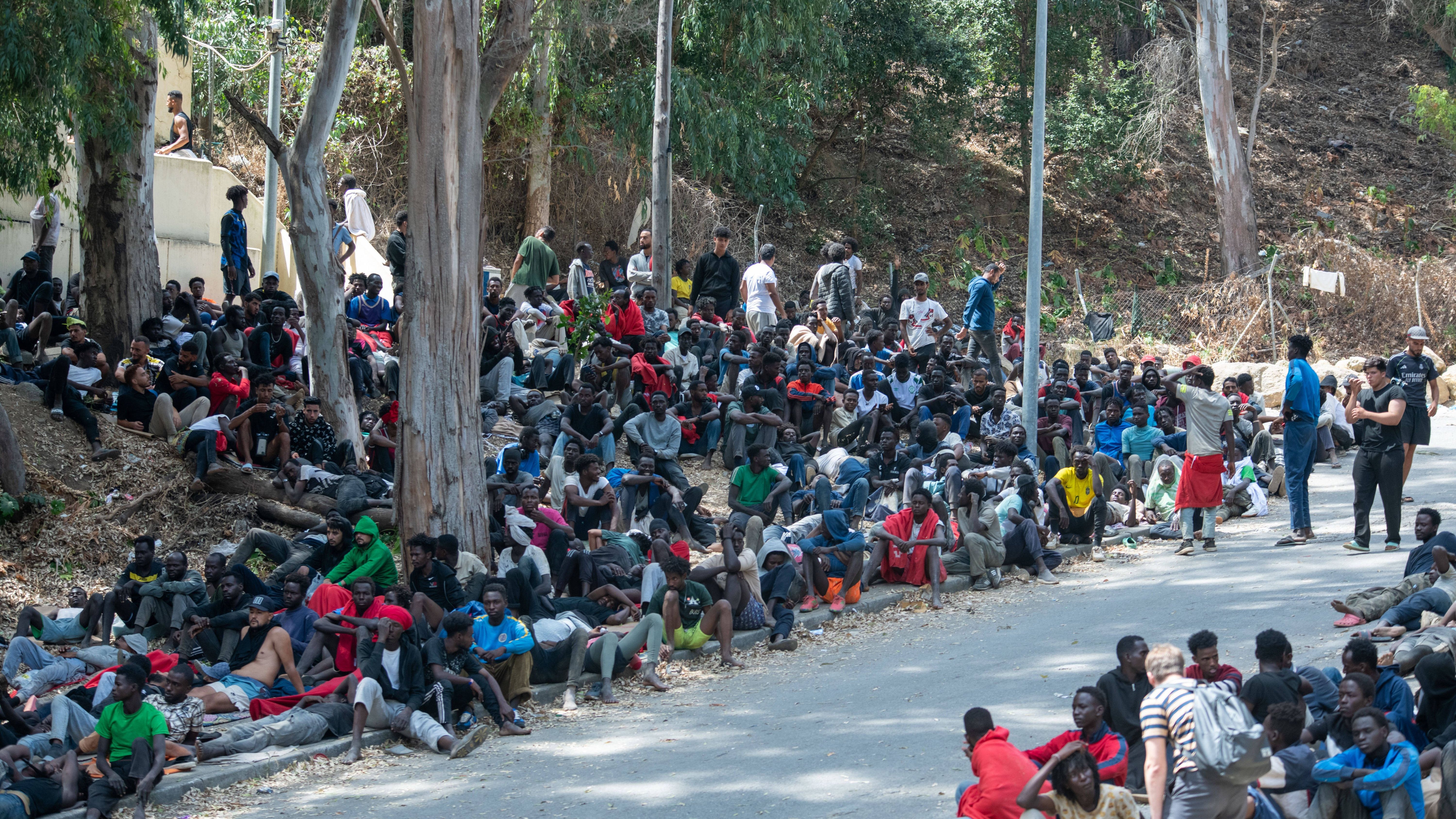
The chronology of such events often involves a period of heightened arrivals, followed by increased border security measures, humanitarian responses, and diplomatic engagements between the concerned countries. In the case of Ceuta, the immediate response from Spanish authorities typically involves rescue operations at sea and the detention and processing of migrants at reception centers.
Supporting Data and Humanitarian Concerns
While official figures on the precise number of individuals who attempted to reach Ceuta during the latest surge vary, reports indicated tens of thousands. These individuals often undertake perilous journeys, facing risks from harsh weather, dangerous sea conditions, and exploitation by human traffickers. The humanitarian implications are significant, with concerns for the safety, well-being, and fundamental rights of those attempting to cross.
The conditions within migrant reception centers, both in Ceuta and other entry points, are often strained due to the volume of arrivals. International organizations and NGOs frequently highlight the need for adequate shelter, food, water, sanitation, and medical care for migrants, particularly vulnerable groups such as women, children, and the elderly.
Data from organizations like the International Organization for Migration (IOM) consistently shows that a significant proportion of migrants are driven by economic hardship, seeking better opportunities for themselves and their families. Others are fleeing conflict, persecution, or environmental degradation. Understanding these root causes is crucial for developing effective and humane migration policies.
Official Responses and Diplomatic Maneuvers
The Spanish government, under Prime Minister Sánchez, has been at the forefront of managing the immediate crisis in Ceuta. Their response typically involves a combination of border security reinforcement, humanitarian assistance, and diplomatic efforts with Morocco, the neighboring country from which most migrants originate.
The criticism from other EU leaders highlights a broader challenge for the bloc: achieving a unified and coherent approach to migration management. While some nations, particularly those on the front lines of migration routes, advocate for shared responsibility and burden-sharing, others prioritize national security and border control, often with a focus on preventing arrivals rather than addressing the underlying causes.
The debate over suspending the Schengen Agreement, though extreme, reflects a growing frustration among some member states with the perceived lack of control over external borders and the uneven distribution of asylum seekers. This puts pressure on the European Commission and the Council of the EU to find common ground and implement effective policies that balance security concerns with humanitarian obligations.
Broader Impact and Implications for European Policy
The events in Ceuta serve as a potent reminder of the enduring challenges posed by irregular migration to Europe. They underscore several key implications for the future of European immigration policy:
- The Weaponization of Migration: The crisis demonstrates how migration can be exploited for political gain, particularly by populist and far-right movements seeking to sow fear and division. This makes rational and evidence-based policymaking more difficult.
- Internal EU Divisions: The differing approaches and reactions of EU member states highlight the deep-seated divisions within the bloc regarding migration. Achieving a unified policy remains a significant hurdle.
- The Need for Comprehensive Solutions: The focus on border control, while necessary, often overshadows the need for addressing the root causes of migration in countries of origin. Sustainable solutions require a multi-pronged approach, including development aid, conflict resolution, and efforts to combat climate change.
- The Role of External Partnerships: Relations with countries of origin and transit, such as Morocco, are critical for managing migration flows. Diplomatic cooperation, including agreements on border management and readmission, plays a vital role.
- The Future of Schengen: The calls to suspend Schengen, however unlikely to be implemented, signal a potential erosion of one of the EU’s most cherished achievements. This raises questions about the long-term viability of the free movement principle in the face of migration pressures.
The situation in Ceuta is not merely a localized border incident; it is a symptom of broader, complex global trends. The way European Union member states respond to such events will shape not only their own internal cohesion and policies but also their standing and influence on the international stage. The challenge lies in moving beyond the immediate political rhetoric and developing sustainable, humane, and effective strategies for managing migration in the 21st century. This requires a commitment to facts, a willingness to engage in difficult conversations, and a recognition that the long-term security and prosperity of Europe are intrinsically linked to addressing the root causes of displacement and irregular migration. The images from Ceuta, while undeniably powerful, must be contextualized within a broader understanding of the human stories and geopolitical realities they represent.
