

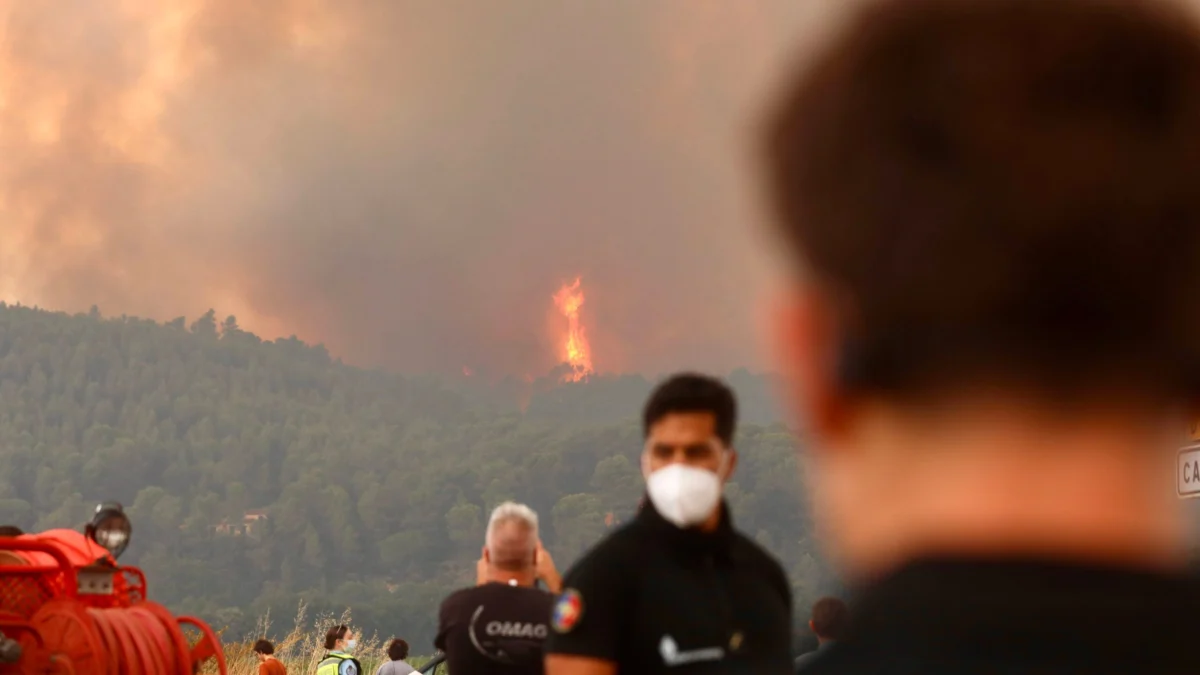
Paris, Madrid, Athens, Ankara – A relentless wave of wildfires is scorching across Europe, leaving a trail of destruction and forcing mass evacuations as the continent grapples with an intensifying heatwave. From the Mediterranean coastlines to the Iberian Peninsula, the summer of 2023 is proving to be one of the most challenging fire seasons on record, straining emergency services and threatening communities and natural landscapes alike.
The Scale of the Crisis: A Continent Under Siege

The sheer scale of the infernos is alarming. In Turkey, hundreds of forest fires have been extinguished, but the fight continues. Greece is battling blazes that have destroyed up to 100 homes in a coastal resort, while in Spain, authorities are monitoring 46 active fires, with significant areas ablaze. France is also reeling from a devastating fire between Marseille and Cannes, which has consumed over 1,000 hectares, forcing the evacuation of thousands. These are not isolated incidents but symptoms of a broader climatic challenge gripping the region.
France: Battling Back from the Brink
In France, the situation along the Atlantic coast, particularly in the Gironde region, has seen significant improvement after more than a week of intense firefighting efforts. Interior Minister Laurent Nuñez announced that the massive fires there are now under control, offering a much-needed reprieve to the affected populations. Over 10,000 residents have been permitted to return to their homes, adding to the 198,000 who had already been allowed back. Since the beginning of the year, France has seen a staggering 119,000 hectares consumed by wildfires, a figure underscoring the severity of the wildfire season.

However, the relief is tempered by renewed concerns. A fire that had been brought under control in the Var department, situated between Marseille and Cannes, has flared up with significant intensity. Within hours on Friday, it had spread across more than 1,000 hectares, highlighting the volatile nature of these infernos. Minister Nuñez has identified this area as a high-risk zone, particularly due to the forecast of strong, dry winds. Approximately 2,500 people have been evacuated from the region, with 1,500 firefighters, supported by six water-dropping planes and five helicopters, working tirelessly to contain the spread. Overnight efforts focused on protecting critical infrastructure and preventing further advancement of the flames.
The most extensive fires of the season in France have ravaged approximately 42,000 hectares in the region near Bordeaux. The image of firefighting efforts, with aircraft dousing flames against a backdrop of smoke-filled skies, has become a stark visual representation of the ongoing battle.
Spain: Taming the Flames, but Vigilance Remains

Spain has also experienced a brutal wildfire season, particularly in the regions of Madrid, Ávila, and Toledo, where devastating fires have largely been contained. The national fire monitoring portal, "Incendios España," which aggregates data from all autonomous regions, reports 46 active wildfires across the country. Hotspots include Castile and León, Catalonia, Valencia, and Castile-La Mancha. Emergency crews are still actively engaged in combating blazes in the northwestern province of Zamora, near the Portuguese border.
While the situation in Zamora showed slight improvement on Saturday morning, attributed to overnight firefighting efforts and increased humidity, the weather outlook remains a concern. Forecasts predict a worsening of conditions by the afternoon, with strengthening winds and high temperatures posing a renewed threat. Similar challenges are being faced in the province of León, where fires continue to burn in areas like Vega de Espinareda.
A significant source of relief comes from the province of Castellón in eastern Spain. The large wildfire in the Vall d’Uixó area, north of Valencia, which destroyed over 9,500 hectares, is no longer spreading, according to authorities. The majority of evacuations and movement restrictions in Spain have since been lifted, signaling a step towards recovery. An aerial view of burnt campsites in the Valle de Iruelas near El Tiemblo, Ávila province, serves as a grim reminder of the destructive power of these fires.

Greece: Highest Alert Amidst Intensifying Threats
For large parts of Greece, the risk of wildfires has reached its highest level, with the civil protection agency issuing a red alert for the greater Athens area. The capital and its surroundings are on high alert as large forest fires continue to challenge emergency services. The situation is particularly dire in a region approximately 60 kilometers west of Athens, where hundreds of people were evacuated by sea. Residents of Porto Germeno were rescued by the coast guard from the beach and transported to safety via boats as approximately 100 homes were engulfed by flames.
While the immediate threat in this area has lessened, residents are not yet permitted to return to the coastal town located in the northeast of the Gulf of Corinth. Several other villages in the region remain evacuated. A vice-mayor expressed the gravity of the situation, stating, "Due to the strong winds, no water-dropping planes can be deployed at the moment. We hope the wind subsides. There is no other option." The scale of the fires is immense, with two active areas each spanning approximately six by six kilometers, equivalent to around 5,000 football fields. Fires are also raging on the Peloponnese peninsula. By Friday evening, firefighters were battling blazes in 73 locations across the country.

On the island of Crete, the large wildfire in the south has been brought under control, but approximately 220 firefighters remain deployed to extinguish smoldering embers and prevent flare-ups. Investigations into the cause of the fire are ongoing, with damaged power poles being a potential source. A small piece of positive news is that the popular palm forest of Preveli, one of Europe’s few natural palm forests, suffered only partial damage. An image of a firefighting plane dropping water over a blaze near Athens starkly illustrates the ongoing efforts.
Turkey: Containment Efforts Underway Amidst Wind Challenges
In Turkey, firefighting crews have been engaged in a continuous battle against numerous forest fires for the fourth consecutive day, with operations continuing through the night. Agriculture and Forestry Minister İbrahim Yumaklı announced from Istanbul that 258 out of 260 fires nationwide, predominantly in the west and south, have been brought under control. However, strong winds continue to complicate firefighting efforts. In the Aegean province of Aydın, in western Turkey, 550 residents were evacuated as a precautionary measure when fires spread rapidly. The governor’s office reported this development.

A fire in Fethiye, which had previously been contained, reignited due to wind, necessitating renewed intervention from firefighting teams, aerial support units, and forest workers. The image of firefighters battling this rekindled blaze highlights the persistent challenges posed by the current weather conditions.
Background and Context: A Season of Extremes
This year’s wildfire season is unfolding against a backdrop of increasingly severe and frequent heatwaves across Europe. Scientists have long warned that rising global temperatures, driven by climate change, are exacerbating the risk and intensity of wildfires. Drier vegetation, longer periods of drought, and more volatile weather patterns create a perfect storm for these destructive events.

The summer of 2022 also witnessed unprecedented wildfire activity across Europe, with countries like Spain, France, and Portugal experiencing devastating blazes. This year appears to be on a similar, if not more severe, trajectory. The economic and environmental implications are substantial, ranging from loss of property and livelihoods to long-term damage to ecosystems, biodiversity, and carbon sequestration. The impact on tourism, a vital sector for many of these regions, is also a significant concern.
Official Responses and Broader Implications
The repeated occurrence of such severe wildfire seasons prompts critical questions about preparedness, resource allocation, and long-term climate change mitigation strategies. Governments are deploying vast resources, including national and international aid, to combat the immediate infernos. However, the focus is increasingly shifting towards preventative measures, such as better forest management, early warning systems, and public awareness campaigns.

The interconnectedness of climate change and extreme weather events like wildfires underscores the urgency of global cooperation to reduce greenhouse gas emissions. The current crisis serves as a stark reminder that the consequences of inaction are not abstract future threats but present-day realities impacting communities across the globe. As the heatwave persists and winds remain unpredictable, the fight against these destructive fires will continue to demand immense courage and resources from those on the front lines. The resilience of affected communities and the effectiveness of preventative strategies will be crucial in navigating the challenges of this and future wildfire seasons.
