

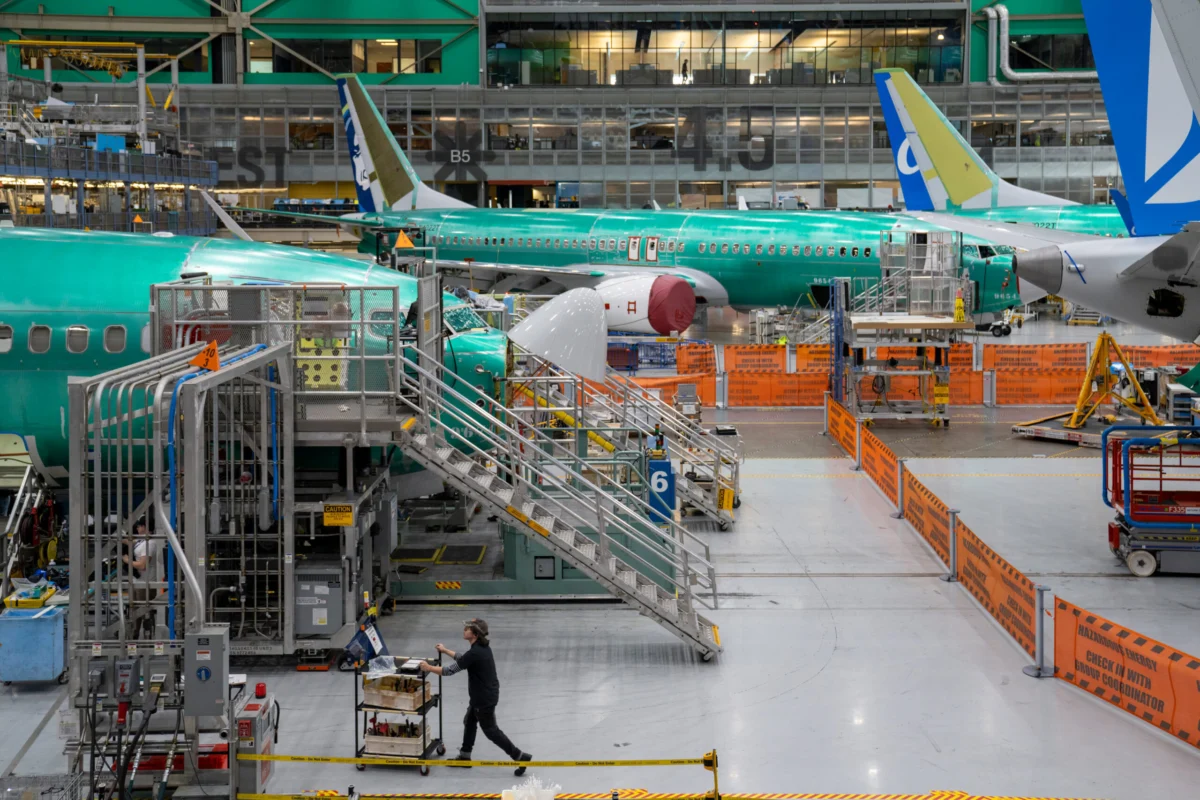
Boeing Co. announced Monday its strategic decision to reduce its commercial airplane workforce by approximately 5%, a measure attributed to a slower-than-anticipated production ramp-up for its flagship 737 MAX aircraft. The cuts, which will be implemented through a combination of attrition and involuntary layoffs, are slated to begin with notifications in December, according to an internal memo issued by Stephanie Pope, head of the commercial aircraft unit. This move underscores the persistent challenges facing the aerospace giant as it endeavors to stabilize its manufacturing processes and meet ambitious delivery targets.
The Road to Production Stabilization: A Challenging Trajectory
The announcement comes as Boeing continues to navigate a complex operating environment marked by lingering supply chain disruptions, heightened regulatory scrutiny, and intense competition. The journey towards production stability for the 737 MAX has been particularly arduous, following its global grounding from March 2019 to late 2020/early 2021 after two fatal crashes. While the aircraft has since been recertified by regulators worldwide and returned to service, the process of ramping up production to pre-grounding levels has proven more protracted than initially projected.
Historically, the 737 program had achieved peak production rates exceeding 57 aircraft per month before the grounding. Post-recertification, Boeing had outlined an aggressive, albeit cautious, schedule to gradually increase output. However, global events, including the lingering effects of the pandemic on labor availability, raw material shortages, and geopolitical tensions impacting logistics, have consistently hampered these efforts. The company’s Renton, Washington, facility, a cornerstone of 737 MAX production, has been at the forefront of these challenges, grappling with the intricate dance of ensuring quality control while simultaneously increasing volume.
CEO Kelly Ortberg’s Earlier Admissions and Revised Outlook
The foundation for Monday’s announcement was laid last month during Boeing’s third-quarter 2026 earnings call. CEO Kelly Ortberg had informed investors that the company would not significantly increase production of the 737 MAX aircraft until the second half of 2027. This marked a notable revision from earlier, more optimistic timelines. Ortberg specifically cited slower-than-expected wing production as a primary bottleneck, highlighting the interconnectedness and fragility of the aerospace supply chain.
"Adjusting our production schedules and reducing aircraft output puts us in an overstaffed position," Pope elaborated in her memo. "Unfortunately, that means we need to align our staffing levels to our revised business plan, resulting in a reduction of approximately 5% through a combination of attrition and involuntary layoffs, with notifications beginning in December." This direct acknowledgment of overstaffing reflects a strategic decision to prioritize operational efficiency and quality over maintaining a workforce sized for higher, yet currently unattainable, production rates.
Boeing is currently striving to stabilize its 737 MAX output at approximately 47 planes per month. The revised target aims for a production rate of 52 planes per month in the second half of 2027. This revised trajectory, while still representing a significant increase from post-grounding lows, underscores a more pragmatic and measured approach to scaling operations, acknowledging the persistent challenges in achieving rapid, consistent growth.
Chronology of Key Events and Production Adjustments
- March 2019 – Late 2020/Early 2021: Global grounding of the 737 MAX following two fatal accidents. Production severely curtailed, then slowly restarted at low rates.
- Early 2020s (Post-Recertification): Boeing begins gradual ramp-up attempts, targeting progressive increases in monthly output. Initial targets often revised due to emerging supply chain and quality control issues.
- 2024-2025: Continuous efforts to increase 737 MAX production, facing intermittent disruptions from component shortages (e.g., engines, avionics, landing gear) and labor availability at both Boeing and its extensive network of suppliers. Quality control measures are enhanced, sometimes leading to temporary slowdowns.
- Q3 2026 Earnings Call (Late October 2026): CEO Kelly Ortberg publicly states that significant increases in 737 MAX production rates will be delayed until the second half of 2027, citing specific issues with wing production and broader supply chain constraints. He confirms the company is working to stabilize output around 47 aircraft per month.
- Monday (Early November 2026): Stephanie Pope’s memo announces the 5% commercial airplane workforce reduction, directly linking it to the revised production schedules and resulting overstaffing.
- December 2026: Notification process begins for employees affected by involuntary layoffs. Attrition also contributes to the 5% reduction target.
- H1 2027: Boeing aims to maintain and stabilize production around 47 737 MAX aircraft per month, focusing on process improvements and supplier readiness.
- H2 2027: The company targets reaching a production rate of 52 737 MAX aircraft per month, contingent on successful resolution of current bottlenecks and improved supply chain predictability.
Supporting Data and Workforce Impact
The 5% reduction impacts Boeing’s commercial airplanes unit, which, according to recent public filings and internal estimates, employs approximately 60,000 individuals across its various facilities globally, with a significant concentration in the Puget Sound region. A 5% cut would translate to approximately 3,000 employees being affected through a combination of attrition and involuntary layoffs. This figure, while substantial, represents a targeted adjustment rather than a company-wide restructuring, focusing specifically on aligning staffing with current production realities.
Boeing’s financial performance has been closely watched by investors, particularly its ability to convert its substantial order backlog into revenue through timely deliveries. As of its latest report, the 737 MAX backlog stands at over 4,500 aircraft, representing years of production. Delays in production rates mean slower revenue recognition and potentially increased costs associated with storing undelivered aircraft. The current stabilization at 47 planes per month contrasts with Airbus’s A320 family production, which has shown a more consistent, albeit also challenging, ramp-up, putting competitive pressure on Boeing to improve its efficiency.
Official Responses and Stakeholder Reactions
The announcement has elicited a range of reactions from key stakeholders:
- Boeing Management: In public statements following the memo, Boeing executives reiterated their commitment to maintaining a strong focus on safety, quality, and disciplined execution. A spokesperson emphasized that these were difficult but necessary decisions to ensure the long-term health and competitiveness of the commercial airplanes business. "We value every one of our employees," the statement read, "and this decision was not made lightly. It is a strategic adjustment to align our resources with our realistic production capabilities and to build a more stable foundation for future growth."
- Employee Unions: The International Association of Machinists and Aerospace Workers (IAM), representing a significant portion of Boeing’s production workforce, expressed deep concern over the impending layoffs. Stan Sorscher, a representative for IAM District 751, stated, "Our members have worked tirelessly through unprecedented challenges. While we understand the pressures Boeing faces, these job cuts are a blow to families and communities. We call on Boeing to prioritize transparency, offer robust support for affected workers, and engage with us on strategies to minimize the impact and ensure a path back to full employment as production rates recover." The union also indicated it would closely monitor the implementation of the cuts to ensure fair treatment and adherence to collective bargaining agreements.
- Industry Analysts: Aerospace analysts largely viewed the announcement as a pragmatic, albeit overdue, adjustment. Richard Aboulafia, Managing Director at AeroDynamic Advisory, commented, "This move reflects a realistic assessment of Boeing’s current operational capacity. While painful in the short term, prioritizing stability and quality over aggressive, unattainable targets is crucial for regaining investor confidence and customer trust. The market has been signaling for some time that the ramp-up expectations were too high given the ongoing supply chain and workforce challenges." Other analysts noted that while the stock might see a short-term dip, a more predictable production schedule could ultimately be viewed positively by investors who value consistency.
- Airline Customers: Major airline customers, many of whom have outstanding 737 MAX orders, expressed understanding but also a degree of frustration. A spokesperson for a large North American carrier, speaking on background, noted, "While we appreciate Boeing’s transparency, these delays inevitably impact our fleet planning and expansion strategies. We need these aircraft to meet growing passenger demand and modernize our fleet. We hope this adjustment leads to more reliable delivery schedules going forward." Airlines have been under immense pressure to increase capacity, and continued delivery delays can lead to operational inefficiencies and lost revenue opportunities.
Broader Impact and Implications
The workforce reduction and revised production schedule have significant broader implications for the aerospace industry and Boeing’s strategic positioning:
- Supply Chain Resilience: Boeing’s decision sends a clear signal throughout its extensive supply chain. Suppliers who had invested in expanding capacity to meet higher projected rates may face their own adjustments, potentially leading to further consolidation or financial strain in the ecosystem. This highlights the need for greater resilience and flexibility within the entire aerospace manufacturing network.
- Financial Performance and Investor Confidence: While the immediate financial impact might be a write-down or restructuring cost, the long-term goal is to improve operational efficiency and profitability by reducing costs associated with overstaffing and inventory holding. Investor confidence, which has been volatile for Boeing, could benefit from a more conservative and achievable outlook, allowing the company to consistently meet or exceed revised targets.
- Competitive Landscape with Airbus: The persistent production challenges at Boeing stand in contrast to Airbus, which, despite its own supply chain hurdles, has generally maintained a more consistent ramp-up for its A320 family. This could potentially allow Airbus to gain further market share in the crucial single-aisle segment, especially as airlines seek more reliable delivery timelines. Boeing’s ability to innovate and deliver on its new product development, such as potential future aircraft programs, will also be closely scrutinized.
- Workforce Morale and Talent Retention: While the layoffs are targeted, they can inevitably impact morale among the remaining workforce. Boeing will need to invest in fostering a positive work environment, emphasizing the long-term vision, and ensuring that the most critical talent is retained, particularly engineers and skilled production workers vital for future programs and ongoing quality improvements.
- Strategic Prioritization: This decision reinforces Boeing’s current strategic prioritization of quality and stability over aggressive growth. After years of criticism regarding production pace impacting quality control, the company appears to be making a deliberate shift towards a more disciplined approach, even if it means sacrificing short-term volume. This recalibration is essential for rebuilding its reputation and ensuring the long-term integrity of its products.
In conclusion, Boeing’s decision to cut its commercial airplane workforce reflects a sober assessment of its current manufacturing capabilities and the persistent headwinds facing the aerospace sector. While a difficult measure, it signals a strategic pivot towards greater operational stability and a more realistic pace for the critical 737 MAX program. The coming months will be crucial for Boeing to demonstrate its ability to execute on these revised targets, rebuild confidence among its stakeholders, and solidify its foundation for future growth in a highly competitive global market.
