


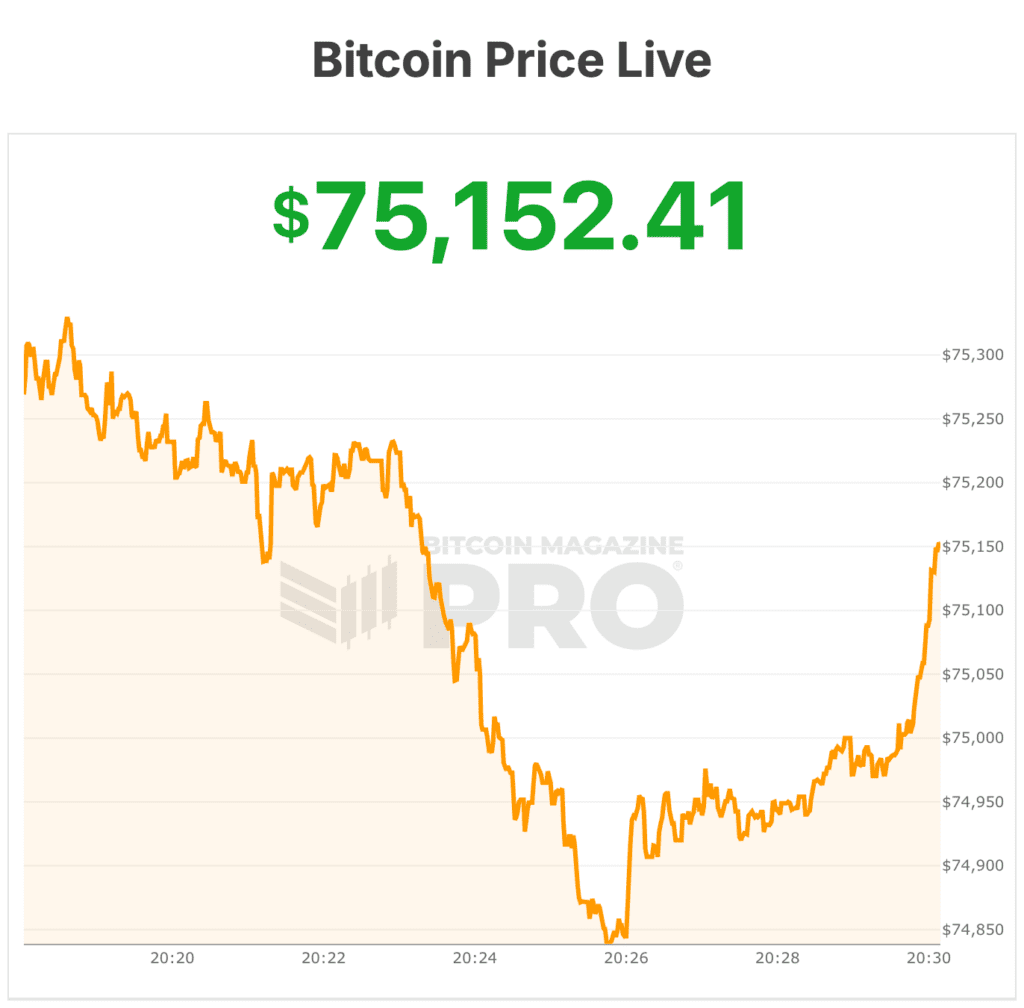
The cryptocurrency market is experiencing a significant resurgence, with Bitcoin (BTC) breaching the $75,000 mark on Monday evening. This surge represents a nearly 25% rebound from its February lows, reigniting optimism among investors and signaling a potential shift in market sentiment. The world’s largest digital asset’s ascent above this key psychological level occurred during U.S. trading hours, following several weeks of consolidation within a narrow trading band. This price action marks Bitcoin’s strongest performance since early February, reflecting an apparent increase in risk appetite across global financial markets.
Geopolitical Tensions Ease, Boosting Investor Confidence
Bitcoin’s latest rally follows a period of price weakness that saw it dip near $63,000 in February. This downturn was largely attributed to heightened geopolitical tensions, particularly those linked to the Iran-Israel conflict and its potential impact on global oil supply routes. The escalation of hostilities in the Middle East had cast a shadow over financial markets, prompting a flight to perceived safe-haven assets and a general reduction in risk-taking.
However, recent developments have provided a significant tailwind for risk assets, including Bitcoin. Over the weekend, markets received a notable boost from signs of easing tensions around the Strait of Hormuz, a critical chokepoint for global oil transportation. Reports indicated that two commercial tankers successfully transited the waterway on Sunday, the first such passage since the conflict intensified. This development, coupled with Iran’s indication that its shipping restrictions would be limited to vessels associated with its adversaries, suggested a de-escalation of immediate threats to maritime trade. This easing of geopolitical concerns has allowed investors to refocus on growth opportunities, leading to a renewed inflow of capital into riskier assets.
Corporate and Institutional Demand Fuels Bitcoin’s Ascent
The current bullish momentum is not solely driven by macroeconomic factors and easing geopolitical anxieties. Significant corporate and institutional buying activity is also playing a crucial role in driving Bitcoin’s price higher.
One of the most prominent developments is the continued aggressive accumulation by MicroStrategy (MSTR), a company that has made Bitcoin its primary treasury reserve asset. On Monday, MicroStrategy announced the acquisition of an additional 22,337 Bitcoin for approximately $1.57 billion. This latest purchase significantly expands the company’s holdings, bringing its total to an impressive 761,068 BTC, with a current market value estimated at around $50 billion. Michael Saylor, CEO of MicroStrategy, has been a vocal proponent of Bitcoin as an inflation hedge and a store of value, and the company’s consistent buying strategy has become a closely watched indicator of institutional conviction in the digital asset.
Beyond MicroStrategy, international institutional interest in Bitcoin is also on the rise. Metaplanet, an investment firm listed on the Tokyo Stock Exchange, recently secured approximately $255 million from global investors. This funding is earmarked to accelerate its Bitcoin treasury strategy, with provisions for additional warrants that could potentially raise total funding to over $530 million for future Bitcoin acquisitions. This growing international appetite from institutional players underscores a broadening acceptance of Bitcoin as a legitimate asset class for diversification and long-term value preservation.

Historical Context and Market Analysis
The current surge in Bitcoin’s price is being viewed through the lens of its historical performance, particularly in light of past market cycles. While the nearly 25% rebound from February lows is impressive, market participants remain cautiously optimistic, mindful of the volatility that has characterized Bitcoin’s journey. The crypto downturn of 2022 saw several instances of significant rebounds that ultimately failed to sustain their upward trajectory, preceding further price declines, most notably following the collapse of the FTX exchange.
Analysts are closely monitoring Bitcoin’s ability to maintain support above the $75,000 level. A sustained hold above this price point could pave the way for a potential ascent towards the $80,000 mark, a level that previously acted as a significant resistance zone before a correction in early 2026. The current trading range, which saw Bitcoin consolidate for several weeks, is often interpreted as a period of accumulation, where smart money is quietly building positions in anticipation of future price appreciation.
Expert Perspectives on Accumulation Strategies
Industry figures are offering insights into navigating the current market environment. Jack Mallers, CEO of Strike, a prominent Bitcoin payments company, has been a vocal advocate for a long-term accumulation strategy. He recently urged investors to "turn on your DCA," referring to dollar-cost averaging. This strategy involves investing a fixed amount of money at regular intervals, regardless of the asset’s price, which can help mitigate the risks associated with market timing.
Mallers’ analysis suggests that Bitcoin is currently trading near historically significant support zones. He posits that prolonged periods of consolidation, like the one observed recently, often present the most opportune moments for investors to steadily accumulate the asset. This approach, he argues, is particularly beneficial ahead of anticipated major market moves, allowing investors to build a substantial position at favorable average prices.
Bitcoin’s Outperformance Amidst Traditional Assets
An intriguing aspect of Bitcoin’s current rally is its outperformance compared to traditional assets. Data indicates that Bitcoin has surpassed the returns of both gold and the S&P 500 in recent performance metrics. This divergence suggests that investors are increasingly allocating capital towards Bitcoin, potentially viewing it as a superior store of value or growth asset in the current economic climate.
The appeal of Bitcoin as a hedge against inflation and a decentralized alternative to traditional financial systems continues to grow. As global economic uncertainties persist, including concerns about national debt levels and monetary policies, investors are seeking assets that offer a degree of independence from centralized control and a potential for significant upside. Bitcoin, with its fixed supply and decentralized nature, fits this profile for a growing segment of the investment community.
Implications for the Broader Crypto Market
The surge in Bitcoin’s price often acts as a leading indicator for the broader cryptocurrency market. When Bitcoin experiences significant upward momentum, it typically ignites renewed interest and investment in altcoins (cryptocurrencies other than Bitcoin). This "altcoin season" can lead to substantial gains for other digital assets as capital flows from Bitcoin into smaller-cap cryptocurrencies in search of higher percentage returns.
However, the sustainability of this broader market rally will likely depend on Bitcoin’s continued strength and its ability to hold its gains. A significant pullback in Bitcoin’s price could trigger a sell-off across the altcoin market, as many smaller digital assets are highly correlated with Bitcoin’s price movements.
Future Outlook and Key Levels to Watch
As Bitcoin navigates the $75,000 to $80,000 range, the market will be keenly observing several key factors. The ongoing flow of institutional capital into Bitcoin via ETFs and direct corporate purchases will remain a critical driver. Additionally, the regulatory landscape for cryptocurrencies globally will continue to shape investor sentiment and adoption rates.
The Federal Reserve’s monetary policy decisions, particularly concerning interest rates, will also play a significant role. A more dovish stance from the Fed could further stimulate risk appetite, potentially benefiting Bitcoin and other growth assets. Conversely, a hawkish approach could lead to tighter financial conditions, which might dampen enthusiasm for speculative investments.
For now, the prevailing sentiment is one of cautious optimism. The break above $75,000 is a significant psychological and technical milestone. If Bitcoin can consolidate its gains and establish new support levels, the path to higher all-time highs could become increasingly probable, ushering in a new phase of bullish activity in the cryptocurrency market. The coming weeks will be crucial in determining whether this rebound is a sustained trend or a temporary resurgence. The strategic accumulation by major players like MicroStrategy, coupled with increasing institutional interest from around the globe, provides a strong foundation for continued positive momentum, but the ever-present volatility of the digital asset market means that vigilance and strategic planning remain paramount for investors.
