

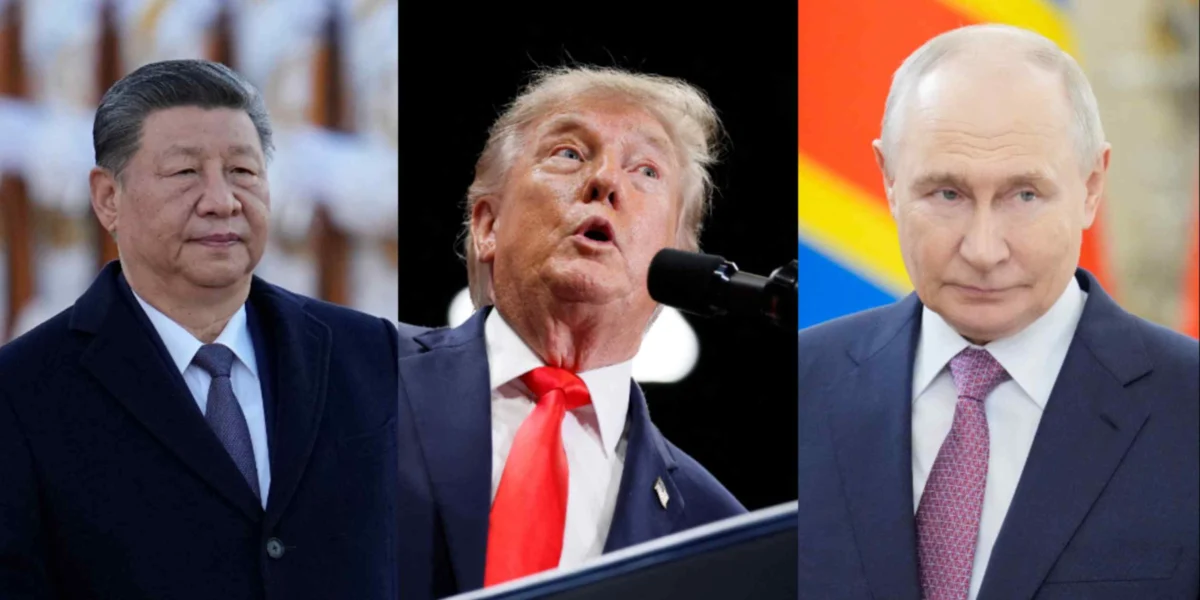
Asia will take center stage for summit diplomacy in November, as U.S. President Donald Trump arrives in Asia dealing with the fallout of the U.S. midterm elections. This critical juncture for global governance is further amplified by the potential for a highly significant three-way summit between Chinese President Xi Jinping, U.S. President Donald Trump, and Russian President Vladimir Putin, tentatively scheduled to occur on the sidelines of the Asia-Pacific Economic Cooperation (APEC) summit in Shenzhen, China, from November 18th to 19th, 2026. The timing of these high-level engagements underscores the increasingly complex and interconnected nature of international relations, particularly within the Asia-Pacific region, a focal point for economic growth and geopolitical competition.
The Shadow of U.S. Midterms on Trump’s Asian Sojourn
President Trump’s arrival in Shenzhen will be significantly shaped by the results of the U.S. midterm elections, which are projected to conclude just days before his departure. Historically, midterm elections have served as a referendum on the incumbent president’s performance, often leading to shifts in congressional control and influencing the president’s domestic and foreign policy agenda. A significant setback for Trump’s Republican party, or even a marginal loss of power, could embolden domestic opposition and potentially weaken his negotiating position on the global stage. Conversely, a strong showing might bolster his authority, granting him greater latitude in diplomatic engagements.
The economic implications of the midterms are also a crucial backdrop. Should the elections usher in a period of domestic economic uncertainty or heightened trade tensions, President Trump may arrive in Asia with a more protectionist stance or a greater urgency to secure favorable trade deals. The U.S. economy, a vital engine of global growth, is closely watched by its trading partners, and any signs of instability emanating from Washington will undoubtedly resonate throughout the APEC summit and any bilateral or trilateral discussions. For instance, a fluctuating stock market or shifts in inflation indicators in the weeks preceding the summit could inform the tenor of discussions on trade imbalances and supply chain resilience, key issues for the Asia-Pacific bloc.
The Shenzhen APEC Summit: A Crucible for Regional Cooperation and Competition
The APEC summit in Shenzhen, a vibrant economic hub in China, is more than just a routine gathering of leaders. It represents a crucial platform for the 21 member economies to address pressing regional challenges and chart a course for future prosperity. Established in 1989, APEC has evolved into the premier forum for promoting free trade, economic cooperation, and sustainable development across the Asia-Pacific. Its agenda typically includes discussions on trade liberalization, investment, connectivity, innovation, and inclusive growth.
However, in recent years, APEC has also become a stage for managing the complex geopolitical rivalries that define the contemporary international landscape. The summit provides a rare opportunity for leaders from nations with diverging interests to engage in dialogue, even if formal agreements are challenging to achieve. The choice of Shenzhen as the host city is particularly symbolic, highlighting China’s growing economic prowess and its ambition to play a more central role in shaping regional and global economic governance.
The 2026 summit is expected to grapple with several critical issues:
- Trade and Investment: The ongoing debate surrounding free trade versus protectionism, the future of global supply chains in the wake of past disruptions, and the need for greater regional economic integration will likely dominate discussions. The member economies will be looking for signals on how to navigate the increasingly complex global trade environment.
- Digital Economy and Innovation: As technology continues to transform economies, APEC leaders will explore ways to foster innovation, promote digital infrastructure, and establish common frameworks for the digital economy, addressing issues like data governance and cybersecurity.
- Climate Change and Sustainable Development: The urgency of climate action and the transition to a green economy will be a central theme. APEC members will likely discuss strategies for decarbonization, renewable energy adoption, and sustainable resource management, aligning with global climate goals.
- Regional Connectivity: Enhancing infrastructure and digital connectivity across the vast Asia-Pacific region remains a priority, facilitating trade, investment, and people-to-people exchanges.
The Unprecedented Prospect of a Xi-Trump-Putin Trilateral
The potential for a trilateral meeting between Presidents Xi Jinping, Donald Trump, and Vladimir Putin on the sidelines of the APEC summit is arguably the most compelling aspect of this diplomatic period. Such a meeting, if it materializes, would be a significant geopolitical event, offering a unique insight into the complex dynamics between three of the world’s most influential powers.
Background and Context:
The relationship between the United States, China, and Russia has been characterized by a mixture of competition, cooperation, and strategic distrust. The U.S.-China relationship has seen increasing friction over trade, technology, human rights, and geopolitical influence. The U.S.-Russia relationship has been strained by issues ranging from alleged election interference and cyberattacks to geopolitical conflicts in Eastern Europe and the Middle East.
Despite these tensions, there are areas where the interests of these three nations can intersect, albeit often cautiously. For instance, global challenges like counter-terrorism, nuclear non-proliferation, and pandemic preparedness require some level of cooperation, even between adversaries.
Potential Agendas and Implications:
The specific agenda for such a trilateral meeting would likely be fluid and depend heavily on the prevailing geopolitical climate and the priorities of each leader. However, several key areas could be on the table:
- De-escalation of Tensions: In a world marked by rising geopolitical risks, leaders might seek to establish direct lines of communication to prevent miscalculations and manage potential flashpoints. This could involve discussions on strategic stability, arms control, and crisis management mechanisms. For example, discussions on the proliferation of advanced weaponry or the stability of key strategic regions could be on the agenda.
- Economic Coordination (or Lack Thereof): While deep economic integration between all three is unlikely given current trade wars and sanctions, there might be discussions on specific areas of mutual interest, such as global commodity prices or the stability of international financial markets. However, given the ongoing trade disputes, particularly between the U.S. and China, any concrete economic agreements would be highly improbable.
- Addressing Global Challenges: Leaders might explore avenues for cooperation on shared threats, such as climate change mitigation, pandemic preparedness, or combating transnational crime. However, the effectiveness of such discussions would likely be tempered by existing geopolitical rivalries.
Inferred Reactions and Analysis:
- From Beijing: China would likely view such a meeting as an opportunity to demonstrate its diplomatic weight and its ability to engage with both the U.S. and Russia. It could also be seen as a strategic move to counterbalance U.S. influence in the region and to solidify its partnerships. China’s official statements would likely emphasize shared interests in regional stability and economic development.
- From Moscow: Russia would likely welcome the opportunity to engage with both major powers, potentially seeking to exploit any divisions between the U.S. and China. Putin might aim to secure assurances or understandings that could advance Russia’s strategic objectives. Moscow’s public statements would likely focus on the need for pragmatic dialogue and mutual respect.
- From Washington: President Trump’s participation would be keenly watched. The U.S. administration might see this as a chance to assert American leadership and to directly address concerns with both Xi and Putin. However, the optics of such a meeting, especially in the wake of the midterms, could be complex, potentially leading to accusations of undermining alliances or engaging with adversaries. U.S. officials would likely emphasize the need for clear communication and a focus on U.S. national interests.
The broader implication of this potential trilateral summit is the acknowledgment of a multipolar world order where major powers are seeking to navigate their complex relationships. While the likelihood of groundbreaking agreements is low, the very act of dialogue between these leaders could, in itself, contribute to a more predictable international environment by reducing uncertainty and preventing unintended escalations.
Broader Impact and Implications for the Asia-Pacific
The convergence of the APEC summit and the potential Xi-Trump-Putin meeting casts a long shadow over the Asia-Pacific region. This region, already a dynamic engine of global economic growth and a theater of increasing geopolitical competition, will be under intense scrutiny.
Economic Ramifications:
The outcomes of the APEC summit will have direct consequences for regional trade flows, investment patterns, and economic development strategies. Any progress on trade liberalization or digital economy frameworks could boost regional prosperity. Conversely, increased protectionist rhetoric or a failure to address key economic challenges could lead to greater uncertainty and hinder growth. The global supply chain, already a point of concern, will be closely observing any signals regarding trade policies and geopolitical stability. For instance, a significant disruption in U.S.-China trade relations, potentially exacerbated by the midterm election results, could ripple through the production and distribution networks of countless industries reliant on Asian manufacturing.
Geopolitical Realignments:
The diplomatic maneuvers in Shenzhen could also lead to subtle shifts in regional alliances and partnerships. The U.S. will be looking to reinforce its alliances and partnerships in the region, while China will continue to assert its growing influence. Russia’s role, often characterized by its strategic engagement with both powers, will also be closely observed. The perception of U.S. leadership and commitment to the region will be tested, particularly in light of domestic political developments.
The Role of Other Asian Powers:
Nations like Japan, South Korea, Australia, and the ASEAN member states will be closely monitoring these high-level discussions. Their own economic and security interests are deeply intertwined with the actions and decisions of the major powers. They will be looking for assurances of stability and opportunities to advance their own regional agendas. For example, Japan, a key U.S. ally, will be particularly interested in the tone of U.S.-China relations and the potential for increased regional security cooperation.
In conclusion, November 2026 promises to be a pivotal month for international diplomacy, with Asia at its epicenter. The confluence of President Trump’s post-midterm visit, the crucial APEC summit in Shenzhen, and the potential for an unprecedented trilateral meeting between the leaders of the U.S., China, and Russia, creates a complex and dynamic geopolitical landscape. The outcomes of these engagements will not only shape the future of the Asia-Pacific but will also have profound implications for the global order, underscoring the interconnectedness of economic and political forces in the 21st century.
