

Once the promised land of unparalleled growth and vast consumer potential, China has dramatically transformed from a fertile ground for American brands into a fiercely contested battleground where local champions increasingly hold sway. For decades, U.S. companies eagerly flocked to China, drawn by its staggering population of over 1.4 billion people and the immense opportunities for expansion in a rapidly modernizing economy. However, a confluence of escalating geopolitical tensions, the formidable rise of sophisticated domestic competitors, and a noticeable disconnect from evolving Chinese consumer preferences has fundamentally altered the landscape, forcing iconic American names to re-evaluate their strategies and, in some cases, retreat from a market that once fueled their global ambitions.
The Golden Era and Its Fading Promise
In the late 20th and early 21st centuries, the "China dream" for multinational corporations was undeniable. Companies like Nike, Starbucks, and General Motors established strong footholds, often enjoying premium status and rapid market penetration. This period was characterized by Chinese consumers’ strong aspiration for foreign brands, which were often seen as symbols of quality, modernity, and global sophistication. The sheer scale of the market meant even a small percentage of market share translated into significant revenue. Aaron Cheris, head of global retail practice at Bain & Company, succinctly captured this sentiment, stating, "China is such a big market. The numbers are so big so quickly when you talk about China that sort of everybody has wanted to try, and that’s why all brands went there."
However, the narrative began to shift notably around the mid-2010s, accelerating into the early 2020s. What was once a relatively straightforward path to expansion became fraught with new challenges. Geopolitical friction, particularly the trade tensions instigated during the Trump administration, introduced an element of political risk that permeated consumer sentiment. Simultaneously, Chinese domestic brands, often bolstered by robust government support and a deep understanding of local nuances, matured at an astonishing pace. These local players were not merely imitators; they became innovators, disrupting established categories with rapid product development, agile distribution networks, and hyper-localized marketing strategies that resonated deeply with a new generation of Chinese consumers. Cheris observed that many American companies simply "haven’t adjusted to the local market and its changing structures and needs," posing a crucial question: "If anything, the question isn’t what’s going wrong in China – it’s why isn’t that happening in the rest of the world." This sentiment underscores a broader challenge for global brands: the unique and rapidly evolving nature of the Chinese market demands a level of adaptation rarely seen elsewhere.
The Ascendancy of ‘Guochao’ and Domestic Prowess
A significant factor in the declining fortunes of many American brands is the rise of "Guochao" – a phenomenon translating to "national trend" or "China chic" – which champions domestic brands and cultural pride. This movement, gaining traction since the late 2010s, reflects a growing confidence and patriotism among Chinese consumers, particularly younger demographics, who increasingly view local products as superior in design, quality, and relevance. This shift has been accompanied by a rapid innovation cycle among Chinese brands, often outperforming their international counterparts in speed-to-market and responsiveness to niche consumer demands. Furthermore, local brands frequently engage in aggressive price wars, leveraging efficient supply chains and lower overheads to offer compelling value propositions that American products, often positioned at a premium, struggle to match. As Cheris noted, "price premiums for American products are often not worth it for Chinese consumers, and Chinese brands often have a fast innovation cycle and better distribution within the region."
The COVID-19 pandemic further exacerbated these trends. Travel restrictions limited luxury purchases abroad, diverting spending to the domestic market. Economic uncertainties made consumers more price-sensitive, while prolonged lockdowns highlighted the agility of local e-commerce and delivery networks. This period accelerated the adoption of domestic brands and solidified new consumption habits that continue to impact international players.
Retail Sector: From Dominance to Decline
The retail sector offers some of the most stark examples of this reversal of fortunes. Once a symbol of global sportswear aspiration, Nike has experienced a significant downturn. The sneaker giant’s China business has reportedly shrunk by 30% since 2021, with its annual revenue hitting an eight-year low. This decline is particularly striking given China’s sportswear market has more than doubled over the past decade, according to GlobalData, indicating a massive shift towards domestic competitors. Brands like Anta and Li-Ning have capitalized on the "Guochao" trend, integrating traditional Chinese elements into their designs and leveraging local athletes and influencers. Yaling Jiang, founder of consumer research firm ApertureChina, candidly stated that Nike has "just become irrelevant" in China, a sentiment echoed by the company’s outgoing CFO Matt Friend, who, in June, expressed uncertainty about when Nike’s China business would return to growth. Despite efforts by Cathy Sparks, VP and GM of Greater China for Nike, to reconnect with consumers, the challenge remains formidable.
Luxury beauty giant Estée Lauder has also faced significant headwinds. CEO Stéphane de La Faverie acknowledged in June that he doesn’t anticipate a quick return to double-digit growth in China, emphasizing the need for brands to be "most locally relevant." The company’s struggles highlight the broader slowdown in luxury consumption and increased competition from local beauty brands offering high-quality products at more accessible price points.
Casual apparel brands have fared even worse. Gap, after years of declining sales and an inability to resonate with Chinese consumers, sold its Greater China business to e-commerce firm Baozun in a $40 million all-cash deal in 2022. While Baozun’s localized strategy has helped Gap break even and plan for 50 new store openings in 2026, the initial divestiture underscores the difficulties faced by Western mass-market retailers. Similarly, Abercrombie & Fitch is reportedly seeking local partners to manage its China operations, indicating a desire to offload direct management in a challenging market.
Amidst these struggles, a few American brands have managed to thrive. Lululemon, despite its premium pricing, has seen its China business grow, with expectations of a 20% increase for the year. Ralph Lauren also reported a robust 40% growth in China in its most recent quarter. Their success, as Cheris explained, boils down to "the basics": a compelling product, local relevance, good value, and effective advertising and distribution channels. These brands have demonstrated an ability to adapt their offerings and marketing to local tastes, rather than simply importing global strategies.

Food and Consumer Packaged Goods: A Battle for Daily Consumption
The food and consumer packaged goods (CPG) sectors present a mixed picture. While some, like Kentucky Fried Chicken (KFC), have achieved remarkable localization and sustained success, others have seen their dominance eroded. KFC, operated by Yum China, has long been lauded for its deep understanding of Chinese tastes, offering menu items like congee and spicy chicken wings that appeal directly to local palates, and establishing an unparalleled distribution network across thousands of cities.
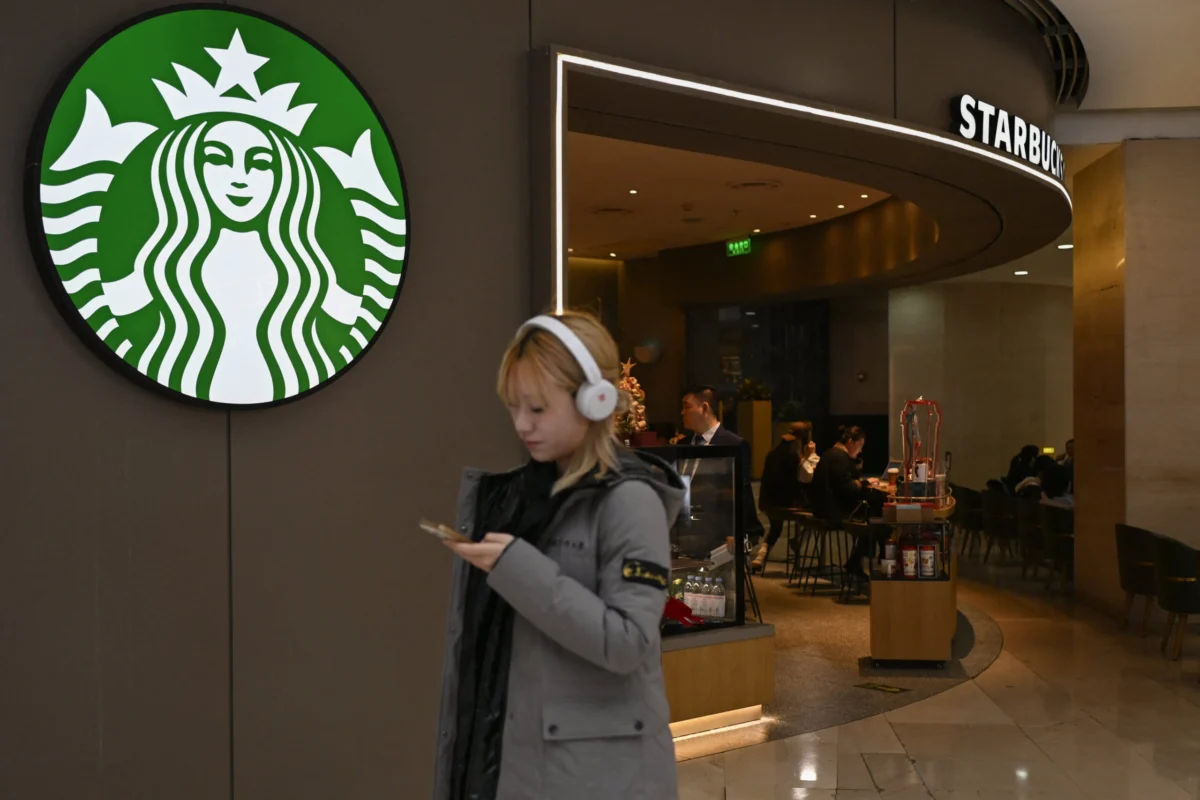
Starbucks, once a symbol of sophisticated Western lifestyle in China, has faced intense competition. After entering mainland China in 1999 and becoming its second-largest market by 2015, the pandemic marked a turning point. Chinese consumers, increasingly price-sensitive and seeking convenience, gravitated towards local brands. The most significant challenger has been Luckin Coffee, which, despite its past accounting scandal, has surged to boast more than three times the number of stores in China compared to Starbucks, often selling beverages at steep discounts. Former Starbucks CEO Laxman Narasimhan acknowledged this "transition" in early 2024, noting "an increase in mass market competitors." In response, Starbucks entered a joint venture with Boyu Capital, giving the Chinese firm a 60% stake to leverage its local expertise and revive sales.
Procter & Gamble (P&G), with China as its second-largest market, has also navigated a challenging environment. Its premium SK-II skincare brand, heavily reliant on luxury travel retail and duty-free sales, suffered from reduced consumer travel and spending post-COVID. Furthermore, anti-Japanese sentiment in late 2023 significantly impacted SK-II sales, highlighting the interconnectedness of geopolitics and consumer behavior. Despite these hurdles, P&G CEO Shailesh Jejurikar stated in July that the company is "now growing share in China for the first time in 15 quarters," attributing this to "fundamental changes" and localized innovations, such as diapers made with silk fibers tailored for the Chinese market. This suggests that even large CPG conglomerates can find pathways to growth through meticulous adaptation.
Automotive Industry: The EV Revolution and Domestic Domination
Perhaps no sector illustrates the paradigm shift more dramatically than the automotive industry. What was once the largest potential growth market for U.S. automakers a decade ago has become a scene of significant restructuring and retreat. Detroit’s "Big Three" – General Motors (GM), Ford Motor, and Stellantis (formerly Fiat Chrysler, though no longer U.S.-based) – have seen their collective global market share plummet from 21.4% in 2019 to an estimated 15.7% in 2025, according to S&P Global Mobility.
General Motors, the longest-standing U.S. automaker in China, has seen its earnings in the region decline from around $2 billion annually in 2018 to two consecutive years of losses in 2024 and 2025. This precipitous fall is largely attributed to the meteoric rise of domestic Chinese car companies like BYD, Geely, and Nio, which have benefited from government funding, a culture of rapid innovation, and a keen understanding of local preferences, especially in the burgeoning electric vehicle (EV) segment.
The Chinese EV market is a critical battleground. New energy vehicles (NEVs), encompassing battery and hybrid-powered cars, accounted for a staggering 65.1% of new passenger cars sold in July 2026, up from 54% a year prior, according to China Passenger Car Association data. Chinese consumers increasingly favor domestic EVs for their competitive pricing, advanced technology, and tailored features. This has not only crippled U.S. legacy automakers but also prompted Chinese EV manufacturers to begin exporting their vehicles globally, intensifying competition in international markets.
Even Tesla, the global EV leader, is reportedly weighing the sale or spinoff of its Chinese business, according to a July report by The Wall Street Journal, indicating the immense pressure and strategic complexities of operating in China. Ford has explicitly pivoted, shifting production of its Lincoln models from China to the U.S. starting in 2030, following a 32.4% decline in its China sales between 2018 and 2022. The company no longer reports its financial results by region, underscoring its diminished focus on the Chinese market.
Strategies for Survival and Future Outlook
The experiences of American brands in China offer crucial lessons for global businesses. Success in this hyper-competitive and rapidly evolving market demands more than just a strong global brand; it requires deep localization, agile adaptation, and an unwavering commitment to understanding and serving the Chinese consumer. Aaron Cheris’s advice remains pertinent: "The key will be which brands take it seriously enough and really build enough local capability to do that, rather than just saying, ‘I’m going to take what I built globally and try to sell it to a Chinese consumer.’"
For American companies to reverse their fortunes, several strategic imperatives emerge:
- Hyper-Localization: Beyond superficial translation, this involves designing products, services, and marketing campaigns specifically for Chinese tastes and cultural nuances.
- Value Proposition: Justifying price premiums with demonstrably superior quality, innovation, or unique brand experience that Chinese consumers perceive as truly valuable.
- Agile Innovation: Matching the rapid product development cycles of local competitors, leveraging local R&D and design teams.
- Omnichannel Excellence: Mastering China’s sophisticated digital ecosystem, including e-commerce platforms, social commerce, and livestreaming, while integrating seamlessly with physical retail.
- Supply Chain Resilience: Building robust, localized supply chains that can withstand geopolitical shocks and ensure speed to market.
- Strong Local Partnerships: Collaborating with Chinese firms that offer invaluable insights into market dynamics, regulatory landscapes, and consumer behavior.
The shift in China is not merely a temporary blip but a fundamental reordering of market power. As Chinese consumers mature and domestic brands continue their ascent, American companies must confront the reality that their past strategies will no longer guarantee success. The future for international brands in China hinges on their ability to shed preconceived notions, embrace radical adaptation, and genuinely compete on local terms, recognizing that the era of effortless growth based solely on foreign prestige is decisively over. The stakes are high, not just for individual companies, but for the broader global economic landscape, as China continues to assert its unique market identity on the world stage.
