

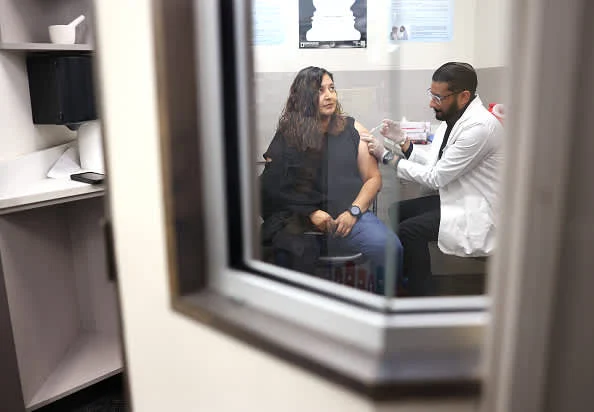
The United States is currently grappling with a concerning resurgence of measles, reporting a 35-year high in confirmed cases and outbreaks across numerous jurisdictions. This alarming trend coincides with a steady increase in childhood vaccine exemptions, leading many to assume a widespread rejection of immunizations. However, a deeper analysis reveals a more intricate challenge for public health officials: not merely staunch anti-vaccine sentiment, but a significant portion of the American public caught in an "uncertain middle ground," confused by conflicting information and susceptible to various narratives surrounding vaccine safety and efficacy. This nuanced landscape demands a re-evaluation of public health communication strategies, moving beyond simple advocacy to empathetic engagement and clear, evidence-based discourse.
The Alarming Rise of Measles and Declining Vaccination Rates
As of recent reports, the U.S. has documented 2,777 confirmed measles cases and 36 new outbreaks spanning 47 jurisdictions this year alone. This figure marks a sobering 35-year high, significantly surpassing the previous multi-decade record set in 2025. The Centers for Disease Control and Prevention (CDC) highlights a critical detail: over 93% of individuals infected either remain unvaccinated or have an unknown vaccination status, underscoring the direct link between immunization coverage and disease susceptibility.
Simultaneously, national childhood vaccination rates for kindergartners have experienced a concerning decline, now hovering around 92%. This dip is further exacerbated by a record high in nonmedical exemptions, which reached 4.2% during the 2025-2026 school year. This percentage translates to an estimated 155,000 children nationwide who are not immunized for reasons other than medical necessity. Public health experts warn that this post-pandemic decline in both vaccination coverage and the rise in exemptions creates vulnerable pockets within communities, setting the stage for the resurgence of highly contagious, preventable illnesses like measles. The threshold for achieving herd immunity for measles, a highly transmissible virus, is approximately 95% of the population vaccinated. Falling below this critical level directly compromises community protection, allowing the virus to spread more easily and trigger outbreaks.
The Nuance of Hesitancy: Beyond "Anti-Vax" Sentiment
While vocal anti-vaccine activists often dominate headlines, recent research suggests that widespread, absolute rejection of vaccines is not the primary driver of current public health challenges. A July survey by the health policy research organization KFF presented adults with four common vaccine myths. Fewer than 1 in 10 respondents definitively stated that each claim was true. However, a significant majority – at least half – fell into a "gray area," indicating they believed the claims were either "probably true" or "probably false."
Drew Altman, KFF CEO and founding president, articulated this complexity, stating, "What’s more true is a lot of people are confused. They don’t know who to believe, they don’t know what to believe, and that means that a lot of America is stuck in the middle, unsure and they’re up for grabs." This "uncertain middle ground" represents a crucial demographic, neither firmly pro-vaccine nor staunchly opposed, but rather individuals with legitimate questions, anxieties, and an openness to conflicting messages about vaccine safety and effectiveness. This confusion can lead to "paralysis," causing individuals to delay or avoid critical decisions regarding their children’s immunization, as Altman noted.
Public health scientist Jess Steier, founder and CEO of Unbiased Science, emphasizes that vaccine hesitancy is far more complicated than outright opposition. She explains that social media algorithms often amplify emotionally charged and alarming content, exposing individuals to a deluge of conflicting information. Many people are not anti-vaccine, but simply overwhelmed by the sheer volume of competing messages and struggle to discern trustworthy sources. Steier asserts that while susceptible to misinformation, these individuals can also be effectively reached through clear, evidence-based information and empathetic conversations with trusted healthcare providers. "Uncertainty can resolve once people have time, information and access," she added.
A Deeper Dive into Hesitancy: The "LANDS" Framework
To better understand the multifaceted nature of vaccine hesitancy, Unbiased Science developed a framework, with a narrower version called "LANDS" specifically tailored for pharmacists, given that most adult vaccinations now occur in pharmacies. This framework identifies five broad groups:
- Lost: Individuals who are genuinely confused by conflicting information and struggle to identify trustworthy sources. They are often bombarded by various claims and find it difficult to distinguish fact from fiction.
- Anxious: People primarily driven by fears of potential side effects, often amplified by anecdotal stories or misinterpretations of rare adverse events. Their concerns stem from a desire to protect themselves or their children from perceived harm.
- Naturalists: Those who prefer natural immunity, believing that the body’s innate defenses are superior to medical interventions. They may be skeptical of pharmaceutical products and advocate for alternative health approaches.
- Distrusters: Individuals with broad suspicion of institutions, including government agencies, the medical establishment, and pharmaceutical companies. Their hesitancy is rooted in a general lack of faith in established systems, often fueled by historical abuses or perceived conflicts of interest.
- Shruggers: This group is not actively opposed to vaccines but does not view them as a priority or essential for their personal health or that of their children. They may exhibit apathy, procrastination, or a belief that the risk of disease is low, especially for illnesses they have never witnessed.
Dr. Lori Handy, an attending physician and associate director of the Vaccine Education Center at Children’s Hospital of Philadelphia, concurs that individuals rarely fit neatly into a single category. She highlights that hesitancy is a complex interplay of social, religious, access-related, and media-influenced factors. Furthermore, a person’s beliefs about one vaccine may not necessarily extend to another, underscoring the need for individualized approaches.
The personal journey of "Andrew," a 19-year-old from Pennsylvania, illustrates this complexity. Raised in a family with deep skepticism about immunizations, fueled by misinformation, distrust of the healthcare industry and government, and religious beliefs, Andrew eventually began to question these positions. Through his own research, he gained a better understanding of vaccine reality and decided to pursue immunization. While still holding some minor concerns about side effects, his primary hurdle became the potential conflict his decision could create within his family, showcasing the profound social dimensions of vaccine acceptance.
The Amplifying Echo Chamber: Politics and Misinformation
The current political climate and the pervasive nature of social media have significantly amplified vaccine misinformation, making the task of public health officials even more formidable. Social media algorithms, designed to maximize engagement, often prioritize emotionally charged or controversial content, inadvertently creating echo chambers where misinformation thrives.
This challenge is further complicated by the involvement of prominent political figures. Former President Donald Trump, for instance, has repeatedly linked the measles-mumps-rubella (MMR) vaccine to autism without scientific evidence. Earlier this month, he signed an executive order suggesting the splitting of the MMR shot, falsely claiming the combined version is "quite lethal" and connecting it to autism. Such rhetoric from figures in positions of authority can significantly erode public trust in established medical recommendations.
Similarly, Robert F. Kennedy Jr., now the Secretary of Health and Human Services, has a well-documented history of spreading scientifically inaccurate information regarding vaccine safety and efficacy, despite frequently asserting that he is not "anti-vaccine." When leaders in critical public health roles disseminate or entertain unfounded claims, it creates an environment of confusion and distrust, making it exceedingly difficult for the public to discern accurate health guidance. As Dr. Handy observes, "All of a sudden, vaccine science has become a political issue or a partisan issue in a way that we’ve never seen before, and it is really, really challenging to be part of the American public and not know which message to trust."
A Troubling Chronology: From Eradication to Resurgence
The current measles crisis has roots stretching back decades, a timeline marked by scientific triumph, a devastating fraud, and the gradual erosion of public trust.
- 1963: The first measles vaccine is licensed in the U.S., marking a significant step in controlling the highly contagious disease.
- 1971: The combined Measles, Mumps, and Rubella (MMR) vaccine is introduced, simplifying childhood immunization schedules.
- 2000: The CDC declares measles eliminated from the United States, a testament to decades of widespread vaccination efforts. This achievement, however, inadvertently contributed to a lowered public perception of measles as a serious threat.
- 1998 (Retracted 2010): British physician Andrew Wakefield publishes a fraudulent paper in The Lancet linking the MMR vaccine to autism. Despite immediate and widespread debunking, and the eventual retraction of the paper due to ethical violations and scientific fraud, this claim ignited a persistent anti-vaccine movement and continues to fuel skepticism about the MMR shot.
- 2000s-Present: The rise of the internet and social media platforms provides an unprecedented platform for the rapid dissemination of misinformation, including anti-vaccine narratives, which gain traction globally.
- 2019: The U.S. experiences its highest number of measles cases in 27 years (1,282 cases), primarily due to outbreaks in under-vaccinated communities.
- 2020-2022: The COVID-19 pandemic intensifies discussions around vaccines, leading to increased polarization and a further surge in misinformation. Public health resources are diverted, impacting routine immunization efforts.
- 2023-2026: A steady decline in childhood vaccination rates and a rise in nonmedical exemptions become evident, particularly in the post-pandemic era. This coincides with an increase in measles cases and outbreaks, culminating in the 35-year high reported this year, surpassing even the 2025 figures. Political figures begin to increasingly weigh in on vaccine policy, further politicizing public health recommendations.
This chronology highlights how a seemingly eradicated disease can resurface when collective immunity wanes, demonstrating the delicate balance of public health achievements.
The Peril of Eroding Herd Immunity
The decline in vaccination rates and the rise in measles cases carry grave implications for public health. Measles is not a benign childhood illness; it can lead to severe complications, including pneumonia, encephalitis (brain swelling), and in rare cases, subacute sclerosing panencephalitis (SSPE), a fatal neurological disorder that can develop years after infection. The highly contagious nature of the virus means that even small dips in vaccination coverage can create significant vulnerabilities.
"This is one of those really terrifying things about certain infectious diseases — they are just so spreadable in so many areas, and when you have a high population of unvaccinated individuals, they will inevitably get infected when they encounter that virus," Steier warns. Beyond individual health risks, outbreaks strain healthcare systems, requiring extensive contact tracing, isolation protocols, and specialized medical care. The economic costs associated with managing outbreaks, including direct medical expenses, public health response efforts, and lost productivity, can be substantial.
Dr. Handy points out that vaccines have, in a sense, become "victims of their own success." Because diseases like measles were largely eliminated for decades, many parents have never witnessed the illness firsthand. This lack of direct experience lowers the perceived risk of the disease, making the perceived risks of the vaccine appear comparatively higher. In this changed risk profile, healthcare providers face the challenge of re-educating the public about the very real dangers of preventable diseases.
Strategies for Rebuilding Trust and Fostering Acceptance
Addressing vaccine hesitancy effectively requires a paradigm shift in public health communication, moving away from a paternalistic "telling" approach to one centered on empathetic listening and genuine dialogue.
"We’ve been a bit more paternalistic in the past, where we tell people things versus listening first and understanding why they might be hesitant or what questions they have," Steier explains. She advocates for starting with listening, understanding the root causes of hesitancy, and refraining from outright dismissal of concerns.
Dr. Handy emphasizes the importance of acknowledging social media as a significant source of health information, rather than simply dismissing it. Providers should engage with the platforms where people seek information and help them critically compare online narratives with evidence-based information from trusted medical sources. The goal is to foster open conversations that address individual fears, correct misinformation, and empower people to better evaluate the information they encounter.
Key strategies include:
- Empathetic Listening: Allowing individuals to voice their concerns without judgment, creating a safe space for questions.
- Tailored Information: Providing relevant, evidence-based information that directly addresses specific fears or misunderstandings.
- Trusted Messengers: Leveraging the credibility of healthcare providers (pediatricians, family doctors, pharmacists) as primary sources of information. The partnership between Unbiased Science and the National Alliance of State Pharmacy Associations to train pharmacists with the "LANDS" framework is an excellent example of this.
- Community Engagement: Working with community leaders, religious figures, and trusted local organizations to disseminate accurate information.
- Transparency: Being open about vaccine development, safety monitoring, and potential (though rare) side effects, building trust through honesty.
- Highlighting Disease Risks: Reminding the public of the severe consequences of vaccine-preventable diseases, particularly given their current resurgence.
Broader Societal Implications
Beyond the immediate health crisis, the current landscape of vaccine hesitancy carries broader societal implications. It reflects and contributes to an erosion of trust in scientific institutions, government bodies, and traditional media outlets. This widespread distrust can hinder responses to future public health emergencies and complicate efforts to address other complex societal challenges.
For schools and communities, falling vaccination rates pose significant logistical and ethical dilemmas. Schools must balance the health and safety of their student body with individual parental choices, often navigating complex exemption laws. The re-emergence of preventable diseases can disrupt education, necessitate school closures, and create divisions within communities.
Ultimately, the challenge of vaccine hesitancy is not just a medical one; it is a profound societal issue that demands a concerted, multi-pronged effort. It requires a commitment to scientific literacy, a restoration of trust in institutions, and a renewed emphasis on compassionate, clear communication. The current measles crisis serves as a stark reminder that public health is a collective responsibility, and the health of the community depends on the informed decisions of its individual members. Addressing the "uncertain middle" with patience, empathy, and irrefutable evidence is paramount to safeguarding the health of the nation and preventing further regression in the fight against preventable diseases.
