

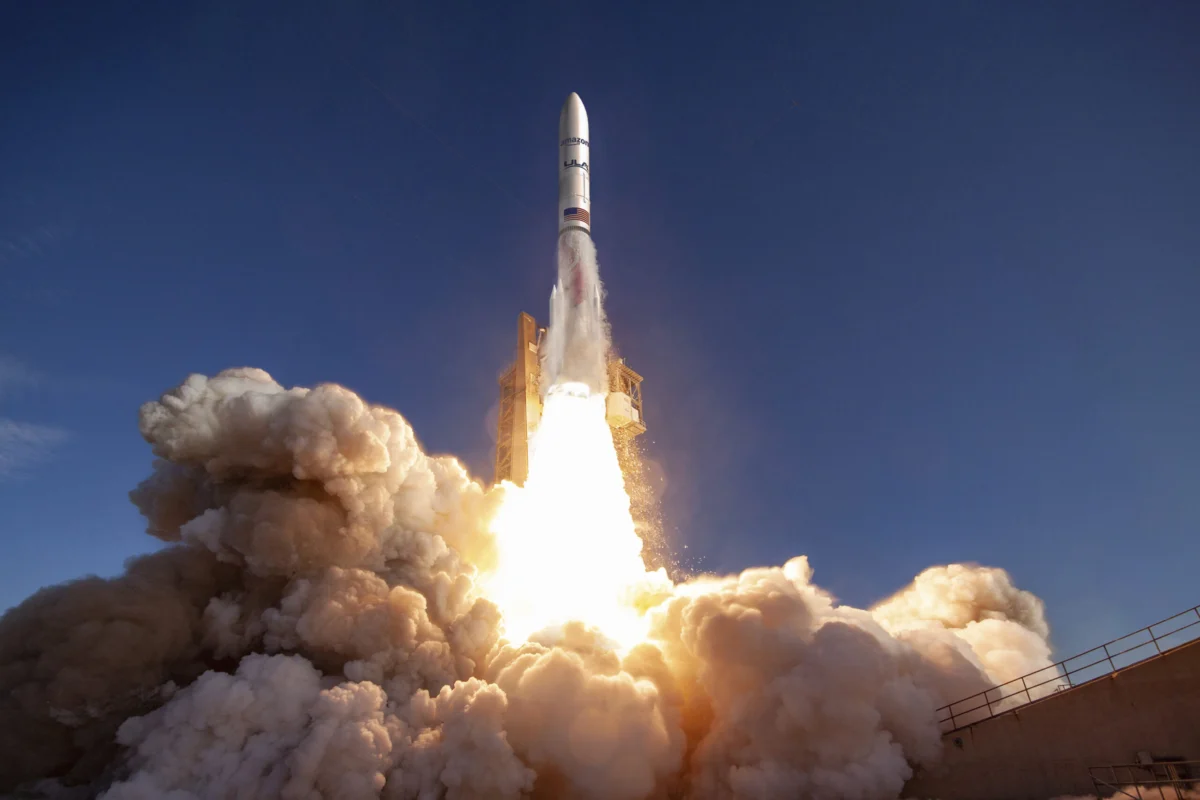
Amazon has formally submitted an application to the Federal Communications Commission (FCC) for a license to deploy a colossal new constellation of 5,105 satellites designed to deliver direct-to-mobile phone service, with the ambitious goal of commencing launches as early as 2028. This strategic maneuver marks a significant escalation in Amazon’s burgeoning space ambitions, signaling a direct challenge to established players in the burgeoning satellite communications market, particularly SpaceX. The filing underscores a deliberate expansion of Amazon’s capabilities, building upon its existing Project Kuiper broadband internet satellite network and its recent acquisition of Globalstar’s satellite operations.
The Strategic Imperative: Integrating Globalstar and Project Kuiper
The FCC application reveals Amazon’s comprehensive strategy to leverage the assets and expertise gained from its acquisition of Globalstar, a deal reportedly valued at $11.57 billion and completed in April 2026. Globalstar has been a key provider of emergency connectivity for Apple iPhones and a range of Internet-of-Things (IoT) devices, utilizing its licensed radio spectrum to offer specialized satellite services. Amazon’s plan is to integrate Globalstar’s spectrum holdings and operational experience directly into its broader satellite infrastructure, specifically to enhance and expand its existing Project Kuiper initiatives.
Project Kuiper, Amazon’s ambitious broadband internet satellite network, was first announced in 2019 with a vision to provide high-speed, low-latency internet connectivity to unserved and underserved communities globally. The initial constellation aims for over 3,200 satellites in low Earth orbit (LEO). The integration of Globalstar’s mobile-centric spectrum and technology with Kuiper’s broadband backbone suggests a dual-pronged approach: not only will Amazon continue to build out its fixed broadband services, but it will now also directly target the highly competitive and potentially lucrative direct-to-mobile phone market. This synergy is critical, as it allows Amazon to utilize existing regulatory approvals and operational frameworks, potentially accelerating its market entry and reducing the lead time for deployment compared to starting from scratch. The acquisition was not merely about purchasing assets; it was about acquiring crucial spectrum licenses and operational know-how that are vital for direct-to-device communication, a complex technical and regulatory landscape. Industry analysts noted at the time that such a strategic acquisition was essential for Amazon to quickly gain a foothold in the direct-to-mobile space, bypassing years of independent spectrum acquisition and regulatory navigation.
Understanding Satellite-to-Mobile Connectivity: Promise and Current Limitations
The concept of providing direct connectivity from satellites to unmodified mobile phones represents a frontier in telecommunications, promising to eliminate dead zones and extend network coverage to the most remote corners of the planet. Unlike traditional satellite phones, which require specialized, often bulky hardware, satellite-to-mobile services aim to connect directly to standard smartphones, leveraging their existing cellular radios. This technological leap has been heralded as a potential game-changer for global connectivity.
Currently, most satellite-to-mobile offerings are limited in bandwidth, primarily supporting text messages, emergency calls, or basic data transfers. This limitation stems from several inherent technical challenges:
- Power Constraints: Standard smartphones possess small antennas and low power output compared to dedicated satellite terminals, making it inherently difficult to establish and maintain a robust link with satellites orbiting hundreds of kilometers above. The power budget available for satellite communication on a typical smartphone is significantly restricted by battery life considerations and device form factor.
- Orbital Dynamics: Satellites in LEO move rapidly across the sky, often at speeds exceeding 27,000 kilometers per hour. This rapid transit requires sophisticated beam steering, dynamic frequency allocation, and seamless handover technologies to maintain continuous connectivity as a satellite passes over a user.
- Spectrum Efficiency and Interference: The available spectrum for satellite-to-mobile services must be shared efficiently to support a large number of users without causing interference to terrestrial cellular networks or other satellite systems. This often necessitates innovative modulation schemes, advanced signal processing, and precise antenna design.
- Atmospheric Attenuation: Signals traveling through the Earth’s atmosphere can experience attenuation due to weather conditions like rain, snow, or fog, which can further weaken the already faint signals from satellites to mobile devices.
Despite these hurdles, the potential for widespread emergency communication and basic connectivity in areas without terrestrial infrastructure is immense. For instance, hikers, travelers in remote regions, and communities affected by natural disasters could benefit significantly from always-on access to vital communication channels. The ability to send an emergency message from anywhere on Earth, regardless of cellular tower proximity, represents a profound safety enhancement.
However, market adoption has been a subject of ongoing debate and scrutiny. Srini Gopalan, CEO of T-Mobile, a carrier that has partnered with SpaceX to offer satellite connectivity to its customers, expressed reservations earlier this spring regarding the current level of customer interest. Speaking at a conference in May, Gopalan candidly stated, "Just to give you an example, we look at our data in May, and satellite usage is 0.0002% of our total network usage. That’s three zeros. We’re seeing it largely focused on the national parks." This assessment highlights that while the technology holds promise, its practical utility and perceived value to the average consumer, beyond niche emergency use cases, are still evolving. The market penetration and revenue generation from these services will largely depend on increasing bandwidth capabilities and demonstrating compelling use cases that extend beyond mere emergency texts. Analysts suggest that for broader adoption, satellite-to-mobile services will need to offer at least basic voice and data capabilities that rival or complement terrestrial networks.
The Intensifying Space Race: Amazon vs. SpaceX
Amazon’s move directly pits it against SpaceX, which, through its Starlink division, has aggressively dominated both the satellite internet and the nascent satellite-to-mobile services markets. SpaceX’s Starlink constellation, which already comprises thousands of LEO satellites, offers high-speed broadband internet globally and has recently launched its "Direct to Cell" service. This service, leveraging spectrum acquired from Echostar in a deal reportedly worth $20 billion, aims to provide global text, voice, and data services directly to unmodified 4G LTE phones. SpaceX’s aggressive expansion and significant investment in spectrum underscore the strategic importance it places on this market segment, as detailed in its IPO filings as a key growth strategy. Starlink’s "Direct to Cell" service began testing in late 2024, demonstrating initial capabilities for text messaging, with voice and data expected to follow in 2025 and 2026, respectively. This gives SpaceX a significant chronological lead in the operational deployment of direct-to-mobile services.
The rivalry between Amazon founder Jeff Bezos and SpaceX CEO Elon Musk extends beyond Earth’s atmosphere, encompassing launch services (Blue Origin vs. SpaceX) and now satellite communications. SpaceX benefits from a significant first-mover advantage, having deployed a substantial portion of its Starlink constellation and demonstrating operational success in both broadband and early direct-to-cell services. Its vertical integration, owning both the satellite manufacturing and launch capabilities through its Starship and Falcon programs, offers a distinct advantage in terms of cost control, deployment speed, and iterative design. Starlink’s rapid deployment, often launching hundreds of satellites per month, has already reshaped the satellite internet landscape, forcing competitors like OneWeb, Viasat, and now Amazon to accelerate their plans and innovate rapidly.
However, Amazon enters the fray with its own set of formidable strengths. The company boasts massive capital reserves, reporting $255 billion in current assets on its books as of the end of April. This financial firepower allows Amazon to sustain long-term, capital-intensive projects like Project Kuiper and its new mobile connectivity network, absorbing potential setbacks and investing heavily in research and development. In contrast, while SpaceX has raised significant capital through multiple funding rounds (valued at over $180 billion in early 2026), its continuous need for funding to fuel its ambitious Mars colonization plans, Starship development, and Starlink expansion suggests that its capital requirements are far more pressing and constant. This financial asymmetry, where Amazon can fund its space ventures largely from its prodigious cash flow from e-commerce and cloud services, could play a crucial role in the long-term endurance of this space rivalry, allowing Amazon to weather market fluctuations and technical challenges with greater resilience.
Project Kuiper’s Broader Ambitions and AWS Synergy
Amazon’s venture into direct-to-mobile connectivity should be viewed within the larger context of Project Kuiper’s strategic importance to the company. Kuiper is not merely a standalone internet service; it is envisioned as a critical extension of Amazon’s vast technological ecosystem, particularly its Amazon Web Services (AWS) cloud computing platform. By providing ubiquitous, low-latency connectivity, Kuiper can unlock new markets for AWS, enabling cloud services in remote areas, supporting edge computing for IoT devices, and facilitating resilient communication for enterprises operating in challenging environments. This synergy is a cornerstone of Amazon’s long-term strategy for market expansion and deeper integration of its diverse business units.
The long-term vision for Kuiper involves offering a robust suite of services that go beyond basic internet access, potentially including secure government communications, disaster recovery solutions, and specialized enterprise applications that demand global reach and high availability. For instance, remote mining operations, maritime shipping, or humanitarian aid efforts could leverage Kuiper for reliable data transfer and communication where terrestrial networks are non-existent or compromised. The integration of Globalstar’s capabilities and the new direct-to-mobile network further solidifies this vision, creating a multi-layered communication infrastructure that can serve a diverse range of customers and use cases, from individual smartphone users to large-scale industrial operations. This diversification also hedges against market volatility in any single segment, providing Amazon with multiple avenues for revenue generation within the burgeoning space economy, which analysts project could reach $1 trillion by 2040.
Navigating Launch Challenges: The Blue Origin Factor
A significant challenge for Amazon’s satellite deployment strategy lies in its reliance on external launch providers, primarily Jeff Bezos’s private space company, Blue Origin. Amazon had initially planned to heavily depend on Blue Origin’s heavy-lift New Glenn rocket for launching a substantial portion of its Kuiper satellites. However, New Glenn has faced significant delays, pushing back its maiden flight multiple times from an initial target of 2021 to 2024, and now potentially even later. The situation was further complicated by a severe anomaly in May that reportedly destroyed Blue Origin’s launch pad in Florida during testing, grounding the rocket and necessitating a comprehensive investigation and repairs. This incident, while not directly involving the New Glenn rocket itself, has undoubtedly impacted Blue Origin’s overall launch schedule and infrastructure availability.
These setbacks have tangible consequences for Amazon. The company was compelled to request an extension from the FCC for the deadline imposed by its license to build out its Project Kuiper network. Regulatory licenses typically come with specific timelines for deployment to ensure spectrum utilization and prevent warehousing of orbital slots. Delays in launch capabilities can jeopardize these timelines, potentially incurring penalties or even loss of licenses. While Amazon has secured launch agreements with other providers, including United Launch Alliance (ULA) for its Vulcan Centaur rocket and Arianespace for Ariane 6, the delays with New Glenn disrupt its optimized launch cadence and may increase overall deployment costs. These alternative launchers, while capable, often come with their own schedules and pricing structures, which may not align perfectly with Amazon’s aggressive deployment goals. The ability to launch its own satellites quickly and cost-effectively, as SpaceX does with its Falcon 9 and Starship, remains a critical advantage that Amazon currently lacks. The long-term success of Project Kuiper and its mobile expansion hinges on reliable, frequent, and affordable access to space, making Blue Origin’s progress on New Glenn a vital component of Amazon’s overall strategy, despite the diversification of its launch portfolio.
The Broader Impact and Future Implications
Amazon’s ambitious entry into the direct-to-mobile satellite market heralds a new phase of intense competition and innovation within the global telecommunications sector. The implications are far-reaching:
- Accelerated Innovation: The direct rivalry between Amazon and SpaceX will likely spur rapid advancements in satellite technology, antenna design, spectrum utilization, and ground infrastructure. This competition could lead to more efficient, higher-bandwidth, and more affordable satellite-to-mobile services in the future, potentially unlocking capabilities like real-time video streaming directly to phones from orbit.
- Market Disruption: The availability of widespread satellite-to-mobile connectivity could disrupt traditional cellular network models, particularly in rural and remote areas where terrestrial infrastructure is expensive to deploy and maintain. It could also force mobile network operators (MNOs) to partner more extensively with satellite providers or invest in their own hybrid solutions to remain competitive. This could reshape investment patterns in ground-based cellular networks.
- Global Connectivity and Digital Inclusion: For billions worldwide who still lack reliable internet access, satellite-to-mobile services offer a pathway to digital inclusion, enabling access to information, education, and economic opportunities that were previously out of reach. This has significant humanitarian and developmental implications, potentially bridging the digital divide in developing nations and remote communities.
- Regulatory Scrutiny: As more companies vie for orbital slots and spectrum, regulatory bodies like the FCC and international organizations will face increasing pressure to establish clear guidelines for sustainable space operations, debris mitigation, and spectrum allocation to prevent interference and ensure equitable access. The sheer number of planned satellites across various constellations raises concerns about orbital congestion and space junk.
- Economic Impact: The burgeoning space economy, driven by satellite constellations and launch services, is projected to grow significantly. Amazon’s investment further injects capital and talent into this sector, creating jobs and fostering technological advancements across various industries, from manufacturing to software development.
Ultimately, while the immediate market demand for current satellite-to-mobile services may be niche, Amazon’s long-term vision, backed by its immense financial resources and strategic integration of assets like Globalstar, positions it as a formidable contender. The race to connect the world, directly to our pockets from orbit, is far from over, and Amazon’s 2028 target marks a crucial milestone in this unfolding technological saga. The coming years will reveal whether the promise of ubiquitous mobile connectivity from space can translate into widespread consumer adoption and sustainable commercial success, fundamentally reshaping how we communicate on a global scale.
