

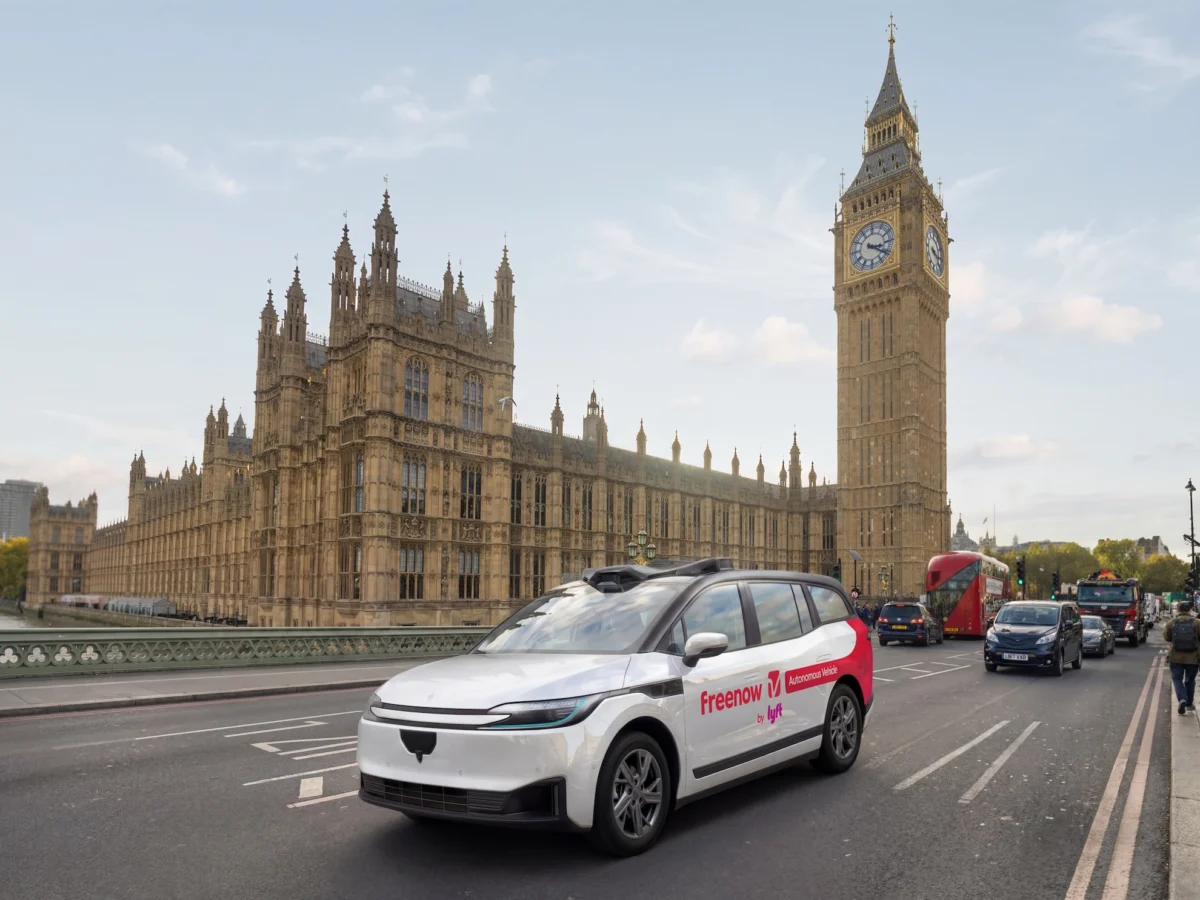
Chinese technology behemoth Baidu has officially commenced the testing of its autonomous vehicles in London, marking a significant step in its strategic partnership with ride-hailing giant Lyft and its recently acquired European multi-mobility subsidiary, Freenow. This development positions Baidu as the latest formidable player to enter the burgeoning autonomous vehicle (AV) testing landscape in the United Kingdom, signaling a global race toward commercial robotaxi deployment. The initial phase of testing, which began on Tuesday, features human safety operators present in all vehicles, adhering to current regulatory and safety protocols.
Initial Launch and Strategic Alliance
The commencement of testing in London comes nearly a year after Baidu and Lyft forged a strategic alliance aimed at deploying Baidu’s purpose-built Apollo Go RT6 robotaxi system across key European markets. This ambitious rollout is slated to leverage the extensive platform infrastructure of Lyft, with the eventual integration into Freenow, the German taxi and multi-mobility application that Lyft acquired in 2025 for approximately $197 million. The acquisition of Freenow provided Lyft with a crucial foothold in Europe’s highly competitive ride-hailing market, where numerous well-funded companies are now intensely vying for the coveted position of being the first to commercially launch robotaxis.
The Apollo Go RT6, an advanced iteration of Baidu’s autonomous driving platform, represents a significant investment in purpose-built hardware and software designed for scalable robotaxi operations. Baidu has been a pioneer in autonomous driving in China, where its Apollo Go service has already accumulated millions of miles and served hundreds of thousands of passengers in cities like Beijing, Shanghai, Guangzhou, and Shenzhen. Its expansion into Europe, particularly through a high-profile partnership with Lyft and Freenow, underscores its global ambitions and confidence in its technological maturity. The decision to partner with established mobility providers like Lyft and Freenow is a strategic move, allowing Baidu to tap into existing customer bases and operational expertise while focusing on its core AV technology.
London: A Global Hub for Autonomous Vehicle Innovation
London, with its complex urban environment, diverse traffic conditions, and proactive regulatory bodies, is rapidly solidifying its status as a pivotal battleground for autonomous vehicle development and deployment in Europe. The city’s intricate network of roads, varied weather patterns, and high population density present unique challenges and opportunities for AV technology. Baidu’s entry follows closely on the heels of other major players. In April, Google’s Waymo, another global leader in autonomous technology, initiated its own testing program in London, also with human safety operators. Waymo has extensive experience in the U.S., operating fully driverless services in cities like Phoenix and San Francisco, making its London foray particularly noteworthy.
Furthermore, Uber, in collaboration with its self-driving technology partner Wayve, a UK-based startup specializing in end-to-end deep learning for autonomous driving, announced plans to launch a robotaxi service in London later this year. This initial Uber/Wayve service will also commence with human safety operators, transitioning to fully driverless operations as regulatory approvals and safety milestones are met. Customers can already sign up on an interest list, indicating the anticipation building around these services. The presence of these tech giants and innovative startups underscores London’s strategic importance, attracting significant investment and talent in the AV sector. The city’s authorities, including Transport for London (TfL), are engaging closely with these companies to ensure safe and responsible development.
The UK’s Evolving Regulatory Framework
The UK government has been actively fostering an environment conducive to autonomous vehicle innovation, aiming to establish the country as a global leader in this transformative technology. This proactive stance is critical for attracting investment and ensuring the safe deployment of AVs. In May, the government opened applications for an Autonomous Vehicle (AV) pilot program, inviting companies to test self-driving vehicles under direct governmental oversight. This initiative is designed to gather crucial data, refine safety protocols, and inform future legislation.
Discussions between Lyft, Freenow, and key UK regulatory bodies, including Transport for London (TfL) and the Centre for Connected and Autonomous Vehicles (CCAV), are ongoing. These discussions are paramount to ensuring that the testing and eventual deployment of robotaxis align with local safety standards, traffic management policies, and urban planning objectives. The UK is currently in the advanced stages of developing a comprehensive regulatory framework for autonomous vehicles. The Automated Vehicles Bill, introduced to Parliament, aims to establish a robust legal basis for AVs on public roads. Key provisions of this bill include a clear liability framework for incidents involving AVs, stringent safety standards, and mechanisms for continuous oversight and adaptation as the technology evolves. This legislative clarity is vital for companies like Baidu, Waymo, and Uber/Wayve, as it provides the necessary legal certainty for long-term investment and operational planning. The government’s vision is to make the UK a safe and attractive location for AV development, potentially unlocking significant economic benefits, estimated to be worth £42 billion by 2035, and creating up to 38,000 new jobs.
Baidu’s Apollo Go: A Global Player’s European Entry
Baidu’s Apollo platform has emerged as one of the world’s leading open-source autonomous driving ecosystems. Launched in 2017, Apollo provides a comprehensive set of hardware and software solutions, ranging from high-precision maps and perception modules to planning and control systems. Its Apollo Go robotaxi service, the commercial arm of the platform, has demonstrated robust performance in complex urban environments across China. As of late 2023, Apollo Go had provided over 5 million rides, showcasing its operational maturity and public acceptance in its home market. The RT6 model, specifically designed for robotaxi services, features an integrated architecture that combines sensors, computing platforms, and vehicle control systems into a cohesive unit, aiming for high reliability and cost-effectiveness at scale.
The expansion into London with the Apollo Go RT6 signifies Baidu’s confidence in its technology’s ability to adapt to diverse international driving conditions and regulatory landscapes. The data gathered from London testing will be invaluable for refining its algorithms for European road semantics, traffic laws, and cultural driving behaviors. For Baidu, successfully deploying in London would not only validate its global technological prowess but also open doors to other European cities, further solidifying its position as a major player in the global AV market alongside Waymo and Cruise.
Lyft and Freenow: Forging a Path in European Mobility
Lyft’s strategic acquisition of Freenow in 2025 for approximately $197 million was a pivotal move, granting the American ride-hailing giant a substantial footprint in the European market. Freenow, originally a joint venture between Daimler and BMW, operates in over 100 European cities, offering a wide array of mobility services including ride-hailing, e-scooters, e-bikes, and car sharing. Its established network of taxi drivers and private-hire vehicles, combined with its strong brand recognition, provides an ideal platform for integrating autonomous services.
The rebranding to "Freenow by Lyft" underscores the synergy between the two entities and Lyft’s ambition to leverage Freenow’s local expertise and operational scale. For Lyft, the partnership with Baidu’s Apollo Go represents a forward-looking strategy to remain competitive in a rapidly evolving mobility sector. As ride-hailing margins face increasing pressure and driver supply remains a persistent challenge, autonomous vehicles offer a path toward reduced operational costs and enhanced service availability. By integrating Baidu’s advanced AV technology into the Freenow platform, Lyft aims to offer cutting-edge robotaxi services that complement its existing offerings, catering to a broader spectrum of urban mobility needs. The companies have indicated that public access to their robotaxis in London is anticipated in 2027, contingent on regulatory approval and further testing milestones.
The Hybrid Model: Integrating Automation with Human Expertise
A key aspect of the future service, as articulated by Freenow by Lyft, will be a "hybrid network." This operational model, also adopted by rivals like Uber, involves human drivers operating traditional taxis and private-hire vehicles working in tandem with the autonomous robotaxis. This approach aims to provide comprehensive coverage and flexibility, especially during the transitional phase of AV adoption.
Thomas Zimmermann, CEO of Freenow by Lyft, emphasized the company’s commitment to its existing workforce. "As a platform with deep roots in the taxi industry, our priority is ensuring that autonomous technology supports the professional drivers who keep London moving," Zimmermann stated. This sentiment highlights a strategic effort to address potential concerns regarding job displacement among human drivers, a common apprehension associated with the rise of autonomous vehicles. The hybrid model could offer several advantages: it allows for gradual integration of AVs, provides redundancy in areas where AVs might struggle (e.g., extreme weather, complex construction zones), and enables a smoother transition for both customers and existing drivers. Human drivers could potentially focus on routes or service types less suited for current AV capabilities, or even act as support staff for AV fleets. This collaborative approach suggests a future where human and machine drivers coexist, at least for the foreseeable future, ensuring continuity of service and mitigating socio-economic disruption.
Economic and Societal Implications
The deployment of robotaxis in London by major global players like Baidu, Waymo, and Uber/Wayve carries significant economic and societal implications. Economically, the advent of robotaxi services could lead to substantial cost reductions for ride-hailing companies, potentially translating into more affordable fares for consumers. A study by the UK’s Department for Transport projected that autonomous vehicles could add £62 billion to the UK economy by 2030 and create 38,000 new jobs. While some existing driving jobs might be impacted, new roles in AV engineering, maintenance, fleet management, and customer support are expected to emerge.
Societally, robotaxis could enhance mobility options for various demographics, including the elderly and those with disabilities, by providing more accessible and reliable transportation. There’s also potential for reduced traffic congestion if robotaxis are efficiently managed and optimized, leading to fewer privately owned vehicles on the road. Environmental benefits could also materialize, especially if robotaxi fleets predominantly comprise electric vehicles, contributing to lower emissions and improved air quality in urban centers. However, careful urban planning will be required to manage potential increases in "deadheading" (empty vehicle miles) and to ensure equitable access to these new mobility services across different socio-economic groups.
Challenges and the Road Ahead
Despite the palpable excitement surrounding autonomous vehicles, significant challenges remain. Technological hurdles persist, particularly in navigating unpredictable urban environments, adverse weather conditions, and complex social interactions on roads. Public acceptance is another critical factor; building trust in self-driving technology requires a spotless safety record and clear communication. Cybersecurity concerns are also paramount, as autonomous vehicles are increasingly connected and vulnerable to potential digital threats.
From a regulatory standpoint, harmonizing rules across different jurisdictions within Europe and globally will be crucial for scalable deployment. The UK’s proactive legislative efforts are commendable, but ongoing vigilance and adaptability will be necessary as the technology evolves. The liability framework, particularly in the event of an accident involving an AV, remains a complex area that the Automated Vehicles Bill seeks to address definitively.
Baidu’s entry into London’s AV testing arena, alongside Waymo and Uber/Wayve, heralds a new era for urban mobility in the UK. The coming years will undoubtedly witness intense competition, rapid technological advancements, and intricate regulatory developments as these companies race to bring fully autonomous robotaxi services to the public. The success of this endeavor will hinge on robust technological performance, strong public trust, and a supportive, adaptive regulatory environment, ultimately reshaping how millions of people move within the world’s major cities.
