

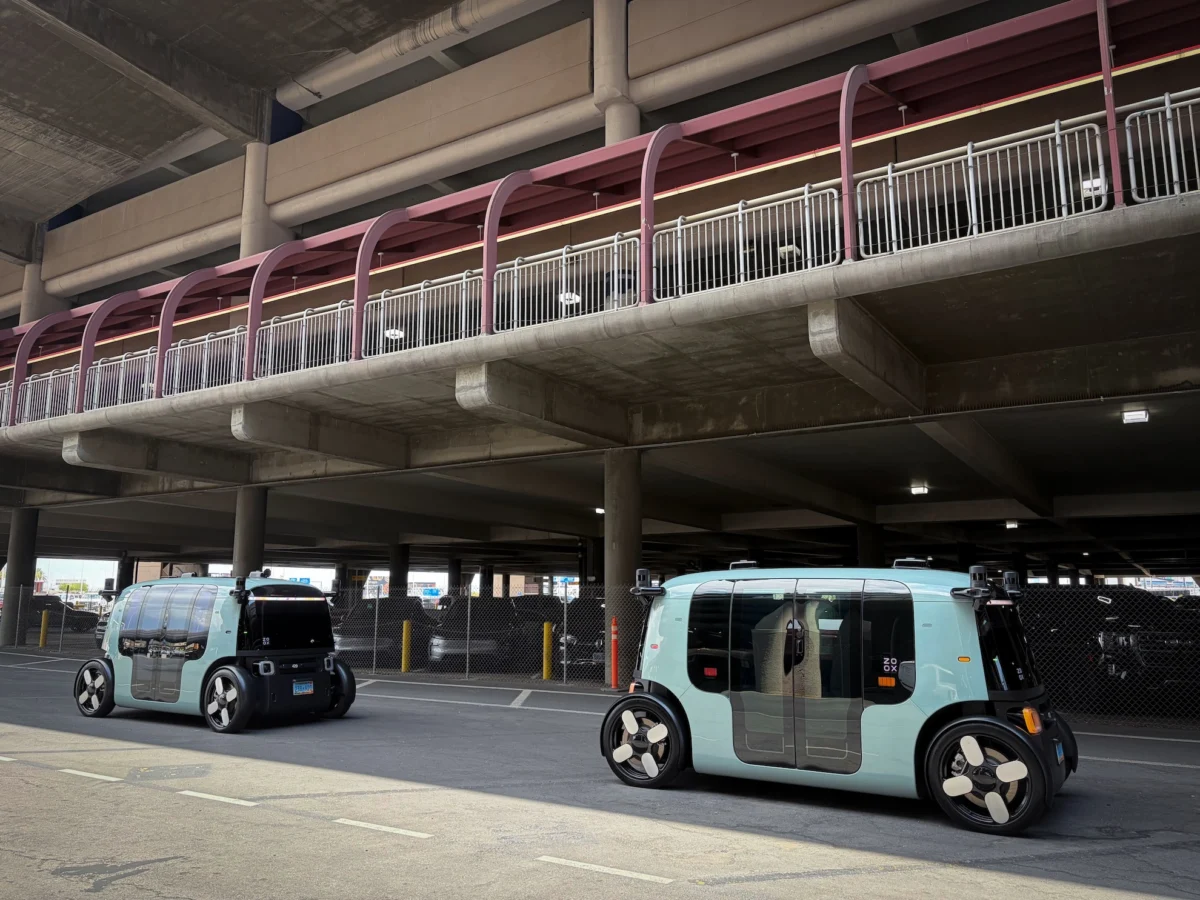
Zoox, the Amazon-owned autonomous vehicle company, has announced a significant expansion of its commercial robotaxi service in Las Vegas, now offering rides to and from Harry Reid International Airport. This strategic move, which allows customers to hail rides to and from one of the nation’s busiest airports starting Thursday, marks a critical milestone for the company, solidifying its operational footprint in a highly competitive and rapidly evolving mobility landscape. The expansion to a premier travel hub like Harry Reid International Airport not only unlocks a crucial revenue stream but also positions Zoox with a distinct competitive advantage over established ride-hailing services in one of the world’s most dynamic tourist destinations.
The Road to Commercialization: A Decade of Innovation
For over a decade, Zoox has been a quiet but determined force in the autonomous vehicle sector, distinguishing itself with a singular vision: to develop a purpose-built, bidirectional robotaxi designed from the ground up for autonomous operation. Unlike many competitors who began by retrofitting existing passenger vehicles with self-driving technology, Zoox committed to engineering a vehicle that entirely lacks traditional controls such as a steering wheel, pedals, or even a conventional driver’s seat. This ambitious approach necessitated a complete reimagining of vehicle architecture, safety systems, and the passenger experience, aiming for optimal space utilization and operational efficiency in urban environments.
The company’s journey began in 2014, founded by Jesse Levinson and Tim Kentley-Klay, with an unwavering focus on creating a fully integrated hardware and software solution. Their custom-designed vehicle, often described as a "carriage on wheels," features symmetrical design, allowing it to travel in either direction without needing to turn around, enhancing maneuverability in congested cityscapes. This innovative design also maximizes interior space, offering a unique face-to-face seating arrangement for up to four passengers. Such a radical departure from conventional vehicle design meant that Zoox faced not only immense engineering challenges but also significant regulatory hurdles, as its vehicle did not conform to existing federal motor vehicle safety standards (FMVSS).
The acquisition by Amazon in 2020 injected substantial capital and strategic resources into Zoox, accelerating its development and commercialization efforts. Amazon’s backing provided the financial muscle and logistical expertise necessary to push the technology from advanced prototyping to real-world deployment. Before the latest commercial approvals, Zoox had already been operating its robotaxis in Las Vegas for approximately a year, offering free rides to employees and select public users. These pre-commercial operations served as a critical testing phase, accumulating millions of miles of autonomous driving data, refining its self-driving system, and validating its operational safety protocols in a complex urban environment. This period allowed Zoox to demonstrate the reliability and safety of its technology, paving the way for the ultimate step: commercial service.
Navigating the Regulatory Landscape: A Crucial Exemption
The true inflection point for Zoox’s business expansion arrived in August 2026, when federal safety regulators granted the company a temporary exemption from certain motor vehicle safety standards. This landmark decision by the National Highway Traffic Safety Administration (NHTSA) was not merely a procedural step; it represented a critical validation of Zoox’s innovative vehicle design and its robust safety framework. The exemption, which is valid for two years and permits Zoox to deploy up to 2,500 vehicles, addressed eight specific federal motor vehicle standards that its custom-built robotaxi could not meet due to its lack of traditional human controls.
Among the crucial standards from which Zoox received exemption were those related to windshield defrosting and light vehicle braking systems. For a vehicle without a steering wheel, pedals, or a human driver, the conventional requirements for windshield defrosting (designed for human visibility) and the physical interaction with braking systems were simply inapplicable. Zoox had to demonstrate that its alternative designs and operational protocols provided an equivalent or superior level of safety. This likely involved sophisticated sensor arrays for environmental perception, redundant braking systems, and advanced remote monitoring capabilities that could address potential issues without direct human intervention inside the vehicle. The granting of this exemption signaled a growing willingness by federal authorities to adapt existing regulations to accommodate truly novel autonomous vehicle designs, acknowledging that innovation often outpaces traditional regulatory frameworks. This move by NHTSA is viewed by industry experts as a precedent-setting decision that could pave the way for other purpose-built autonomous vehicles to enter commercial service.
A Rapid Ascent: Key Milestones in Zoox’s Expansion
The federal exemption undeniably "kicked Zoox’s business expansion into drive," as evidenced by a flurry of strategic activities in recent months. Following the August 2026 approval:
- August 10, 2026: Commercial Operations Begin: Zoox officially commenced charging for robotaxi rides in Las Vegas. This transition from free pilot programs to a revenue-generating service was a monumental step, marking its entry into the commercial ride-hailing market. Initial operations focused on a geofenced area within Las Vegas, targeting key entertainment and business districts.
- Geographic Expansion for Testing: Shortly after, Zoox announced plans to expand its self-driving vehicle testing operations to two new major U.S. cities: San Diego and Houston. These cities present different urban complexities and weather conditions, allowing Zoox to further refine its autonomous driving system and gather diverse operational data. San Diego offers varied terrain and coastal conditions, while Houston presents a sprawling metropolitan area with distinct traffic patterns and humidity challenges.
- Release of Safety Framework: Concurrent with its operational ramp-up, Zoox released a comprehensive safety framework. This document details the company’s rigorous approach to safety, encompassing vehicle design, software development, operational procedures, and incident response. Transparency in safety protocols is paramount for building public trust and demonstrating accountability in the nascent autonomous vehicle industry. It provides a blueprint of how Zoox mitigates risks and ensures the reliability of its autonomous system.
- Harry Reid International Airport Expansion: The latest announcement, allowing airport service, represents the culmination of these efforts and a strategic leap forward. Airport routes are traditionally among the most lucrative and high-demand segments of the ride-hailing market, due to consistent passenger traffic and often higher average fare values.
Unpacking the Airport Advantage: A Competitive Edge
Zoox’s expansion to Harry Reid International Airport provides a significant, perhaps even decisive, competitive edge in the bustling Las Vegas ride-hailing market. The convenience offered by Zoox’s robotaxis directly addresses a common pain point for travelers: airport pickups. According to Zoox, its vehicles will pick up and drop off riders at both airport terminals, precisely near baggage claim. This direct-to-terminal service stands in stark contrast to the existing arrangements for traditional ride-hailing giants like Uber and Lyft at Harry Reid International.

For Uber and Lyft passengers, while drop-offs at the terminal curb are standard, pickups are a more arduous affair. Travelers are typically directed to a designated ride-share area located on the upper floor of a nearby parking garage, often requiring a five- to ten-minute walk from baggage claim. After a long flight, navigating an unfamiliar airport with luggage to reach a distant pickup point can be a significant inconvenience. Zoox’s ability to offer direct, curb-side service near baggage claim eliminates this friction, providing a seamless and stress-free experience for weary travelers. This enhanced convenience is a powerful differentiator that could attract a substantial share of airport traffic, especially from tourists prioritizing ease and efficiency.
Harry Reid International Airport (LAS) is a massive transportation hub, serving over 50 million passengers annually in recent years, making it one of the busiest airports in the United States. A significant portion of these passengers are tourists visiting the Las Vegas Strip, many of whom rely on ride-hailing services. Capturing a meaningful share of this high-volume, high-value market segment is critical for Zoox’s profitability and market penetration strategy. The airport route is not just about convenience; it’s about accessing a consistent stream of customers who are often willing to pay a premium for a superior service experience.
Las Vegas: The Epicenter of Autonomous Mobility
Las Vegas has long served as a vital proving ground for autonomous vehicle companies, and its prominence in the AV industry is only accelerating. The city’s unique characteristics make it an ideal environment for testing and deploying robotaxi services:
- Predictable Routes and Infrastructure: The grid-like street system, wide boulevards, and relatively clear weather conditions (though extreme heat can be a factor) provide a conducive environment for autonomous navigation.
- High Demand for Transportation: As a premier global tourist destination, Las Vegas experiences constant high demand for transportation services, particularly between the airport, hotels, convention centers, and entertainment venues. This provides a rich operational dataset and a robust customer base for commercial robotaxi services.
- Supportive Regulatory Environment: Nevada, and Clark County specifically, have shown a proactive and supportive stance towards autonomous vehicle technology, streamlining permitting processes and fostering innovation. This forward-thinking regulatory approach has attracted numerous AV companies.
- Economic Impact: The integration of robotaxis is expected to enhance the city’s tourism appeal, offering innovative and efficient transit options. It also promises economic benefits through job creation in areas like maintenance, remote monitoring, and operational support, even as the driver role evolves.
Beyond Zoox, the city is rapidly transforming into a veritable "teeming" ground for commercial robotaxi operators. The Nevada Transportation Authority (NTA) recently issued permits to several other major players, signaling an imminent surge in autonomous vehicle services.
The Looming Robotaxi Race: A Crowded Field Emerges
While Zoox currently holds a unique advantage with its airport access, the competitive landscape in Las Vegas is poised for rapid intensification. The NTA’s recent issuance of commercial robotaxi permits to Tesla, Uber, and Waymo in Clark County last month underscores the accelerating race to dominate the autonomous ride-hailing market. These permits collectively allow for the deployment of an astonishing 8,000 robotaxis across the county over the next 12 months, setting the stage for an unprecedented scale-up of AV services.
Each competitor brings a distinct strategy to the table:
- Waymo: A subsidiary of Alphabet (Google’s parent company), Waymo is arguably the most experienced commercial robotaxi operator, having launched fully driverless services in Phoenix and San Francisco. Its strategy involves retrofitting traditional vehicles (like Jaguar I-Paces and Chrysler Pacifica minivans) with its sophisticated self-driving stack. Waymo’s extensive operational history and safety record make it a formidable competitor. Their entry into Las Vegas is highly anticipated, potentially bringing a mature, battle-tested service.
- Tesla: Led by Elon Musk, Tesla’s approach to autonomy, known as Full Self-Driving (FSD), is primarily camera-based and aims for a single, scalable solution for both consumer vehicles and a potential robotaxi network. While Tesla has received permits, its operational model for a dedicated robotaxi service, distinct from its consumer FSD beta program, is still developing. The company’s brand recognition and large fleet of FSD-equipped vehicles could give it an advantage if it can transition effectively to a commercial robotaxi model.
- Uber: The global ride-hailing giant, Uber, has adopted a multifaceted strategy. While it previously divested its own autonomous driving division, it has re-entered the AV space through strategic partnerships. In Las Vegas, Uber plans to operate robotaxis through collaborations with Hyundai subsidiary Motional, and notably, with Zoox itself. This hybrid approach allows Uber to leverage the technological expertise of specialized AV developers while maintaining its market dominance through its established platform and customer base. The partnership with Zoox is particularly interesting, suggesting that even as Zoox competes with Uber on some fronts, it may also power a portion of Uber’s autonomous offerings, highlighting the complex and collaborative nature of the AV industry.
The deployment of up to 8,000 robotaxis within a year represents an exponential increase in autonomous vehicle presence, transforming Las Vegas into a real-world laboratory for large-scale AV integration. This will inevitably lead to intense competition for market share, pricing strategies, and customer loyalty. The differentiator Zoox has secured with its airport access could be a critical factor in establishing an early lead.
Broader Implications: Reshaping Urban Transportation and Beyond
The rapid expansion of commercial robotaxi services, spearheaded by Zoox’s airport integration, carries profound implications for urban transportation, the economy, and consumer behavior.
- Reshaping Urban Mobility: The widespread deployment of robotaxis is poised to fundamentally alter urban mobility patterns. It could reduce the need for private car ownership, alleviate traffic congestion in specific areas (if optimized efficiently), and potentially enhance public transport networks by providing first- and last-mile solutions. The vision of a city where autonomous vehicles are a ubiquitous and convenient mode of transport is slowly becoming a reality in places like Las Vegas.
- Economic Impact and Job Evolution: While robotaxis promise efficiency and new service models, they also spark discussions about job displacement for traditional drivers. However, new jobs will emerge in areas like fleet management, maintenance, remote assistance, data analysis, and regulatory oversight. For Las Vegas, enhanced transportation options could further boost its tourism economy, making it an even more attractive destination.
- Consumer Trust and Adoption: The success of robotaxis hinges on public acceptance and trust. Companies like Zoox, by openly sharing their safety frameworks and demonstrating reliable, safe operations, are crucial in fostering this trust. The direct airport service offers a compelling use case that could help normalize the experience of riding in a driverless vehicle for a broad demographic of travelers. However, incidents, even minor ones, will be scrutinized, and public perception will be heavily influenced by the industry’s collective safety record.
- Technological Advancement: The intense competition and large-scale deployment in Las Vegas will drive continuous innovation in autonomous driving technology. This includes advancements in sensor fusion, AI algorithms, cybersecurity, and vehicle-to-infrastructure (V2I) communication, ultimately benefiting the entire AV ecosystem.
As Las Vegas embraces its role as a leading testbed for autonomous mobility, Zoox’s strategic move to Harry Reid International Airport marks not just a victory for the Amazon-backed company, but a significant leap forward for the entire autonomous vehicle industry. It signals a new era where driverless vehicles are no longer a futuristic concept but a tangible, commercially available reality reshaping how people move within our cities. The coming months will undoubtedly witness an exhilarating race among these tech giants, all vying to define the future of transportation.
