

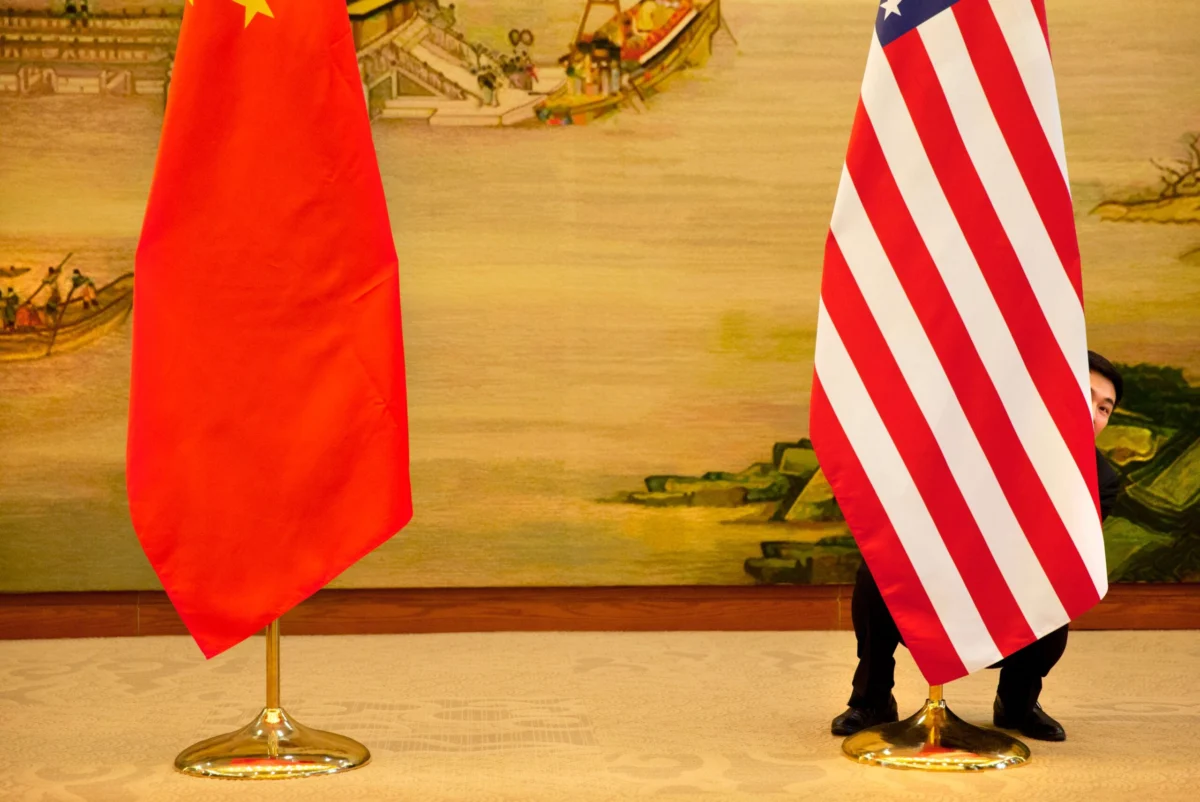
In a significant move to fortify national security and bolster domestic industries, Washington has intensified its regulatory pressure on foreign-made advanced robotic systems and imposed substantial tariffs on imported drones and their components. These measures, rolled out across July and August, explicitly cite national-security concerns, marking a critical escalation in the ongoing technological and economic competition between the United States and global rivals, particularly China. The drone tariffs are slated to take effect in September, with further component tariffs scheduled for 2027, underscoring a deliberate, multi-year strategy to reconfigure critical supply chains.
Broader Context: The U.S.-China Tech Rivalry Deepens
These recent restrictions are not isolated incidents but rather integral components of a comprehensive U.S. strategy aimed at curtailing the influence of foreign technology, especially from nations deemed strategic adversaries, within strategically vital industries. The foundation of this approach was laid in 2021 with the establishment of the Federal Communications Commission’s (FCC) "Covered List." Initially designed to target telecommunications and surveillance equipment from specific companies like Huawei, ZTE, and Hikvision due to perceived national security threats, the list has progressively expanded its scope. Its evolution reflects a growing concern within U.S. policy circles regarding the pervasive integration of foreign-made technology into critical infrastructure, consumer markets, and sensitive government operations.
The expansion of the Covered List to include foreign-made drones and, most recently, advanced robotic devices, illustrates a broadening definition of "national security" in the digital age. This encompasses not just communication networks but also autonomous systems capable of data collection, surveillance, and potential integration into military or critical industrial applications. U.S. officials have increasingly articulated concerns about data privacy, intellectual property theft, and the potential for foreign governments to exploit technological backdoors in hardware and software, especially from companies with close ties to state entities. This strategic pivot aligns with a wider U.S. effort to "de-risk" its supply chains and reduce reliance on single-source suppliers, particularly those from geopolitical competitors.
This policy trajectory is set against the backdrop of a prolonged and multifaceted U.S.-China tech rivalry. From semiconductors to 5G infrastructure, artificial intelligence, and now robotics, both economic superpowers are vying for dominance in foundational technologies. The CHIPS and Science Act, export controls on advanced semiconductors, and various other trade measures underscore Washington’s determination to limit Beijing’s access to cutting-edge technology while simultaneously fostering domestic innovation and manufacturing capabilities. The current actions in robotics and drones are a logical extension of this broader geopolitical and economic contest, aiming to prevent the entrenchment of foreign-dominated ecosystems in emerging critical sectors before they become too pervasive to dislodge. The U.S. aims to ensure that technologies deemed critical for future economic and military advantage are developed and controlled by secure, trusted partners.
A Chronology of Escalating Restrictions
The timeline of these escalating restrictions highlights a methodical approach by U.S. authorities to address perceived vulnerabilities:
- 2021: The FCC formally establishes its "Covered List," initially identifying telecommunications and video surveillance equipment from specific Chinese entities (e.g., Huawei, ZTE, Hikvision, Hytera, Dahua) as posing unacceptable national security risks. This move effectively bars companies receiving federal subsidies from purchasing or using equipment from these firms, initiating a process of technological decoupling in sensitive areas.
- Late 2023 / Early 2024: Discussions and policy formulation intensify within the U.S. government regarding the vulnerabilities presented by foreign-made drones and robotics. Intelligence assessments and industry consultations likely inform the decision to expand the scope of restrictions, recognizing the increasing sophistication and market penetration of these autonomous systems. Concerns focus on their potential use for espionage, sabotage, or the collection of sensitive data on U.S. infrastructure and citizens.
- July [Current Year]: Washington announces heightened restrictions on foreign-made advanced robotic systems. This move specifically targets devices that could be integrated into critical infrastructure, defense applications, or sensitive commercial operations, reflecting a proactive stance to prevent future security compromises. The FCC’s decision, welcomed by U.S. companies like Agility Robotics, aims to address security concerns before these systems become deeply embedded in the American market, drawing lessons from the challenges encountered with previously integrated foreign technologies.
- August [Current Year]: The U.S. government imposes steep tariffs on imported drones and their components. This economic lever is designed to make foreign-made drones less competitive in the U.S. market, thereby encouraging domestic production and consumption. The tariffs represent a direct financial disincentive for companies relying on foreign supply chains for these products, with the stated aim of strengthening U.S. supply chain resilience and national security.
- September [Current Year]: The newly imposed tariffs on finished drones are scheduled to take effect, immediately impacting import costs and market prices. This marks the first tangible economic consequence of the new policy for businesses and consumers.
- 2027: An additional layer of tariffs on drone components is set to be implemented. This staggered approach suggests an intention to allow the industry time to adjust supply chains while signaling a long-term commitment to reshaping the market. By targeting components, the policy aims to address the deeper layers of the supply chain, encouraging domestic or allied production of even the smallest parts and reducing reliance on foreign-dominated manufacturing ecosystems.
The Scale Gap: Chinese Dominance in Robotics and Drones
The latest U.S. actions come at a time when Chinese manufacturers have established formidable, often commanding, positions in both the drone and humanoid robot sectors. Their competitive edge is largely driven by unparalleled manufacturing scale and cost advantages that U.S. and European rivals frequently struggle to match. This dominance is particularly pronounced in the burgeoning humanoid robot market, which is seeing rapid development and deployment.
According to a recent report by Counterpoint Research, global humanoid robot shipments soared by nearly 300 percent year-over-year in the first half of 2026, reaching an estimated 22,000 units. The vast majority of these shipments — an astounding 86 percent — originated from Chinese manufacturers. The report identified the world’s five largest humanoid robot makers by shipments – AgiBot, Unitree, Galbot, UBTECH, and Leju Robotics – as all being Chinese companies. This demonstrates a market concentration rarely seen in emerging high-tech sectors and highlights the significant lead Chinese firms have built.
In stark contrast, U.S. companies, while often leaders in frontier AI, advanced software, and semiconductor innovation, operate at a significantly smaller scale in terms of physical robot manufacturing and deployment. Ankur Saxena, an investment director at TDK Ventures, highlighted this fundamental divergence: "The United States leads in frontier AI, software and semiconductor innovation. China leads in manufacturing scale, supply-chain depth and cost." This division of strengths illustrates the distinct competitive advantages each nation brings to the global technology landscape.
This scale gap is not merely a matter of production volume; it creates a powerful compounding advantage for Chinese firms. Lower production costs enable Chinese manufacturers to deploy more robots into diverse applications, generating a wealth of real-world operational data. This data, in turn, fuels iterative improvements in their AI algorithms, control systems, and hardware designs, leading to increasingly sophisticated and reliable technology. Higher production volumes also drive down unit costs further through economies of scale, creating a virtuous cycle that reinforces their market leadership. This dynamic makes it exceedingly difficult for smaller-scale competitors to catch up.
Soumen Mandal, a principal analyst at Counterpoint Research, further elaborated on how Chinese humanoid makers achieve these cost efficiencies. Many are actively pursuing vertical integration, bringing more of the technology stack in-house. This strategy reduces reliance on external, potentially more expensive, suppliers and allows for greater control over design and production. Additionally, Chinese robotics companies can leverage China’s vast and mature manufacturing ecosystem, including its expertise in automotive production and electronics, to streamline their robotics development. For instance, companies like Unitree are developing more components internally, while established automakers such as XPeng are drawing on their extensive experience in chips and vehicle manufacturing as they venture into robotics, creating powerful synergies and accelerating development cycles.
This manufacturing prowess allows Chinese companies to slash humanoid robot prices at a pace that most U.S. competitors find nearly impossible to match. As Saxena succinctly put it, "You cannot sanction your way around a cost curve. You can only out-build it, and America has yet to begin making the decade-long investment that will require." This statement underscores the profound challenge facing U.S. industry: simply restricting market access does not address the underlying economic fundamentals of scale and cost efficiency that Chinese manufacturers have mastered, necessitating a long-term investment in domestic capabilities.
U.S. Industry Reactions and the Quest for Domestic Alternatives
The U.S. robotics industry has generally welcomed the government’s moves, particularly regarding the FCC’s decision on advanced robotic systems. Agility Robotics, a prominent U.S. humanoid robot developer, publicly supported the FCC’s stance in July. The company emphasized that such measures could proactively address security concerns around foreign-made advanced robots before they become deeply integrated into the U.S. market, drawing a parallel to the challenges observed in the drone industry where foreign systems became widely adopted before security concerns were fully addressed. Agility Robotics highlighted its own Digit humanoid, which is designed and assembled in the U.S., as an example of secure, domestically produced technology. However, the company also underscored the importance of continued access to global tools and technologies necessary for advancing robotics research and development, acknowledging the interconnected nature of global innovation and the need for a balanced approach.
The goal for U.S. policymakers and domestic companies is not just to exclude foreign products but to cultivate a robust, secure, and competitive domestic robotics ecosystem. This involves significant investment in research and development, manufacturing infrastructure, and talent development. The challenge is formidable, given the established cost and scale advantages of foreign competitors and the capital-intensive nature of robotics manufacturing. The government hopes that by creating a more level playing field through tariffs and restrictions, domestic companies will have the necessary impetus and protection to scale up their operations.
Implications for the Global Robotics Industry: Fragmentation and New Frontiers
The imposition of these restrictions is forcing a fundamental re-evaluation within the global robotics industry, raising a critical question: If Chinese drones and humanoids are increasingly shut out of the U.S., where does the competition move next? Industry analysts and executives widely anticipate that the result will be less a clean U.S.-China split and more a fragmented global market, characterized by divergent strategies and regional specialization.
Where Does China Go Next?
Even if Chinese robotics companies face diminished access to the lucrative American market, they retain significant advantages that will drive their expansion elsewhere. China possesses a massive domestic market, which serves as a powerful incubator for innovation and scale, providing a strong base for continued growth. Beyond its borders, there is ample room for expansion, particularly in regions where demand for affordable automation is rapidly growing and security concerns aligned with U.S. policy are less pronounced. Ankur Saxena noted that Chinese robotics companies are already strategically targeting price-sensitive markets experiencing severe labor shortages across Europe, Southeast Asia, Latin America, and the Middle East, leveraging their cost efficiencies.
Soumen Mandal draws a parallel to the trajectory of Chinese electric vehicle (EV) companies. He anticipates that humanoid robot makers will follow a similar path: first building unparalleled scale within their domestic market, then aggressively expanding into overseas markets, and eventually establishing local production facilities in key regions. Countries grappling with aging populations, declining birth rates, and persistent labor shortages – especially in manufacturing sectors – are likely to become early adopters of humanoids, where robots can efficiently undertake repetitive and physically demanding tasks. This strategy allows Chinese firms to leverage their cost advantages and manufacturing expertise to meet global demand for automation, effectively bypassing U.S. market access issues and establishing new strongholds.
The Emergence of Two Ecosystems: A Drone Market Precedent
The drone market offers a concrete "early glimpse" into what this fragmented robotics landscape might entail. Bentzion Levinson, founder and CEO of Virginia-based drone maker Heven AeroTech, observes that the industry is already cleaving into two distinct ecosystems:
- A U.S.-led market: This segment is increasingly built around American-made, NDAA (National Defense Authorization Act)-compliant systems. Security requirements, data integrity, and supply chain transparency are paramount in this ecosystem, which targets defense, critical infrastructure, and government applications. Here, premium pricing for assured security is acceptable.
- A China-led market: This segment remains focused on low-cost, high-volume production, catering to consumer, commercial, and industrial applications where affordability and accessibility are primary drivers. This market will continue to serve regions less concerned with U.S. security mandates or where economic considerations take precedence.
Levinson concedes that Western manufacturers are unlikely to compete effectively with Chinese companies in the low-end consumer drone market, where cost remains an insurmountable advantage. Instead, U.S. and allied companies are expected to increasingly specialize and compete in higher-value segments, such as long-range autonomous systems for defense, advanced surveillance, and critical infrastructure inspection, where stringent security requirements outweigh initial purchase price considerations. This specialization allows them to focus on areas where their technological lead and trusted status are most valued.
Beyond the Platform: The Next Competitive Frontier
The competitive landscape is also shifting beyond the drones and robots themselves to the underlying technologies that power them and the sophisticated payloads they carry. Levinson argues that "The next battleground is over who owns the next-gen energy and payload architecture." He specifically points to battery technology as a crucial area of competition. As autonomous systems become more capable and demand longer operational durations and greater power output, battery limitations could elevate power systems into an increasingly important point of strategic competition. Innovation in energy density, charging speed, and longevity will be critical determinants of future leadership in robotics, creating new opportunities for technological breakthroughs and market differentiation. Similarly, advancements in AI software, sensor technology, and modular payload systems will define the capabilities and applications of these advanced machines, potentially becoming new chokepoints in the global supply chain.
A More Regionalized Robotics Market: The Allied Alternative
Ankur Saxena posits that "The alternative to China isn’t a purely domestic U.S. supply chain; it’s a diversified allied one." This vision acknowledges the impossibility and inefficiency of entirely reshoring all aspects of robotics manufacturing to the United States. Instead, it advocates for strengthening supply chains with trusted allies, leveraging their respective strengths and creating a resilient network.
This approach could create significant opportunities for other Asian manufacturing powerhouses:
- Japan: Possesses decades of unparalleled experience in industrial robotics, precision manufacturing, and advanced materials. Japanese companies like Fanuc and Yaskawa are global leaders in factory automation, known for their reliability and precision.
- South Korea: Brings formidable strengths in electronics, advanced battery technology (e.g., LG Energy Solution, Samsung SDI), and automotive manufacturing (e.g., Hyundai, which owns Boston Dynamics). Its expertise in complex assembly and high-tech components is invaluable.
- Taiwan: Remains a crucial player in the global semiconductor industry, producing the advanced chips essential for robotics’ computational power, making it an
