

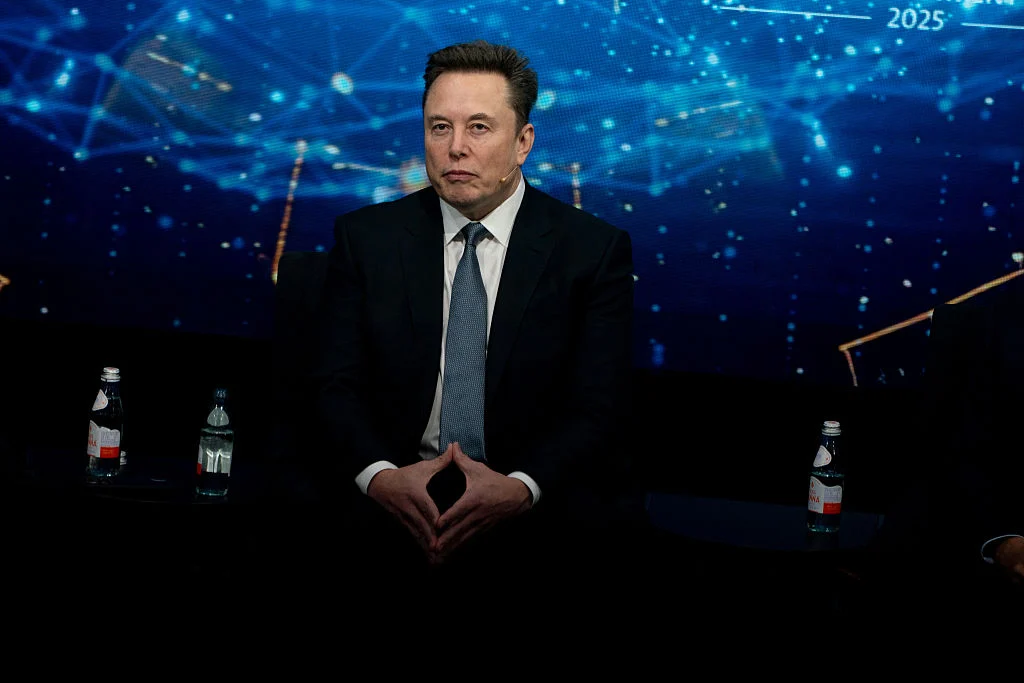
Elon Musk, the visionary entrepreneur behind SpaceX and Tesla, has publicly confirmed a significant strategic pivot aimed at resolving one of artificial intelligence’s most pressing infrastructure challenges: the looming power grid bottleneck. Musk revealed on Saturday that SpaceX is constructing a specialized foundry in Bastrop, Texas, dedicated to manufacturing highly complex gas turbine blades and vanes. This move, he claims, could accelerate the deployment of critical natural gas turbines by up to 18 months, representing a "profound game-changer" for the energy-intensive AI industry.
The announcement followed a report by The Information, which had begun piecing together details of SpaceX’s clandestine operations. Citing specific job listings that explicitly sought talent for a "blades and vanes foundry," and drawing on findings from due diligence specialist Corey Trinetti – known for his meticulous analyses of AI infrastructure sites – the report indicated that SpaceX had acquired approximately 830 acres of land near its existing Starlink factory in Bastrop between March and June. This substantial land acquisition, coupled with the specialized job postings, strongly suggested a major industrial undertaking. Musk’s subsequent confirmation on X (formerly Twitter) pulled back the curtain on the project, aligning with his long-standing strategy of vertical integration to overcome supply chain limitations across his various ventures.
The Unveiling of a Strategic Foundry
Musk’s revelation came as a direct response to the mounting speculation, providing clarity on the purpose of the previously undisclosed facility. He articulated a dual-pronged energy strategy for his enterprises: "SpaceX and Tesla are each building 100GW/year of solar production capacity as fast as possible, but natural gas will still be needed to supplement and bootstrap solar for several years." This statement underscores a pragmatic approach to energy generation, acknowledging the immediate necessity of natural gas as a bridge fuel while simultaneously pursuing ambitious renewable energy goals. The core of his assertion lay in identifying the "limiting factor for nat gas turbine production" as the casting of blades and vanes. By bringing this highly specialized manufacturing process in-house, SpaceX aims to bypass existing bottlenecks and significantly expedite the deployment of power generation critical for AI data centers.
This strategic decision highlights a fundamental challenge confronting the burgeoning AI sector. While much attention has been paid to the scarcity of high-performance graphics processing units (GPUs) – with Nvidia’s newest Blackwell chips, for instance, still facing lead times of several months – a more foundational constraint has rapidly emerged: the physical capacity of the power grid itself. The International Energy Agency (IEA) projects a staggering increase in global data center electricity consumption, forecasting it to roughly double by 2030. This exponential demand is pushing existing energy infrastructure to its limits, forcing a reevaluation of traditional power supply strategies.
AI’s Insatiable Energy Demand and the Natural Gas Imperative
The "why" behind this intricate manufacturing endeavor traces back to the sheer computational power required by modern AI. Training large language models (LLMs) and other complex AI algorithms demands immense electrical energy, often running continuously in massive data centers. These facilities, often referred to as "hyperscale" data centers, are becoming the backbone of the digital economy, and their proliferation is accelerating the global energy crisis.
Major technology companies, the so-called "hyperscalers" like Amazon, Google, Meta, OpenAI, and Microsoft, have traditionally championed renewable energy sources such as wind and solar to power their operations. However, the immediate and overwhelming demand for AI-driven compute power has led to a significant shift in strategy. Faced with an overstretched grid and the lengthy timelines associated with new utility-scale power plant construction, these tech giants are increasingly turning to private, gas-fired power plants built directly adjacent to their data centers. This localized generation strategy allows them to bring new data centers online much faster than relying on grid upgrades or waiting for new renewable projects to connect.
The scale of this shift is evident in the market. GE Vernova, a leading manufacturer of gas turbines, has openly stated that its production capacity is essentially "sold out" through 2030, largely attributable to the surging demand from AI infrastructure development. This unprecedented backlog underscores the severity of the supply chain bottleneck that Musk aims to circumvent. The race to build AI infrastructure has thus created an unexpected surge in demand for natural gas, a fossil fuel, creating a complex dilemma for companies committed to sustainability goals.
The Technical Challenge: Mastering Turbine Blade Casting
The specific bottleneck Musk identified – the casting of turbine blades and vanes – is an engineering marvel in itself. These components operate in the hottest section of a gas turbine, where temperatures can soar to between 3,000 and 3,600 degrees Fahrenheit. This is approximately 800 degrees hotter than the melting point of the superalloys from which they are typically made. Such extreme conditions are only tolerable due to a combination of advanced design and manufacturing techniques. These include intricate internal cooling channels that allow cooling air to flow through the blade, sophisticated thermal-barrier coatings that insulate the metal, and, critically, a highly specialized casting process.
The paramount challenge lies in casting each blade as a single, unbroken crystal structure. Unlike ordinary cast metals, which consist of numerous microscopic grains with seams that can become points of weakness under extreme stress and temperature fluctuations, turbine blades for power generation must exhibit a "single-crystal" structure. This eliminates grain boundaries, significantly enhancing the component’s strength, creep resistance (resistance to deformation under prolonged stress at high temperatures), and overall durability. Achieving this requires growing the crystal slowly and precisely within a vacuum furnace, meticulously controlling temperature gradients and solidification rates to ensure an isotropic structure free from defects.
This process is notoriously difficult, even for the smaller blades used in jet engines. The blades required for power-plant turbines are considerably larger, amplifying the complexity and difficulty of producing them at industrial scale without introducing microscopic flaws that could compromise performance and safety. Globally, only a handful of companies – estimated to be just four – have mastered this intricate casting process sufficiently to produce these components at the industrial volumes now demanded by the energy sector. All of these specialized manufacturers are currently operating at maximum capacity, creating a critical choke point in the supply chain.
Musk’s Vertical Integration Strategy and Market Implications
Should SpaceX successfully establish and scale this advanced manufacturing capability, it would represent a monumental achievement and confer a significant competitive advantage. A Musk-controlled entity would possess a crucial manufacturing capability that virtually every other AI infrastructure developer currently relies on a tiny, overstretched oligopoly to provide. This vertical integration strategy, a hallmark of Musk’s business philosophy across Tesla and SpaceX, would grant his ventures a degree of independence and speed that would be difficult for even well-funded competitors without in-house manufacturing prowess to replicate quickly.
The implications for the AI industry’s competitive landscape are substantial. It could potentially allow entities like xAI, Musk’s artificial intelligence company, or other future AI-focused ventures under his umbrella, to deploy compute infrastructure at an accelerated pace. This "edge" could translate into faster model training, quicker product development, and a more robust foundation for AI innovation, potentially reshaping the competitive dynamics of the sector. Furthermore, it could put pressure on existing turbine manufacturers to innovate faster or expand capacity, or it could inspire other hyperscalers to explore similar vertical integration strategies, though the capital expenditure and technical expertise required would be immense.
Environmental and Health Concerns: A Double-Edged Sword
However, the rapid acceleration of natural gas turbine deployment, while addressing an immediate energy crisis for AI, comes with significant environmental and public health ramifications. Natural gas, while burning cleaner than coal, is still a fossil fuel that emits greenhouse gases, primarily carbon dioxide, contributing to climate change. Beyond CO2, these turbines also release other pollutants into the atmosphere, including smog-forming compounds like nitrogen oxides (NOx) and hazardous chemicals such as formaldehyde. These pollutants are directly linked to a range of adverse health outcomes, including asthma, various respiratory diseases, and certain types of cancer.
The concerns are not theoretical. In Memphis, where SpaceXAI has operated gas turbines to power its Colossus data centers since 2024, the NAACP has repeatedly accused the company of operating without the necessary permits or adequate pollution controls mandated by federal law. The organization has highlighted the disproportionate impact on nearby neighborhoods, which often already bear a heavy burden of industrial pollution. A limited analysis by University of Memphis researchers, while not definitive, suggested a "slightly worse" air pollution profile due to the data center’s operations.
Memphis is not an isolated incident. Similar environmental justice battles are unfolding wherever gas turbines are being deployed as the default solution for data center power shortages. In Virginia’s "Data Center Alley," a region densely packed with data centers, a study commissioned by the Piedmont Environmental Council utilized the EPA’s COBRA health-impact model to assess the potential fallout. The findings were stark: emissions from a single facility’s eight full-time gas turbines could impact over 2.5 million people across multiple counties. The study projected that these emissions could lead to an estimated 3.4 to 6.5 additional premature deaths annually, translating into a staggering $53 million to $99 million in annual health-related damages. Crucially, the heaviest burden of these health impacts was found to fall on already marginalized communities, exacerbating existing inequalities.
Navigating the Future: Innovation, Energy, and Responsibility
Elon Musk’s bold move to insource turbine blade manufacturing underscores the unprecedented energy demands of the AI revolution and the critical need for innovative solutions to power this burgeoning sector. While his strategy promises to alleviate a significant bottleneck and accelerate AI development, it simultaneously amplifies a complex dilemma: how to balance rapid technological advancement with environmental stewardship and public health.
The broader implications extend beyond merely solving a manufacturing problem. It forces a renewed examination of energy policy, infrastructure planning, and environmental regulations in an era of rapid technological change. The tension between the urgency of AI development and the imperative to mitigate climate change and protect vulnerable communities will likely intensify. As more gas turbines come online to feed AI’s insatiable appetite for power, the list of complaints, lawsuits, and health concerns is expected to grow, placing greater scrutiny on the environmental footprint of the digital age. The challenge for innovators and policymakers alike will be to find pathways that allow for technological progress without sacrificing the planet’s health or the well-being of its inhabitants.
