

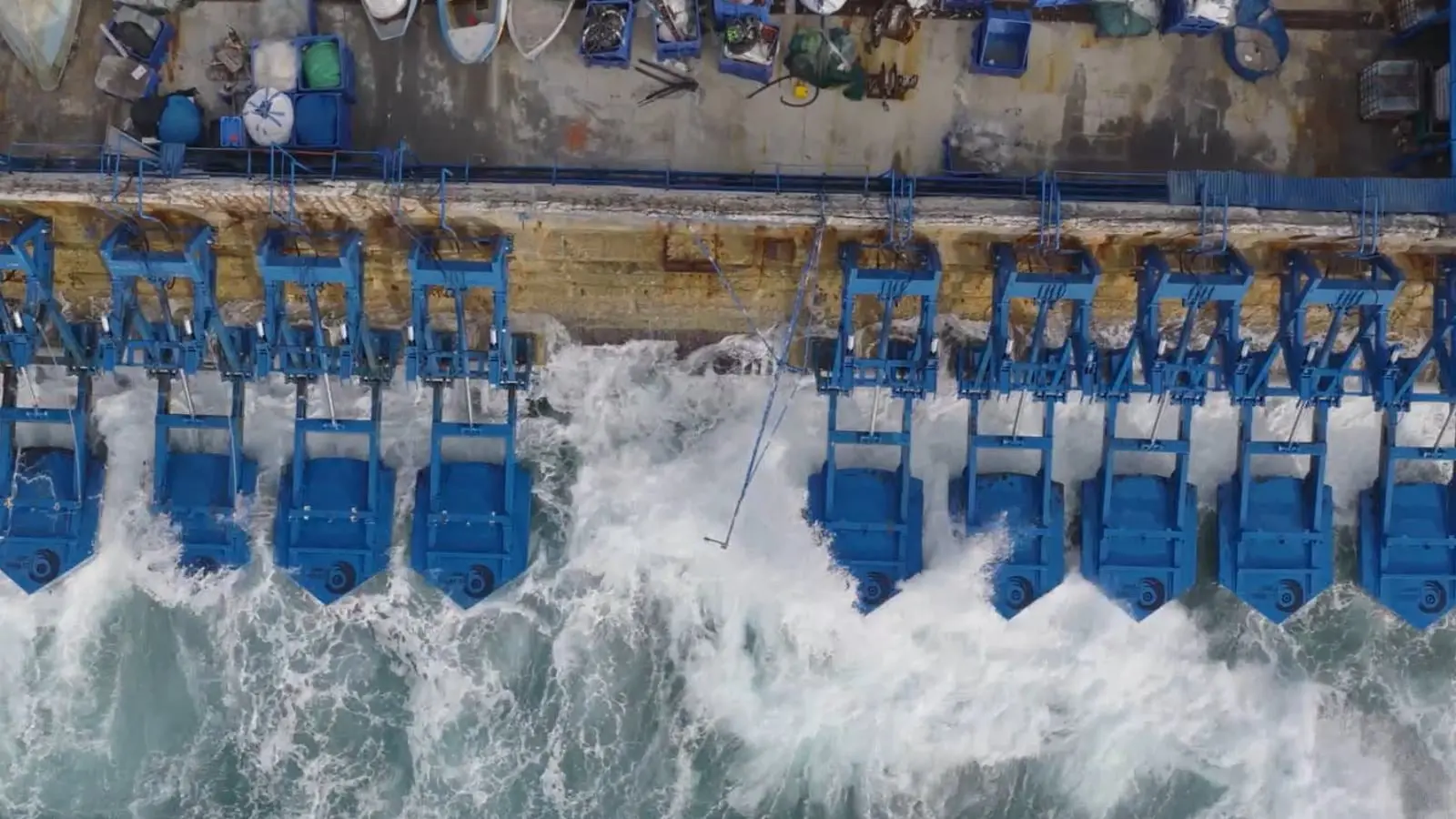
The transition toward a diversified renewable energy portfolio has reached a significant milestone in the Middle East as Eco Wave Power Global AB (publ) (EWP) announced a substantial increase in electricity generation from its grid-connected wave energy array at Jaffa Port, Israel. During the months of April and May, the EWP-EDF One pilot project demonstrated the robust scalability of its onshore wave energy conversion technology, capitalising on more energetic sea conditions to deliver a surge in power output. This performance data serves as a critical proof of concept for the company’s proprietary technology, which seeks to harness the kinetic motion of ocean waves from the safety of existing coastal infrastructure, thereby bypassing the prohibitive costs and logistical complexities traditionally associated with offshore marine energy installations.
Performance Metrics and Data Analysis
The recent operational results from Jaffa Port highlight a direct correlation between wave intensity and energy harvest, providing EWP’s engineering teams with high-fidelity data essential for refining the next generation of commercial-scale units. In April, the Jaffa Port site recorded three distinct periods where wave heights fluctuated between 1 and 1.5 metres. During these intervals, the system generated approximately 461 kilowatt-hours (kWh) of electricity, achieving a peak power output of 26.2 kilowatts (kW).
Performance metrics saw a dramatic uptick in May as the Eastern Mediterranean experienced more turbulent sea states. Over the course of four days characterized by wave heights ranging from 1 to 2 metres, the system produced 1,004 kWh of electricity. This represents more than a 100% increase in production compared to the April period under similar monitoring parameters. During this window, peak power reached 39.1 kW, with an average output of approximately 10.45 kW during active generation cycles.
The company focuses its performance analysis on waves exceeding the 1-metre threshold, as these conditions represent the primary operating environment for future commercial deployments. The data gathered in the first half of the year follows a record-setting performance in February, when winter storms pushed wave heights to approximately 3 metres. During that peak period, the Jaffa Port installation reached a maximum generation capacity of 54 kW, with average output hovering around 20 kW. Collectively, these results provide a transparent look at the system’s power curve, showing a clear trajectory of increased efficiency as wave energy density rises.
Technical Architecture: The Onshore Advantage
Eco Wave Power’s approach to marine energy represents a departure from the industry’s historical focus on offshore "point absorbers" or "attenuators." While offshore systems must contend with the immense structural stresses of the open ocean, EWP’s technology utilizes floaters attached to existing man-made structures such as breakwaters, jetties, and piers. This "onshore" or "near-shore" configuration offers several distinct advantages that are currently being validated at the Jaffa Port site.
The energy conversion unit, which includes the hydraulic motors and the generator, is housed in a standard shipping container located on land. The floaters, which are the only components in the water, move up and down with the motion of the waves, compressing and decompressing hydraulic pistons. This pressure is then converted into rotational motion to drive a generator. Because the most sensitive electrical and mechanical components are located on land, they are protected from the corrosive effects of saltwater and the destructive force of deep-sea storms.
Furthermore, this configuration significantly lowers the Levelized Cost of Energy (LCOE) by reducing the need for expensive specialized vessels, underwater cables, and professional divers for maintenance. The Jaffa Port project has maintained a record of zero downtime attributable to technology failure since the beginning of 2025, a statistic that underscores the reliability of the system compared to offshore counterparts that often struggle with "survivability"—the ability to remain operational after extreme weather events.
Strategic Partnerships and Grid Integration
The EWP-EDF One project is the result of a strategic collaboration between Eco Wave Power and EDF Renewables IL, a subsidiary of the French global energy giant Électricité de France (EDF). The project also received co-funding from the Israeli Ministry of Energy, reflecting a national interest in exploring marine energy as a complement to the country’s burgeoning solar sector.
The electricity generated at Jaffa Port is managed through a Power Purchase Agreement (PPA) with the Israel Electric Corporation (IEC). While a portion of the energy is utilized for on-site self-consumption to power the project’s monitoring systems, the majority is exported directly into Israel’s national electricity grid. This integration is a vital step in proving that wave energy can provide a stable and predictable contribution to a modern energy mix.
Unlike solar power, which is limited by daylight hours, or wind power, which can be highly intermittent, wave energy is characterized by a higher capacity factor and greater predictability. Waves are generated by wind blowing over vast distances of open water, meaning that even after the wind dies down, the swells continue to carry energy toward the shore for hours or even days. This makes wave energy a potential "baseload-adjacent" renewable source that can help stabilize grids during periods of low solar or wind production.

Chronology of Development and Global Expansion
The Jaffa Port project is the culmination of over a decade of research and development led by EWP’s founder and CEO, Inna Braverman. The company’s journey began with a pilot project in Gibraltar, which was the first of its kind in Europe to be connected to the grid under a commercial PPA. Following the success in Gibraltar, EWP shifted its focus to larger, more efficient designs, leading to the 2023 commissioning of the Jaffa Port array.
The timeline for EWP’s expansion is currently accelerating. Beyond the Eastern Mediterranean, the company has secured permits and agreements for projects in several key maritime regions:
- United States: EWP is in the final stages of preparing a pilot installation at AltaSea in the Port of Los Angeles. This project marks the company’s entry into the North American market, where California’s ambitious renewable energy mandates provide a fertile environment for wave energy adoption.
- Portugal: The company has received a license for a 20-megawatt (MW) project in Porto, which would represent one of the largest wave energy arrays in the world upon completion.
- Taiwan: Recent Memorandums of Understanding (MoUs) suggest a growing interest in utilizing EWP’s technology to power island communities and coastal industrial zones in East Asia.
Digital Innovation: AI and the "Digital Twin"
A significant component of the Jaffa Port project’s mission is the collection of data to feed into EWP’s burgeoning digital infrastructure. The company is increasingly leveraging Artificial Intelligence (AI) and predictive analytics to optimize the performance of its floaters. By creating a "Digital Twin"—a virtual replica of the physical Jaffa Port installation—engineers can simulate various sea states and test how different floater shapes or hydraulic pressures might affect energy capture.
Inna Braverman has emphasized that the data from waves above 1 metre is particularly valuable for training these AI models. "Every month of operation gives us additional real-world information that can be incorporated into our AI models, digital twins, and predictive maintenance systems," Braverman stated. These digital tools allow the system to "anticipate" incoming waves, adjusting the resistance in the hydraulic pistons in real-time to maximize energy extraction—a process known as phase control.
Predictive maintenance is another area where digital innovation is expected to drive down costs. By analyzing vibration and pressure data, the AI can identify potential component wear before a failure occurs, allowing for scheduled maintenance that does not interrupt power generation.
Broader Implications for the Global Energy Transition
The success of the EWP-EDF One project arrives at a time when the global community is searching for "missing pieces" in the net-zero puzzle. While solar and wind have seen massive cost reductions, the inherent variability of these sources requires significant investment in battery storage or alternative "always-on" clean energy. Wave energy, with its high energy density and consistent availability, is increasingly viewed as a necessary component of a resilient blue economy.
According to the International Renewable Energy Agency (IRENA), the theoretical global potential for ocean energy is vastly greater than current global human energy consumption. However, the technical challenge has always been harvesting that energy in a way that is economically viable and environmentally benign. By utilizing existing coastal infrastructure, EWP avoids the environmental concerns associated with laying deep-sea cables or disturbing seabed ecosystems, making the technology more palatable to coastal regulators and environmental advocacy groups.
Furthermore, the "onshore" model offers a dual-use benefit for coastal protection. As sea levels rise due to climate change, breakwaters are under increasing stress. EWP’s floaters act as a form of "energy dampener," absorbing a portion of the wave’s force before it hits the fixed structure. This could potentially extend the lifespan of coastal infrastructure while simultaneously generating clean power for the local community.
Conclusion and Future Outlook
As Eco Wave Power moves toward the latter half of 2025, the focus will shift from data collection to commercial scaling. The Jaffa Port project has successfully demonstrated that the technology can survive and thrive in real-world marine conditions, providing a steady stream of electrons to the Israeli grid. The transition from the current pilot floaters to larger, commercial-grade units is expected to result in a geometric increase in power output.
The roadmap for EWP involves not just larger floaters, but larger arrays. While the Jaffa Port project features a limited number of units, future installations in Portugal and the U.S. are designed to feature dozens, or even hundreds, of floaters integrated into miles of coastline. For the burgeoning wave energy sector, the results from Jaffa Port are more than just numbers on a spreadsheet; they are a signal to investors, policymakers, and utilities that the power of the ocean is finally within reach of the shore.
