

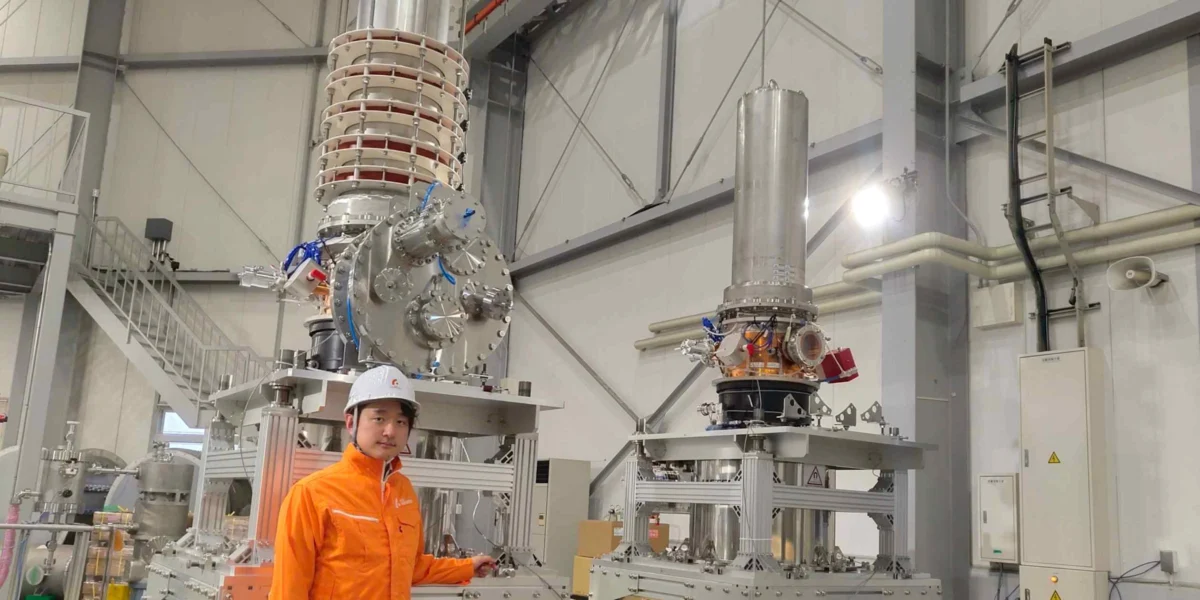
TOKYO — Japan’s Green Transformation (GX) Acceleration Agency has injected significant capital into two promising cleantech startups, channeling a total of ¥20 billion (approximately $125 million) in combined public-private funding towards advancements in nuclear fusion technology and innovative plastics recycling solutions. This strategic investment underscores Japan’s ambitious commitment to a low-carbon future, as articulated in its broader national strategy to mobilize ¥370 trillion ($2.3 trillion) across 17 key sectors by fiscal year 2040. The agency’s move signals a renewed focus on accelerating the development and commercialization of technologies deemed critical for achieving decarbonization goals.
The primary beneficiaries of this substantial funding round are Kyoto Fusioneering, a company at the forefront of developing auxiliary equipment for nuclear fusion reactors, and an unnamed but significant player in the advanced plastics recycling arena. While specific details regarding the allocation of funds between the two entities have not been fully disclosed, the investment is expected to propel both startups towards crucial development milestones and market readiness.
A Strategic Pivot Towards Decarbonization
The GX Acceleration Agency’s mandate is to identify and support nascent technologies that hold the potential to fundamentally reshape Japan’s energy landscape and industrial processes. Nuclear fusion, often hailed as the "holy grail" of clean energy due to its promise of abundant, carbon-free power, represents a long-term bet with immense potential. Conversely, advanced plastics recycling addresses an immediate and pressing environmental challenge, offering solutions to the global plastic waste crisis.
The agency’s involvement signifies a governmental endorsement of these nascent industries, providing not only financial backing but also a crucial signal to private investors. This public-private partnership model is designed to de-risk early-stage investments and foster an ecosystem conducive to innovation. The ¥20 billion infusion is a testament to the perceived maturity and potential of these specific ventures within the broader GX framework.
Kyoto Fusioneering: Powering the Fusion Future
Kyoto Fusioneering, based in Kyoto, has been steadily gaining recognition for its work in developing critical components for future fusion power plants. Their expertise lies in areas such as advanced superconducting magnets, which are essential for confining the superheated plasma required for fusion reactions, and sophisticated control systems. The company’s proprietary technologies are designed to enhance the efficiency, reliability, and economic viability of fusion reactors, paving the way for their eventual deployment.
The company’s development trajectory has been marked by several key achievements. Founded in 2019, Kyoto Fusioneering has rapidly assembled a team of leading scientists and engineers. They have been actively engaged in research collaborations with major international fusion projects and have secured earlier rounds of funding from private venture capital firms, demonstrating a growing confidence in their technological roadmap. This latest investment from the GX Acceleration Agency is expected to significantly accelerate their product development cycles, enable larger-scale testing of their equipment, and support their efforts to secure commercial partnerships.
The implications of successful nuclear fusion technology are profound. A functioning fusion power plant would offer a virtually inexhaustible source of energy with no greenhouse gas emissions and minimal long-lived radioactive waste, addressing two of the most significant challenges facing humanity. While commercial fusion power is still considered decades away, breakthroughs in component development, such as those pursued by Kyoto Fusioneering, are vital steps in shortening that timeline.
Advancing Plastics Recycling: A Circular Economy Imperative
The second recipient of the GX Acceleration Agency’s investment, a company specializing in advanced plastics recycling, addresses a more immediate environmental concern. The sheer volume of plastic waste generated globally poses a significant threat to ecosystems and human health. Traditional mechanical recycling methods often result in downcycled materials with limited applications, and a substantial portion of plastic waste remains unrecycled, ending up in landfills or polluting oceans.
Advanced recycling technologies, often referred to as chemical recycling, offer a pathway to break down plastic polymers into their original building blocks. These monomers can then be used to create new plastics of virgin quality, effectively closing the loop and creating a truly circular economy for plastics. This process can handle a wider range of plastic types, including mixed plastics and contaminated materials that are difficult to recycle mechanically.
While the specific technology employed by the recipient company is not detailed in the initial report, it is likely to involve advanced depolymerization techniques. Such processes can include pyrolysis, gasification, or solvent-based dissolution, each with its own advantages and challenges in terms of efficiency, energy consumption, and scalability. The investment will likely be used to scale up pilot plants, optimize the recycling process for various plastic streams, and establish partnerships with waste management companies and plastic producers.
The success of advanced plastics recycling is crucial for reducing reliance on fossil fuels for plastic production, mitigating plastic pollution, and creating new, sustainable revenue streams within the waste management sector. The global market for advanced plastics recycling is projected to grow significantly in the coming years, driven by increasing regulatory pressure, corporate sustainability commitments, and consumer demand for environmentally responsible products.
The GX Acceleration Agency: A Catalyst for Change
The GX Acceleration Agency was established as part of Japan’s broader "Green Transformation" initiative, a comprehensive strategy aimed at achieving carbon neutrality by 2050. The agency’s role is to act as a catalyst, bridging the gap between innovative research and commercial deployment. It achieves this by providing direct financial support, facilitating strategic partnerships, and creating an environment where cutting-edge cleantech solutions can thrive.
The ¥370 trillion investment target by 2040 is ambitious, encompassing a wide array of sectors including renewable energy, hydrogen, energy storage, sustainable aviation fuel, and carbon capture technologies. The agency’s investments in nuclear fusion and plastics recycling are strategically aligned with this overarching vision, targeting areas with the potential for transformative impact on Japan’s economy and its environmental footprint.
The agency’s approach is characterized by a willingness to invest in technologies with longer development horizons, such as nuclear fusion, while also supporting solutions to pressing contemporary problems like plastic waste. This dual-pronged strategy reflects a pragmatic approach to decarbonization, acknowledging both the immediate needs and the long-term aspirations.
Broader Implications and Future Outlook
The ¥20 billion investment by the GX Acceleration Agency is more than just a financial transaction; it represents a significant endorsement of the potential of nuclear fusion and advanced plastics recycling to contribute to a sustainable future. This capital injection is expected to:
- Accelerate Technological Advancement: The funding will enable the startups to conduct more extensive research and development, scale up their technologies, and overcome critical engineering challenges.
- Attract Further Private Investment: The agency’s involvement acts as a de-risking mechanism, making these ventures more attractive to private venture capital and strategic corporate investors. This could lead to a virtuous cycle of increased funding and accelerated growth.
- Strengthen Japan’s Cleantech Ecosystem: By supporting these key players, Japan is bolstering its position as a leader in cleantech innovation, potentially creating new industries and high-skilled jobs.
- Contribute to Global Decarbonization Efforts: Success in nuclear fusion would revolutionize global energy production, while advancements in plastics recycling are critical for addressing a worldwide environmental crisis.
While the timeline for the full realization of nuclear fusion power remains uncertain, and the scaling of advanced plastics recycling faces its own set of challenges, this significant investment by Japan’s GX Acceleration Agency marks a pivotal moment. It underscores a national commitment to tackling climate change through technological innovation and provides a critical boost to companies poised to deliver solutions for a greener, more sustainable world. The coming years will be crucial in observing how these investments translate into tangible progress and contribute to Japan’s ambitious Green Transformation goals.
