

HONG KONG – Alibaba Group announced on Sunday its intention to raise approximately 80 billion Hong Kong dollars, equivalent to $10.2 billion, through a new share placement targeting investors outside the United States. The e-commerce and cloud computing giant has earmarked the entirety of these substantial funds for the strategic enhancement of its comprehensive artificial intelligence capabilities, a move that underscores the escalating global competition to develop advanced AI models and the critical computing infrastructure required to support them. This significant capital infusion arrives at a pivotal moment, as both China and Western nations are aggressively investing in AI research and development, signaling a critical juncture in the technological arms race.
Strategic Investment in a Competitive Landscape
The decision by Alibaba to channel such a considerable sum into its AI endeavors reflects a clear recognition of artificial intelligence as the preeminent technological frontier of the 21st century. The company’s commitment to "full-stack AI capabilities" suggests an ambitious strategy that extends from fundamental research in large language models (LLMs) and generative AI to the development of the specialized hardware and cloud infrastructure necessary for training and deploying these sophisticated systems. This integrated approach aims to create a self-sufficient AI ecosystem, allowing Alibaba to maintain control over its technological trajectory and capitalize on the burgeoning AI market.
The global AI landscape has been dramatically reshaped in recent years, particularly since the public unveiling of sophisticated generative AI models like OpenAI’s ChatGPT in late 2022. This event spurred an unprecedented surge in investment and innovation across the tech industry. Companies worldwide are now vying to develop proprietary AI models that can understand, generate, and interact with information in ways previously confined to science fiction. The race is not merely about algorithmic prowess; it is equally about securing access to and developing the immense computational power – primarily in the form of advanced GPUs and specialized AI chips – that underpins these AI advancements.
Alibaba’s announcement places it directly in contention with other major global technology players, including its domestic rivals like Baidu, Tencent, and Huawei, as well as international giants such as Google, Microsoft, and Amazon. These companies are all engaged in a similar pursuit of AI dominance, investing billions in research, talent acquisition, and infrastructure build-out. The scale of Alibaba’s capital raise suggests an intent to accelerate its existing AI projects and potentially acquire new technologies or companies that can bolster its competitive position.
Background and Chronology of Alibaba’s AI Journey
Alibaba’s engagement with artificial intelligence is not a recent development. The company has been investing in AI research and applications for years, integrating AI into its core e-commerce operations, cloud services, and digital entertainment platforms. Early applications included personalized recommendations, fraud detection, logistics optimization, and customer service chatbots.
However, the recent breakthroughs in generative AI have prompted a strategic recalibration and a significant escalation of investment. The company has been developing its own LLMs, such as the Tongyi Qianwen series, aiming to rival models developed by its competitors. The "full-stack" approach implies that Alibaba is not only focusing on the AI models themselves but also on the entire ecosystem surrounding them. This includes:
- AI Chip Development: Investing in the design and production of specialized AI processors, a critical bottleneck in the current market, where demand for advanced chips like those from Nvidia far outstrips supply.
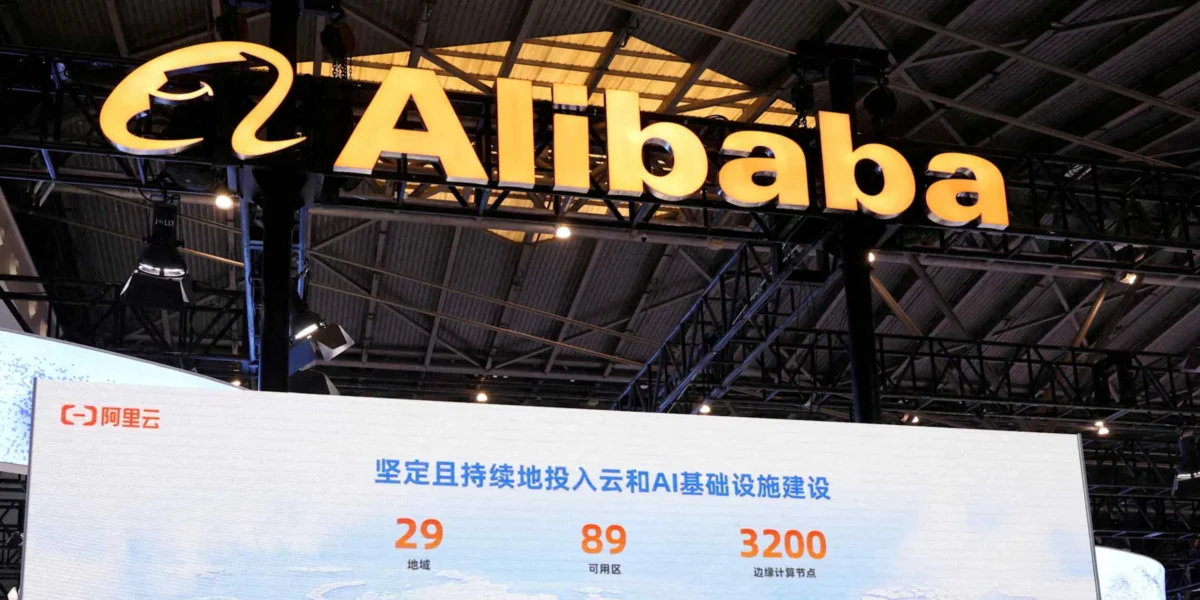
- Cloud Infrastructure: Expanding and optimizing its cloud computing services (Alibaba Cloud) to provide the scalable and high-performance computing resources needed for AI training and inference. This is a crucial differentiator, as the cost and availability of cloud computing power are major determinants of AI development speed.
- AI Model Research: Dedicating resources to fundamental research in areas like natural language processing, computer vision, and reinforcement learning to push the boundaries of AI capabilities.
- Application Development: Integrating advanced AI into its diverse product portfolio, from enhancing e-commerce search and customer interaction to developing new AI-powered services and enterprise solutions.
The timeline for this increased focus has been accelerating since 2023, following the widespread impact of generative AI. Alibaba has consistently highlighted AI as a key growth driver in its investor communications. The share placement announced on Sunday represents the most significant single capital commitment to this strategic priority to date.
Supporting Data and Market Context
The market for AI infrastructure and services is experiencing exponential growth. According to recent industry analyses, the global AI market is projected to reach trillions of dollars in the coming decade. Specifically, the market for AI chips is a major component of this growth, with projections indicating a Compound Annual Growth Rate (CAGR) exceeding 30% over the next five to seven years. Similarly, the AI cloud services market is expanding rapidly as businesses increasingly rely on cloud providers for the computational power needed to develop and deploy AI solutions.
Alibaba Cloud, as one of the largest cloud providers in China and a significant player globally, is strategically positioned to benefit from this trend. However, it also faces intense competition, not only from international cloud giants but also from domestic competitors who are also heavily investing in AI-specific infrastructure and services. The demand for high-end AI chips, particularly those manufactured using advanced process technologies, has led to supply chain constraints and soaring prices. This has prompted many large tech companies, including Alibaba, to explore in-house chip design and manufacturing capabilities to ensure a more stable and cost-effective supply.
The $10.2 billion capital infusion is substantial and places Alibaba in a strong position to compete for talent, acquire cutting-edge technology, and build out the necessary infrastructure. To put this in perspective, major tech companies have announced multi-billion dollar investments in AI over the past few years. For instance, Microsoft’s ongoing partnership with OpenAI involves billions of dollars in funding and cloud computing resources. Similarly, Google has pledged significant investments in its AI research and hardware development. Alibaba’s commitment is therefore in line with, and in some cases surpasses, the scale of investments being made by its global peers.
Potential Reactions and Inferred Statements
While official statements from specific investors involved in the share placement have not yet been released, the move is likely to be met with a mix of optimism and scrutiny.
- Investor Sentiment: For investors looking for exposure to the AI growth story, Alibaba’s commitment signals a clear strategic direction and a substantial allocation of capital towards a high-growth sector. This could boost investor confidence in the company’s long-term prospects, particularly if Alibaba can demonstrate tangible progress in its AI development and market penetration.
- Competitive Responses: Competitors are likely to view this as a clear signal of Alibaba’s intensified efforts in the AI arena. This could prompt them to accelerate their own AI strategies, potentially leading to further price wars in cloud services or increased M&A activity to acquire AI talent and technology.
- Industry Analysts: Analysts are expected to closely monitor the deployment of these funds. Key metrics will include the progress of Alibaba’s LLM development, the performance of its AI chips, the adoption rate of its AI-powered cloud services, and its ability to translate these technological advancements into commercial success and market share gains. Questions may also arise regarding the specific targets for this investment and the timeline for expected returns.
Inferred statements from Alibaba’s leadership would likely emphasize the transformative potential of AI and the company’s strategic imperative to be at the forefront of this revolution. They would likely highlight how this investment will empower their customers, enhance their own products and services, and contribute to broader societal progress through technological innovation. The focus on "full-stack" capabilities would be framed as a means to achieve greater control, efficiency, and innovation across the entire AI value chain.
Broader Impact and Implications
Alibaba’s significant investment in AI carries several crucial implications for the technology sector, the global economy, and the geopolitical landscape of AI development.
- Accelerated Innovation: The infusion of capital is expected to accelerate Alibaba’s pace of innovation in AI. This could lead to the development of new AI models, more efficient computing architectures, and novel AI applications that could disrupt existing industries or create new ones. The competition spurred by such investments often drives faster overall progress in the field.
- Shifting Cloud Market Dynamics: By bolstering its AI capabilities, Alibaba aims to strengthen its position in the cloud computing market. This could lead to increased competition for cloud providers, potentially driving down prices for AI-intensive workloads or leading to the development of more specialized cloud offerings tailored to AI needs.
- Geopolitical Implications: The race for AI dominance has significant geopolitical undertones, particularly between the United States and China. Alibaba’s substantial investment, coupled with China’s broader national strategy to become a global leader in AI, highlights the ongoing competition for technological supremacy. Such investments can influence supply chain dependencies, international collaboration, and the establishment of global AI standards.
- Talent Acquisition: The demand for skilled AI professionals is exceptionally high. This capital infusion will enable Alibaba to aggressively recruit top AI researchers, engineers, and data scientists, potentially creating a talent drain from other companies or academic institutions.
- Economic Growth: The development and deployment of advanced AI technologies have the potential to drive significant economic growth through increased productivity, the creation of new industries, and the enhancement of existing ones. Alibaba’s investment is a bet on this future economic transformation.
In conclusion, Alibaba’s $10.2 billion commitment to AI represents a bold strategic move in a highly competitive global arena. It signals the company’s determination to be a leader in the next wave of technological innovation, aiming to build a comprehensive AI ecosystem that spans from foundational research to widespread application. The success of this ambitious undertaking will be closely watched as it unfolds against the backdrop of an accelerating global race to define the future of artificial intelligence.
