

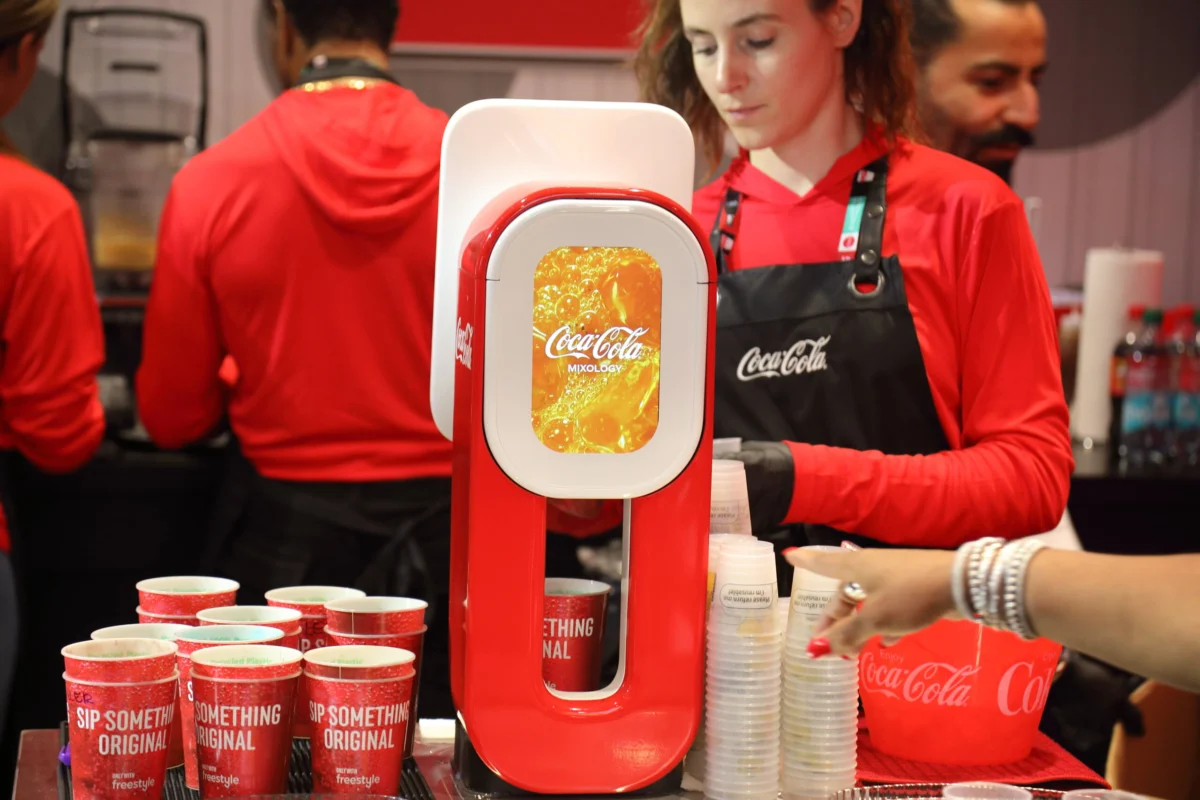
ATLANTA – The Coca-Cola Company is embarking on a significant strategic pivot, aggressively innovating in customizable dispensed beverages and advanced equipment to meet the rapidly shifting preferences of modern consumers, particularly Generation Z, and to bolster its foodservice partners in a competitive market. This proactive evolution sees the beverage giant move beyond its iconic Freestyle platform to explore dirty sodas, brightly colored refreshers, and bespoke energy drinks, all powered by new dispensing technologies.
Operating from its discreet innovation labs near its global headquarters in Atlanta, Coca-Cola is developing a "flood of innovation," according to company executives. These initiatives are a direct response to a burgeoning consumer desire for personalized drink experiences and an increasing demand from restaurants and other foodservice operators for novel, margin-driving beverage options. The company recently showcased its new Mixology dispenser for refreshers at the National Restaurant Association show, signaling its commitment to these emerging categories.
The Shifting Beverage Landscape and Consumer Preferences
The impetus for Coca-Cola’s intensified innovation stems from profound shifts in consumer behavior and market dynamics. Data from Circana reveals that in the second quarter of this year, beverage servings at restaurants significantly outpaced both food-only and food-with-beverage servings. This trend underscores the growing importance of drinks as a standalone occasion, particularly for younger demographics like Generation Z.
"Oftentimes these beverages are an opportunity to take a break, get some energy or protein, have a treat, at a lower price point," explained David Portalatin, Circana senior vice president and food service industry advisor. This perspective highlights that for many consumers, especially Gen Z, a drink purchased away from home is no longer merely about hydration; it’s an experiential purchase, a moment of indulgence, or a functional boost. The social currency of visually appealing drinks, shareable on platforms like Instagram and TikTok, further fuels this trend, prompting consumers to willingly spend upwards of $10 on a "craveable" beverage.
This shift has not gone unnoticed by Coca-Cola’s long-standing foodservice partners, from global titans like McDonald’s and Wendy’s to smaller chains. These operators are actively expanding their beverage menus to capture new revenue streams and enhance profitability. For Coca-Cola, adapting to these demands is not merely an opportunity but a strategic imperative to avoid losing market share to competitors. Megan Tallman, Coke’s vice president of dispensed equipment and innovation for its North American business, emphasized, "It’s our job to ensure that we’re providing unique experiences and beverages because it’s not a bonus now with consumers — it’s the norm, they expect it."
Freestyle’s Enduring Legacy and Future Evolution
At the heart of Coca-Cola’s dispensed beverage strategy for the past 17 years has been the Freestyle machine. Since its debut, the Freestyle dispenser has poured over 67 billion 8-ounce servings of beverages, collecting invaluable real-time data on consumer preferences, trending flavors, and consumption patterns across different regions and business types. This rich dataset, accessible via a massive television screen at Coke’s Equipment Innovation Center in Atlanta, allows the company to identify emerging trends and even inform grocery store product launches, such as the limited-time Coca-Cola Orange Cream. Tallman refers to Freestyle as "the largest testing platform out there" for new flavors and concepts.
Despite its success and the dozens of flavor combinations it offers, Coca-Cola recognizes the need to evolve the Freestyle platform to keep pace with an exploding market of specialty beverage chains. Technomic tracks over 100 such chains in the U.S., collectively operating more than 41,000 locations that offer everything from gourmet coffee to boba and custom juices. This highly fragmented yet rapidly growing segment underscores the consumer appetite for limitless customization and unique drink experiences.
To address specific operational needs, Coca-Cola has introduced the Freestyle Mini, initially launched in Europe and unveiled at the National Restaurant Association Show in Chicago. Designed for bars and restaurants with limited counter space, the Mini offers up to 16 drink options, more than double the variety typically available from a traditional soda gun. While not yet commercially available in the U.S., its introduction signifies Coca-Cola’s commitment to providing flexible, high-capacity dispensing solutions for diverse foodservice environments.
Embracing New Trends: Dirty Sodas and Refreshers
Beyond refining its core Freestyle offerings, Coca-Cola is actively developing equipment and formulations for two of the hottest trends in customizable beverages: dirty sodas and refreshers.
Dirty Sodas: Originating from Utah-based chain Swig, dirty sodas—a blend of soda with flavored syrups, cream, or other ingredients—have transcended their regional roots to become a national phenomenon, appearing everywhere from KFC restaurants to grocery store shelves. This trend has played a crucial role in reimagining soda from a mass-market commodity into a handcrafted, indulgent treat. Matthew Greer, a food, agribusiness, and beverage analyst for Truist, notes, "Gen Z is the first generation raised to believe that nothing you consume is neutral, so everything is either helping you or costing you. So, traditional soda does nothing for me, and it gives me 40 grams of sugar, so that fails the test." Dirty sodas, by adding a perceived value or "treat" element, circumvent this perception.
For Coca-Cola, the rise of dirty sodas is a significant boon, as sparkling soft drinks, including its core soda brands like Sprite, Schweppes, and Fanta, still constitute 69% of the company’s overall unit case volume. Coca-Cola’s namesake soda alone accounted for 47% of global unit case volume and 42% of U.S. unit case volume in 2025, according to company filings. To automate this trend, Coke has developed a prototype that integrates a dairy module into the classic Freestyle dispenser, offering preprogrammed recipes to ensure consistency while maintaining the visually appealing "drip" down the cup—a trademark of dirty sodas. This rapid prototyping, achieved in roughly three weeks, underscores the agility of Coke’s innovation team.
Refreshers: The refresher category, pioneered by Starbucks in 2012 to appeal to non-coffee drinkers seeking an afternoon boost, has grown into a $2 billion annual business for the coffee giant. Its success has inspired numerous restaurant chains, including Panera Bread and Dunkin’, to introduce their versions. Datassential reports that refreshers are now found on 8.1% of national restaurant chain menus. Starbucks CEO Brian Niccol acknowledged the trend as a "compliment," highlighting its market significance.
Coca-Cola aims to define and dominate its segment of the refresher category. Sarah Kate Sims, director of dispensed innovation for Coca-Cola North America, admits there’s "no real definition for what a refresher is," prompting Coke to establish its own functional and aesthetic standards. For Sims, a Coca-Cola refresher should be a "healthier" beverage providing a pick-me-up without a traditional coffee base, instead leveraging green tea or natural coffee extract. Crucially, it must also be visually appealing. This focus on both function and presentation drives Coke’s development efforts for future refresher offerings.
"The Vault" and Collaborative Innovation
Coke’s innovation extends beyond equipment, encompassing beverage formulation itself, often developed in "The Vault," a dedicated testing facility located across the parking lot from its Global Equipment Platforms office. This space serves as a hub for collaboration with top customers, allowing for joint problem-solving and the co-creation of new beverages.
A prime example is the 18-month partnership with Texas-based Whataburger, which culminated in the launch of its "Whatafreshers" line in July. This collaborative model also underpins Coca-Cola’s success with "white-label" products, where Coke develops and supplies custom beverages that are branded by its partners. A decade ago, Coke pioneered premium lemonade in this manner, with over 40,000 bubbler dispensers now carrying the drink, including Wendy’s "Dave’s Craft Lemonade." Lemonade, along with Sprite (ranked fifth among U.S. carbonated soft drink brands by 2025 sales volume), has become a popular base for many brightly colored refreshers and handcrafted drinks.
The Future of Energy: Customizable and Controlled
Looking ahead, Coca-Cola is venturing into the energy drink segment with a novel approach: a colorless, relatively unflavored energy drink base, available in both frozen and liquid forms. This blank slate beverage, slated for launch with foodservice operators in the first half of 2027, is designed for customization by color and flavor.
While energy drinks represent a smaller category than sparkling beverages, they boast the highest projected growth for the next decade, according to Megan Tallman. Coca-Cola believes this customizable solution will appeal to a broader consumer base, particularly female consumers who are increasingly interested in handcrafted energy solutions. Truist’s Matthew Greer points out that brands like Celsius have transformed the conversation around energy drinks, expanding their audience beyond traditional gas station purchases to integrate into lifestyle routines, such as workouts.
Crucially, Coca-Cola’s dispensed energy drink will be designed for employee-served dispensing to "limit consumption," Tallman noted. A 12-ounce serving of Coke’s version will contain 106 milligrams of caffeine, comparable to a same-sized can of Red Bull and half the caffeine of a Celsius can. This controlled approach directly addresses growing liability concerns following wrongful death lawsuits linked to highly caffeinated beverages like Panera Bread’s Charged Lemonade.
Strategic Partnerships and Competitive Dynamics
The intensifying interest in customizable beverages from foodservice partners, particularly the McDonald’s playbook, underscores a significant opportunity for Coca-Cola. Melinda Pritchett, director of innovation for Coke’s North American business, observed, "If you’re looking at what McDonald’s is doing with the handcrafted beverages, all of our customers are saying, ‘We should be in that as well.’"
McDonald’s, the largest U.S. restaurant chain by system sales, has indeed expanded its McCafe menu to include refreshers and crafted sodas, including Coke’s Sprite and Hi-C, as part of its broader beverage strategy. McDonald’s CEO Chris Kempczinski reported strong performance, stating that U.S. drink sales were "ahead of plan" with higher guest checks and new occasions emerging throughout the day, alongside strong food attachment rates. This success occurred despite a relatively lackluster quarter for McDonald’s U.S. business, which saw only 0.8% same-store sales growth.
However, the beverage landscape remains highly competitive. McDonald’s recently expanded its options further with the Red Bull Dragonberry Energizer, partnering with a competitor of Coca-Cola (Red Bull is privately owned). This move sparked speculation about the state of Coca-Cola’s more than 70-year-long partnership with McDonald’s. Coca-Cola CEO Henrique Braun addressed these concerns directly, affirming the "fantastic and very long-standing partnership" and respecting McDonald’s decisions regarding relationships with other companies.
Ultimately, for Coca-Cola, the success of these innovations hinges on driving "incremental volume"—meaning, whether a customer would purchase a new refresher even if they wouldn’t otherwise buy a drink. Early surveys of McDonald’s franchisees, conducted by Kalinowski Equity Research, found that over half of operators reported specialty drinks performing in line with expectations. However, some franchisees noted that sales primarily represented a "trade-off from other beverages" rather than a significant increase in new transaction counts. This feedback underscores the ongoing challenge for Coca-Cola to ensure its innovations genuinely expand the beverage market rather than merely reallocate existing sales.
As consumers continue to prioritize customization, experience, and functional benefits in their beverage choices, Coca-Cola’s aggressive push into next-generation dispensing and diverse drink categories positions it to maintain its market leadership, strengthen its foodservice partnerships, and capture the evolving tastes of a new generation. The company’s Atlanta innovation centers are not just developing new drinks; they are shaping the future of beverage consumption.
