

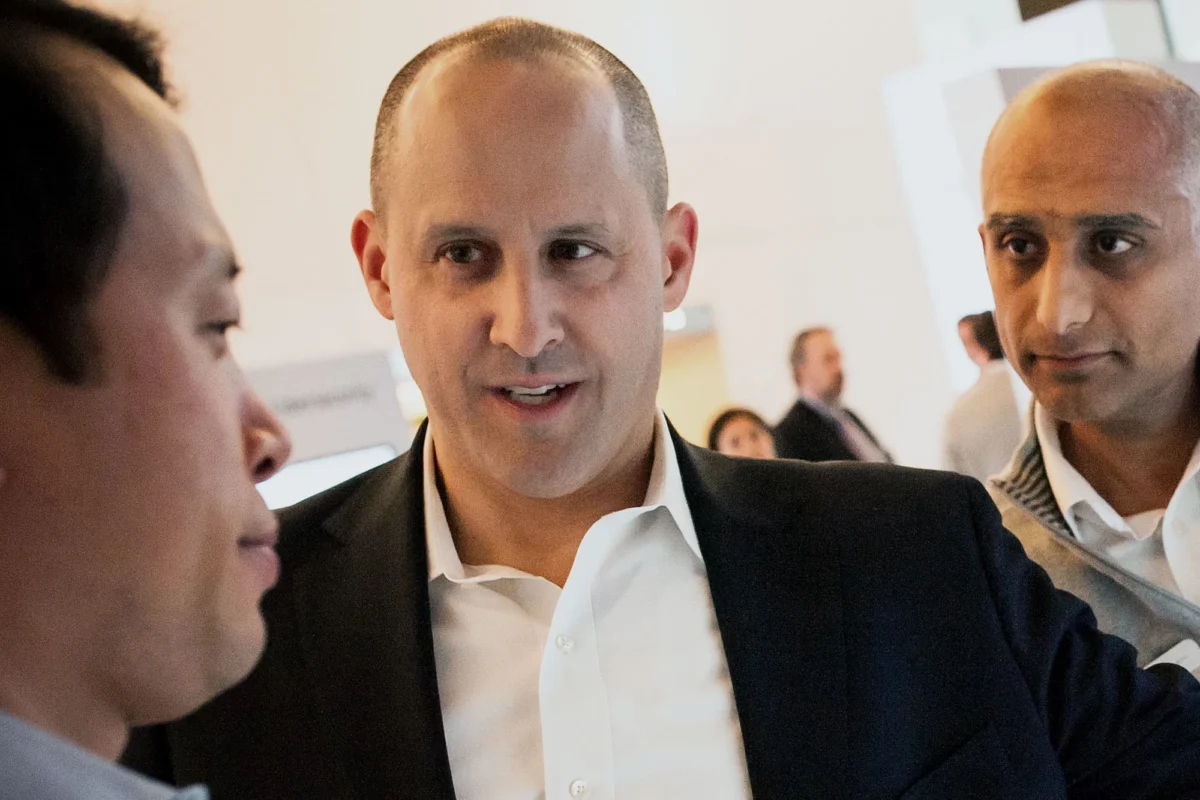
Matt Zames, a distinguished figure in the financial sector and former chief operating officer of JPMorgan Chase, is set to join the Trump administration in an advisory capacity for the Social Security Administration (SSA). The appointment, which sees Zames taking on an unpaid role, is aimed at bolstering the agency’s critical modernization efforts under the leadership of Social Security Commissioner Frank Bisignano, with whom Zames previously collaborated at JPMorgan. This move signals a strategic intent to infuse private-sector expertise into a federal agency grappling with deeply entrenched technological challenges and long-term financial solvency concerns.
Zames commenced his new duties on Monday at the Social Security Administration headquarters in Baltimore, Maryland, where an office placard bearing his name had already been installed, according to individuals familiar with the matter who requested anonymity due to the sensitive nature of the discussions. His arrival underscores the administration’s recognition of the urgent need for a transformative approach to the SSA’s operational framework, particularly its reliance on decades-old technology systems that hinder efficiency and adaptability in the digital age.
A Career Defined by Strategic Leadership and Crisis Management
Matt Zames’s professional trajectory is marked by significant roles in high-stakes financial environments, demonstrating a consistent ability to navigate complex challenges and drive strategic change. A former hedge-fund trader, Zames’s prominence at JPMorgan Chase solidified following his pivotal role in mitigating the fallout from the infamous "London Whale" trading scandal in 2012. This incident, which involved a massive trading loss exceeding $6 billion, severely impacted the bank’s reputation and financial standing. Zames was instrumental in the subsequent cleanup operation, reorganizing trading desks, implementing stricter risk controls, and restoring stability, an achievement that showcased his capabilities in crisis management and operational overhaul.
Following this critical intervention, Zames ascended to the position of chief operating officer (COO) at JPMorgan, a role he held for approximately five years. As COO, he was a driving force behind numerous technology initiatives and aggressive cost-cutting projects across the vast global banking institution. His tenure was characterized by a relentless pursuit of operational excellence, streamlining processes, and investing in technological infrastructure to enhance efficiency and competitive advantage. During this period, Zames was widely regarded as a strong contender to succeed Jamie Dimon, the long-serving CEO of JPMorgan Chase, a testament to his influence and perceived leadership potential within the organization. His unexpected departure from JPMorgan in 2017 marked the end of a significant chapter in his banking career.
Transition to Private Equity and Strategic Advisory
After leaving JPMorgan, Zames transitioned to the private equity sector, joining Cerberus Capital Management as its president in 2018. At Cerberus, a firm known for its focus on distressed assets and turnaround investments, Zames oversaw technology investments and played a crucial role in improving the firm’s significant stake in Deutsche Bank, another institution undergoing substantial restructuring. His experience at Cerberus further honed his skills in identifying inefficiencies, leveraging technology for operational improvement, and executing complex financial and organizational transformations in diverse business landscapes.
In 2021, Zames stepped down from his role at Cerberus, subsequently establishing his own advisory and restructuring firm. This venture allowed him to apply his extensive expertise to a broader range of companies and challenges, providing strategic guidance on operational efficiency, technological integration, and financial restructuring. Beyond his corporate roles, Zames has also served on key advisory groups for the Treasury Department and the Federal Reserve, contributing his insights on debt markets and financial sector stability. These appointments underscore his recognized expertise in macroeconomic policy and the intricate workings of the financial system, providing him with a unique vantage point on both private and public sector operational challenges.
The Social Security Administration: A Dual Challenge of Technology and Solvency
Zames’s entry into the SSA comes at a critical juncture for the agency, which faces a two-pronged challenge: an urgent need for technological modernization and the looming specter of financial instability for its trust funds.
Technological Antiquity: The SSA is responsible for administering a vast array of benefits, including retirement, disability, and survivor payments, to tens of millions of Americans. This monumental task relies on core IT systems that are, in many cases, decades old. These legacy systems are characterized by outdated programming languages, complex interdependencies, and a lack of modern interfaces, making them costly to maintain, difficult to update, and vulnerable to security threats. The inherent rigidity of such systems stifles innovation, complicates data management, and often results in slower service delivery for beneficiaries. Modernization efforts typically involve migrating to cloud-based solutions, enhancing cybersecurity protocols, developing user-friendly digital portals, and leveraging data analytics to improve efficiency and fraud detection. Zames’s background in spearheading technology upgrades and cost-cutting at a global financial giant like JPMorgan could prove invaluable in navigating the bureaucratic and technical hurdles inherent in such a massive governmental undertaking.
Financial Solvency: Beyond the technological quagmire, the SSA is projected to exhaust its Old-Age and Survivors Insurance (OASI) trust fund, which pays retirement and survivor benefits, in less than a decade. According to the 2023 Trustees’ Report, the OASI Trust Fund is projected to be able to pay 100 percent of scheduled benefits until 2033. At that point, if Congress does not act, it would be able to pay only about 77 percent of scheduled benefits. Similarly, the Disability Insurance (DI) Trust Fund is projected to be able to pay 100 percent of scheduled benefits until 2057. However, the combined OASI and DI Trust Funds are projected to be able to pay 100 percent of scheduled benefits until 2033. This means that without legislative intervention, millions of Americans could face significant benefit cuts, a prospect with profound socio-economic implications. The financial challenges are driven by demographic shifts, including lower birth rates, increased life expectancy, and the retirement of the large baby-boomer generation, which means fewer workers are contributing to the system relative to the number of beneficiaries. While Zames’s role is primarily focused on modernization, an efficient, technologically advanced agency can better manage its resources, potentially contributing to more sustainable operations and providing better data for policy decisions regarding solvency.
The Role of Commissioner Frank Bisignano and the Unpaid Advisor Model
The appointment of Zames is particularly significant given his existing relationship with Commissioner Frank Bisignano. Bisignano, who assumed the role of Social Security Commissioner last year, also has a strong background in the financial sector, having served as a senior executive at JPMorgan Chase and later as CEO of First Data (now Fiserv). His appointment to lead the SSA was widely seen as a signal that the administration intended to bring a private-sector, efficiency-driven approach to the agency. Zames’s arrival as an advisor appears to be a direct extension of this strategy, leveraging a trusted colleague with a proven track record in large-scale operational and technological transformations.
Zames is taking on an unpaid position as a "special government employee." This type of appointment allows individuals with specialized expertise to serve the government for a limited duration without receiving a salary. Special government employees typically hold their positions for a maximum of 130 days within any 365-day period, though this can be spread over a longer timeframe if the work is not full-time. This model is often utilized to bring in top-tier talent from the private sector for specific projects or to provide high-level strategic advice without incurring significant payroll costs or requiring a full-time commitment. For Zames, it offers an opportunity to contribute to public service using his unique skill set, while for the administration, it provides access to invaluable expertise without the complexities of a full-time federal appointment.
Inferred Objectives and Potential Impact
The overarching objective behind Zames’s appointment is clear: to accelerate the SSA’s modernization agenda. His specific contributions are likely to include:
- Strategic Planning for IT Overhaul: Leveraging his experience in large-scale technology projects, Zames can help design a comprehensive roadmap for upgrading the SSA’s legacy IT infrastructure, including priorities, timelines, and resource allocation.
- Cost Efficiency and Operational Streamlining: His background in cost-cutting at JPMorgan suggests he will identify areas for operational efficiency within the SSA, potentially leading to significant savings and improved resource utilization.
- Digital Transformation: Guiding the agency towards more user-centric digital services, making it easier for beneficiaries to access information, apply for benefits, and manage their accounts online.
- Risk Management and Cybersecurity: Applying best practices from the financial sector to strengthen the SSA’s data security protocols and protect sensitive beneficiary information from cyber threats.
- Talent Development: Advising on strategies to attract and retain skilled IT professionals within the federal government, a perennial challenge for agencies competing with the private sector.
While Zames’s immediate focus is expected to be on technological and operational improvements, the ripple effects of a more efficient SSA could indirectly support efforts to address the agency’s financial challenges. Better data management, reduced administrative costs, and improved fraud detection capabilities could contribute to the long-term sustainability of the trust funds, even if direct policy decisions on funding remain the purview of Congress.
Broader Implications and Challenges Ahead
The infusion of private-sector leadership into federal agencies, while often lauded for its potential to drive efficiency and innovation, also presents unique challenges. Government bureaucracy, procurement processes, civil service regulations, and the sheer scale of an agency like the SSA can be formidable obstacles to rapid change. Any modernization effort will require significant political will, sustained funding, and careful navigation of stakeholder interests, including those of current and future beneficiaries, advocacy groups, and congressional committees.
Zames’s advisory role, while temporary, could set a precedent for how the Trump administration approaches similar challenges across other federal agencies. It signals a preference for bringing in seasoned executives with practical experience in large-scale organizational transformation to tackle complex governmental issues. The success of his tenure will likely be measured by tangible progress in the SSA’s modernization efforts and the establishment of a clear, actionable plan for its future operational and technological resilience.
Ultimately, the appointment of Matt Zames to advise the Social Security Administration is a noteworthy development in the ongoing effort to prepare one of America’s most vital social programs for the challenges of the 21st century. His deep experience in technology, operations, and crisis management within the financial industry offers a unique perspective that could prove instrumental in guiding the SSA through its critical phase of modernization, thereby enhancing its ability to serve millions of Americans for generations to come, even as the broader financial solvency questions continue to demand congressional attention.
