

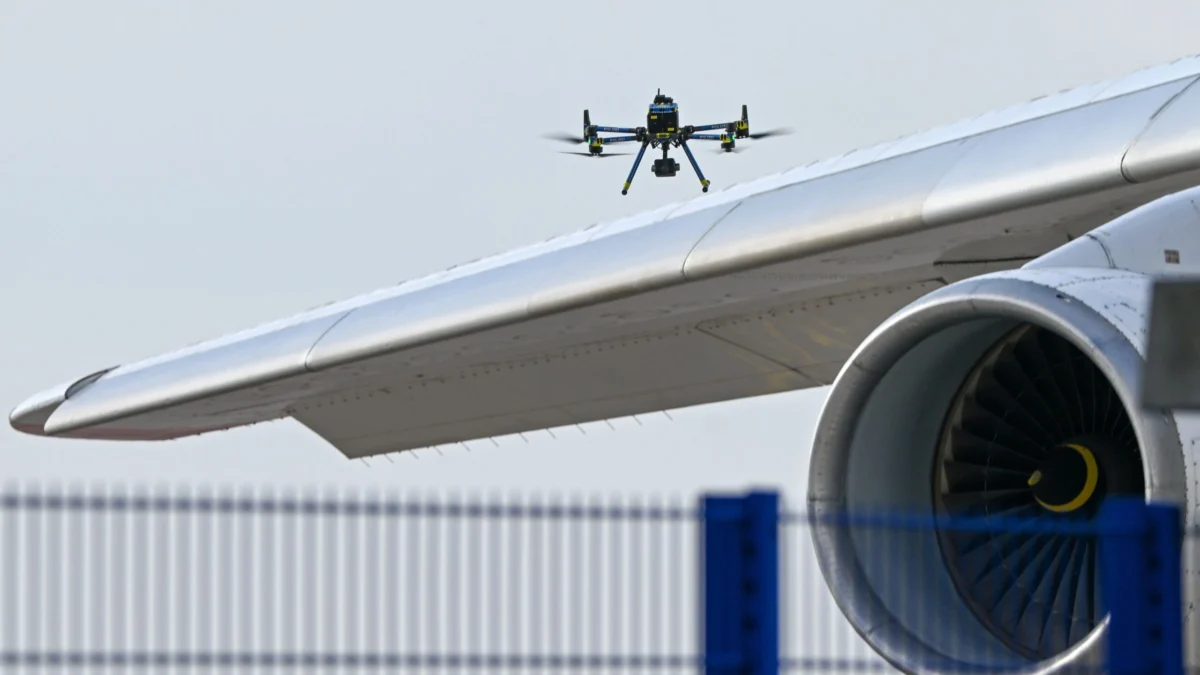
A recent study by the London-based International Institute for Strategic Studies (IISS), with which the Hanns-Seidel-Stiftung, an organization affiliated with the CSU party, was involved, paints a grim picture of Europe’s readiness to counter Russian drone attacks. The report suggests that European nations are currently ill-equipped to even definitively attribute drone incidents, such as those targeting airports or sensitive military installations, to Russia. However, it deems a coordinated Russian drone campaign against Europe "highly probable."

In light of a suspected attack attempt involving an explosive drone at Leipzig/Halle Airport, Federal Interior Minister Alexander Dobrindt (CSU) is reportedly bolstering Germany’s drone defense capabilities. The joint Drone Defense Center (GDAZ) of the federal and state governments is set to undergo significant personnel expansion and a broader national rollout. This development comes as concerns mount over the increasing sophistication and deployment of unmanned aerial vehicles in various geopolitical contexts.
Growing Concerns Over Unmanned Aerial Threats
The IISS study highlights a critical gap in Europe’s defensive posture: the ability to identify and attribute drone incursions. This lack of certainty complicates the response, making it difficult to formulate a cohesive strategy against potential adversaries. The report’s assertion of a "highly probable" Russian campaign underscores the escalating nature of hybrid warfare, where drones serve as a potent tool for reconnaissance, disruption, and psychological impact.

The incident at Leipzig/Halle Airport, though details are still emerging, serves as a stark real-world example of these anxieties. The alleged use of an explosive drone targeting a civilian infrastructure hub raises serious questions about the vulnerability of European airspace and the potential for significant damage and casualties. Such events can have cascading effects, disrupting essential services, impacting economic activity, and fostering public unease.
Expansion of Germany’s Drone Defense Capabilities
Responding to these growing threats, the German Ministry of the Interior is initiating a significant expansion of the GDAZ. According to a report by the "Bild" newspaper, citing government sources, the center will see its specialized personnel double from approximately 150 to 300 highly trained operatives. This increase in human capital is crucial for enhancing situational awareness, rapid response, and the effective deployment of countermeasures.
Furthermore, the network of operational support bases is slated to double from four to eight strategic locations across the country. This geographical expansion aims to ensure more comprehensive coverage and a swifter reaction time to detected drone activity. The rationale behind such an expansion is rooted in the understanding that effective drone defense requires a layered approach, encompassing surveillance, identification, tracking, and neutralization capabilities.
The Role of the Joint Drone Defense Center (GDAZ)
The GDAZ, established as a collaborative effort between the federal government and the individual German states, represents a centralized command and control structure for combating drone threats. Its mandate typically includes:

- Intelligence Gathering and Analysis: Monitoring airspace for unauthorized or hostile drone activity.
- Threat Assessment: Evaluating the nature and intent of detected drones.
- Coordination of Response: Directing the deployment of various defense assets, including specialized units, jamming technologies, and potentially kinetic countermeasures.
- Inter-Agency Cooperation: Facilitating seamless collaboration between different security agencies, law enforcement, and military branches.
The planned expansion signifies a recognition that existing resources and infrastructure were insufficient to meet the evolving threat landscape. The doubling of personnel and operational sites suggests a proactive strategy to bolster national security against a multifaceted and increasingly prevalent aerial menace.
Broader European Context and Implications
The IISS study’s findings resonate beyond Germany’s borders. Many European nations are grappling with similar challenges in adapting their defense strategies to the proliferation of drone technology. The increasing accessibility of drones, coupled with their potential for covert deployment, poses a significant challenge to traditional security paradigms.

The implications of this evolving threat are far-reaching:
- Economic Disruptions: Drone attacks on critical infrastructure, such as airports, power grids, or industrial facilities, can lead to substantial economic losses due to operational shutdowns and repair costs.
- Civilian Safety: The potential for drones to carry explosives or other harmful payloads directly endangers civilian populations and public spaces.
- Geopolitical Instability: The ambiguity surrounding drone attacks can fuel tensions between nations, potentially leading to miscalculations and escalations.
- Military Readiness: The need to divert resources and attention to counter drone threats can impact a nation’s ability to focus on other defense priorities.
The report’s emphasis on the difficulty of attribution is particularly concerning. In the absence of clear evidence, perpetrators can operate with a degree of impunity, making deterrence more challenging. This underscores the importance of investing in sophisticated intelligence, surveillance, and reconnaissance (ISR) capabilities, as well as robust forensic analysis techniques for drone wreckage.

Historical Context and Precedents
The use of drones in conflict has seen a dramatic rise in recent years. From reconnaissance missions in the early 2000s to their widespread deployment in conflicts like the Nagorno-Karabakh war and the ongoing conflict in Ukraine, drones have proven to be versatile and impactful assets. Their relatively low cost, ease of deployment, and ability to operate in contested airspace have made them attractive to state and non-state actors alike.
The incident at Leipzig/Halle Airport, if confirmed to be a deliberate act of aggression, would represent a significant escalation in the types of threats faced by European nations. While drone incursions and suspicious sightings have occurred previously, the alleged use of an explosive device points to a more overt and dangerous intent.

Expert Analysis and Future Outlook
Security analysts have long warned about the vulnerability of critical infrastructure to drone attacks. The ability of even small, commercially available drones to be modified for military purposes presents a persistent challenge. Experts have called for a multi-pronged approach that includes:
- Technological Advancement: Development of more effective drone detection, identification, and neutralization systems, including electronic warfare capabilities, directed energy weapons, and counter-drone projectiles.
- International Cooperation: Enhanced intelligence sharing and coordinated defense strategies among allied nations to present a united front against drone threats.
- Regulatory Frameworks: Strengthening regulations governing the sale, use, and registration of drones to prevent their misuse.
- Public Awareness and Preparedness: Educating the public about potential drone threats and establishing clear protocols for reporting suspicious activity.
The expansion of Germany’s drone defense infrastructure is a necessary step in adapting to this evolving security environment. However, it is part of a larger, ongoing effort required across the continent. The challenge for European nations lies not only in bolstering their technological and operational capabilities but also in fostering the political will and international collaboration needed to effectively deter and defend against the growing threat of unmanned aerial systems. The coming months and years will likely see continued investment and strategic adjustments as Europe seeks to fortify its defenses against this persistent and evolving aerial menace.
