

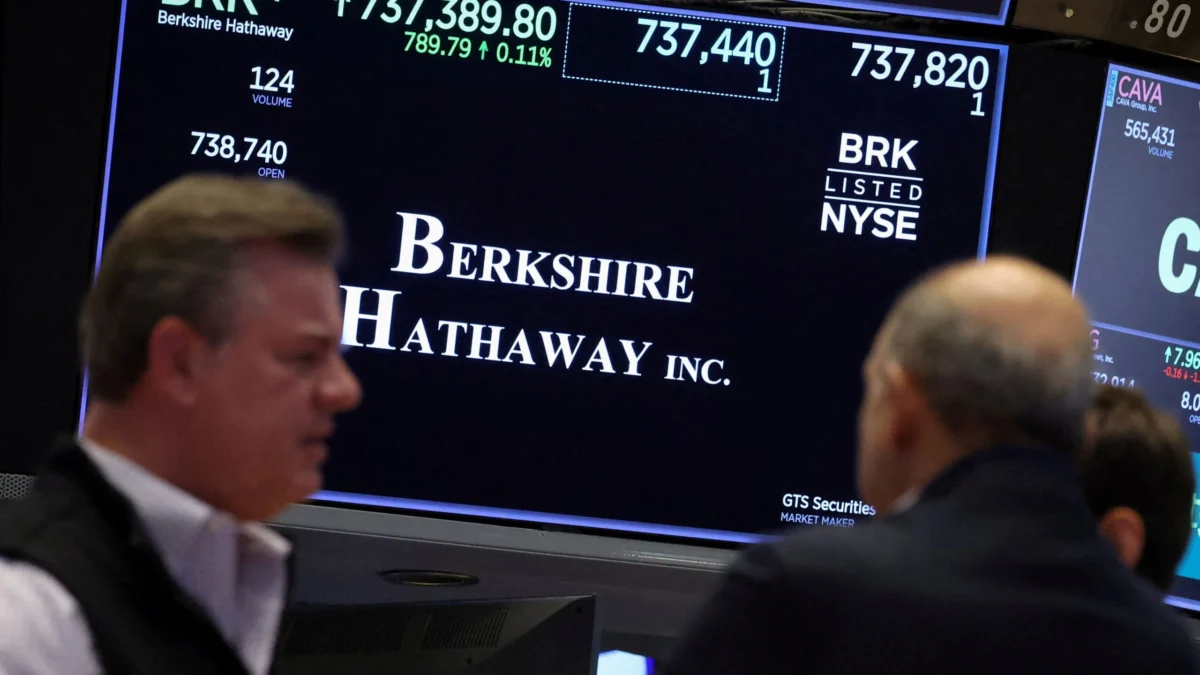
Frankfurt – In a bold display of confidence and strategic capital allocation, Greg Abel, the newly appointed Chief Executive Officer of Berkshire Hathaway, has significantly ramped up the conglomerate’s share repurchase program, signaling a new era under his leadership. During the past fiscal quarter, Berkshire Hathaway executed buybacks totaling a substantial $4.5 billion, according to a statement released by the Omaha, Nebraska-based company on Saturday. This aggressive move not only demonstrates Abel’s commitment to returning value to shareholders but also represents a pivotal shift in the company’s financial strategy following the transition of leadership from legendary investor Warren Buffett.
Beyond the significant buybacks, Abel has also overseen the acquisition of billions of dollars worth of stocks for Berkshire Hathaway’s highly scrutinized investment portfolio. This dual approach of reducing outstanding shares while simultaneously making strategic additions to its equity holdings underscores Abel’s proactive management style and his intent to leave his distinct mark on the storied company. The scale of these buybacks marks the largest since 2021, according to data compiled by Bloomberg News, highlighting the magnitude of this strategic maneuver.
A New Chapter Under Greg Abel
Greg Abel officially assumed the role of CEO in January, taking the reins from Warren Buffett, who had helmed the company for an impressive 60 years. While Buffett has transitioned to the role of Chairman of the Board, his enduring influence on Berkshire Hathaway’s philosophy and long-term vision remains undeniable. However, Abel’s recent actions indicate a clear intention to implement his own strategic directives, building upon the foundation laid by Buffett while forging a new path forward.
The first two quarters under Abel’s chief executive tenure have been characterized by decisive action. The substantial share repurchases, coupled with strategic portfolio investments, suggest a management team that is not only actively deploying capital but also strategically positioning Berkshire Hathaway for future growth. This proactive stance is a departure from periods where the company maintained exceptionally high cash reserves, a strategy often defended by Buffett as a means of ensuring financial resilience and seizing opportunistic investments.
Quantifying the Shift: Financial Data and Trends
The impact of these buybacks on Berkshire Hathaway’s balance sheet is significant. The company’s substantial cash reserves, which stood at $397 billion at the end of the first quarter, have been reduced to $365.5 billion following the aggressive repurchase activity. This reduction, while considerable, still leaves Berkshire Hathaway with an immense war chest, a testament to its enduring profitability and Buffett’s decades of astute investment decisions.
The decision to deploy such a significant portion of its cash for share repurchases is likely to be met with approval from many investors. For years, a segment of Berkshire Hathaway’s shareholder base has advocated for the company to invest its unusually large cash holdings more actively, whether through acquisitions, stock purchases, or increased dividends. While Buffett historically prioritized maintaining liquidity and waiting for compelling investment opportunities, Abel’s approach appears to be more geared towards actively managing and deploying capital to enhance shareholder value in the shorter to medium term.
Historical Context and Buffett’s Legacy
Warren Buffett’s tenure at Berkshire Hathaway is legendary, marked by a consistent philosophy of value investing, long-term holding periods, and a deep understanding of business fundamentals. Under his guidance, Berkshire Hathaway evolved from a struggling textile mill into a sprawling conglomerate with holdings in insurance, energy, railroads, manufacturing, and retail, alongside a vast portfolio of publicly traded stocks. His meticulous approach to capital allocation, often characterized by patience and a discerning eye for undervalued assets, became a hallmark of his investing prowess.
In recent years, particularly in the latter part of his CEO tenure, Buffett had been observed to be gradually reducing his stake in certain large equity positions within Berkshire’s portfolio, realizing substantial profits. This strategic pruning was often attributed to the difficulty in finding new, large-scale investment opportunities at attractive valuations in the prevailing market environment. Buffett himself has frequently articulated his search for compelling acquisitions or equity investments, noting that high market valuations often presented a barrier to deploying Berkshire’s substantial cash reserves. This created a dynamic where the company was exceptionally liquid but had fewer readily available, Buffett-approved deployment avenues.
Abel’s Strategic Vision and Market Reactions
Greg Abel’s ascent to the CEO position was a carefully orchestrated transition, with Buffett publicly endorsing him as his successor for the top operational role. Abel, who previously led Berkshire Hathaway Energy, is known for his operational expertise and a more hands-on approach to management. His recent actions, particularly the significant share buybacks, suggest a strategic vision that prioritizes active capital management and shareholder returns.
The market’s reaction to these moves is likely to be closely watched. Investors who have long encouraged Berkshire to deploy its cash more aggressively may view Abel’s strategy as a positive development, signaling a potential for increased returns and a more dynamic approach to capital allocation. Conversely, those who appreciated Buffett’s emphasis on extreme financial prudence and the long-term accumulation of value might be observing these changes with a degree of caution, awaiting further evidence of their success.
Analysis of Implications: Shareholder Value and Future Growth
The implications of these aggressive buybacks are multifaceted. By reducing the number of outstanding shares, Berkshire Hathaway can increase its earnings per share (EPS), a key metric that often influences stock valuations. This can make the company’s stock appear more attractive to investors, potentially driving up its market price. Furthermore, share buybacks can be interpreted as a signal of management’s belief that the company’s stock is undervalued, thereby enhancing investor confidence.
The simultaneous addition of new stocks to the portfolio, though less detailed in the initial announcement, also signals Abel’s active engagement in identifying and capitalizing on investment opportunities. This suggests a willingness to diversify and potentially expand Berkshire’s equity holdings, even as it reduces its cash position. The success of these new investments will be crucial in determining the overall efficacy of Abel’s capital allocation strategy.
The reduction in cash reserves, while significant, is unlikely to cripple Berkshire Hathaway’s ability to pursue large-scale acquisitions or respond to economic downturns. The company’s immense profitability and its diverse business operations provide a strong and stable financial foundation. However, it does suggest a potential shift in the company’s risk appetite and a greater willingness to leverage its capital for more immediate returns.
Looking Ahead: A New Era for Berkshire Hathaway
The coming quarters will be critical in assessing the long-term impact of Greg Abel’s leadership on Berkshire Hathaway. His initial actions suggest a departure from some of the more conservative capital allocation strategies that characterized the latter years of Buffett’s CEO tenure. However, it is important to remember that Buffett’s influence as Chairman of the Board will likely continue to guide the overarching philosophy of the company.
Abel’s strategy appears to be a pragmatic response to the evolving financial landscape and the persistent calls from investors for more active capital deployment. The success of his approach will ultimately be measured by Berkshire Hathaway’s continued profitability, the performance of its investments, and its ability to generate sustained shareholder value. The transition from a singular, iconic leader to a new executive team often presents challenges and opportunities, and the market will be keenly observing how Greg Abel navigates this pivotal period in Berkshire Hathaway’s illustrious history. His bold move to significantly increase share buybacks and adjust the investment portfolio marks a clear and decisive statement of intent, signaling that Berkshire Hathaway is poised for a dynamic future under new leadership.
