

DETROIT – General Motors (GM) and its long-standing Chinese partner, SAIC Motor, have officially extended their decades-old joint venture (JV) agreement for an additional two decades, pushing its expiration date from the previously scheduled 2027 to 2047. The announcement, made by the U.S. automaker on Tuesday night, signals a strategic re-commitment to the world’s largest automotive market amidst profound shifts in consumer preferences, intense domestic competition, and an increasingly complex geopolitical environment.
The 50-50 joint venture, which has been a cornerstone of GM’s international operations since its inception in 1997, will continue to encompass its existing partnership with Guangxi Automobile Group, including its Wuling subsidiary. This renewal comes at a pivotal moment for foreign automakers in China, as they grapple with the rapid ascendancy of indigenous brands, particularly in the burgeoning electric vehicle (EV) segment, and a discernible pivot in consumer loyalty away from traditional Western marques.
A Partnership Forged in a Different Era
The original SAIC-GM joint venture, established in 1997, was a product of China’s "market for technology" policy, which required foreign automakers to partner with local companies to gain access to the vast and rapidly growing Chinese market. In exchange for market access, foreign firms were expected to transfer technology and expertise to their Chinese counterparts. This strategy proved immensely successful for GM, transforming China into its largest sales market globally for 13 consecutive years, from 2010 to 2023. At its peak, GM’s equity income from its Chinese operations exceeded $2 billion annually in 2018, underscoring the immense profitability of this partnership.
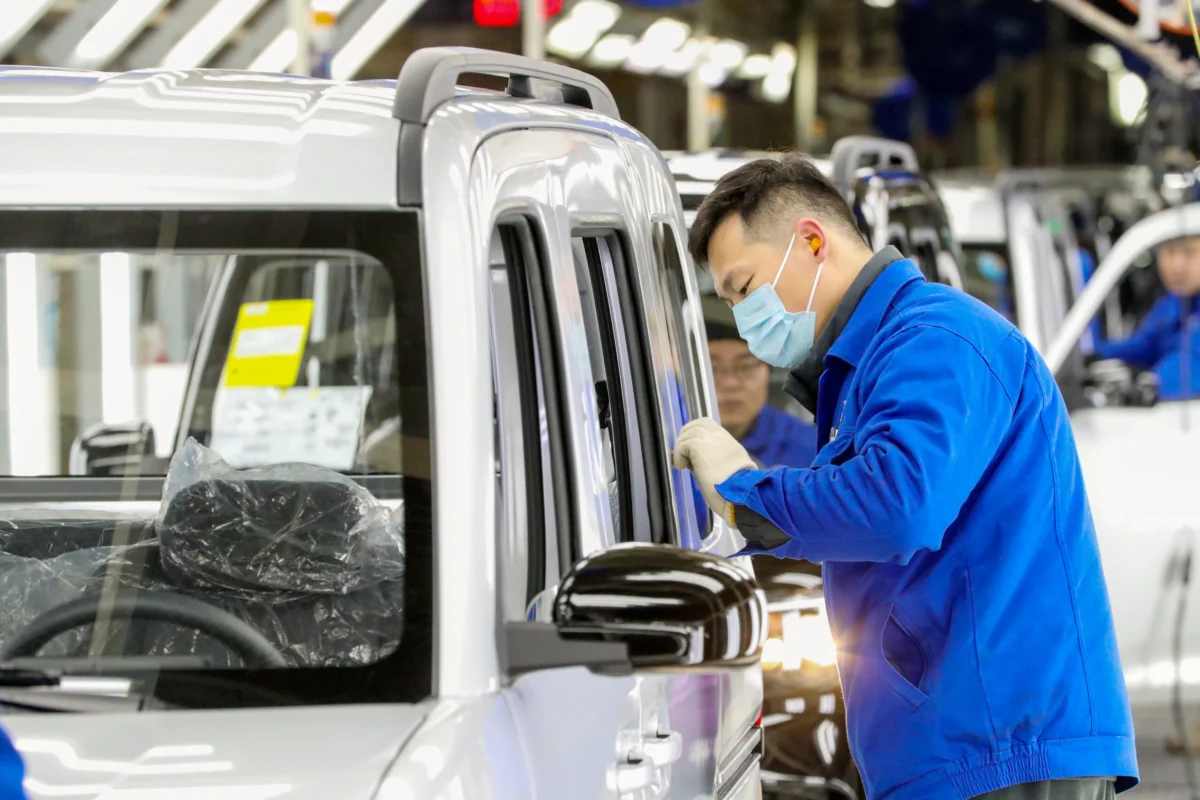
Over its nearly three-decade tenure, the SAIC-GM joint venture has been a manufacturing powerhouse, producing and delivering more than 20 million vehicles across various brands, including Buick, Cadillac, Chevrolet, and Wuling. This vast output cemented GM’s presence and brand recognition across the Chinese automotive landscape. Factories like the one in Qingdao city, Shandong province, depicted with workers assembling cars on February 5, 2025, have been central to this production success.
Navigating a Rapidly Shifting Automotive Landscape
The decision to extend the joint venture unfolds against a backdrop of unprecedented change in the Chinese automotive industry. The market, once dominated by foreign brands, has witnessed a dramatic transformation, driven by robust government support for domestic manufacturers, a relentless focus on innovation, and an unparalleled speed of product development. Chinese brands, particularly those specializing in electric vehicles, have surged in popularity, rapidly eroding the market share of their international competitors.
In recent years, the collective market share of foreign brands in China has reportedly declined from over 60% to approximately 40%. Companies like BYD, Nio, Xpeng, and Geely have not only captured significant domestic market share but are also increasingly eyeing international expansion. This intense competition has put immense pressure on legacy joint ventures, forcing them to re-evaluate strategies, streamline operations, and accelerate their transition to electric powertrains.
For General Motors, this shift has had a tangible impact on its financial performance. After years of robust profits, the automaker reported two consecutive years of losses from its Chinese operations in 2024 and 2025. These losses necessitated significant restructuring actions, which cost GM approximately $1.1 billion in special charges last year. While the first six months of the current year have seen a modest recovery, with GM reporting $248 million in equity income, the financial trajectory highlights the formidable challenges foreign automakers now face.
Strategic Pivot: Focusing on Premium and Exports
The extended agreement outlines a revised strategic focus for the joint venture. GM noted that the deal will emphasize "refocusing domestic sales of Buick and Cadillac models in China" while also prioritizing "exporting products, including Chevrolet models, built in China for non-U.S. markets." This dual strategy reflects a pragmatic adjustment to the new market realities.
The focus on Buick and Cadillac in China leverages GM’s established premium brand equity, which still holds considerable appeal among Chinese consumers despite the rise of domestic luxury EVs. Cadillac, in particular, has been making strides with its electric offerings in China, such as the Lyriq, seeking to carve out a niche in the high-end EV segment. Buick, a historically strong brand in China, will continue to be a pillar, adapting its portfolio to include more electric and technologically advanced models.
Perhaps the most significant strategic shift is the emphasis on exports. John Roth, GM China President, articulated this vision in a release, stating, "We are committed to strong performance in the China market, and we see meaningful opportunities to compete in select international markets: the Middle East, Africa, South America, Mexico and Asia-Pacific." This ambition underscores China’s emergence as the world’s largest exporter of vehicles, having surpassed Germany and Japan in recent years. This phenomenon has been driven by a combination of factors: overcapacity in the domestic market, cost-effective manufacturing capabilities, and a robust supply chain honed by years of intense competition.
For GM, leveraging its Chinese manufacturing base for exports offers several advantages. It allows the company to utilize existing plant capacity, benefit from competitive production costs, and access global markets with vehicles that may be better suited for specific regions outside of North America and Europe. Chevrolet models, for instance, could find strong demand in emerging markets targeted by GM, capitalizing on China’s export infrastructure and competitive pricing.
Geopolitical Undercurrents and Future Implications
The extension of the SAIC-GM joint venture occurs amid heightened geopolitical tensions between the United States and China. Trade disputes, technology restrictions, and calls for "de-risking" or "decoupling" have become common themes in bilateral relations. Notably, there has been a potential stateside ban on Chinese brands and vehicles, driven by concerns over national security and economic competitiveness, as highlighted by legislative efforts from figures like Senator Ted Cruz.
This geopolitical backdrop adds a layer of complexity to GM’s decision. By extending the joint venture, GM is signaling its continued commitment to engagement with China, albeit with a refined strategy. Analysts suggest that for a global automaker of GM’s scale, completely withdrawing from the world’s largest auto market and a crucial manufacturing hub is not a viable option in the short to medium term. The financial and operational implications of such a move would be immense. Instead, a more nuanced approach of strategic recalibration and leveraging China as an export base seems to be the chosen path.
For SAIC Motor, the extension of the partnership also brings significant benefits. Maintaining a joint venture with a global automotive giant like GM provides continued access to advanced technologies, international management practices, and a valuable channel for premium brand sales within China. Furthermore, the collaboration on exports can help SAIC expand its global footprint indirectly through GM’s established distribution networks in various regions.
Expert Perspectives and Challenges Ahead
Automotive industry analysts generally view the extension as a pragmatic, albeit challenging, necessity for GM. "The Chinese market is simply too big to abandon entirely," commented Dr. Sarah Chen, an automotive industry expert based in Shanghai. "However, the days of easy profits for foreign JVs are long gone. GM’s pivot to premium segments domestically and utilizing China as an export hub for other markets is a smart adaptation to the new reality. It allows them to maintain a presence without necessarily competing head-on with the likes of BYD in the mass-market EV space."
The challenges, however, remain substantial. GM will need to rapidly accelerate its EV offerings within China to compete effectively with technologically advanced and often more affordable domestic alternatives. Furthermore, the geopolitical climate could still pose risks, with potential tariffs or trade barriers impacting its export strategy. Ensuring the continued competitiveness of Buick and Cadillac against a rising tide of sophisticated domestic luxury brands will also be critical.
The SAIC-GM joint venture, which has already produced over 20 million vehicles, now embarks on a new chapter. Its extension to 2047 is not merely a procedural renewal but a profound strategic realignment, reflecting the dynamic forces reshaping the global automotive industry. It underscores a future where global automakers must increasingly adapt, collaborate, and innovate to thrive in an environment characterized by intense competition, technological disruption, and shifting geopolitical allegiances. For General Motors, the path forward in China is no longer about unchecked growth, but about strategic endurance and leveraging local strengths for global reach.
