

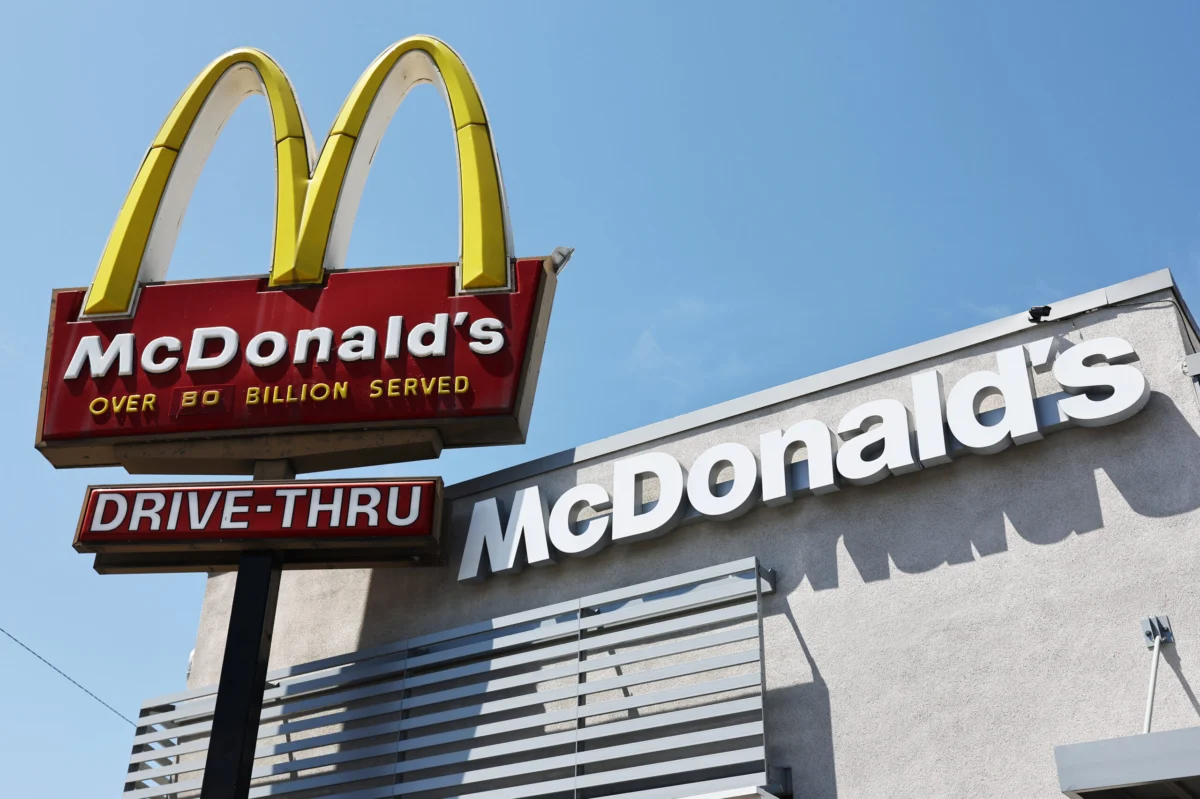
McDonald’s Corporation, the global fast-food behemoth, announced a blend of encouraging global growth and concerning underperformance within its crucial U.S. market for the second quarter ended June 30, 2026. The company’s financial disclosures on Tuesday revealed a scenario where robust international operations largely offset domestic struggles, prompting an immediate leadership change in its largest market and a candid admission from its top executive regarding execution gaps. Shares of the company, traded under the ticker MCD, concluded the day approximately 1% higher, reflecting a nuanced investor reaction to the complex report.
The burger giant reported second-quarter net income of $2.36 billion, or $3.32 per share, marking an increase from $2.25 billion, or $3.14 per share, in the comparable period a year earlier. Adjusted for restructuring charges and other specific items, McDonald’s achieved earnings of $3.38 per share. This performance, while showing year-over-year growth, presented a mixed picture against analyst expectations. Net revenue also saw a respectable increase of 4%, reaching $7.1 billion for the quarter. Crucially, the company’s global same-store sales experienced a 1.3% uptick, aligning with Wall Street’s projections as surveyed by LSEG analysts. However, this global average masked a significant disparity.
Navigating Domestic Headwinds: The U.S. Market’s Stumble
The primary area of concern stemmed from McDonald’s U.S. same-store sales, which only managed a modest 0.8% increase during the quarter. This figure fell notably short of both internal expectations and external analyst forecasts, underscoring the challenges the company is currently grappling with in its home market. While the average check size at domestic restaurants did rise, a critical metric – customer traffic – experienced a decline. This indicates that fewer customers were visiting McDonald’s locations in the U.S., a worrying trend for a business model heavily reliant on volume.
Addressing the investor community during the earnings conference call, McDonald’s CEO Chris Kempczinski was forthright about the domestic struggles. "We don’t have a strategy problem," Kempczinski stated emphatically, adding, "We simply didn’t execute at the level we needed to in the second quarter." This direct assessment pinpointed execution as the core issue rather than a fundamental flaw in the company’s strategic direction. The CEO’s remarks set the stage for a significant announcement designed to invigorate the U.S. segment.
Leadership Transition to Spur U.S. Revival
In a swift move to address the underperformance, McDonald’s announced the appointment of Skye Anderson as the new president of its U.S. business, effective immediately. Anderson, a seasoned veteran with 26 years of dedicated service to the Golden Arches, steps into this pivotal role succeeding Joe Erlinger, who had led the division for more than six years. Her extensive background within the company includes previous stints as chief operating officer of McDonald’s USA and, prior to that, leadership of its Global Business Services unit. This internal promotion signals McDonald’s intent to leverage deep institutional knowledge and operational expertise to navigate the complex U.S. market.
Kempczinski expressed confidence in Anderson’s ability to steer the U.S. division back to robust growth. "While our playbook is working around the world, we see an opportunity to raise the bar in the U.S. and accelerate performance in our largest market," he commented in a prepared statement. The appointment of a leader with a strong operational background like Anderson suggests a renewed focus on in-store execution, efficiency, and customer experience as key pillars of the domestic turnaround strategy. Industry analysts viewed the move as a clear signal of the company’s urgency in addressing the U.S. segment’s challenges, with many expecting Anderson to bring a fresh perspective to franchisee engagement and operational consistency.
Deep Dive into U.S. Value Strategy and Operational Hurdles
Executives elaborated on the specific factors contributing to the disappointing U.S. performance, starting with the inconsistent implementation of its value strategy. McDonald’s operates largely through a franchisee model in the U.S., granting operators a degree of autonomy in setting their own prices. While the company provides guidance and assesses how these menu prices contribute to the chain’s overall value proposition, the inherent tension between driving sales through discounts and preserving franchisee profits often creates friction.
Kempczinski highlighted a critical disconnect: only about 60% to 65% of McDonald’s U.S. system had consistently implemented its "under $3 menu," a program designed to feature 10 specific value items. The "loose $3 parameter" for this menu, intended to offer flexibility, inadvertently led some franchisees to raise prices on smaller, traditionally low-cost items, such as a small order of fries, rather than consistently offering them at a competitive value point. This fragmented approach to value offerings likely confused consumers, diluting the impact of the intended strategy.
Compounding this issue, McDonald’s simultaneously scaled back on many national digital offers, which have become increasingly vital in engaging customers and driving participation in its loyalty program. The combined effect of inconsistent in-store value execution and reduced national digital promotions resulted in "a fairly significant amount of price [increases] that got taken in Q2," according to Kempczinski. This effectively made McDonald’s less competitive on price in a period when consumers, facing persistent inflationary pressures, were increasingly scrutinizing their discretionary spending, particularly on quick-service meals.
Beyond pricing, operational complexities also plagued U.S. restaurants. Kempczinski admitted that "too many complicated launches" had slowed down restaurant operations, directly impacting service times and, consequently, hurting customer satisfaction scores. In a fast-paced environment where speed and convenience are paramount, any dip in service efficiency can quickly deter repeat visits.
Furthermore, McDonald’s faced tough comparisons in its marketing efforts. The company had benefited significantly from a highly popular "Minecraft" movie tie-in in April 2025, setting a high bar for subsequent promotional campaigns. Its World Cup campaign, launched during the final month of the second quarter, underperformed expectations, failing to generate the anticipated customer engagement and traffic. These marketing missteps, combined with operational and pricing challenges, created a confluence of negative factors for the U.S. market.
Glimmers of Hope and International Strength
Despite the domestic challenges, the report was not without its bright spots. McDonald’s saw positive traction from the recent launch of its new lineup of refreshers and crafted sodas. Kempczinski noted that these innovative beverage options were successfully introducing new visits and lifting the average customer check, indicating a strong appeal among consumers looking for premium drink experiences. Building on this success, McDonald’s plans to further expand its beverage offerings in the coming weeks with the addition of Red Bull Energizers to its menu, aiming to capture a wider segment of the beverage market.
Internationally, McDonald’s demonstrated robust performance, largely living up to its reputation as a global powerhouse. Its international operated markets segment reported a solid same-store sales growth of 1.5%, showcasing consistent execution and strong consumer demand across key global regions. The international developmental licensed markets division performed even better, with same-store sales rising by an impressive 1.9%. These figures underscore the effectiveness of McDonald’s global "Accelerating the Arches" strategy and the brand’s enduring appeal in diverse cultural contexts.
Strategic Vision and Revised Expansion Targets
Looking ahead, McDonald’s remains committed to its long-term growth objectives, even as it navigates current market complexities. In June 2026, during its biennial worldwide convention for franchisees, the company unveiled an updated growth strategy, articulating four core cornerstones: a new restaurant design, better-tasting food and drinks, consumer-led innovation, and improved customer service. The overarching goal of this renewed strategy is ambitious: to become diners’ first choice, every time. This holistic approach signals a recognition that sustained growth requires excellence across all facets of the customer experience, from the physical environment to menu quality and service efficiency.
However, the company also adjusted its aggressive restaurant expansion targets. Executives now expect to reach 50,000 restaurants worldwide by the end of 2028, representing a slight delay from its prior projection of achieving this milestone by the end of 2027. CFO Ian Borden attributed this lag to the "current consumer environment and inflation to development costs." This revision reflects the broader economic headwinds impacting capital expenditures and construction, as well as a more cautious outlook on market conditions influencing new store viability. While a delay, the commitment to reaching 50,000 restaurants underscores McDonald’s continued ambition for global dominance and market penetration.
Analyst Perspectives and Broader Implications
Industry analysts largely echoed Kempczinski’s sentiment, viewing the U.S. performance as an execution problem rather than a strategic one. Many highlighted the critical role of franchisee cooperation in McDonald’s decentralized model. "The challenge for McDonald’s is always aligning its vast network of independent franchisees with national strategic imperatives, especially when it comes to pricing and promotions," noted one prominent quick-service restaurant analyst. "Skye Anderson’s operational background and long tenure will be crucial in rebuilding that consistency and trust."
The decline in U.S. traffic also drew attention to the broader competitive landscape within the fast-food industry. As inflation continues to squeeze household budgets, consumers are becoming more discerning about where they spend their food dollars. Value perception is paramount, and any perceived increase in prices or lack of compelling deals can quickly drive customers to competitors. McDonald’s will need to strike a delicate balance between offering attractive value, ensuring franchisee profitability, and maintaining product quality and service speed.
For investors, the mixed results present a nuanced outlook. The strong international performance and the company’s commitment to strategic growth and innovation provide a foundation for optimism. However, the underperformance in the crucial U.S. market, coupled with the revised expansion timeline, suggests that the path to accelerated growth may be bumpier than previously anticipated. The success of Skye Anderson’s leadership in the U.S. and the effective implementation of the refreshed growth strategy will be closely watched indicators in the coming quarters. The company’s ability to "raise the bar" domestically will be key to sustaining its global momentum and reaffirming its position as a market leader. The commitment to a 2027 turnaround for U.S. same-store sales expectations sets a clear benchmark for the company’s progress.
