

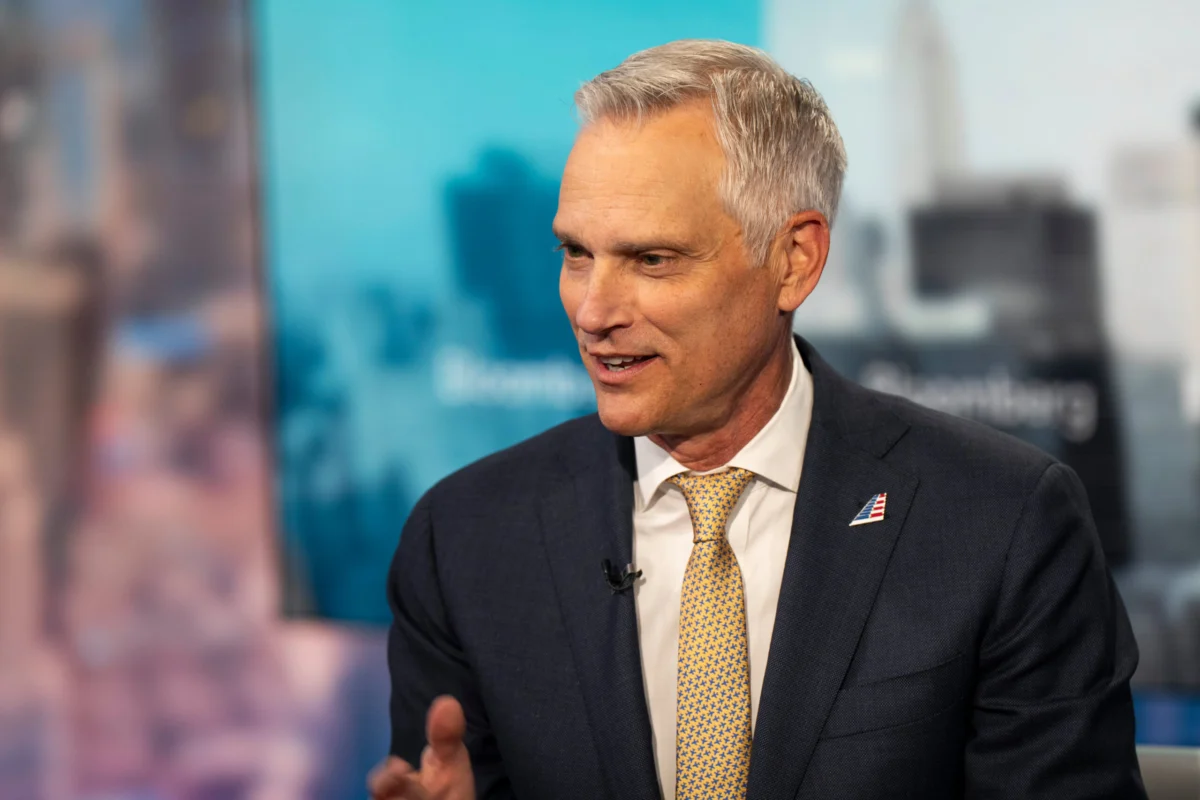
FORT WORTH, Texas – Robert Isom, Chief Executive Officer of American Airlines Group Inc., is confronting a significant "math problem" at the helm of the nation’s busiest carrier. Despite operating an unparalleled number of daily flights, American Airlines continues to lag substantially behind its primary competitors, United Airlines and Delta Air Lines, in profitability. This challenge has spurred a comprehensive strategic overhaul, focusing on elevating the premium customer experience, expanding its loyalty program, and modernizing its fleet and infrastructure.
The Profit Predicament: A Widening Gap
According to data compiled by Cirium, American Airlines flies approximately 6,500 flights per day this year, a volume equivalent to nearly an entire Alaska Airlines more than its closest competitor. Yet, this operational scale has not translated into commensurate financial gains. Last year, United Airlines reported profits approximately $3 billion higher than American’s, while U.S. profit leader Delta Air Lines surpassed American by nearly $5 billion. This persistent profitability gap underscores the core of Isom’s challenge: converting high operational volume into superior financial performance.
In an exclusive interview with CNBC late last month, Isom articulated the airline’s ambition, stating that American and its nearly 140,000 employees aspire "to be best at everything that we do." He affirmed that the carrier’s "long-range plan is certainly making up the margin gap," though he refrained from providing a specific timeline for achieving this critical goal. The immediate imperative, as highlighted by American CFO Devon May, is to address the "revenue gap and closing the unit revenue gap," acknowledging that while the airline has mastered efficient operations, it must now convince customers to pay more.
A Strategy for Elevation: Premiumization and Customer Experience
American Airlines’ executive leadership, during recent discussions at the carrier’s Fort Worth headquarters, unveiled a series of initiatives designed to attract higher-spending travelers. These include significant investments in its airport lounges, a forthcoming wide-body aircraft order, and comprehensive fresh interiors for a greater portion of its long-haul fleet. Isom explicitly defined American’s identity as "a premium global airline with the largest footprint in North America," signaling a clear strategic pivot towards the lucrative premium segment.
The airline’s plan is built on four pillars: growing its increasingly vital loyalty program, enhancing the overall customer experience, strategically expanding its network, and, crucially, increasing higher-end revenue. Wall Street analysts appear to share a degree of optimism, forecasting an adjusted earnings per share of 64 cents this year, an almost 80% increase from the previous year. Further, projections for 2027 anticipate a quadrupling of adjusted earnings to $2.58 per share, suggesting confidence in the long-term efficacy of American’s strategy. An updated forecast is expected when American reports its second-quarter results this Thursday.
This strategic direction comes amidst a dynamic industry landscape. United and Delta earlier this month reported robust bookings, indicative of continued strong travel demand. However, the unexpected surge in fuel prices due to the Iran war presented an industry-wide challenge, though carriers have largely succeeded in passing these increased costs onto travelers. Executives across the industry, including those at Delta, do not foresee a significant drop in fares in the near future, providing a potentially favorable environment for airlines to pursue premium pricing.
Cabins, Connectivity, and Lounges: The Premium Push
Central to American’s premiumization drive is a sweeping overhaul of its aircraft cabins and the integration of advanced in-flight amenities. The airline is actively remodeling existing cabins across its fleet and taking deliveries of new aircraft featuring enhanced interiors and more premium seating options. While a decision on reintroducing seatback screens to its narrow-body fleet remains under consideration, American has joined other major airlines in adopting satellite Wi-Fi from SpaceX’s Starlink, promising faster and more reliable internet connectivity for passengers.
The focus on premium customers reflects an industry-wide trend, where travelers willing to pay more for first-class seats, business class, or exclusive lounge access represent a critical revenue stream. From Delta’s long-standing success with its Delta One Suites to the efforts of even now-defunct budget carriers like Spirit Airlines, the race to install luxurious new seats – small but highly profitable real estate – is intense.
Isom confirmed that the cabin refresh program will soon extend to American’s Boeing 787-8 Dreamliners. The revamped cabins on its largest aircraft, the Boeing 777-300ERs, are expected to debut within weeks. The financial incentive is clear: a single business-class lie-flat seat can generate close to $10,000 on certain long-haul international routes, a stark contrast to the $2,000 or less typically earned from an economy seat in the rear. American has also been phasing out older aircraft configurations that featured separate first and business classes, consolidating into a more streamlined, high-density business class product.
However, this push for premium service is not without its operational challenges. The Association of Professional Flight Attendants (APFA), representing American’s flight attendants, has expressed concerns regarding staffing levels. Julie Hedrick, President of the APFA, noted that with the introduction of 70-seat Business Suites and the marketing of a premium international experience, the airline is "expecting a reduced number of Flight Attendants to deliver significantly more personalized service." American reduced flight attendant staffing on these aircraft from 13 to 11 in 2020, a move echoed by other carriers. Hedrick warned that this could result in "longer service times and a customer experience that falls short of what passengers expect."
Beyond the aircraft, American is significantly upgrading its ground facilities. Chief Customer Officer Heather Garboden confirmed plans to construct the largest Admirals Club lounge in its network, a sprawling 37,000-square-foot facility at its primary hub, Dallas Fort Worth International Airport (DFW) in Terminal C. Additionally, the airline plans a grab-and-go "Provisions" airport lounge in the under-construction Terminal F at DFW, alongside a Flagship check-in area in Terminal D. DFW, American’s largest hub, is undergoing a substantial $12 billion makeover, with the carrier recently unveiling new gates in Terminal C, slated for further expansion. These investments align with a broader industry trend of upgrading and expanding airport lounges to cater to high-spending clientele across the U.S.
Operational Excellence vs. Revenue Generation: Closing the Unit Revenue Gap
While American has a strong track record of running an efficient operation, the challenge, as articulated by CFO Devon May, is to translate this efficiency into higher revenue per unit. This is where American is playing catch-up. United has had a roughly decade-long head start in catering to higher-paying travelers, while Delta boasts close to two decades of experience in this segment. Delta, for instance, in the late 2000s, was giving away approximately 90% of its domestic first-class seats as free upgrades to frequent flyers. Today, it proudly states it sells the vast majority, a trend that American is keen to replicate by increasing "buy-ups" through technical changes and strategic pricing.
Under Isom’s leadership, American has intensified its investments in premium offerings. The airline’s commercial team is actively developing technical solutions aimed at presenting customers with more opportunities to purchase pricier seats and services. This involves sophisticated revenue management and merchandising strategies designed to maximize the value derived from each seat.
Beyond its fortress hubs, American’s Chief Commercial Officer, Nat Pieper, emphasized the airline’s need to "win" in competitive "jump-ball markets" such as Los Angeles, Chicago, and Washington, D.C. He noted ongoing success in growing sign-ups for its lucrative credit card program in some of these key markets, including New York, which are crucial for cultivating customer loyalty and ancillary revenue.
American’s flight network is currently split approximately 80% domestic and 20% international. International flights typically command a higher premium compared to domestic routes and are generally served by aircraft equipped with more luxurious premium cabins. Isom underscored the airline’s extensive network breadth as a major strong suit, one that he believes will continue to be a competitive advantage. While American and other airlines rely on global alliances and partnerships to extend their reach, United has been aggressively expanding its own international network, adding numerous new destinations from Mongolia to Galicia, Spain, making its expansive global footprint a key calling card.
Leadership and Resilience: ‘Never Been Deterred’
Robert Isom, a mechanical engineer by training, began his aviation career with Northwest Airlines and America West Airlines, both of which eventually merged into modern-day Delta and American, respectively. The airline industry, known for its insular nature dueen to the highly specific and safety-critical knowledge required, rarely recruits top executives from outside its ranks. Interestingly, American’s executive team has seen a split between American and United, with United CEO Scott Kirby having been fired from American almost exactly ten years ago, only to be hired as president by United on the same day.
Isom, 62, assumed the top leadership role at American in March 2022, a critical juncture as the industry was grappling with the profound disruptions of the COVID-19 pandemic, which had led to projected U.S. airline losses exceeding $35 billion in 2020 alone. "I’ve never been deterred, no matter what the challenges that we face," Isom stated, reflecting on his journey. He took over in a quarter where American reported a $1.6 billion loss, underscoring the severity of the task at hand. "I’m clear-eyed about the challenges in this business," he added, referencing the industry’s resilience through events like the 9/11 terrorist attacks, financial crises, bankruptcies, mergers, wars, and disease outbreaks.
Operational reliability remains a key focus. In the first half of the year, American ranked sixth among 11 U.S. airlines in punctuality, with an on-time rate of 76.6%, according to Cirium data. This placed it behind Delta and United, which secured the second and third spots respectively. Under Isom and COO David Seymour, the carrier is actively working to enhance its on-time performance by de-stressing its schedule, rather than compressing chaotic connecting banks in major hubs, and by leveraging artificial intelligence to predict and mitigate maintenance issues.
Compounding its financial challenges, American’s earnings are still burdened by a substantial debt load, which peaked at approximately $54 billion coming out of the pandemic. While the airline has made significant strides in reducing this to around $35 billion, balance sheet improvement remains a major priority. Dennis Tajer, spokesman for the Allied Pilots Association (APA), which represents American’s 15,000 aviators, succinctly described the situation, stating, "They’re a giant – with a limp." Earlier this year, both the APA and the flight attendants’ union publicly questioned Isom’s leadership, linking broader company underperformance to reduced profit-sharing for staff.
Gaining customer recognition for these improvements, however, may take time. Jay Barney, a professor of strategic management at the University of Utah David Eccles School of Business, observed that "Changing a service culture is hard, but not impossible." To effectively alter overall brand perception, he advised, "You have to make the changes obvious and visible, to current customers and potential customers." Barney also pointed out that flyers often remain captive due to the overwhelming market share held by major airlines at key hub airports, leading to a situation where airlines might be "charging more to their current customers."
Fleet Modernization and Future Aircraft Orders
While American acknowledges being behind in the premium game, Isom reported that customer satisfaction scores are on the rise. Chief Commercial Officer Nat Pieper, an airline industry veteran appointed last fall following a period of recovery from a failed corporate sales strategy in 2024, confirmed robust demand across all segments.
A crucial component of the airline’s next phase involves a significant wide-body aircraft order, which Isom indicated is on the table for this year, with both Boeing and Airbus under consideration. American’s fleet of over 1,000 planes is currently the youngest among the three largest U.S. airlines, a result of a substantial 400-plus aircraft order placed about 15 years ago for new Boeing and Airbus narrow-body planes. However, dozens of its Boeing 777 wide-body aircraft average more than two decades in service. The refresh of these older Boeing 777-200s is next, Isom noted, but the carrier is actively shopping for new long-haul aircraft. "I think that Airbus could play a big role" in the new order, Isom said, despite American’s current wide-body fleet being exclusively Boeing. American declined to specify the size of its planned order, but new aircraft would likely begin arriving in the early or middle of the next decade.
This move comes as rival United Airlines, which fiercely competes with American at Chicago O’Hare International Airport, has aggressively secured delivery slots for over 100 Boeing Dreamliners in the last four years, further intensifying the competition for modern, fuel-efficient wide-body aircraft.
Merger Mania: A Non-Starter
As Isom articulates his vision for American Airlines’ future, he unequivocally dismisses one particular strategic path: a merger with United Airlines. This year, United CEO Scott Kirby publicly suggested such a merger, an idea that American swiftly rebuffed.
"I spoke with Scott," Isom recounted to CNBC. "Given history, given law, given past mergers, there wasn’t anyone that we talked to, our advisors, interested parties, politicians, that said that there was any chance of this happening." He concluded firmly, "At the end of the day, we spend time looking at things that have a chance of happening. We don’t spend a lot of time pursuing impossibilities."
The regulatory environment for airline mergers has grown increasingly stringent, as evidenced by the U.S. Justice Department’s successful lawsuit in 2023 to block American’s more involved Northeast Alliance (NEA) partnership with JetBlue on antitrust grounds. While United maintains a partnership with JetBlue, Kirby has repeatedly stated his disinterest in acquiring the New York-based airline and has acknowledged that a merger with American would not proceed without a willing partner in American’s management. Under the JetBlue deal, United is set to gain several slots at New York’s John F. Kennedy International Airport as early as next year. As Brett Snyder, who authors the Cranky Flier blog, aptly put it, "Why buy the cow if you’re getting the milk for free?"
When asked about his own appetite for potential mergers and acquisitions, Isom offered the standard executive response, stating that the carrier is always exploring opportunities to better serve its customers. For now, however, Isom remains resolutely focused on what he describes as American’s "new chapter." He expressed his enduring passion for the industry, stating he gravitated toward it "to be involved with something where you can make a difference." He concluded, "This is this one that you never wake up in the morning or going to bed at night thinking: Did I do good for somebody or something? You certainly had the chance to in this business." His commitment suggests a long and challenging, but determined, path ahead for American Airlines as it seeks to redefine its place in the competitive global aviation landscape.
