

TOKYO – The Japanese government is poised to initiate a comprehensive review and revision of three cornerstone national security documents by the close of the year. A primary focus of these revisions will be the strengthening of the extended nuclear deterrence provided by the United States, a move signaling Japan’s deepening concern over escalating security challenges in the Indo-Pacific region. This strategic recalibration comes in the wake of increasingly assertive actions by regional adversaries, including China’s recent display of advanced offensive capabilities.
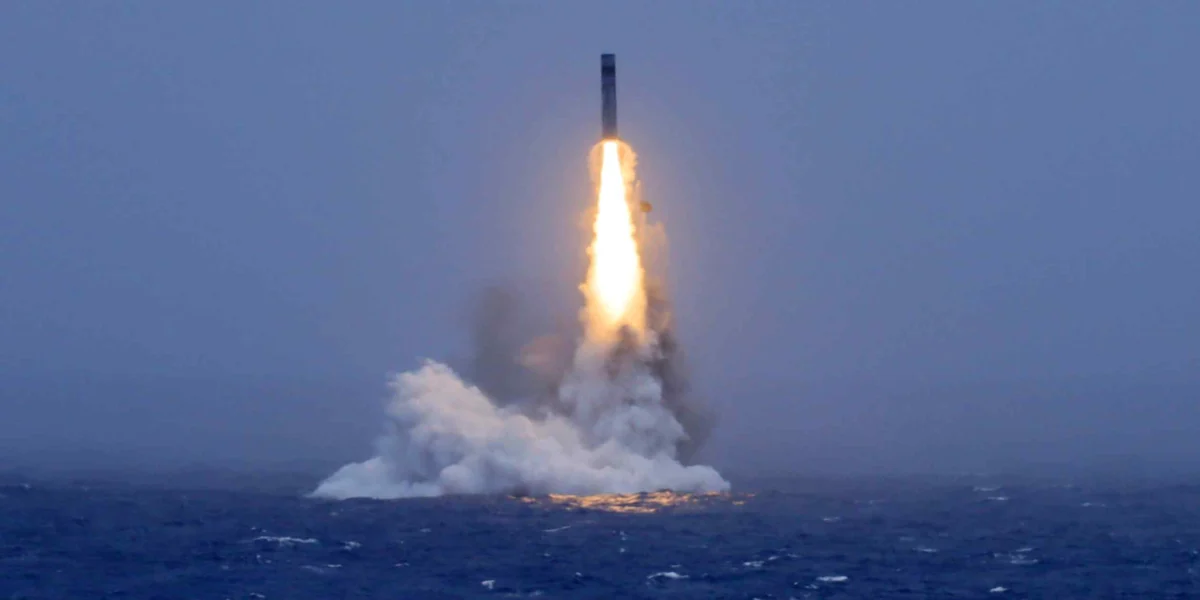
The impetus for this significant policy reassessment can be traced to a confluence of evolving geopolitical realities. Foremost among these is the perceived growth in military prowess and strategic intent of China, underscored by events such as the recent launch of a ballistic missile from a nuclear submarine by the People’s Liberation Army Navy. This incident, captured in imagery that highlights the nation’s burgeoning offensive capabilities, serves as a stark reminder of the expanding reach and sophistication of China’s military arsenal. Such developments are not occurring in a vacuum but are part of a broader pattern of military modernization and expansion by Beijing, which has led to increased tensions across the East and South China Seas, as well as around Taiwan.
Escalating Regional Tensions and the Nuclear Shadow
The security landscape in East Asia has become increasingly complex and fraught with potential flashpoints. North Korea’s persistent development of nuclear weapons and ballistic missile programs continues to pose a direct and immediate threat to Japan and its allies. Pyongyang’s regular missile tests, often defying international condemnation and sanctions, underscore its commitment to advancing its strategic capabilities. This ongoing defiance creates a climate of perpetual instability, forcing regional powers to constantly reassess their defensive postures.
Beyond North Korea, the territorial disputes in the East China Sea, particularly involving the Senkaku/Diaoyu Islands, remain a persistent source of friction between Japan and China. China’s increased naval and air activity in these disputed waters, often involving coast guard vessels and maritime militia operating under the guise of law enforcement, has been interpreted by Tokyo as a deliberate strategy to assert its claims and incrementally alter the status quo. The potential for miscalculation or accidental escalation in such contested zones is a significant concern for regional stability.
Furthermore, the geopolitical ramifications of Russia’s ongoing military actions in Ukraine have not been lost on Japan. The violation of a sovereign nation’s territorial integrity and the potential for the use of nuclear threats by a major power have amplified anxieties within Japan about the broader international norms governing state behavior and the credibility of deterrence in the face of aggressive expansionism. This global context reinforces the strategic imperative for Japan to ensure its own security and that of its allies.
Revisiting Key Security Documents: A Strategic Imperative
The three key security documents slated for revision are foundational to Japan’s defense policy. While the specific titles are not publicly detailed in the initial reporting, it is widely understood that these typically include the National Security Strategy, the National Defense Program Guidelines, and the Mid-Term Defense Program. These documents outline Japan’s strategic objectives, defense capabilities, and resource allocation for the coming years.
The decision to revise these documents signals a commitment to adapt Japan’s defense posture to meet the evolving threat environment. The focus on bolstering U.S. extended nuclear deterrence is particularly noteworthy. Extended deterrence refers to the commitment by a nuclear-armed state, in this case the United States, to use its nuclear arsenal to defend an ally that does not possess nuclear weapons. For Japan, this alliance has been the bedrock of its security since the end of World War II.
The Alliance and the "Nuclear Umbrella"
The U.S.-Japan Security Treaty, signed in 1951 and significantly revised in 1960, forms the cornerstone of the bilateral relationship and provides Japan with its security guarantee. Under this treaty, the United States commits to the defense of Japan and maintains a significant military presence in the region. A crucial component of this security umbrella is the U.S. nuclear deterrent, which is implicitly extended to Japan.
However, the increasing assertiveness of regional nuclear powers and the perceived expansion of their nuclear capabilities have led to discussions within Japan about the adequacy of this extended deterrence. The question is not about acquiring nuclear weapons – Japan has a long-standing constitutional commitment to pacifism and has been a strong proponent of nuclear disarmament – but rather about ensuring that the U.S. nuclear commitment remains credible and robust in the face of evolving threats.
This could translate into several practical measures. One possibility is increased joint planning and exercises focused on scenarios involving the use of nuclear weapons, aiming to enhance interoperability and preparedness. Another avenue might involve discussions on burden-sharing within the alliance, though this is a sensitive topic. Japan could also seek greater transparency and consultation with the U.S. regarding its nuclear posture and strategic planning in the region. The goal is to send a clear signal to potential adversaries that any aggression would be met with a decisive and overwhelming response, deterring them from initiating conflict.
China’s Evolving Military Capabilities: A Timeline of Concern
China’s military modernization program has been underway for decades, but its pace and sophistication have accelerated significantly in recent years. The launch of a ballistic missile from a nuclear submarine, as reported, is indicative of this progress. Such capabilities are typically associated with a nation’s ability to project power and conduct strategic strikes.
Early 2000s: China begins a significant expansion of its naval forces, focusing on building a blue-water navy capable of operating far from its shores. This includes the development of aircraft carriers and advanced submarines.
Mid-2010s: China achieves a significant milestone with the operational deployment of its first indigenous aircraft carrier, the Liaoning, followed by the Shandong. The development of its submarine-launched ballistic missile (SLBM) program also gains momentum.
Late 2010s – Present: China’s SLBM technology matures, with reports of advanced variants like the JL-3, capable of reaching targets across North America. The recent missile launch signifies a demonstration of these enhanced capabilities, potentially aimed at deterring regional rivals and projecting strength. This period also sees China deploying advanced anti-ship ballistic missiles (ASBMs), which are designed to target aircraft carriers and pose a significant challenge to naval power projection in the Western Pacific.
The implications of these advancements are far-reaching. They suggest that China is moving beyond a purely defensive posture to one that includes a credible first-strike capability and the ability to threaten U.S. naval assets in the region. This directly impacts the credibility of U.S. extended deterrence, as it raises questions about the potential costs and risks associated with a nuclear exchange.
Data and Supporting Evidence
While specific classified data remains confidential, publicly available information and analyses from defense think tanks provide context. The Stockholm International Peace Research Institute (SIPRI) has reported on the steady growth of China’s nuclear arsenal, though it remains significantly smaller than those of the U.S. or Russia. However, the emphasis is on the qualitative improvements and the development of delivery systems, such as the aforementioned SLBMs, which are designed for survivability and strategic reach.
According to reports by the U.S. Department of Defense, China’s military spending has seen consistent double-digit percentage increases for much of the past two decades, funding ambitious modernization programs across all branches of the People’s Liberation Army. This includes the development of advanced fighter jets, stealth technology, hypersonic missiles, and a rapidly expanding submarine fleet, both nuclear-powered and conventionally powered.
The increase in the number and sophistication of Chinese naval exercises, often conducted in waters close to Japan and other regional states, further supports the perception of a more assertive military posture. These exercises frequently involve multiple branches of the PLA, simulating complex operational scenarios.
Official Reactions and Diplomatic Undercurrents
While the Japanese government has not issued detailed statements on the specific contents of the upcoming security document revisions, the tenor of official discourse has clearly shifted. Prime Minister Fumio Kishida has repeatedly emphasized the need to fundamentally strengthen Japan’s defense capabilities in response to the increasingly severe security environment.
U.S. officials have generally welcomed Japan’s commitment to enhancing its defense capabilities and its contributions to regional security. The U.S.-Japan alliance is viewed as the linchpin of stability in the Indo-Pacific, and any measures that strengthen Japan’s ability to defend itself and contribute to collective security are seen as positive developments. However, discussions surrounding nuclear deterrence are inherently sensitive, and official statements from both sides tend to be measured, focusing on cooperation and shared responsibility rather than specific nuclear strategies.
Regional allies, such as South Korea and Australia, are likely monitoring these developments closely. While each nation has its own distinct security challenges and alliances, the overarching trend of rising regional tensions and the need for credible deterrence is a shared concern. Increased cooperation and coordination among these like-minded democracies are expected to be a natural consequence of these evolving geopolitical dynamics.
Broader Impact and Implications for Regional Stability
The decision by Japan to focus on bolstering U.S. extended nuclear deterrence has several significant implications.
Deterrence Credibility: The primary aim is to reinforce the credibility of the U.S. nuclear umbrella. By demonstrating a commitment to integrated defense planning and potentially exploring new ways to enhance deterrence signaling, Japan and the U.S. seek to make the cost of aggression prohibitively high for potential adversaries.
Shifting Defense Calculus: This move could lead to a broader reassessment of defense postures across the region. If Japan, a nation constitutionally bound to pacifism and historically averse to military adventurism, is seen as seriously considering measures related to nuclear deterrence, it sends a strong message about the gravity of the perceived threats.
Arms Race Concerns: While Japan is not seeking to acquire nuclear weapons, any perceived increase in military capabilities, particularly those related to nuclear strategy, can be viewed with concern by some. The delicate balance of power in the region means that actions taken by one state to enhance its security can sometimes be interpreted as escalatory by others, potentially leading to an arms race. However, proponents of this move argue that it is a necessary response to existing escalatory actions by other powers.
Alliance Cohesion: The process of revising these security documents and enhancing deterrence will inevitably involve close coordination between Tokyo and Washington. This can further strengthen the U.S.-Japan alliance, solidifying its role as a cornerstone of regional security architecture.
Domestic Debate: The strengthening of defense capabilities, even within the framework of extended deterrence, is likely to spark continued debate within Japan regarding the interpretation of its pacifist constitution and the appropriate level of defense spending. However, public opinion polls have shown a growing acceptance of a more robust defense posture in recent years, reflecting the evolving security consciousness of the Japanese public.
In conclusion, Japan’s impending revision of its key security documents and its focus on bolstering U.S. extended nuclear deterrence represent a significant strategic response to a rapidly deteriorating regional security environment. The move underscores the growing concerns about China’s military expansion and North Korea’s nuclear ambitions, and it signals a determination by Tokyo to adapt its defense posture to ensure its national security and contribute to the stability of the Indo-Pacific. The effectiveness of these measures will depend on the concrete steps taken and the broader geopolitical reactions they elicit, but they undoubtedly mark a critical juncture in Japan’s post-war security policy.
