

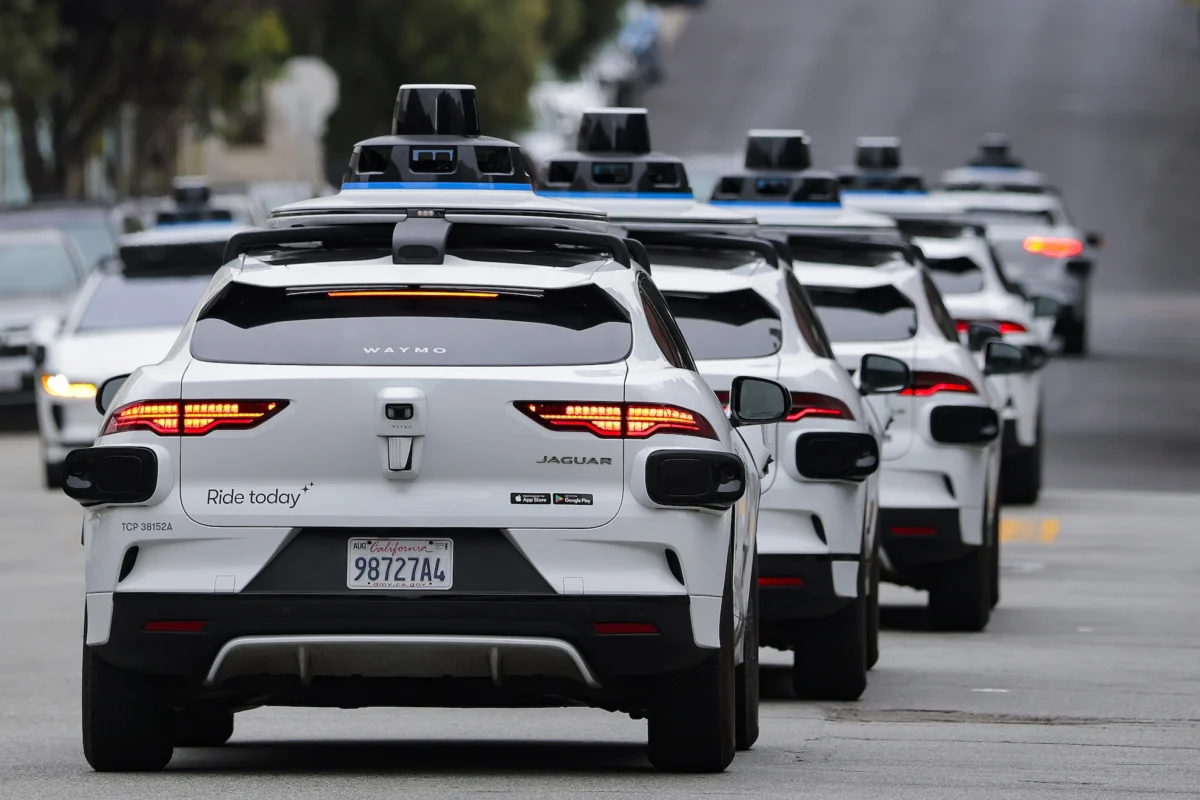
San Francisco, CA – July 18, 2026 – Waymo, the autonomous vehicle subsidiary of Alphabet Inc., confirmed today that its robotaxi service in San Francisco experienced a temporary suspension, with freeway routes rendered unavailable, amidst a significant power outage that affected approximately 7,000 PG&E customers across the city. The disruption, which began around midday, prompted the company to make "temporary adjustments" to its operations, a move that underscores the ongoing challenges and scrutiny faced by autonomous vehicle (AV) operators in complex urban environments. Service was reportedly resumed after approximately one hour, following an assessment and coordination with local officials, but the incident has once again brought to the forefront discussions about the resilience of AV technology in the face of infrastructure failures and the need for robust regulatory frameworks.
Chronology of a Midday Disruption
The events unfolded rapidly on Friday, July 18, 2026. At approximately 12:30 PM PDT, reports began to surface of a widespread power outage impacting various neighborhoods in San Francisco. PG&E, the primary utility provider for the region, confirmed that thousands of its customers were without electricity, initiating investigations into the cause and scope of the disruption. As the blackout spread, its effects quickly extended to the city’s burgeoning autonomous vehicle ecosystem.
Almost concurrently with the outage, Waymo customers in San Francisco began receiving in-app notifications regarding service interruptions. A screenshot widely circulated on social media, notably by users like Ethan McKanna on X (formerly Twitter), showed a message from Waymo stating that service was "temporarily paused" and that "freeway routes are unavailable." This immediate communication to riders highlighted the real-time impact of the power failure on daily transportation options for those who rely on Waymo’s driverless cars.
In response to inquiries from TechCrunch, a Waymo spokesperson initially provided a concise statement: "We are making temporary adjustments to our service while we monitor local conditions. We know riders depend on us, and we will return to normal operations as soon as possible." This initial acknowledgment indicated the company’s awareness of the situation and its commitment to rider safety and service continuity.
However, the situation quickly evolved. Following the initial publication of news regarding the pause, Waymo issued an updated statement, clarifying the duration and rationale behind the disruption. A spokesperson elaborated, stating that the company "decided to pause service for approx. one hour to assess the scale of the power outage affecting a large portion of San Francisco and coordinate with local officials." This clarification shed light on Waymo’s internal protocols, suggesting a deliberate, measured response to a developing infrastructure crisis rather than an immediate, uncontrolled system failure. By mid-afternoon, Waymo confirmed that its robotaxi service had fully resumed normal operations, indicating that the one-hour assessment period had concluded successfully and that conditions were deemed safe for driverless operations.
Background of Waymo’s Operations and Previous Incidents in San Francisco
Waymo has been a prominent player in the autonomous vehicle landscape of San Francisco for several years, progressively expanding its operational design domain (ODD) and rider services. The company obtained its driverless deployment permit from the California Public Utilities Commission (CPUC) in August 2022, allowing it to charge for fully autonomous rides without a safety driver present. Since then, Waymo has steadily increased its service area and vehicle fleet, becoming an integral, albeit sometimes controversial, part of the city’s transportation fabric.
San Francisco, with its complex street layouts, diverse weather patterns, and high traffic density, serves as a critical testing ground for AV technology. The city’s challenging environment pushes the boundaries of driverless systems, requiring sophisticated perception, prediction, and planning capabilities. However, this complexity also exposes the vulnerabilities of even the most advanced AVs when confronted with unforeseen external disruptions.
This latest incident is not an isolated event but rather fits into a pattern of autonomous vehicle disruptions linked to critical infrastructure failures. Waymo vehicles, along with those of other AV operators, have previously faced operational challenges during blackouts and other significant urban incidents. For example, in December of the previous year (2025), a number of Waymo vehicles reportedly stalled on city streets during another power outage, causing minor traffic impediments and raising questions about their fail-safe mechanisms. Similarly, an incident during a Fourth of July fireworks show saw AVs contributing to traffic congestion, prompting concerns from emergency services and city officials about their ability to navigate large-scale, unplanned events. These prior occurrences have contributed to a growing sentiment among some city leaders that current regulations may not be adequate.
Mayor Lurie’s Call for Tougher Regulations and the Broader Regulatory Landscape
The recurring nature of these incidents has not gone unnoticed by San Francisco’s leadership. Mayor Daniel Lurie has emerged as a vocal proponent for stricter oversight of autonomous vehicles. Following previous disruptions, including the aforementioned Fourth of July traffic fiasco, Mayor Lurie publicly called for tougher state regulations. His primary concern, and that of other city officials, revolves around the need to "adequately address how autonomous vehicles operate during major incidents, planned or not."
The regulatory framework for autonomous vehicles in California is primarily managed by two state agencies: the California Department of Motor Vehicles (DMV), which handles testing and deployment permits, and the California Public Utilities Commission (CPUC), which regulates commercial operations, including the charging for rides. While these agencies have established extensive guidelines, the rapid evolution of AV technology and the unique challenges presented by dense urban environments like San Francisco continually test the adequacy of existing rules.
Mayor Lurie’s push for more stringent regulations reflects a broader tension between innovation and public safety. Proponents of AV technology emphasize its potential to reduce accidents, improve traffic flow, and enhance accessibility. However, critics, including some city officials and emergency responders, highlight concerns about AVs impeding emergency services, creating unpredictable traffic situations during failures, and the lack of transparent accountability when incidents occur. The mayor’s stance suggests a desire for regulations that not only ensure the safety of AVs in ideal conditions but also mandate robust contingency plans and fail-safe behaviors specifically designed for infrastructure failures, natural disasters, or large-scale public events that can overwhelm standard operational protocols. This could include requirements for AVs to automatically pull over to safe, designated areas, communicate their status effectively to traffic authorities, or even allow for remote human intervention more readily during crises.
Impact of Power Outages on Autonomous Vehicle Operations
Power outages present a multifaceted challenge for autonomous vehicles, impacting various layers of their operational architecture. While AVs are designed with onboard power systems and redundant sensors, a widespread blackout in an urban environment can still create significant hurdles:
-
Traffic Signal Disruptions: The most immediate and visible impact of a power outage is the cessation of traffic signals. Intersections become uncontrolled, requiring AVs to rely solely on their perception systems to navigate complex, dynamic situations. While AVs are programmed to treat dark traffic lights as four-way stops, the sheer volume of human-driven vehicles that may not adhere to such rules, coupled with potential confusion, increases the risk profile significantly. Human drivers often struggle with uncontrolled intersections; introducing AVs into this chaotic mix adds another layer of complexity.
-
GPS and Localization Challenges: While AVs use a combination of GPS, LiDAR, radar, and high-definition maps for localization, widespread power outages can sometimes affect localized GPS augmentation systems or cellular networks that AVs might use for real-time map updates or communication with remote operations centers. Although Waymo vehicles are equipped with robust onboard processing capabilities and redundant systems, any degradation in external data streams could necessitate a more cautious, or even paused, operational mode.

-
Communication and Remote Assistance: AVs, even fully autonomous ones, rely on robust communication channels for various functions, including sending telemetry data, receiving software updates, and, crucially, requesting remote assistance from human operators when encountering perplexing or ambiguous situations. A widespread power outage can disrupt cellular networks or Wi-Fi infrastructure, thereby impairing these vital communication links. If a vehicle encounters an edge case during a blackout and cannot communicate with its remote support team, its ability to proceed safely might be compromised, leading to a standstill.
-
Perception and Environmental Uncertainty: While AVs "see" the world through sensors, a power outage often means streetlights are out, potentially reducing visibility, especially during dusk or night-time conditions (though this incident occurred during the day). More importantly, the human environment changes drastically: pedestrians might cross less predictably, emergency vehicles might operate without their usual signals being respected, and general traffic behavior can become erratic. AVs must adapt to this heightened level of environmental uncertainty, which often defaults to a more conservative, cautious driving style, or a full pause.
-
Charging Infrastructure: While not directly affecting an operating vehicle, a prolonged power outage would naturally impact the ability to charge AV fleets, potentially limiting their deployment capacity once power is restored. This is a logistical consideration that AV operators must factor into their emergency response plans.
Waymo’s decision to pause service for an hour highlights its approach to managing these risks. It implies a systematic review of the operational environment, assessing the extent of signal outages, potential communication impacts, and overall safety implications before allowing vehicles to resume operations. This proactive, safety-first stance, while causing temporary inconvenience, is crucial for maintaining public trust and ensuring the long-term viability of autonomous technology.
Waymo’s Operational Protocols and Emergency Response
The company’s response to the July 18 outage offers insight into its emergency protocols. The initial notification to customers, followed by the statement about "temporary adjustments," and then the more detailed explanation of a "one-hour pause to assess the scale… and coordinate with local officials," paints a picture of a structured, multi-stage response.
-
Real-time Monitoring: Waymo’s operations centers likely monitor local conditions in real-time, including traffic flow, weather, and utility outages. Automated alerts or human observation would have triggered an immediate response upon detection of the PG&E outage.
-
Customer Communication: Prompt communication to riders via the in-app interface is critical for managing expectations and ensuring safety. Informing users about service pauses and route limitations allows them to make alternative transportation arrangements.
-
Internal Assessment: The "one-hour pause" was likely dedicated to a comprehensive internal assessment. This would involve:
- Analyzing the geographical extent of the power outage.
- Evaluating the impact on traffic signals within their operational domain.
- Checking the stability of communication networks vital for remote assistance and data transmission.
- Confirming the health and status of all active vehicles.
- Reviewing potential risks for vehicle recovery if a prolonged outage were to occur.
-
Coordination with Local Officials: This is a crucial, yet often overlooked, aspect of AV operations during emergencies. Waymo’s statement about coordinating with local officials suggests engagement with entities like the San Francisco Municipal Transportation Agency (SFMTA), emergency services, and potentially PG&E. Such coordination would involve sharing information about the outage’s impact on AVs, understanding city-wide emergency responses, and ensuring AV operations do not inadvertently impede first responders or restoration efforts. This proactive engagement is vital for fostering trust and collaborative problem-solving between private AV companies and public agencies.
-
Gradual Resumption: Once the assessment concludes and conditions are deemed safe, service would be resumed, potentially in phases, starting with less affected areas or specific routes, before a full return to normal operations. The prompt resumption in this instance suggests that the outage’s impact on Waymo’s core operational capabilities was contained and manageable.
Broader Implications for the Autonomous Vehicle Industry
Incidents like the July 18 power outage in San Francisco have significant broader implications for the autonomous vehicle industry, particularly as companies aim for wider deployment and public acceptance.
-
Public Trust and Perception: Every disruption, no matter how minor or well-managed, can erode public trust, especially when it involves critical infrastructure failures. For AVs to achieve widespread adoption, the public must perceive them as not just safe in ideal conditions, but also resilient and reliable during unforeseen emergencies. Transparent communication and demonstrable effective contingency plans are essential for building and maintaining this trust.
-
Infrastructure Resilience and Smart Cities: The incident underscores the interdependency of advanced technologies like AVs with traditional urban infrastructure. As cities become "smarter" and more reliant on interconnected systems, the resilience of foundational infrastructure—power grids, communication networks, road markings—becomes paramount. This incident may prompt further discussions on integrating AV operational requirements into smart city planning and infrastructure upgrades, ensuring that critical systems are robust enough to support driverless mobility.
-
Regulatory Evolution: The repeated calls from Mayor Lurie and other officials suggest that existing AV regulations, while comprehensive for day-to-day operations, may need further refinement to specifically address emergency scenarios and infrastructure failures. Future regulations might mandate more rigorous testing for such events, require specific fail-safe modes (e.g., automatic safe harbor parking during prolonged outages), or demand real-time data sharing with emergency services during crises. The CPUC and DMV will likely continue to face pressure to adapt regulations as AV technology matures and encounters more real-world complexities.
-
Technological Development: These incidents also serve as valuable learning opportunities for AV developers. They highlight areas where system robustness can be improved, such as enhanced onboard processing for navigating completely un-signaled environments, more resilient communication protocols, or even the development of alternative localization methods that are less susceptible to external disruptions.
-
Competitive Landscape: In a competitive market with multiple AV operators (e.g., Waymo, Cruise, etc.), how each company handles these disruptions can influence its public image and regulatory standing. Companies that demonstrate superior emergency response, transparency, and collaboration with city officials are more likely to gain public and regulatory favor.
In conclusion, Waymo’s temporary service pause in San Francisco due to a power outage, while brief, serves as a potent reminder of the intricate challenges inherent in integrating autonomous vehicles into the fabric of a bustling modern city. It highlights the critical interplay between cutting-edge technology and foundational urban infrastructure, the ever-evolving nature of regulatory oversight, and the continuous need for transparent communication and robust emergency preparedness. As autonomous vehicle technology continues its march toward widespread deployment, the industry and regulators alike must collaboratively address these complexities to ensure that driverless mobility truly enhances, rather than complicates, the urban experience, especially when the unexpected occurs.
