

ALMATY, Kazakhstan – In a significant shift within Kazakhstan’s vital energy sector, the nation’s state-owned oil and gas company, KazMunayGas (KMG), is reportedly on the cusp of taking a dominant role in the construction of a new gas treatment plant at the colossal Karachaganak field. This development comes as a discernible strain has emerged in the long-standing relationship between the Kazakh government and its Western partners, primarily Italy’s Eni and the Anglo-Dutch supermajor Shell, who currently co-own and operate the field. The dispute centers on the financing and execution of the critical gas treatment facility, a project deemed essential for maximizing the field’s immense hydrocarbon potential.
The Karachaganak field, one of the world’s largest natural gas and condensate fields, has been a cornerstone of Kazakhstan’s energy production and export strategy for decades. Discovered in 1979, commercial production commenced in 1997, and it has since become a linchpin in the country’s economic landscape, contributing significantly to GDP, export revenues, and employment. The field’s ownership structure, governed by a Production Sharing Agreement (PSA), has historically involved a consortium of international oil companies alongside KazMunayGas. Eni and Shell have been the principal operators, bringing substantial technical expertise and capital investment to the project.
However, recent years have seen increasing friction over the development plans for Karachaganak, particularly concerning the proposed gas treatment plant. Sources close to the negotiations indicate that disagreements have festered over the allocation of costs, the project’s timeline, and the proposed technological solutions. The Kazakh government, through its energy ministry and KazMunayGas, has reportedly grown impatient with what it perceives as delays and a lack of definitive commitment from the Western partners to expedite the construction of the new facility. This impatience is compounded by the government’s stated objective of increasing domestic gas processing capacity and securing greater value from its natural resources.
Background of the Karachaganak Field and its Partners
The Karachaganak field, situated in northwestern Kazakhstan, is an exceptionally complex and prolific hydrocarbon reservoir. It boasts estimated reserves of approximately 1.35 trillion cubic meters (tcm) of natural gas and over 3 billion barrels of condensate. Its strategic importance to Kazakhstan cannot be overstated, serving as a primary source of gas for domestic consumption and a significant contributor to the country’s export earnings, primarily to Russia and China.
The Karachaganak Integrated Organisation (KIO) is the operating entity, with the following shareholding: Eni (29.25%), Shell (29.25%), Chevron (18%), Lukoil (13.5%), and KazMunayGas (10%). The long-term nature of the PSA, initially signed in 1997 and subsequently amended, has provided a framework for substantial investment and production. Eni and Shell, as the co-operators, have historically been responsible for the day-to-day management and strategic direction of the field’s development, including major capital expenditure decisions.
The need for a new gas treatment plant has been a recurring topic for years. Existing facilities, while modernized over time, are approaching their operational limits, and a new, larger plant is crucial to process the increasing volumes of gas and condensate produced, as well as to enhance the recovery of valuable components. The proposed plant is designed to handle an additional 10 billion cubic meters per year of gas and approximately 4 million tonnes of condensate.
The Emerging Rift: Disagreements Over the Gas Treatment Plant
The core of the current dispute appears to revolve around the financing and operational control of the new gas treatment plant. Reports suggest that the Kazakh government, represented by KazMunayGas, has advocated for a more robust state-led approach, possibly involving a greater contribution from national entities and potentially a shift in the project’s financial architecture. This may include seeking more favorable financing terms, potentially through state-backed loans or direct investment, and ensuring that the project aligns more closely with national industrial policy objectives.
Conversely, Eni and Shell, as major international energy companies, operate under different financial and strategic imperatives. Their involvement in such large-scale projects typically involves extensive due diligence, risk assessment, and adherence to established international financial norms. It is understood that discussions have stalled over the precise cost-sharing mechanisms, the timeline for capital expenditure, and the projected return on investment for the new plant. The Western partners may have expressed concerns about the financial viability of certain proposals or the perceived risks associated with the project’s execution under potentially altered contractual or operational frameworks.
The Kazakh government’s stance, as articulated through its energy ministry and KazMunayGas, appears to be driven by a desire to accelerate the project and ensure that the nation derives maximum economic benefit. There is a growing sentiment within the government that it needs to take a more assertive role in managing its strategic resource projects, especially those involving significant national assets like Karachaganak. The protracted negotiations and the perceived lack of progress have evidently led to a point where the government is now exploring alternative pathways to ensure the plant’s construction.
KazMunayGas’s Ascending Role and Chinese Involvement
The increasing prominence of KazMunayGas in this scenario is a key indicator of Kazakhstan’s evolving energy strategy. The state-owned entity is tasked with strengthening the nation’s domestic oil and gas sector, and its involvement in a project of this magnitude signifies a desire to build its own technical and managerial capabilities while also asserting greater national control. KMG has been actively involved in various upstream and downstream projects within Kazakhstan and has also pursued international ventures, demonstrating its growing ambition.
The mention of a Chinese partner, while not explicitly named in the initial reports, is also a significant development. China has become a major investor in Kazakhstan’s energy sector and a crucial trading partner. Chinese companies, often state-backed, have a track record of financing and constructing large-scale infrastructure projects, including energy facilities. If a Chinese entity is indeed partnering with KMG on the gas treatment plant, it suggests a strategic alliance aimed at leveraging China’s financial clout and construction expertise to bypass potential impasses with the existing Western partners. This also aligns with Kazakhstan’s broader "pivot to the East" in its foreign and economic policy.
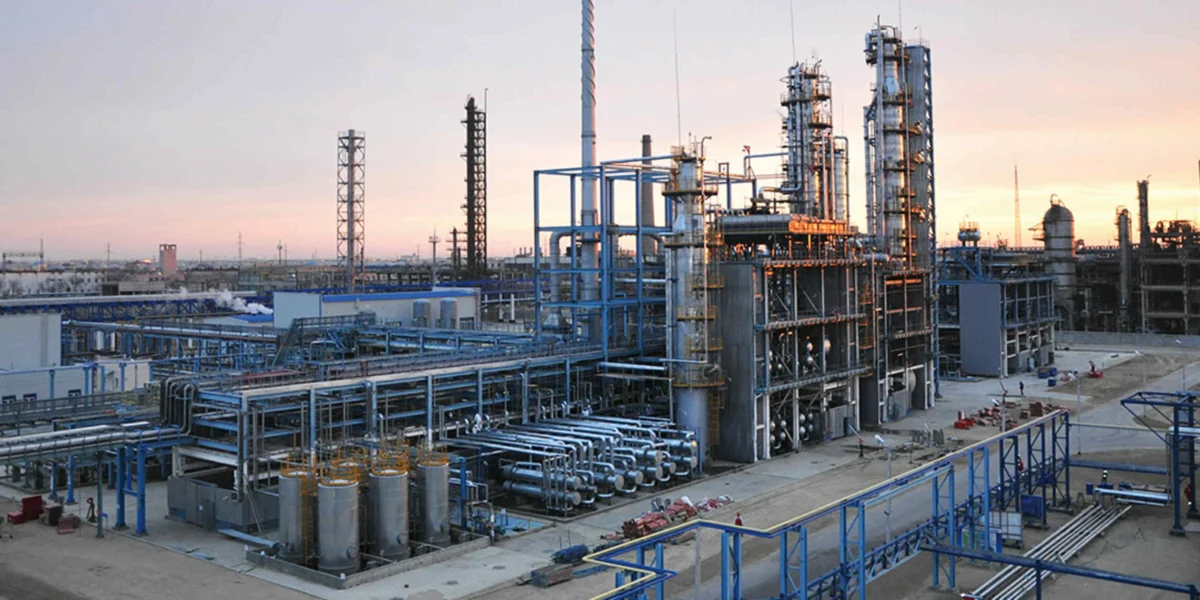
The screenshot accompanying the initial report, showing a crude oil processing facility in Aktau City, a joint project between KazMunayGas and China’s CITIC, serves as a visual testament to the existing collaboration between KMG and Chinese entities in the energy infrastructure domain. This prior experience likely provides a foundation for further, even larger, joint ventures.
Potential Implications of the Shift
The potential exit or reduced role of Eni and Shell from the direct construction and operation of the Karachaganak gas treatment plant would represent a significant recalibration of Kazakhstan’s energy partnerships.
-
For Kazakhstan: This move could empower KazMunayGas to gain invaluable experience in managing and operating large-scale gas processing facilities, enhancing its technical and managerial capacities. It could also lead to more favorable terms for Kazakhstan in terms of project financing, revenue sharing, and national economic benefits. However, it also carries risks associated with increased reliance on state-led execution, which can sometimes face challenges in efficiency and timely delivery compared to established international operators. The potential involvement of a Chinese partner introduces a new dynamic, requiring careful management of international relations and contractual agreements.
-
For Eni and Shell: A diminished role at Karachaganak would represent a setback for the two energy giants, impacting their production and investment portfolios in a strategically important region. It could also signal a broader trend of resource-rich nations seeking greater control over their natural assets and diversifying their international partnerships. For these companies, the challenge will be to navigate these evolving geopolitical and economic landscapes while protecting their investments and ensuring continued access to resources. The specific financial implications for Eni and Shell will depend on the terms of their eventual disengagement or continued involvement in other aspects of the Karachaganak operation.
-
For the Global Energy Market: While Karachaganak’s overall production may not be immediately disrupted, a prolonged dispute or a hasty transition could introduce temporary uncertainties. However, given the field’s scale and the strategic importance of its output, it is likely that all parties will seek to minimize any significant impact on global supply. The shift could also underscore a growing trend of national oil companies taking a more dominant role in their domestic energy sectors, potentially influencing investment flows and partnership models worldwide.
A Look at the Timeline and Future Prospects
The genesis of the current friction likely dates back several years, with initial discussions about the need for a new gas treatment plant commencing well over a decade ago. However, the urgency and the definitive push for a state-led initiative appear to have intensified in the last 2-3 years, coinciding with a period of increased focus on resource nationalism in various parts of the world.
The specific timeline for the potential handover or the commencement of construction under the new KMG-led consortium remains unclear. Negotiations of this complexity often involve protracted discussions over legal frameworks, financial arrangements, and technical specifications. However, the current reports suggest that a decision point may be rapidly approaching.
The future of Karachaganak will be closely watched. If KazMunayGas, potentially with Chinese backing, successfully takes the reins of the gas treatment plant construction, it will mark a significant milestone in Kazakhstan’s energy sector development. It could serve as a blueprint for how other resource-rich nations can assert greater control over their strategic assets and forge new international partnerships. Conversely, any protracted disputes or operational hiccups could underscore the complexities of such transitions and the enduring value of established international expertise. The outcome will undoubtedly have lasting implications for Kazakhstan’s economic trajectory and its position in the global energy landscape.
