

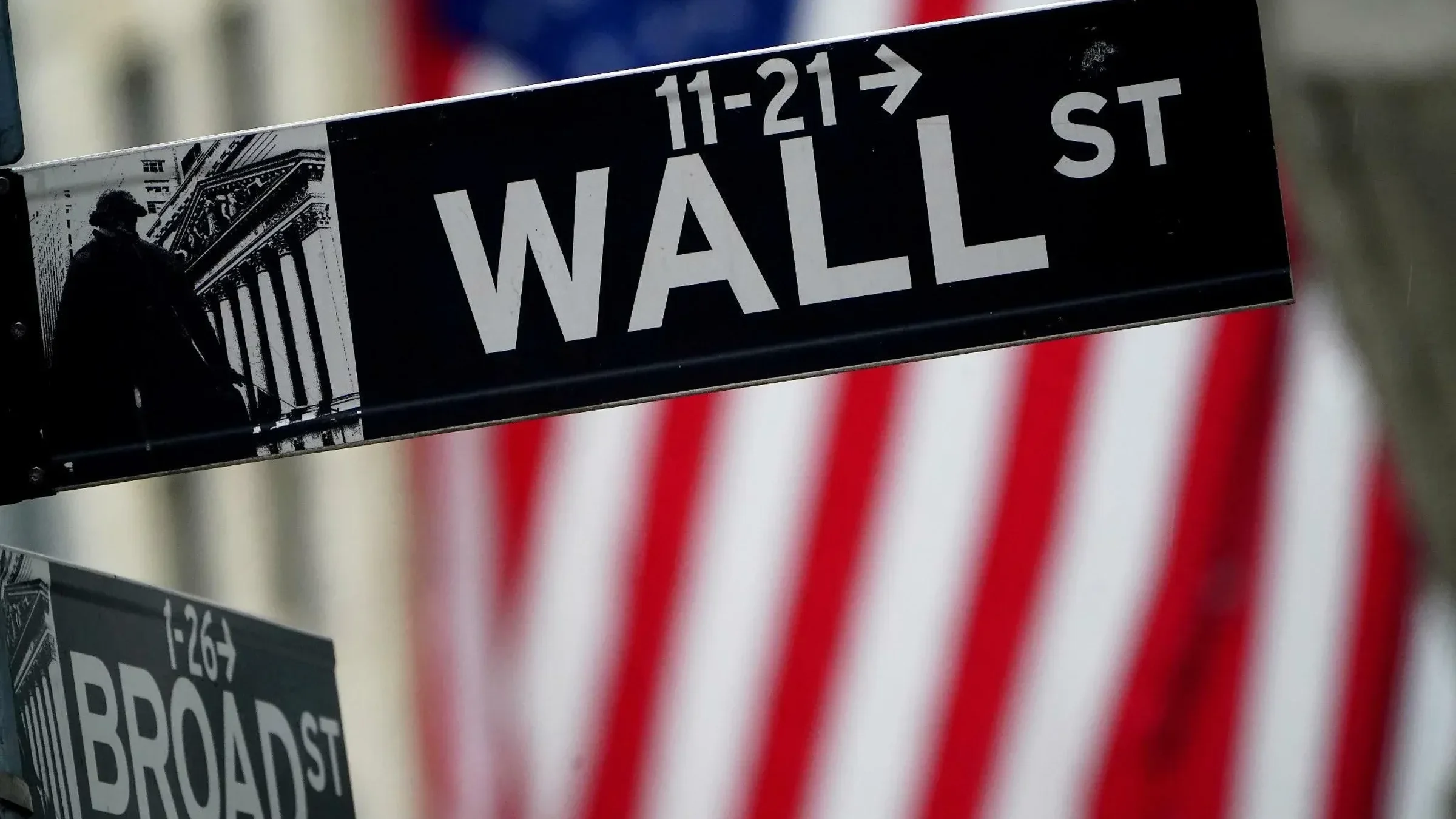
New York, NY – April 16, 2026 – The benchmark indices on Wall Street continued their remarkable ascent on Thursday, building on a streak of gains that has captivated investors. In parallel, the U.S. dollar experienced a notable downturn, falling below a closely watched average, signaling a potential shift in currency market dynamics. This dual movement underscores a complex economic landscape, where equity markets exhibit robust optimism while currency valuations face headwinds.
The sustained strength of U.S. equities, particularly the S&P 500, has been a dominant theme in recent weeks. The broad market index has demonstrated an exceptional ability to shrug off geopolitical concerns and economic uncertainties, consistently reaching new heights. This upward trajectory is not merely a fleeting trend but a sustained performance that has seen the S&P 500 gain an impressive eleven percent in April alone. This surge has been characterized by remarkable consistency, with the index experiencing a downturn on only a single day in the entire month, and that decline was a negligible 0.1 percent. Such a performance is a testament to the strong investor sentiment and the perceived resilience of the U.S. corporate sector.
Market Dynamics and Investor Sentiment
The prevailing sentiment on Wall Street is overwhelmingly positive, a stark contrast to earlier anxieties that had pushed the S&P 500 to its lowest point in eight months at the end of March. This dramatic turnaround has been fueled by a confluence of factors, including positive economic indicators, corporate earnings reports that have largely met or exceeded expectations, and a general sense of optimism regarding future economic growth. Analysts point to the current market environment as one where investors are actively seeking opportunities, driving demand for U.S. equities.
Joachim Schallmeyer, Head of Capital Markets & Strategy at Dekabank, commented on the market’s ability to swiftly rebound from crises. "The indices are quickly putting crises behind them," Schallmeyer stated. "This is good and appropriate, as they have little impact on the earnings development of U.S. companies." This perspective suggests that the underlying fundamentals of many U.S. businesses remain strong, allowing them to weather external shocks and continue to generate profits, which in turn supports their stock valuations.
The Dollar’s Decline: A Shift in Global Currency Markets?
While equities have soared, the U.S. dollar has faced significant pressure, breaking below a key moving average. This decline, though potentially temporary, has broader implications for international trade, investment flows, and global economic balance. The dollar’s weakening suggests a potential recalibration of its status as the world’s primary reserve currency, or at least a period of adjustment in its valuation relative to other major currencies.
The specific moving average that the dollar has fallen below is a significant technical indicator, often watched by traders and analysts for signs of trend changes. Its breach can signal a shift in market sentiment and potentially lead to further downward pressure on the currency if sustained. Several factors could be contributing to this weakening:
- Interest Rate Differentials: While the Federal Reserve has maintained a hawkish stance on interest rates, other central banks may be signaling a shift towards monetary easing or have already begun to do so. This can make U.S. dollar-denominated assets less attractive compared to those offering higher yields in other currencies.
- Geopolitical Developments: While Wall Street has seemingly brushed aside recent geopolitical tensions, the dollar’s performance can be more sensitive to perceived global stability. Any escalation or prolonged uncertainty in international relations could lead investors to seek safer havens, which may or may not be the U.S. dollar.
- Trade Balances: Persistent trade deficits can exert downward pressure on a currency. If the U.S. continues to import more than it exports, it can lead to an outflow of dollars, potentially weakening its value.
- Shifting Investor Risk Appetite: As global markets become more stable and investor confidence grows, there can be a rotation away from traditional safe-haven assets like the dollar towards riskier, higher-yield investments.
Background: The Evolving Geopolitical Landscape
The article briefly alludes to a ceasefire between the U.S. and Iran, and negotiations between warring parties in Islamabad. While these specific details are presented in a somewhat fragmented manner within the original text, they likely refer to broader diplomatic efforts aimed at de-escalating regional conflicts.

- U.S.-Iran Relations: A ceasefire between the U.S. and Iran, even a temporary one, would be a significant development. Such an agreement would typically be preceded by extensive diplomatic maneuvering and could signal a reduction in immediate military tensions. The mention of initial negotiations in Islamabad ending without a resolution, but with a prospect of a second round, suggests a complex and ongoing peace process. U.S. President Donald Trump’s statement about potential developments within the next two days indicates a delicate stage in these diplomatic efforts.
- Israel-Lebanon Ceasefire: The reported agreement for a ten-day ceasefire between Israel and Lebanon would also be a crucial step towards regional stability. Such agreements often involve international mediation and are aimed at preventing further hostilities and creating space for dialogue.
These geopolitical events, while seemingly distant from Wall Street’s daily fluctuations, can have a ripple effect. Reductions in geopolitical risk can boost investor confidence, encouraging investment in equities and potentially affecting currency valuations as capital flows shift. The market’s apparent ability to "hack the crisis" suggests that investors may be discounting the immediate economic impact of these conflicts, focusing instead on the potential for resolution and the underlying strength of the U.S. economy.
Supporting Data and Expert Analysis
The S&P 500’s performance is a key data point illustrating the current market strength. An eleven percent gain in April alone is a substantial figure, especially following a period of decline. This momentum is not merely speculative; it is underpinned by corporate performance. The article notes that the market is focusing on positive signals, and that U.S. stocks are highly sought after by investors. This demand is driven by the perception that U.S. companies are well-positioned for future growth.

The context provided by experts like Schallmeyer is vital. His assertion that market indices are "putting crises behind them" highlights a prevailing market psychology where immediate economic impacts are being minimized in favor of long-term growth prospects. This perspective is crucial for understanding why markets can appear to disregard negative news, as investors are often looking ahead to future earnings potential.
Implications and Broader Impact
The dual movement of a soaring stock market and a weakening dollar presents a mixed economic picture.

- For U.S. Investors: The strength of the stock market is a clear positive, offering opportunities for capital appreciation. However, a weakening dollar means that the returns on U.S. investments may be less valuable when converted back into foreign currencies.
- For International Investors: A weaker dollar can make U.S. assets more attractive for foreign investors, potentially increasing demand for equities and other U.S. assets. However, it also means that their returns, when converted back to their home currency, could be diminished if the dollar continues to fall.
- For Global Trade: A weaker dollar can make U.S. exports cheaper for foreign buyers, potentially boosting export volumes. Conversely, it makes imports more expensive for U.S. consumers and businesses. This can have an impact on trade balances and inflation.
- For Global Economic Stability: The dollar’s role as the world’s primary reserve currency means that significant fluctuations can have far-reaching consequences. A sustained weakening could prompt a reevaluation of currency reserves by central banks and international institutions, potentially leading to a more multipolar currency system.
The article’s mention of the dollar falling "under a closely watched average" is significant from a technical analysis perspective. Traders and portfolio managers often use such moving averages to identify trend shifts. A sustained break below a key average can trigger algorithmic trading strategies and further influence investor behavior.
Conclusion
The U.S. stock market’s continued rally, exemplified by the S&P 500’s strong performance, indicates a high degree of investor confidence and optimism about the future prospects of American companies. This resilience in the face of geopolitical complexities suggests that the market is prioritizing economic fundamentals. Simultaneously, the weakening of the U.S. dollar below a key technical level signals a potential shift in global currency dynamics, the full implications of which will unfold in the coming weeks and months. The interplay between these two trends—equity strength and currency weakness—creates a complex economic environment that warrants close observation by investors, policymakers, and businesses worldwide. The market’s ability to digest and move past recent geopolitical events, as highlighted by expert commentary, underscores a prevailing belief in the underlying strength and recovery potential of the U.S. economy.
