

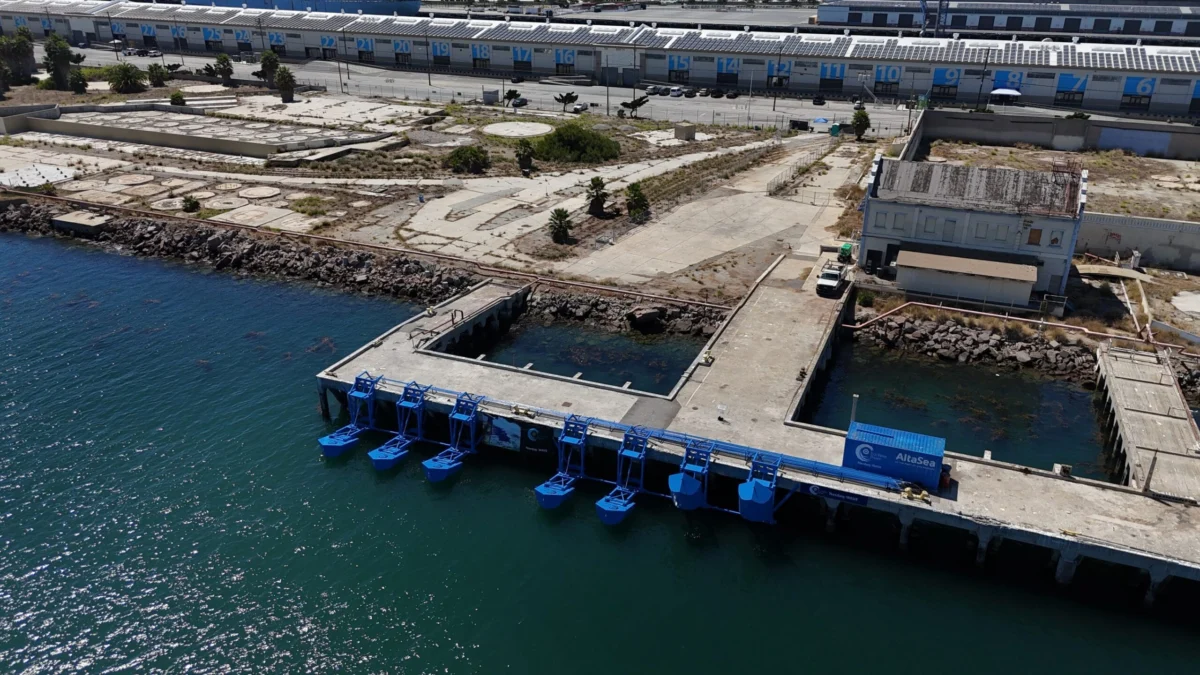
The completion of the wave energy pilot program at the Port of Los Angeles represents a pivotal advancement in the quest to harness the ocean’s kinetic energy, as Eco Wave Power Global AB announced the successful delivery of its final project report to Shell International Exploration and Production. This milestone concludes a comprehensive 2024 Pilot Test Agreement between the two entities, validating the technical and economic viability of onshore wave energy conversion in a real-world maritime environment. By demonstrating that energy can be extracted from waves using existing coastal infrastructure without the need for traditional offshore construction or seabed anchoring, the project addresses several of the historical barriers that have long hindered the marine energy sector.
Achievement of Pilot Milestones and Technical Validation
The pilot program at the Port of Los Angeles was designed to test the endurance, efficiency, and environmental footprint of Eco Wave Power’s patented technology. According to the final report submitted to Shell, the project achieved all predetermined milestones, confirming that the system could operate effectively under the specific maritime conditions of the California coast. One of the most significant metrics revealed in the report was the total capital expenditure (CapEx) for the pilot, which remained below $1 million. This figure is notably lower than traditional offshore wave energy projects, which often require hundreds of millions of dollars in investment for underwater cabling, specialized vessels, and complex mooring systems.
The technology utilizes a series of "floaters" attached to existing man-made structures such as breakwaters, piers, or jetties. As waves rise and fall, the movement of these floaters drives hydraulic cylinders located on the structure. These cylinders pump pressurized biodegradable fluid to a land-based power station, where a hydraulic motor rotates a generator to produce electricity. By housing the most sensitive electrical and mechanical components on land, the system avoids the corrosive effects of constant saltwater immersion and the high maintenance costs associated with deep-sea operations.
Environmental and Regulatory Success
A critical component of the Los Angeles pilot was the environmental assessment and permitting process. The project was granted full permits after an evaluation concluded that the installation would have "no significant environmental impact." This is a major hurdle for many marine renewable projects, which often face opposition due to concerns regarding underwater noise pollution, disruption of benthic habitats, or entanglement risks for marine mammals. Because the Eco Wave Power system is attached to existing concrete structures and does not involve drilling into the seabed or laying extensive subsea cables, its ecological footprint is minimized.
The Port of Los Angeles installation now serves as a blueprint for urban coastal energy integration. Beyond its role as a functional power unit, the site will continue to serve as a demonstration and educational facility. This allows policymakers, port authorities, and potential investors to observe the technology in action, demystifying wave energy as a "future" concept and positioning it as a present-day reality.
A Chronology of Collaboration and Strategic Feasibility
the partnership between Eco Wave Power and Shell did not begin at the Port of Los Angeles. It was preceded by a multi-year collaborative effort aimed at identifying the most commercially viable locations for wave energy deployment across the United States. A large-scale feasibility study conducted by the two companies identified 77 potential coastal sites in the U.S. that are suitable for Eco Wave Power’s technology. These sites were selected based on wave climate, proximity to existing infrastructure, and local grid demand.
The timeline of the current project reached a major peak in September 2023, when Eco Wave Power officially launched the Port of Los Angeles installation. This marked the company’s first successful entry into the American market, following previous successes in Gibraltar and Israel. The transition from the feasibility study phase to a physical, operational pilot in Los Angeles demonstrates a rapid progression from theoretical modeling to industrial application.
Supporting Data: The Potential of Wave Energy
To understand the implications of this pilot, it is necessary to look at the broader energy data context. According to the U.S. Energy Information Administration (EIA), the theoretical annual energy potential of waves off the coasts of the United States is estimated to be as high as 2.64 trillion kilowatt-hours. This is equivalent to approximately 64% of the total electricity generation in the United States in 2021. Despite this massive potential, wave energy has remained a "niche" renewable compared to solar and wind, largely due to the harsh conditions of the open ocean that destroy equipment and drive up insurance and maintenance costs.
The Eco Wave Power approach seeks to lower the Levelized Cost of Energy (LCOE) by leveraging "onshore" or "near-shore" advantages. By reducing CapEx to under $1 million for a pilot and utilizing existing structures, the company aims to bring wave energy costs in line with more mature renewable technologies. The successful pilot in Los Angeles provides the data points necessary to prove that wave energy can be both affordable and scalable when integrated with existing port infrastructure.

Official Responses and Industry Reactions
While specific internal comments from Shell regarding the final report remain confidential, the energy major’s continued involvement signals a strategic interest in diversifying its renewable energy portfolio. Shell’s "Powering Progress" strategy involves significant investment in low-carbon energy solutions, and the successful completion of this pilot suggests that wave energy could play a role in the company’s long-term transition goals.
Industry analysts have noted that the success of the Port of Los Angeles project could trigger a "domino effect" among other major global ports. Port authorities are under increasing pressure to decarbonize operations and reduce the "Scope 3" emissions of the vessels and logistics companies that use their facilities. Onshore wave energy provides a consistent, base-load-adjacent power source that can help ports achieve "Green Port" certifications and meet local renewable energy mandates.
Global Expansion: From Los Angeles to South Africa
The momentum generated in California is already translating into international expansion. Eco Wave Power recently announced the results of a feasibility study for a potential wave energy power station at the Port of Ngqura in South Africa. Conducted in collaboration with Africa Great Future Development Ltd (AGFDL), the study yielded what the company described as "encouraging" results.
The technical assessment indicates that the breakwater infrastructure at the Port of Ngqura has the potential to support approximately 8.3 MW of installed wave energy capacity. This would represent a significant scale-up from the Los Angeles pilot, moving from a demonstration phase to a commercial-scale power station capable of supplying electricity to thousands of homes or industrial port operations. The South African project is currently moving toward further development and permitting assessments, mirroring the path taken in the United States.
Analysis of Implications for the Renewable Energy Mix
The successful conclusion of the Shell-Eco Wave Power pilot highlights a fundamental shift in the marine energy sector. For decades, the focus was on offshore "wave farms" that mimicked the layout of offshore wind. However, the high failure rate of these projects due to storm damage and maintenance difficulties led to a cooling of investor interest. The "onshore" pivot represented by Eco Wave Power addresses these vulnerabilities by keeping the "brains" of the operation on dry land and using the durability of existing concrete maritime structures to protect the mechanical components.
Furthermore, wave energy offers a distinct advantage over solar and wind in terms of energy density and predictability. Waves are more consistent than wind and continue to provide energy after the sun sets, making them an ideal complement to a solar-heavy grid. In a region like California, which faces grid stability challenges during the "duck curve" period of the evening, a steady stream of wave-generated power could provide much-needed reliability.
The economic implications are equally notable. By proving that a project can be fully permitted and deployed with a CapEx of less than $1 million, Eco Wave Power has lowered the barrier to entry for smaller municipalities and private port operators. This "modular" approach allows for incremental scaling, where a port can start with a small array of floaters and expand as energy needs grow, rather than requiring a massive upfront investment in a large-scale offshore array.
Conclusion and Future Outlook
The submission of the final project report to Shell marks the end of a successful pilot but the beginning of a broader commercialization phase for Eco Wave Power. With the Port of Los Angeles site remaining as a reference project, the company is well-positioned to capitalize on the 77 potential sites identified in its U.S. study. As global ports seek to become energy hubs rather than just logistics hubs, the integration of wave energy into breakwaters and piers offers a path toward self-sufficiency and carbon neutrality.
The collaboration with Shell International Exploration and Production underscores the growing recognition that marine energy is a vital component of the global energy transition. If the technical success in Los Angeles can be replicated at scale in locations like South Africa and across the U.S. coastline, wave energy may finally move from the fringes of renewable technology into the mainstream, providing a clean, reliable, and cost-effective power source for coastal populations worldwide.
