

Turboden America, a subsidiary of the Mitsubishi Heavy Industries Group, has finalized a multi-year framework agreement with Fervo Energy to supply Organic Rankine Cycle (ORC) power generation units for up to 35 "GeoBlocks," representing a massive 1,750-megawatt expansion of dispatchable geothermal energy. This three-year agreement marks a significant milestone in the commercialization of next-generation geothermal technology, aiming to streamline supply chains and accelerate the deployment of carbon-free, firm power to the United States electrical grid. The collaboration focuses on Fervo’s modular approach to geothermal development, utilizing standardized 50 MW units—known as GeoBlocks—to meet the rapidly growing electricity demands driven by industrial expansion and the proliferation of energy-intensive data centers.
A New Paradigm for Geothermal Scaling
The framework agreement establishes a standardized roadmap for the delivery of power generation equipment, a move designed to mitigate the long lead times that often plague large-scale infrastructure projects. By securing a predictable pipeline for ORC units, Fervo Energy can move more aggressively on its project timelines, while Turboden America gains the market certainty required to scale its manufacturing capabilities within the U.S. market.
Turboden S.p.A., headquartered in Italy and operating globally under the Mitsubishi Heavy Industries (MHI) umbrella, specializes in the design and manufacture of ORC turbogenerators. These systems are particularly well-suited for geothermal applications because they can efficiently convert medium-to-high temperature heat into electricity through a closed-loop process. Unlike traditional steam turbines that require high-pressure steam directly from the earth, ORC systems use an organic fluid with a lower boiling point, allowing for effective power generation from a wider range of thermal resources.
Paolo Bertuzzi, President of Turboden America LLC and CEO of Turboden S.p.A., emphasized that the partnership is a response to the increasing strain on the domestic power grid. "Over the past two years, we have built a constructive strategic relationship with Fervo, and this framework agreement reflects a mutual commitment to continued and expanded collaboration," Bertuzzi stated. He noted that geothermal energy is uniquely positioned to stabilize the grid by providing "clean, firm energy," a term used to describe renewable sources that are available 24/7, unlike intermittent solar and wind.
The Cape Station Foundation
The current framework builds upon an existing relationship between the two firms. Turboden is already under contract to supply ORC units for the first three 50 MW GeoBlocks at Fervo’s flagship "Cape Station" development in Beaver County, Utah. This initial project is currently in the advanced commissioning stage of Phase I, with a commercial startup expected later this year.
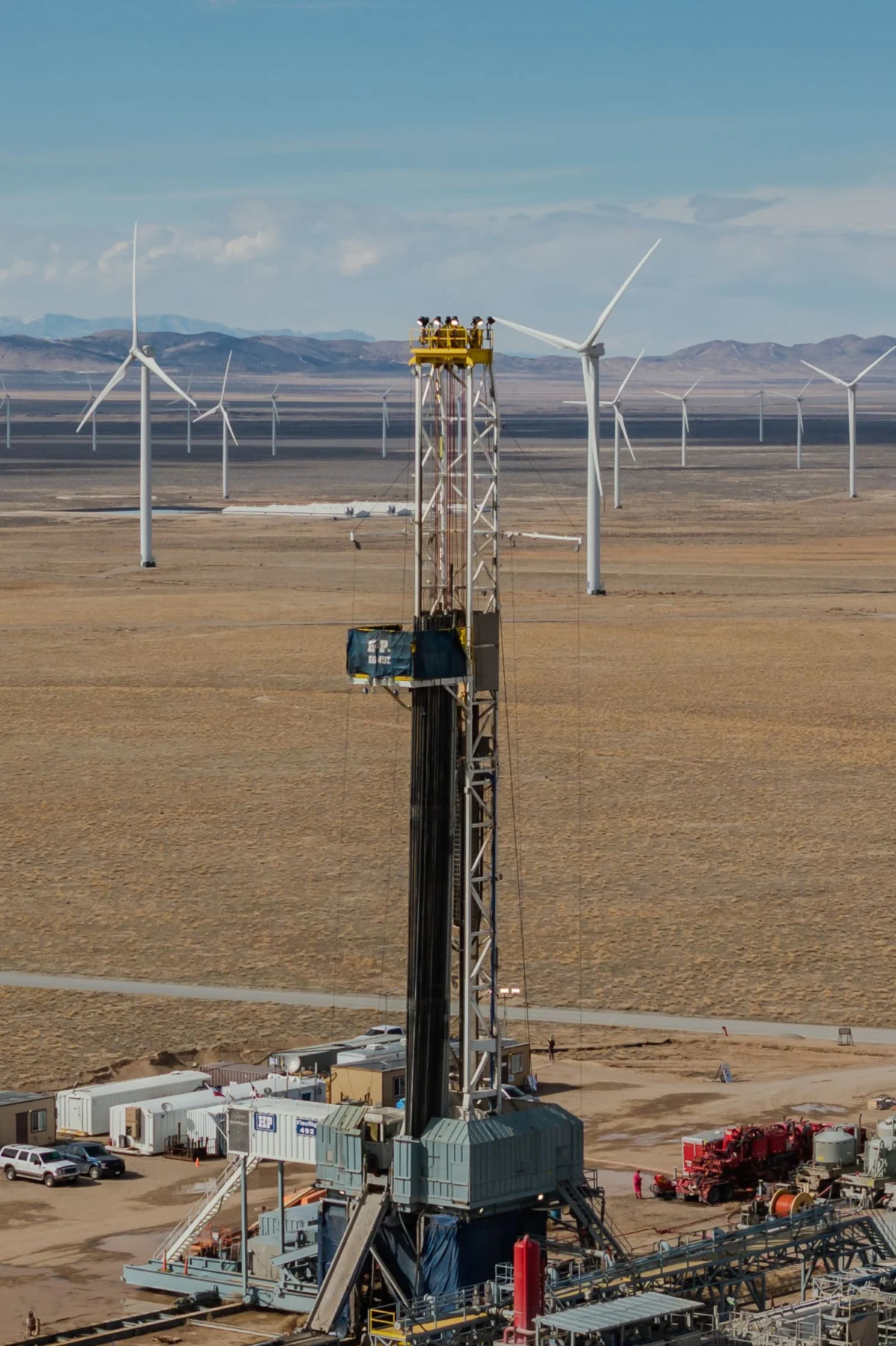
Cape Station represents the vanguard of Enhanced Geothermal Systems (EGS). While traditional geothermal energy relies on finding naturally occurring "hydrothermal" reservoirs—pockets of hot water and steam trapped in porous rock—EGS technology allows developers to create their own reservoirs. By utilizing advanced drilling techniques borrowed from the oil and gas industry, Fervo Energy drills into hot, dry basement rock, creates a network of fractures, and circulates water through those fractures to extract heat.
This technological shift vastly expands the geographic footprint where geothermal energy can be harvested. While traditional geothermal is limited to specific "hot spots" with naturally occurring water, EGS can theoretically be deployed anywhere there is sufficiently hot rock at reachable depths.
Chronology of Development and Project Milestones
The trajectory of the Fervo-Turboden partnership follows a clear timeline of technological validation and scaling:
- 2021-2023: Fervo Energy conducts pilot tests, including its successful "Project Red" in Nevada, which demonstrated the viability of horizontal drilling and multi-stage stimulation in geothermal applications. During this period, the initial technical relationship with Turboden was established.
- Late 2023: Fervo breaks ground on Cape Station in Utah, the world’s largest EGS development.
- 2024: Advanced commissioning begins for Cape Station Phase I. The project is designed to deliver its first 100 MW of baseload power to the grid by 2026.
- Early 2025: The 1,750 MW framework agreement is signed, providing the hardware foundation for the next 35 GeoBlocks.
- 2026-2028: Cape Station Phase II is scheduled to come online, adding another 400 MW of capacity.
- Post-2028: The full Cape Station development, which has received permitting approval for up to 2,000 MW (2 GW), will continue to scale toward its maximum capacity using the units secured under the new framework.
Technical Specifications and Environmental Impact
The ORC units provided by Turboden are designed for maximum environmental efficiency. The systems operate without increasing fuel consumption or carbon dioxide emissions, as they utilize the earth’s internal heat as the sole energy source. Furthermore, the closed-loop nature of the ORC process means that the working fluid is recycled, and the geothermal brine extracted from the ground is reinjected into the reservoir, minimizing water consumption—a critical factor in the arid climate of the American West.

Tim Latimer, CEO and co-founder of Fervo Energy, highlighted the importance of the MHI partnership in achieving industrial scale. "By combining Turboden’s proven ORC technology with the global capabilities of Mitsubishi Heavy Industries, we are strengthening the supply chain needed to build geothermal at scale," Latimer said. He noted that the collaboration is central to Fervo’s mission of bringing reliable, 24/7 carbon-free energy to a grid that is increasingly hungry for "always-on" power.
Utah: The Epicenter of the Geothermal Renaissance
The choice of Utah for the Cape Station project is no coincidence. The state is home to some of the most significant geothermal potential in the United States. Researchers and geologists estimate that the southwestern portion of Utah alone contains more than 10 GW of high-quality geothermal reserves.
The region’s development has been significantly aided by the U.S. Department of Energy’s (DOE) Frontier Observatory for Research in Geothermal Energy (FORGE). Located near the Cape Station site, FORGE is a dedicated underground laboratory where scientists and engineers test new EGS technologies, drilling methods, and monitoring tools. The data produced by FORGE over the last several years has lowered the risk for private developers like Fervo, providing a clear geological map and technical baseline for large-scale commercialization.
When fully developed, the Cape Station project will occupy approximately 631 acres. This includes 148 acres of public lands managed by the Bureau of Land Management (BLM), which recently took steps to expedite the permitting process for geothermal exploration as part of a broader federal push for renewable energy.
Broader Industry Context and the Rise of Data Centers
The agreement between Turboden and Fervo arrives at a pivotal moment for the energy industry. The surge in Artificial Intelligence (AI) and cloud computing has led to an unprecedented demand for new data centers. Companies such as Google, Microsoft, and Amazon have set ambitious carbon-neutral goals, but the intermittent nature of solar and wind energy makes it difficult to power 24/7 data center operations solely with those sources.
Geothermal energy, particularly the modular "GeoBlock" approach, offers a solution. Because it provides a steady "baseload" of power regardless of weather conditions or time of day, it serves as a direct replacement for coal or natural gas plants. Industry analysts suggest that the ability to "fast-track" geothermal projects through framework agreements like the one signed by Turboden and Fervo will be a major selling point for tech giants looking to secure green power for their next generation of server farms.
The U.S. Geothermal Landscape in 2025
The United States currently leads the world in geothermal capacity, with approximately 3,900 MW installed. However, this represents only a small fraction of the country’s total potential. The distribution of geothermal power is currently concentrated in a handful of Western states:
- California: Dominates the sector, accounting for 66.6% of total U.S. geothermal generation in 2023, largely due to The Geysers field north of San Francisco.
- Nevada: The second-largest producer at 26.1%.
- Utah: Currently holds a 3.2% share, though this is expected to rise sharply as Cape Station comes online.
- Other States: Hawaii (2.1%), Oregon (1.3%), Idaho (0.5%), and New Mexico (0.2%) maintain smaller footprints.
The 1,750 MW covered by the new framework agreement is nearly half of the current total U.S. installed capacity. If fully realized, this single partnership could increase the nation’s geothermal output by nearly 45%, underscoring the transformative potential of the Fervo-Turboden collaboration.
Implications for the Energy Transition
The shift toward framework agreements and modular technology signifies the "industrialization" of geothermal energy. Historically, geothermal projects were treated as bespoke, one-off engineering feats, which led to high costs and unpredictable schedules. By moving toward a standardized "product" like the GeoBlock, Fervo and Turboden are applying the same principles that led to the rapid cost declines in solar and wind power.
This agreement also highlights the role of traditional industrial giants in the energy transition. Mitsubishi Heavy Industries, through Turboden, provides the manufacturing muscle and global supply chain expertise necessary to move EGS from a laboratory curiosity to a cornerstone of the national power grid. As Phase I of Cape Station nears its 2026 delivery date, the industry will be watching closely to see if this model can indeed provide the "efficient path" to meeting the world’s rising demand for clean, firm energy.
