

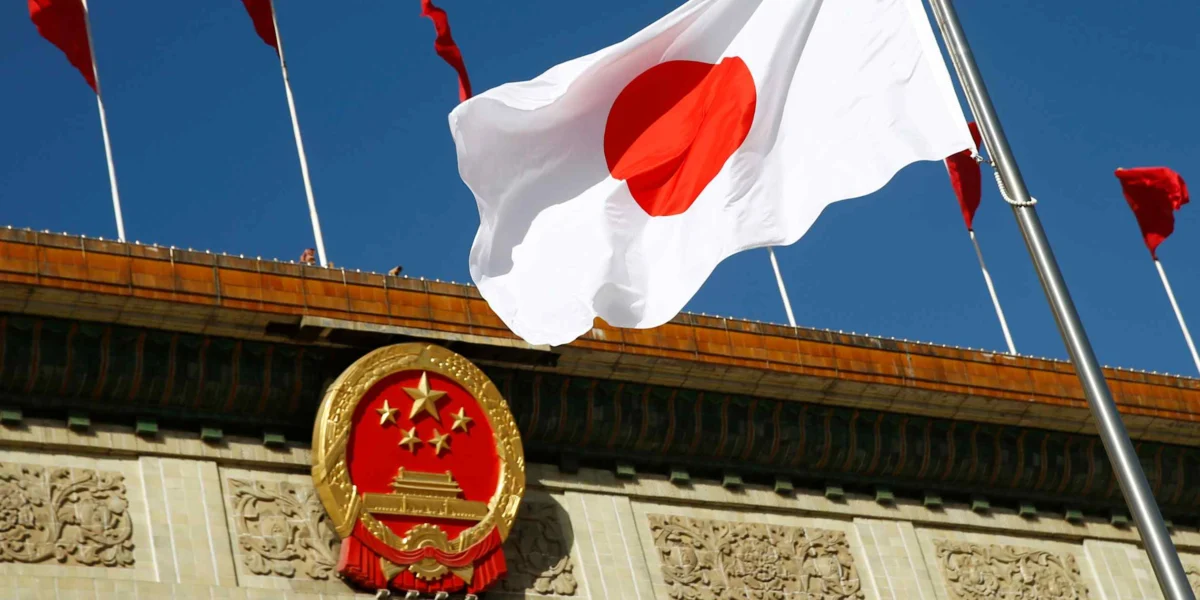
Japan has officially reclassified its relationship with China, labeling the neighboring superpower an "important neighbor" in a draft of its annual diplomatic bluebook. This subtle yet significant alteration marks a departure from the previous formulation that described the relationship as "one of Japan’s most important bilateral relations." The shift, unveiled by the Japanese government on Tuesday, comes against a backdrop of escalating bilateral tensions, underscored by recent Chinese export restrictions targeting dual-use goods destined for Japan and a series of pointed remarks from Japanese political figures concerning Taiwan.
Evolving Diplomatic Language and Underlying Concerns
The change in terminology, while seemingly minor, signals a recalibration of Japan’s approach to its most significant geopolitical and economic partner. The previous description in the diplomatic bluebook had long emphasized the crucial nature of the bilateral ties, reflecting decades of deeply intertwined economic activity and strategic considerations. The new phrasing, "important neighbor," while still acknowledging the proximity and significance of China, suggests a more guarded and perhaps less interdependent framing of the relationship.
This linguistic adjustment is not merely semantic. It reflects a growing unease within Tokyo regarding Beijing’s assertive foreign policy, its increasing military presence in the Indo-Pacific, and its willingness to leverage economic tools for political ends. The inclusion of specific concerns about China’s export restrictions on dual-use goods—items that can have both civilian and military applications—in the draft bluebook highlights a key area of friction. These restrictions, implemented by Beijing, are perceived by Japan as a form of economic coercion, particularly in light of Japan’s evolving security posture and its strengthening alliance with the United States.
Background: A Deteriorating Relationship
The diplomatic bluebook is a critical annual report published by the Japanese Ministry of Foreign Affairs. It outlines Japan’s foreign policy stance, analyzes the global geopolitical landscape, and details its relationships with key countries. Any alteration in its descriptions is carefully considered and indicative of a deliberate policy shift.
The current chill in Japan-China relations can be traced back to several key developments. In late 2025, remarks made by Japanese Prime Minister Sanae Takaichi regarding the strategic importance of Taiwan and the potential implications of any military action by Beijing against the island, drew sharp condemnation from China. These statements, while reflecting a growing consensus within Japan and its allies about the need to deter aggression in the region, were viewed by Beijing as a provocative interference in its internal affairs.
Following these remarks, China began to implement a series of export controls. While Beijing has officially framed these measures as necessary to uphold national security and prevent the proliferation of sensitive technologies, Japanese officials and industry leaders have widely interpreted them as retaliatory. The targeted nature of these restrictions, specifically impacting goods with potential dual-use applications, has fueled concerns about China’s willingness to weaponize its economic leverage.
Timeline of Escalating Tensions and Diplomatic Responses
- Late 2025: Japanese Prime Minister Sanae Takaichi makes public statements emphasizing the critical importance of peace and stability across the Taiwan Strait and expressing concerns about potential Chinese military actions. These remarks spark significant diplomatic friction with Beijing.
- Early 2026: China begins to implement new export controls on a range of dual-use goods, including advanced materials, specialized chemicals, and certain electronic components. These measures are reportedly impacting Japanese manufacturers reliant on these inputs.
- March 24, 2026: Japan’s Ministry of Foreign Affairs releases a draft of the annual diplomatic bluebook. The document notably reclassifies the relationship with China from "one of Japan’s most important bilateral relations" to an "important neighbor."
- March 25, 2026: The draft bluebook is presented to the government for review and finalization. The revised language and explicit mention of China’s export restrictions on dual-use goods targeting Japan are highlighted by media outlets.
Supporting Data and Economic Interdependence
The economic ties between Japan and China are substantial, making the use of economic leverage by Beijing a particularly sensitive issue. In 2023, two-way trade between Japan and China reached approximately $300 billion USD. Japan has long been a significant investor in China, and Chinese supply chains are deeply integrated with Japanese manufacturing sectors, particularly in areas like electronics, automotive, and advanced materials.
The dual-use goods targeted by China’s export restrictions are crucial for various Japanese industries. For instance, specialized chemicals are essential for semiconductor manufacturing, a sector where Japan holds significant technological prowess. Advanced materials are vital for the aerospace and defense industries, areas where Japan is increasingly seeking to bolster its capabilities in line with its revised security strategy. The disruption of these supply chains could have ripple effects, impacting production costs, delivery times, and ultimately, Japan’s competitive edge in key global markets.
The specific nature of the dual-use goods also raises national security concerns for Japan. The country, bound by its pacifist constitution, is nonetheless increasing its defense spending and enhancing its capabilities to respond to regional security challenges. Restrictions on the export of technologies that could be used for both civilian and military purposes can hinder Japan’s own defense modernization efforts and its ability to contribute to regional stability.
Official Responses and Inferred Reactions
While official statements from both Tokyo and Beijing have been carefully worded, the implications of the bluebook’s revised language are clear. The Japanese Ministry of Foreign Affairs, in its public statements surrounding the bluebook’s release, has emphasized the need for stable and constructive bilateral relations. However, it has also underscored the importance of addressing specific concerns, such as the impact of export controls on international trade and the principle of fair competition.
Unofficially, Japanese business leaders have expressed considerable concern over the export restrictions. Industry associations have reportedly engaged in discussions with government officials to assess the impact and explore potential mitigation strategies, including diversifying supply chains and seeking alternative sources of critical materials.
China, in turn, has largely reiterated its stance on national security and its sovereign right to regulate exports. Beijing has accused Japan of aligning too closely with the United States and engaging in activities that undermine regional stability, particularly with regard to Taiwan. The Chinese Ministry of Foreign Affairs has consistently called on Japan to adopt a responsible attitude and to avoid actions that could jeopardize the broader relationship.
Broader Impact and Implications
The shift in Japan’s diplomatic language towards China, coupled with the specific grievances highlighted in the bluebook, signals a more assertive and perhaps more pragmatic approach to managing a complex and increasingly fraught relationship.
1. Strategic Rebalancing: The reclassification suggests Japan is seeking to balance its economic interdependence with China against its growing security concerns and its alignment with democratic allies. The "important neighbor" label acknowledges proximity and ongoing engagement but avoids the deeper, more entwined connotations of "most important bilateral relations," signaling a strategic distance.
2. Economic Resilience: The explicit mention of export restrictions on dual-use goods underscores Japan’s commitment to addressing economic coercion. This could lead to further policy initiatives aimed at enhancing supply chain resilience, diversifying import sources, and potentially developing domestic alternatives for critical technologies.
3. Regional Security Dynamics: The tensions between Japan and China are a significant factor in the broader Indo-Pacific security landscape. Japan’s stance, as reflected in the bluebook, reinforces its commitment to regional stability and its willingness to push back against what it perceives as destabilizing actions by Beijing. This could further solidify alliances with countries like the United States and Australia, who share similar concerns about China’s regional assertiveness.
4. Diplomatic Signaling: The diplomatic bluebook serves as a key signal to domestic audiences, international partners, and China itself about Japan’s foreign policy priorities. The revised language and specific concerns communicate a clear message: while Japan seeks peaceful coexistence and economic engagement, it will not shy away from addressing actions that it deems detrimental to its national interests and regional security.
The coming months will reveal the full extent of the impact of this diplomatic recalibration. However, the draft bluebook’s updated framing of the Japan-China relationship and its pointed critique of Beijing’s economic practices represent a significant moment in the evolving geopolitical dynamics of East Asia. Japan’s move to label China an "important neighbor" is not a repudiation of the relationship, but a clear indication of a more cautious, strategic, and security-conscious engagement with its powerful, and increasingly assertive, counterpart.
