

The escalating conflict involving Iran has sent shockwaves through global energy markets, triggering a significant and sustained surge in crude oil prices, most notably impacting the Asian benchmark, Dubai crude. The geopolitical turmoil has exacerbated existing supply concerns, intensifying competition among nations heavily dependent on Middle Eastern oil for their energy needs. This dynamic has led to a precarious situation where demand outstrips the available supply, pushing prices to levels not seen in years, with profound implications for economies worldwide.
Escalation of the Iran Conflict and its Immediate Market Impact
The precise trigger for the current "Iran war" remains a complex and evolving narrative, but its intensification in early March 2026 marked a critical inflection point for global oil markets. While the specifics of military engagements and diplomatic fallout continue to unfold, the undeniable consequence has been a disruption to the flow of oil from a region that is a cornerstone of global energy security. Initial reports of heightened tensions, followed by confirmed military actions in and around the Persian Gulf, immediately spooked traders and refiners.
On March 10, 2026, news of significant naval skirmishes in the Strait of Hormuz, a vital chokepoint for a substantial portion of global oil exports, sent crude futures spiraling. Brent crude, the international benchmark, saw an immediate jump of over 5%, while West Texas Intermediate (WTI) followed suit. However, the impact on Dubai crude, which serves as the primary pricing reference for a vast swathe of Asian crude oil transactions, proved to be even more dramatic. By March 15, Dubai crude futures had climbed by an unprecedented 12% from pre-conflict levels, reaching over $95 per barrel. This rapid ascent underscored the market’s immediate recognition of the vulnerability of Middle Eastern oil supplies.
The Dubai Crude Premium: A Function of Supply Scarcity and Asian Demand
The disproportionate surge in Dubai crude prices can be attributed to several interconnected factors, chief among them being the heightened risk premium associated with Middle Eastern production and the specific demand profiles of key Asian consumers. Nations across East Asia, including major importers like China, Japan, South Korea, and India, rely heavily on crude oil sourced from Saudi Arabia, Iraq, the UAE, Kuwait, and Iran itself. The conflict has directly threatened the production and transit of oil from these nations.
The Strait of Hormuz, through which a significant percentage of Dubai crude is shipped, became a focal point of concern. Any perceived threat to its unimpeded passage immediately translates into higher shipping insurance costs, longer transit times due to rerouting, and the very real possibility of supply disruptions. For Asian economies, which are often in a state of robust economic activity and thus high energy consumption, the availability of affordable crude oil is paramount. The current conflict has pitted these nations against each other in a desperate scramble for the remaining secure supplies, driving up the price of the most readily available benchmark for their needs.
A Timeline of Escalation and Market Reaction
The period between early March and late March 2026 witnessed a rapid and unsettling progression of events:
- March 1-5, 2026: Initial reports of heightened diplomatic tensions between Iran and several Gulf states, coupled with increased military posturing in the region. Oil prices see a modest upward trend as a precautionary measure.
- March 6, 2026: The first significant naval incident is reported in the Persian Gulf. Brent crude futures jump 3%, and Dubai crude sees a 2% increase.
- March 10, 2026: A major military engagement occurs near the Strait of Hormuz, involving naval assets and missile exchanges. This marks the definitive escalation into what is now termed the "Iran war." Brent crude surges over 5% within hours, reaching $90 per barrel. Dubai crude futures jump 4%, exceeding $88 per barrel.
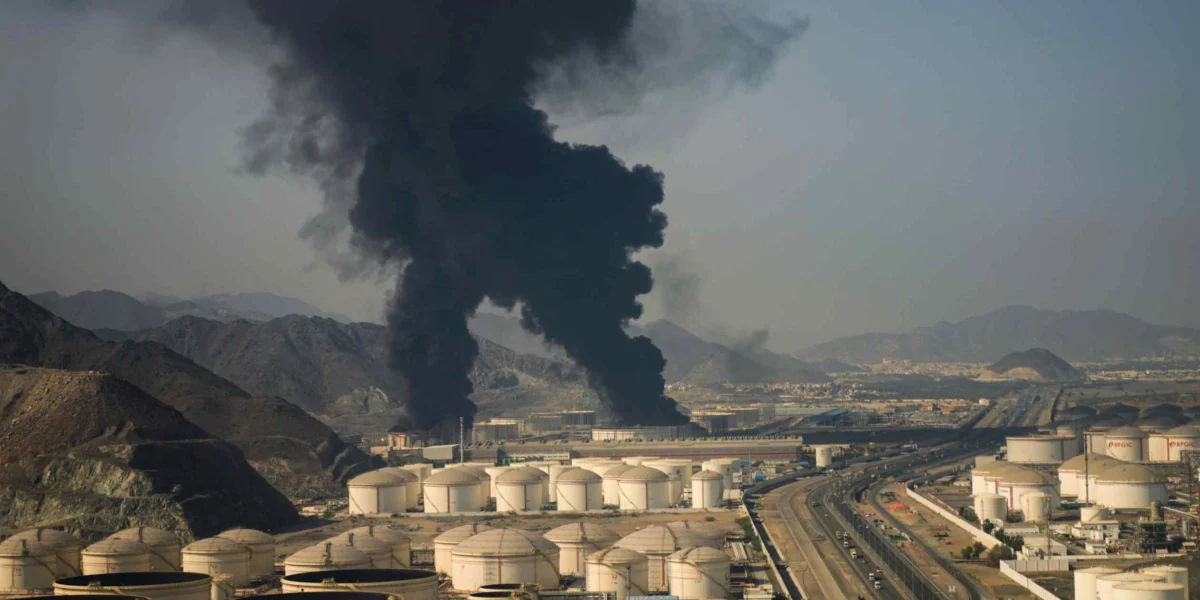
- March 14, 2026: Images emerge of smoke plumes rising from an oil facility in Fujairah, United Arab Emirates, reportedly due to a drone strike. While the UAE states its oil infrastructure remains largely unaffected, the incident amplifies fears of broader regional instability and direct attacks on energy assets. Dubai crude prices breach $92 per barrel.
- March 18, 2026: Major oil-producing nations in the Middle East announce precautionary measures, including increased security around their export terminals and production facilities. Some minor, localized production disruptions are reported in Iraq and southern Iran due to logistical challenges. Dubai crude futures climb to $94.50 per barrel.
- March 21, 2026: International energy agencies release updated forecasts, projecting a potential deficit in global oil supply for the second quarter of 2026 if tensions persist. This news further fuels market anxiety. Dubai crude settles above $95 per barrel, its highest point since the outbreak of hostilities.
Supporting Data: Price Trends and Supply Dynamics
The market’s reaction has been quantifiable. Prior to the escalation in early March 2026, Dubai crude was trading in a relatively stable range of $80-$82 per barrel. Within a mere two weeks, this price had climbed by nearly 20%. This surge is not merely speculative; it reflects a tangible shift in supply-demand fundamentals.
According to data from the International Energy Agency (IEA), global oil demand in the first quarter of 2026 was projected at 105 million barrels per day. While production from non-OPEC+ nations has seen gradual increases, the Middle East remains responsible for approximately 30% of global crude oil output. The conflict has introduced a significant risk factor to this supply, with estimates suggesting that up to 2 million barrels per day of Middle Eastern crude could be directly or indirectly impacted by heightened tensions and potential disruptions.
The impact on refining margins has also been significant. As crude prices rise, refiners face higher input costs. However, the increased demand for refined products, coupled with the premium placed on available crude, has allowed some refiners to pass on these costs, leading to higher gasoline and diesel prices at the pump in many Asian countries. For example, average gasoline prices in Japan, which heavily imports refined products and crude, have risen by approximately 15% since early March.
Official Responses and Diplomatic Efforts
Governments and international bodies have been actively responding to the escalating crisis. The United Nations Security Council convened emergency sessions, calling for an immediate de-escalation of hostilities and urging all parties to exercise restraint. Secretary-General António Guterres issued a stern warning regarding the potential for catastrophic consequences for global peace and economic stability if the conflict were to spread.
Major oil-consuming nations, particularly in Asia, have engaged in urgent diplomatic outreach to key Middle Eastern producers. Representatives from Japan, South Korea, and China have held high-level talks with officials in Saudi Arabia and the UAE, seeking assurances of stable supply and exploring potential strategic petroleum reserve releases. While these nations have pledged to maintain their export commitments, the underlying threat to transit routes remains a significant concern.
The Organization of the Petroleum Exporting Countries and its allies (OPEC+), which includes Russia and other major producers, have been monitoring the situation closely. While the group has historically aimed to stabilize oil markets through production adjustments, the current geopolitical complexities surrounding Iran, a member of OPEC, present a delicate balancing act. Any official production cuts by OPEC+ could further exacerbate supply concerns, while inaction might be perceived as insufficient to address the market’s anxieties.
Broader Impact and Implications
The sustained rise in crude oil prices has far-reaching implications beyond the energy sector.
Economic Strain on Importing Nations:
Countries heavily reliant on oil imports face significant economic challenges. Higher energy costs translate directly into increased inflation, reduced consumer spending power, and a potential slowdown in economic growth. For developing economies, the impact can be particularly severe, potentially leading to balance of payments crises and increased debt burdens. The competition for dwindling supplies could also lead to increased bilateral energy deals, potentially fragmenting the global market and creating new geopolitical dependencies.
Geopolitical Realignment:
The conflict and its impact on energy markets could catalyze significant geopolitical realignments. Nations that are net energy exporters may see their influence grow, while importing nations will likely redouble efforts to diversify their energy sources and accelerate the transition to renewable energy technologies. The vulnerability exposed in the current system could spur greater investment in domestic production, energy efficiency measures, and alternative fuels.
Inflationary Pressures and Monetary Policy:
The surge in energy prices is a significant driver of global inflation. Central banks worldwide will face increased pressure to tighten monetary policy, potentially raising interest rates further to curb inflation. This, in turn, could dampen economic activity and increase the risk of recession in some economies. The delicate balance between managing inflation and supporting economic growth will be a key challenge for policymakers in the coming months.
Long-Term Energy Security Concerns:
The current crisis highlights the persistent vulnerability of global energy markets to geopolitical shocks. It underscores the need for greater investment in diversified energy infrastructure, including renewable energy sources, nuclear power, and advanced battery storage technologies. The long-term energy security of nations will depend on their ability to reduce reliance on volatile fossil fuel markets and build more resilient and sustainable energy systems.
The unfolding events surrounding the Iran conflict and its impact on oil prices represent a critical juncture for the global economy. The immediate challenge is to mitigate the inflationary pressures and economic strain on importing nations, while the longer-term imperative is to accelerate the transition towards a more secure and sustainable energy future, less susceptible to the vagaries of geopolitical instability. The price of Dubai crude, a key barometer of regional energy health, will undoubtedly remain under intense scrutiny as the situation continues to develop.
