

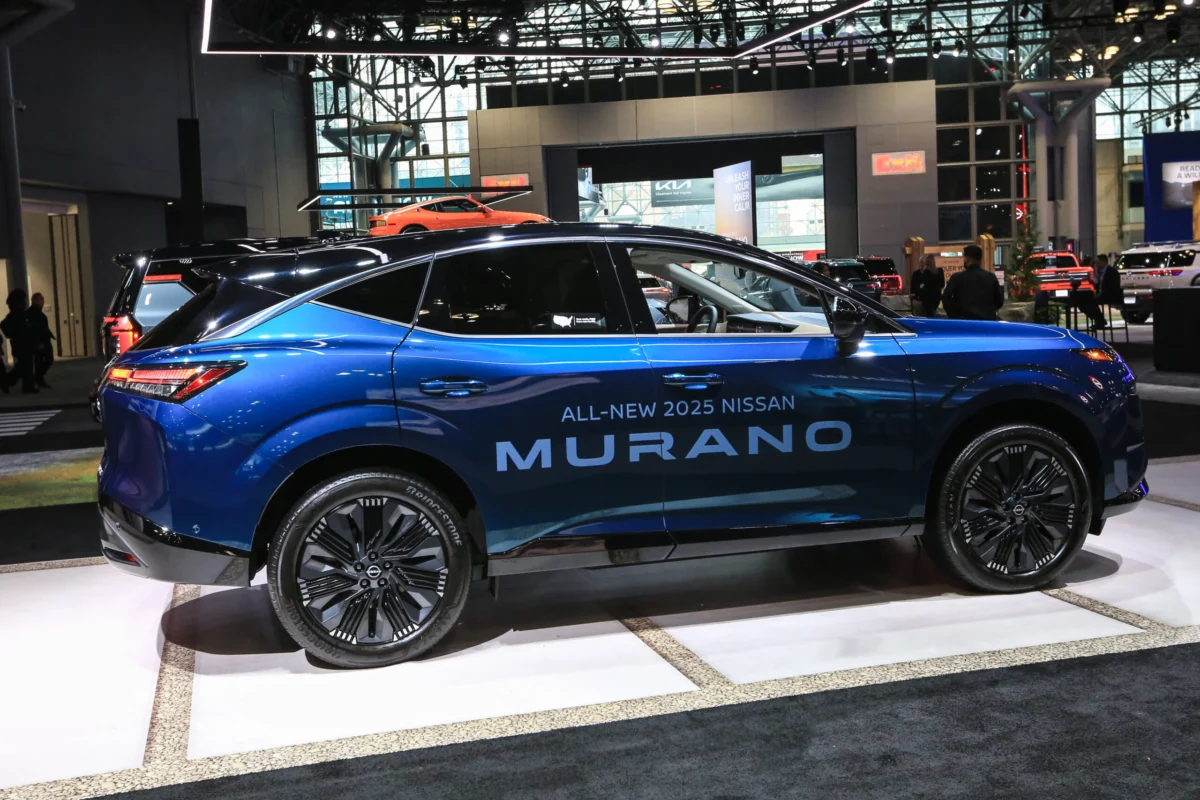
DETROIT – Nissan Motor Co. has announced its intention to join fellow Japanese automotive giants Toyota Motor Corp. and Honda Motor Co. in a significant strategic pivot: exporting U.S.-produced vehicles to the Japanese market. This move, centered around the midsize Nissan Murano SUV manufactured in Smyrna, Tennessee, is a direct consequence of revised vehicle import regulations stemming from a bilateral trade agreement forged by the Trump administration. The decision signals a tangible outcome of the U.S.-Japan Trade Agreement (USJTA) and reflects a nuanced re-evaluation of global manufacturing and distribution strategies by major automakers.
On Tuesday, Nissan confirmed that the U.S.-built Murano would begin its journey across the Pacific to Japan early next year. This marks a notable historical moment, as it will be the first American-made Nissan vehicle sold in Japan since the 1990s, according to a company spokeswoman. The initiative is not merely a logistical shift but a strategic effort to diversify Nissan’s product portfolio within its home market and cater to evolving consumer preferences.
Ivan Espinosa, Nissan CEO, underscored the company’s rationale in a recent statement, asserting, "With the introduction of this model, Nissan aims to further strengthen its product lineup in Japan and meet the diverse needs of Japanese customers." This sentiment resonates across the Japanese automotive industry, as major players adapt to a new regulatory landscape designed to facilitate easier transatlantic vehicle flow.
The Genesis of a Trade Shift: The U.S.-Japan Trade Agreement
Nissan’s announcement is the latest in a series of similar declarations from Japanese automakers, all made possible by critical changes to Japan’s vehicle import regulations. These amendments were formalized as part of the U.S.-Japan Trade Agreement (USJTA), which officially entered into force on January 1, 2020. The agreement, a centerpiece of the Trump administration’s trade policy, sought to address long-standing trade imbalances and reduce barriers for American agricultural and industrial goods entering Japan, while also easing U.S. tariffs on certain Japanese products.
Crucially for the automotive sector, the USJTA included provisions that streamline the process for importing U.S.-made vehicles into Japan. Historically, automakers faced a complex and often costly process of adapting vehicles to meet Japan’s stringent domestic certification standards, even for models already compliant with robust U.S. safety and environmental regulations. The new regulations, which were confirmed last month and effectively implement the automotive component of the USJTA, stipulate that U.S.-manufactured vehicles are exempt from redundant Japanese vehicle certification requirements, provided they adhere to American standards. This significant regulatory concession removes a major non-tariff barrier that previously made U.S. vehicle exports to Japan economically prohibitive for many manufacturers.
The implications of these regulatory shifts extend beyond mere paperwork. Automakers typically incur substantial expenses and engineering efforts to tailor vehicles for different global markets, ranging from minor adjustments like lighting and side mirrors to more fundamental modifications such as engine specifications, emissions controls, and, notably, the placement of the steering wheel. Nissan’s decision to import the Murano with a left-hand drive configuration—standard for American roads but atypical for Japan’s right-hand drive traffic—highlights the extent of the regulatory relaxation and the company’s strategic embrace of this newfound flexibility. While this presents a unique consumer proposition, it also introduces a potential novelty factor that could appeal to a niche market in Japan seeking distinctiveness.
A Chronology of Commitments: Toyota and Honda Pave the Way
Nissan’s entry into this new export paradigm follows earlier, trailblazing announcements from its compatriots, Toyota and Honda, illustrating a coordinated industry response to the USJTA.
Toyota Motor Corp., the world’s largest automaker and Japan’s preeminent car manufacturer, was among the first to signal its intentions. In December, Toyota unveiled plans to commence exporting several U.S.-made models to Japan beginning this year. Its lineup includes the popular Camry sedan, the robust Highlander SUV, and the full-size Tundra pickup truck. The Camry, a long-standing best-seller in the U.S., and the Highlander and Tundra, which represent larger vehicle segments, underscore Toyota’s confidence in the new trade environment and its strategy to introduce diverse offerings to the Japanese market. The move also highlights the global interconnectedness of Toyota’s vast manufacturing network, leveraging its North American production capabilities to serve its home market.
Following suit, Honda Motor Co., Japan’s second-largest automaker, made its own significant announcement earlier this month. Honda confirmed its plans to export two distinct U.S.-built models to Japan in the latter half of this year: the high-performance Acura Integra Type S and the adventure-ready Honda Passport TrailSport Elite SUV. The Acura Integra Type S, a sport compact, caters to a performance-oriented enthusiast segment, while the Passport TrailSport Elite offers a rugged, outdoor-focused SUV option. These choices reflect a calculated strategy to tap into specific consumer niches within Japan, leveraging the unique characteristics and market positioning of their U.S.-produced vehicles.
The collective actions of Toyota, Honda, and now Nissan, form a compelling narrative of how a trade agreement can reshape global supply chains and open new avenues for market access. These automakers, deeply invested in their U.S. manufacturing operations, are now optimizing those investments to serve their domestic market, creating a virtuous cycle that could strengthen both U.S. production and Japanese consumer choice.
Market Realities and Strategic Positioning: A Niche, Not a Deluge
While these export plans undoubtedly foster positive trade relations between the United States and Japan, experts caution against overstating the immediate volume impact. The Japanese automotive market, renowned for its discerning consumers and sophisticated domestic industry, presents a unique landscape for imports.
Sam Fiorani, Vice President of Global Vehicle Forecasting for AutoForecast Solutions, provides crucial context: "About 95% of the Japanese market is made up of locally produced vehicles." This leaves a relatively modest slice of the market—less than a quarter of a million units annually—for imports from all global sources. Furthermore, a significant majority of these existing imports hail from Germany, with luxury brands like Mercedes-Benz, BMW, and Audi dominating the premium import segment.
Vehicles sold under U.S. brands, even when considering models built in other countries, constitute an even smaller fraction of this import pie. Fiorani points out that this group includes roughly 8,700 Jeeps and a mere 500 Cadillacs, indicating a limited historical appetite for traditionally "American" vehicles. This historical context suggests that even with regulatory easements, a dramatic surge in U.S.-made vehicle imports is unlikely in the short to medium term.
Stephanie Brinley, a Principal Automotive Analyst at S&P Global Mobility, offers further insights into the strategic rationale behind these exports. She notes that many of the vehicles slated for import—the Murano, Camry, Highlander, Tundra, Passport—are considered relatively large by Japanese standards, where smaller, more fuel-efficient cars are the norm due to tighter urban spaces and higher fuel costs.
"These vehicles are still — with the exception of the Integra — are relatively large for Japan. I think they’re still going to be niche, low-volume products within that market," Brinley explains. However, she adds a crucial distinction: "But because they are a little bit different and a little bit bigger, they can position them as a special halo product in Japan."
This "halo product" strategy suggests that the primary objective might not be mass-market sales but rather to cultivate a unique brand image, offer distinct options for affluent buyers, and demonstrate the global capabilities of their U.S. manufacturing bases. A left-hand drive, larger SUV like the Murano, for instance, could appeal to a select demographic seeking exclusivity, a connection to American culture, or simply a vehicle that stands out in a sea of domestically produced right-hand drive models. The novelty factor, combined with the cachet of being "American-made" by a Japanese brand, could create a unique selling proposition for a niche clientele.
Broader Implications and Future Outlook
The decision by Nissan, Toyota, and Honda to export U.S.-built vehicles to Japan carries multifaceted implications, extending beyond mere sales figures.
Economic Impact: While the immediate sales volume might be modest, these exports represent a tangible economic benefit for U.S. manufacturing plants like Nissan’s facility in Smyrna, Tennessee, and Toyota’s various U.S. operations. Increased export orders can support jobs, stimulate investment, and enhance the overall capacity utilization of these facilities. It underscores the U.S. role as a global manufacturing hub for these multinational corporations.
Trade Relations and Diplomacy: The successful implementation of these export plans serves as a positive indicator of the U.S.-Japan Trade Agreement’s effectiveness. It demonstrates that the deal can deliver concrete benefits to U.S. industries (by facilitating exports) and simultaneously strengthen economic ties between the two nations. From a diplomatic perspective, it helps to alleviate historical trade frictions, particularly in the sensitive automotive sector, which has long been a focal point of U.S. trade policy discussions. It can be viewed as a goodwill gesture and a commitment to balanced trade.
Consumer Choice in Japan: For Japanese consumers, these imports offer an expanded array of choices, particularly in segments that might be underserved by domestic offerings. Larger SUVs and trucks, while niche, cater to specific lifestyle preferences that might be growing, albeit slowly. The left-hand drive configuration, while unusual, could become a status symbol for some, much like European luxury imports.
Challenges and Adaptations: Despite the relaxed certification rules, automakers will still face challenges. Pricing will be crucial, as these imported vehicles will likely carry a premium due to shipping costs and their "special" positioning. Marketing strategies will need to be finely tuned to target the specific niche audiences interested in these larger, left-hand drive vehicles. Furthermore, the after-sales service and parts supply chains for these less common configurations will need to be robustly established. The ongoing global supply chain volatility could also present logistical hurdles.
Future of Global Automotive Manufacturing: This trend could prompt other automakers to re-evaluate their global manufacturing footprints and export strategies, particularly if more bilateral trade agreements follow similar patterns of regulatory harmonization. It highlights a potential shift towards optimizing production in key regions to serve a wider array of markets, rather than solely focusing on localized production for localized sales.
In conclusion, Nissan’s decision to export the U.S.-built Murano to Japan is more than just a product launch; it is a significant indicator of a changing landscape in global automotive trade. Propelled by the U.S.-Japan Trade Agreement and mirroring similar moves by Toyota and Honda, this development signifies a strategic reorientation for Japanese automakers. While the immediate sales volumes may be modest, the symbolic and diplomatic weight of these exports, coupled with their potential to enhance brand image and diversify product offerings, positions them as a crucial evolution in the intricate dynamics of international commerce and automotive manufacturing. The road ahead for these American-made vehicles in Japan will be closely watched, offering valuable lessons on the interplay of trade policy, consumer preferences, and global production strategies.
