

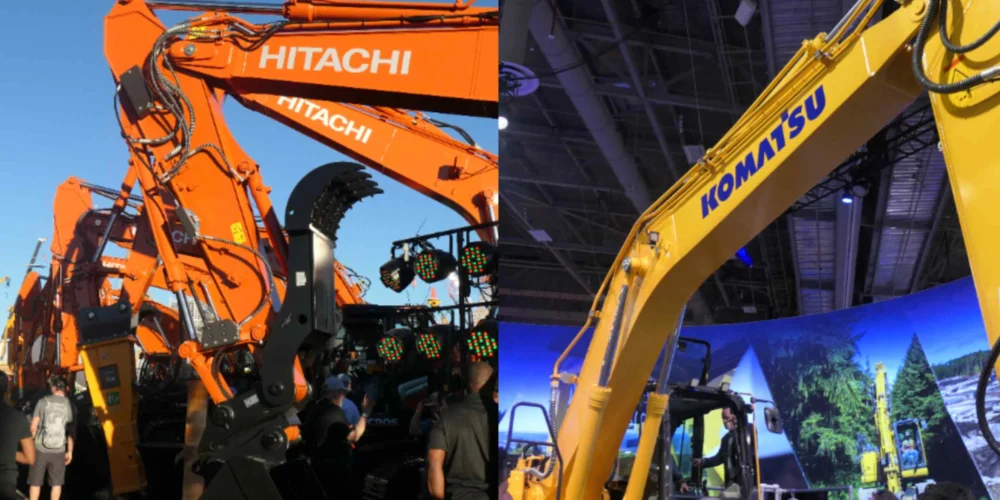
LAS VEGAS, Nevada — Major Japanese construction equipment manufacturers, including Komatsu, Hitachi Construction Machinery, and Kubota, have indicated their intention to sustain recently implemented price increases aimed at counteracting the impact of American tariffs, even in the wake of the U.S. Supreme Court’s decision last month to invalidate those very duties. This stance signals a complex economic maneuver by these global players, highlighting their strategic adjustments to a volatile trade environment and their commitment to maintaining profitability in one of their key international markets.
The Supreme Court’s ruling, delivered in late February 2026, effectively nullified tariffs that had been imposed on certain imported goods, including components and finished construction machinery. While the immediate legal consequence was the removal of these specific duties, the financial and operational adjustments made by companies in anticipation of or during the tariff period are proving to be more enduring. Industry analysts suggest that the price hikes, initially introduced to absorb the added cost burden of tariffs, are now being framed by manufacturers as necessary to preserve profit margins against broader inflationary pressures and escalating supply chain expenditures.
Background: The Tariff Landscape and Industry Response
The imposition of tariffs by the U.S. government, a policy enacted over several years leading up to 2026, had created a significant challenge for international manufacturers reliant on the American market. For Japanese construction machinery giants like Komatsu and Hitachi, which have a substantial presence and significant sales volume in the U.S., these tariffs represented a direct increase in the cost of doing business. The industry, characterized by its high-value, capital-intensive equipment, operates on relatively tight margins, making it particularly sensitive to trade-related cost escalations.
In response to the escalating tariff environment, these companies, along with others such as Kubota, began implementing a series of price adjustments. These measures were designed to offset the direct financial impact of the duties, which could range from a few percent to over ten percent depending on the specific product and component origin. The strategy involved a combination of increasing the list prices of their machinery and parts, and in some cases, re-evaluating their sourcing strategies to mitigate exposure to tariff-affected goods.
The period leading up to the Supreme Court’s decision was marked by considerable uncertainty. Legal challenges to the tariffs were mounted by various industry groups and individual companies, arguing that the duties were either improperly implemented, economically detrimental, or inconsistent with international trade agreements. These legal battles created a fluctuating landscape for businesses, forcing them to make strategic decisions under a cloud of potential policy reversals.
Chronology of Events and Manufacturer Actions
The timeline of events is crucial to understanding the current situation.
- Early to Mid-2020s: The U.S. government begins to implement and increase tariffs on a wide range of imported goods, including steel, aluminum, and various manufactured components. Japanese construction machinery manufacturers, like many global companies, start to feel the impact of these tariffs on their U.S. operations.
- 2024-2025: Facing mounting costs and an unpredictable trade environment, Komatsu, Hitachi Construction Machinery, and Kubota, among others, initiate phased price increases on their product lines sold in the United States. These increases are explicitly or implicitly linked to the need to absorb tariff-related expenses and maintain competitive pricing structures.
- Late 2025: Legal challenges to the tariffs gain momentum, with industry associations and affected companies filing lawsuits. The outcome of these legal proceedings remains uncertain for an extended period.
- February 2026: The U.S. Supreme Court delivers its ruling, striking down the specific tariffs in question. This decision theoretically removes the direct financial burden imposed by those particular duties.
- March 2026: Despite the Supreme Court’s ruling, Komatsu, Hitachi Construction Machinery, and Kubota announce their intention to maintain existing price hikes. This announcement is made at industry events and through official statements to distributors and customers.
The decision by these companies to retain price increases, despite the removal of the direct tariff trigger, suggests a broader strategic recalibration. It is plausible that the pricing adjustments were not solely a reaction to tariffs but also a response to other escalating costs.
Supporting Data and Market Dynamics
The U.S. construction equipment market is a significant global hub, representing a substantial portion of the revenue for major manufacturers. Komatsu, for instance, reported that North America accounted for approximately 25% of its total sales in the fiscal year ending March 2025, with construction machinery being a dominant segment. Similarly, Hitachi Construction Machinery and Kubota derive a considerable share of their revenue from the U.S. market.
The import reliance of these Japanese manufacturers in the U.S. is a key factor. While final assembly may occur in the U.S. for some models, a high percentage of components and even entire machines are often imported from Japan or other global production bases. This import activity makes them particularly vulnerable to tariffs. For example, a tariff of 10% on a key component costing $50,000 would add $5,000 to the production cost of a machine, which manufacturers would then have to decide whether to absorb or pass on to customers.
Furthermore, the construction sector itself has been experiencing its own set of economic pressures. Rising raw material costs (steel, aluminum, copper), increased energy prices, and persistent labor shortages have contributed to a general inflationary trend within the industry. These factors, independent of tariffs, have driven up the cost of manufacturing and operating heavy machinery.
Analysis of Implications: A Strategic Pivot?
The decision to maintain price hikes, despite the Supreme Court’s ruling, can be interpreted as a strategic pivot by these Japanese manufacturers. Several factors likely contribute to this approach:
- Preservation of Profitability: The primary driver is almost certainly the need to safeguard profit margins. The price increases, once implemented, may have become necessary to achieve target profitability levels, especially when considering the cumulative effect of increased raw material, logistics, and labor costs that have persisted beyond the tariff period.
- Market Pricing Power: These companies, being leaders in their respective segments, often possess significant pricing power. They may be leveraging this power to maintain a certain price floor for their products, especially in a market where demand, while fluctuating, remains robust for advanced and reliable construction equipment.
- Cost Recovery and Future Investment: The revenue generated from sustained higher prices can be directed towards research and development, technological innovation (e.g., electrification, automation), and expanding their global manufacturing and distribution networks. This is crucial for maintaining a competitive edge in a rapidly evolving industry.
- Signal to the Market: By maintaining prices, manufacturers might be sending a signal that the cost of doing business in the U.S. has fundamentally shifted, even without the specific tariff mechanism. This could influence future sourcing decisions, investment strategies, and pricing strategies of competitors.
- Long-Term Supply Chain Resilience: The period of trade disputes and tariffs has likely prompted a review of supply chain vulnerabilities. Companies may be investing in diversifying their sourcing, potentially leading to higher production costs that need to be factored into pricing.
Reactions from Related Parties (Inferred)
While official statements from Komatsu, Hitachi, and Kubota focus on their internal strategies, the implications for other stakeholders are significant:
- U.S. Construction Companies: These companies, the direct customers of the manufacturers, are likely to face continued higher equipment acquisition costs. This could impact their project budgets, potentially leading to higher bids for construction projects or a delay in capital expenditure for fleet upgrades. Industry associations representing construction firms may voice concerns about the sustained price increases and their impact on the affordability of essential equipment.
- U.S. Distributors and Dealers: The pricing decisions directly affect the margins and sales volumes of authorized distributors and dealers in the U.S. While they may benefit from higher unit prices, they could also face challenges in moving inventory if end-user demand is significantly dampened by the elevated costs.
- Competitors: Competitors, both domestic and international, will be closely watching these moves. They may either follow suit with similar price adjustments, or they could attempt to gain market share by maintaining lower prices, although this would likely require them to absorb greater cost pressures themselves.
- U.S. Government and Policymakers: The Supreme Court’s ruling was a victory for those challenging the tariffs. However, the continued price increases by foreign manufacturers, even after the tariffs are removed, might spark debate about broader economic factors influencing trade and domestic industries. Policymakers may need to consider other mechanisms to support domestic manufacturing if the cost of imported equipment remains high.
In conclusion, the decision by leading Japanese construction machinery manufacturers to uphold price hikes, even after the U.S. Supreme Court’s invalidation of the tariffs that initially prompted them, underscores the complex interplay of global trade policy, market economics, and corporate strategy. It signals a period of sustained cost pressures within the heavy machinery sector, driven by factors that extend beyond specific trade disputes, and highlights the strategic imperative for these companies to maintain their financial stability and competitive positioning in the vital U.S. market. The long-term effects of this decision will likely shape pricing dynamics and investment decisions across the construction equipment industry for the foreseeable future.
