

Helsinki, Finland – As the artificial intelligence landscape witnesses unprecedented capital influx, exemplified by Anthropic’s record-setting initial public offering, a divergent yet equally compelling narrative is unfolding at industry gatherings like the Slush startup conference in Helsinki. Here, the prevailing sentiment championed "open-source everything," highlighting a growing enterprise appetite for alternatives to the high-cost, proprietary models offered by AI giants. This dichotomy underscores a pivotal moment for companies like Fireworks AI, which are positioning themselves at the forefront of the open-weight AI movement, even as they grapple with the complex realities of rapid expansion and the inherent vulnerabilities of the digital frontier.
The Shifting Sands of AI Adoption: Open-Source vs. Proprietary
The enthusiasm for open-source AI at Slush directly contrasts with the monolithic valuations of proprietary AI labs. While companies like Anthropic and OpenAI command staggering investor confidence for their cutting-edge generalized intelligence, a significant segment of the market, particularly large enterprises, is actively seeking more cost-effective, customizable, and secure solutions. This is the enormous opportunity that Fireworks AI, a specialized intelligence platform, aims to capture.
Fireworks AI operates by running and optimizing open-weight AI models for businesses. These models, freely downloadable and adaptable, allow customers to fine-tune them with their proprietary data. The promise is clear: faster, cheaper AI operations that are less susceptible to replication by rivals, offering a distinct competitive advantage over relying solely on the "frontier models" from major players. Notable early adopters include tech behemoths like Uber, Shopify, and Notion, signalling a serious shift in enterprise AI strategy.
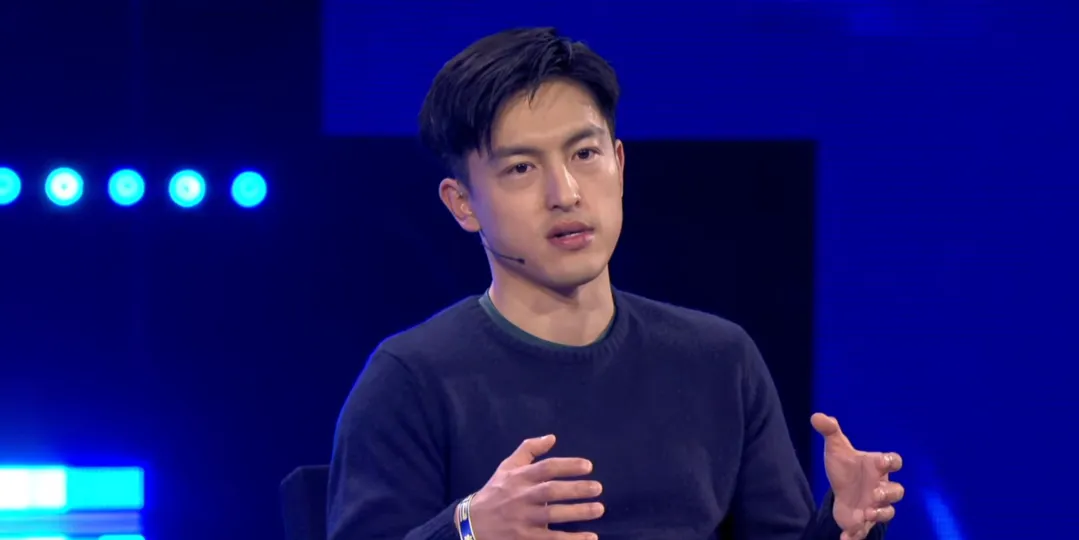
Chenyu Zhao, co-founder of Fireworks AI and a former decade-long veteran of Google, including a leadership role on Google Cloud Vertex AI, articulated this market gravitation during a stage discussion at Slush. He posited that the astronomical pricing of frontier models often renders them unnecessary for the vast majority of business applications, particularly when generalized intelligence isn’t the primary requirement. Zhao emphasized that unless a company requires the absolute latest, generalized intelligence, specialized open models offer a more pragmatic and economical path.
A critical concern driving this shift, echoed by Microsoft CEO Satya Nadella in a July warning, is the potential for proprietary AI labs to inadvertently absorb their customers’ invaluable know-how. This "double payment" – once in monetary terms and again through the implicit transfer of intellectual property via prompts and interactions – presents a significant risk for businesses seeking to maintain data sovereignty and competitive differentiation. Zhao firmly believes in a "two-model world," where frontier models excel at high-level planning, but open models handle the bulk of operational tasks, driving a focus on "cost per task" rather than just "cost per token."
Fireworks AI’s Rapid Ascent and Strategic Vision
Founded by Chenyu Zhao, Lin Qiao, and Dima Dzhulgakov, Fireworks AI has quickly ascended to a prominent position within the AI ecosystem. Zhao’s decision to leave Google, where he managed a 50-person engineering team, was driven by the compelling vision and complementary strengths of his co-founders. He describes Fireworks as a platform that empowers companies to "own your AI rather than being beholden to giant AI conglomerates," arguing that simply using off-the-shelf models like Opus or Sonnet does not provide a sustainable differentiator.
The performance gap between open and frontier models, once perceived as substantial, has dramatically narrowed. Zhao confidently states that open models, thanks to recent breakthroughs from initiatives like DeepSeek and a "waterfall of fantastic open models," are now at most six months behind the leading proprietary models, and often as close as three months. This rapid convergence significantly strengthens the value proposition for enterprises considering the switch.
Despite the shrinking performance gap, Zhao acknowledges that businesses can be slow to transition, often due to brand recognition and initial risk aversion. However, he notes a clear inflection point: "Before you find product-market fit, using the best model is low risk. But once you pass 10,000 or 100,000 users and you’re spending $10,000 to $100,000 a month on tokens, it’s time to think about open source." This financial incentive, coupled with the desire for greater control and customization, is accelerating the adoption curve for open-weight solutions.
The market has responded with significant investment. Fireworks AI, assigned a robust $17.5 billion valuation by its investors in the summer, is reportedly in "early talks" for another funding round, reflecting the intense capital interest in this burgeoning category. This valuation places Fireworks AI among the most promising startups in the AI domain, underscoring investor confidence in its specialized intelligence platform model.
Navigating the Crucible of Security Incidents
However, Fireworks AI’s rapid growth has not been without significant challenges. The company recently disclosed two distinct security incidents in the fall, marking its first major "black eye." The first incident involved hackers gaining unauthorized access to API keys and tokens stored as secrets for a limited number of accounts. The second, more severe breach saw attackers compromise Fireworks’ cloud provider, infiltrating a development system and exfiltrating customer data, including billing records and some sensitive datasets.
The fallout from these incidents has been substantial. Notion, a prominent customer, publicly confirmed that AI chat transcripts from fewer than 1% of its workspaces were exposed and subsequently disconnected from Fireworks AI’s services. Even more critically, Uber reported that hackers stole names, addresses, birth dates, and driver’s license numbers of approximately 150,000 drivers through a vendor, later identified by TechCrunch as Fireworks AI. These breaches represent a significant blow to customer trust and underscore the paramount importance of robust cybersecurity in the AI infrastructure space.
Chenyu Zhao addressed these incidents candidly, placing them within the broader context of an "unprecedented frequency of attacks" that many companies are currently experiencing. He explained that a significant motivation for these attacks is "LLM jacking" – the illicit hunting for API keys and secrets to sell tokens on underground marketplaces. Zhao reiterated Fireworks AI’s core promise of "zero data retention for inference traffic," and stated there was no indication this fundamental principle had been compromised.
However, the specific exposure of Notion’s and Uber’s data prompted further clarification. Zhao explained that Notion’s data exposure occurred because the company was utilizing a "batch prediction" service, which by its nature involves uploading and storing datasets at rest, thus falling outside the "zero-retention" policy for inference traffic. In response, Fireworks AI is actively migrating these services to an "online flow" model, aiming to retain data only for the duration strictly necessary for processing. This clarification highlights the nuanced challenges of implementing universal data security policies across diverse service offerings and the ongoing need for adaptive security architectures. Rebuilding the confidence of impacted customers like Notion and Uber will be a critical task for Fireworks AI moving forward.
A Dynamic and Competitive AI Landscape
The broader AI infrastructure market is experiencing a fervent period of investment and consolidation. Alongside Fireworks AI’s impressive valuation, competitors like Together AI and Baseten have also announced substantial funding rounds in recent months, signalling a robust ecosystem of companies building services around open-source and specialized AI models.
Adding to the dynamic landscape, Palo Alto Networks, a cybersecurity giant, recently announced its acquisition of Applied Compute for $4.5 billion, an all-stock deal. Applied Compute, founded just a year prior by former OpenAI researchers, shares a similar business model with Fireworks AI, focusing on helping companies train and run custom AI models on their own data. This acquisition underscores the strategic importance of this sector, with established tech players recognizing the imperative to integrate custom AI capabilities into their offerings. The significant valuation of Applied Compute, despite its nascent stage, further validates the market’s demand for specialized, data-private AI solutions.
Industry leadership changes also cast long shadows. According to recent reports, the departure of Jensen Huang from Nvidia, a key investor in Fireworks AI since 2024, has been felt as a "blow to the industry." However, Zhao remains confident in Nvidia’s continued commitment to the open-source movement and its ongoing investment in initiatives like Nemotron, asserting that Fireworks AI anticipates sustained partnership with the chip giant. This demonstrates the intertwined nature of the AI ecosystem, where even executive transitions at major players can ripple through the entire industry.
The Future of Specialized Intelligence
Fireworks AI stands at a fascinating juncture, embodying the promise and perils of the rapidly evolving AI industry. Its success hinges on its ability to effectively scale its specialized intelligence platform, continue narrowing the performance gap between open and proprietary models, and, crucially, restore and fortify customer trust following its recent security incidents.
The vision championed by Chenyu Zhao—of a future where businesses leverage specialized, cost-effective open models to own their AI destiny, complementing the high-level capabilities of frontier models—resonates deeply with the increasing demand for data sovereignty and economic efficiency. As the AI market matures, the focus is undeniably shifting towards practical, deployable, and secure solutions that offer tangible business value beyond mere generalized intelligence. Fireworks AI’s journey will serve as a critical case study in how companies navigate this complex landscape, balancing innovation, rapid growth, and the non-negotiable imperative of robust security. The ongoing battle between open-source accessibility and proprietary power will undoubtedly define the next chapter of artificial intelligence, with companies like Fireworks AI playing a pivotal role in shaping its direction.
