

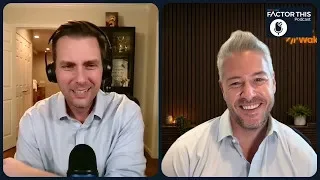
The landscape of the American renewable energy sector is undergoing a period of profound transformation, driven by legislative shifts, technological advancements in data center infrastructure, and the maturation of distributed energy resources. At the center of this discourse is Yann Brandt, a seasoned executive and the founder of SolarWakeup, a digital digest that has served as a cornerstone of industry intelligence for 14 years. Brandt’s recent transition from his role as President and CEO of FTC Solar, a publicly traded solar tracker company, back into the realm of high-level industry analysis marks a significant moment for the sector. His latest venture, a podcast titled Boots on the Ground, co-hosted with former Solar Energy Industries Association (SEIA) President and CEO Abby Hopper, seeks to provide a granular look at the headlines shaping the future of solar and storage.
The emergence of this new platform coincides with a pivotal juncture in U.S. energy policy. Following the U.S. midterm elections and ahead of the annual RE+ conference in Las Vegas, the industry is grappling with the implementation of the Inflation Reduction Act (IRA), the surging energy demands of artificial intelligence (AI), and the looming uncertainties of the next presidential election cycle. Brandt’s perspective, forged through both executive leadership and media influence, provides a unique lens through which to view the complexities of the modern energy transition.
The Evolution of SolarWakeup and the Role of Industry Intelligence
SolarWakeup was founded during a period when the solar industry was still considered a niche segment of the broader energy market. Over the course of 14 years, Brandt has maintained the daily publication, transforming it into an essential resource for executives, investors, and policymakers. The longevity of the newsletter is notable within an industry characterized by high volatility and rapid corporate turnover.
Brandt’s ability to sustain the publication while simultaneously leading FTC Solar (Nasdaq: FTCI) highlights the increasing overlap between operational leadership and market communication. During his tenure at FTC Solar, Brandt navigated the complexities of the global supply chain, trade disputes, and the integration of advanced tracking technology into utility-scale projects. His return to a more focused role in industry commentary via Boots on the Ground suggests a growing demand for nuanced, "straight talk" analysis that bypasses corporate jargon to address the fundamental economic and political drivers of the sector.
The Strategic Partnership with Abby Hopper
The collaboration between Yann Brandt and Abby Hopper represents a convergence of two of the most influential voices in the renewable energy space. Abby Hopper’s tenure as the head of SEIA was defined by significant lobbying efforts and the navigation of complex trade environments, including the Section 201 tariffs and the initial rollout of the IRA.
By pairing a former trade association leader with a former public company CEO, Boots on the Ground aims to bridge the gap between policy advocacy and commercial execution. This partnership is particularly relevant as the industry moves from the "announcement phase" of the IRA toward the "implementation phase." Stakeholders are now less concerned with the theoretical benefits of tax credits and more focused on the practicalities of domestic content requirements, prevailing wage standards, and the logistical hurdles of building out a domestic manufacturing base.
The Surge of Data Centers and the 24/7 Carbon-Free Energy Challenge
One of the most significant themes currently dominating the industry—and a primary focus of Brandt’s recent analysis—is the unprecedented demand for electricity driven by data centers. The rapid expansion of artificial intelligence and cloud computing has forced tech giants such as Amazon, Google, and Microsoft to seek massive amounts of firm, carbon-free power.
Data center load growth is projected to be a primary driver of electricity demand in the United States over the next decade. According to recent reports from the International Energy Agency (IEA), data centers’ total electricity consumption could reach more than 1,000 terawatt-hours (TWh) by 2026, roughly equivalent to the electricity consumption of Japan. In the U.S., regions like Northern Virginia and parts of Ohio are seeing utility load forecasts increase by double digits, primarily due to data center clusters.
For the solar industry, this presents both an opportunity and a challenge. While these tech firms are the largest corporate buyers of renewable energy, their need for "round-the-clock" power is pushing the limits of intermittent resources. Brandt and other experts are increasingly focusing on the integration of long-duration energy storage and the potential for "clean firm" power to supplement solar and wind. The dialogue is shifting from simple megawatt-hour procurement to a more complex discussion about grid reliability and the role of solar in a 24/7 carbon-free energy (CFE) framework.
Distributed Energy Resources and the Decentralization of the Grid
While utility-scale solar continues to dominate capacity additions, Brandt’s insights frequently touch upon the critical role of distributed energy resources (DERs). This includes residential solar, commercial and industrial (C&I) installations, and community solar projects. The decentralization of the grid is no longer a theoretical concept but a practical necessity as aging infrastructure struggles to handle extreme weather events and rising peak demand.
However, the DER segment faces significant headwinds, most notably in the form of regulatory changes. In California, the transition to Net Energy Metering 3.0 (NEM 3.0) has fundamentally altered the economics of rooftop solar, emphasizing the need for paired battery storage. This shift is reflective of a broader national trend where utilities and regulators are seeking to balance the benefits of local generation with the costs of maintaining the centralized grid. Brandt’s commentary often highlights the tension between "behind-the-meter" innovation and the traditional utility business model, a conflict that will likely define the next decade of state-level energy policy.
The Political Landscape: Post-Midterms and the Path to 2024
The timing of Brandt’s latest project is inextricably linked to the political calendar. The results of the U.S. midterm elections provided a measure of stability for the renewable energy sector, as the core components of the Inflation Reduction Act remained largely intact despite a divided Congress. However, the industry is now looking toward the 2024 presidential election with a mix of anticipation and caution.
The IRA, which provides nearly $370 billion in climate and energy spending, has incentivized billions of dollars in private investment, much of it directed toward states represented by Republican lawmakers. This "red state" investment serves as a potential hedge against future attempts to repeal the law. Nevertheless, administrative changes can significantly impact the speed of permit approvals, the interpretation of tax credit guidance, and the enforcement of trade policies.
Brandt’s discussions often delve into the pragmatism required of renewable energy executives who must plan for 20-year project lifecycles in four-year political increments. The "next president of the United States" is not just a political figure but a primary variable in the financial models of solar developers and manufacturers.
Supporting Data and Economic Indicators
The scale of the solar industry’s growth provides the backdrop for the Boots on the Ground narrative. According to the SEIA and Wood Mackenzie’s "Solar Market Insight" reports, the U.S. solar industry installed a record 32.4 gigawatts (GW) of capacity in 2023, a 51% increase from 2022. This growth was largely driven by a recovery in the utility-scale segment as supply chain constraints eased.
Key data points currently influencing the sector include:
- Manufacturing Capacity: Since the passage of the IRA, over 100 GW of new solar manufacturing announcements have been made across the U.S. value chain, including modules, cells, wafers, and ingots.
- Interconnection Queues: Despite high demand, the "bottleneck" of the industry remains the interconnection queue. As of early 2024, there are over 2,000 GW of generation and storage capacity waiting for grid connection, with solar accounting for the largest share.
- Cost Trends: While the long-term trend for solar costs is downward, the industry has seen short-term price volatility due to labor shortages, high interest rates, and the cost of capital.
Implications for the Future of Energy Media and Executive Leadership
The launch of Boots on the Ground and the continued relevance of SolarWakeup suggest a shift in how information is consumed within the energy sector. As the industry matures, there is a diminishing appetite for generalized news and a growing need for expert-led analysis that connects policy, finance, and engineering.
Yann Brandt’s career trajectory—from founder to CEO and back to a prominent media voice—mirrors the maturation of the solar industry itself. It is no longer enough to be a specialist in one area; the modern energy leader must understand the global supply chain, the intricacies of the Federal Energy Regulatory Commission (FERC), and the shifting priorities of Silicon Valley’s tech giants.
As the industry prepares for the RE+ conference and the challenges of the coming year, the dialogue initiated by Brandt and Hopper will likely focus on execution. The "golden age" of solar is often discussed in terms of potential, but the reality is a grind of permitting, interconnection, and workforce development. By providing a platform for "straight talk," Brandt ensures that the industry remains grounded in the practical realities of the energy transition, even as it aims for ambitious climate goals.
The broader impact of this discourse extends beyond the solar industry. As renewable energy becomes the primary source of new generation on the U.S. grid, the insights shared by veterans like Brandt and Hopper will inform the strategies of utilities, the decisions of institutional investors, and the policies of state and federal governments. The transition to a clean energy economy is as much a communication challenge as it is a technical one, and voices that can bridge that gap remain more vital than ever.
