

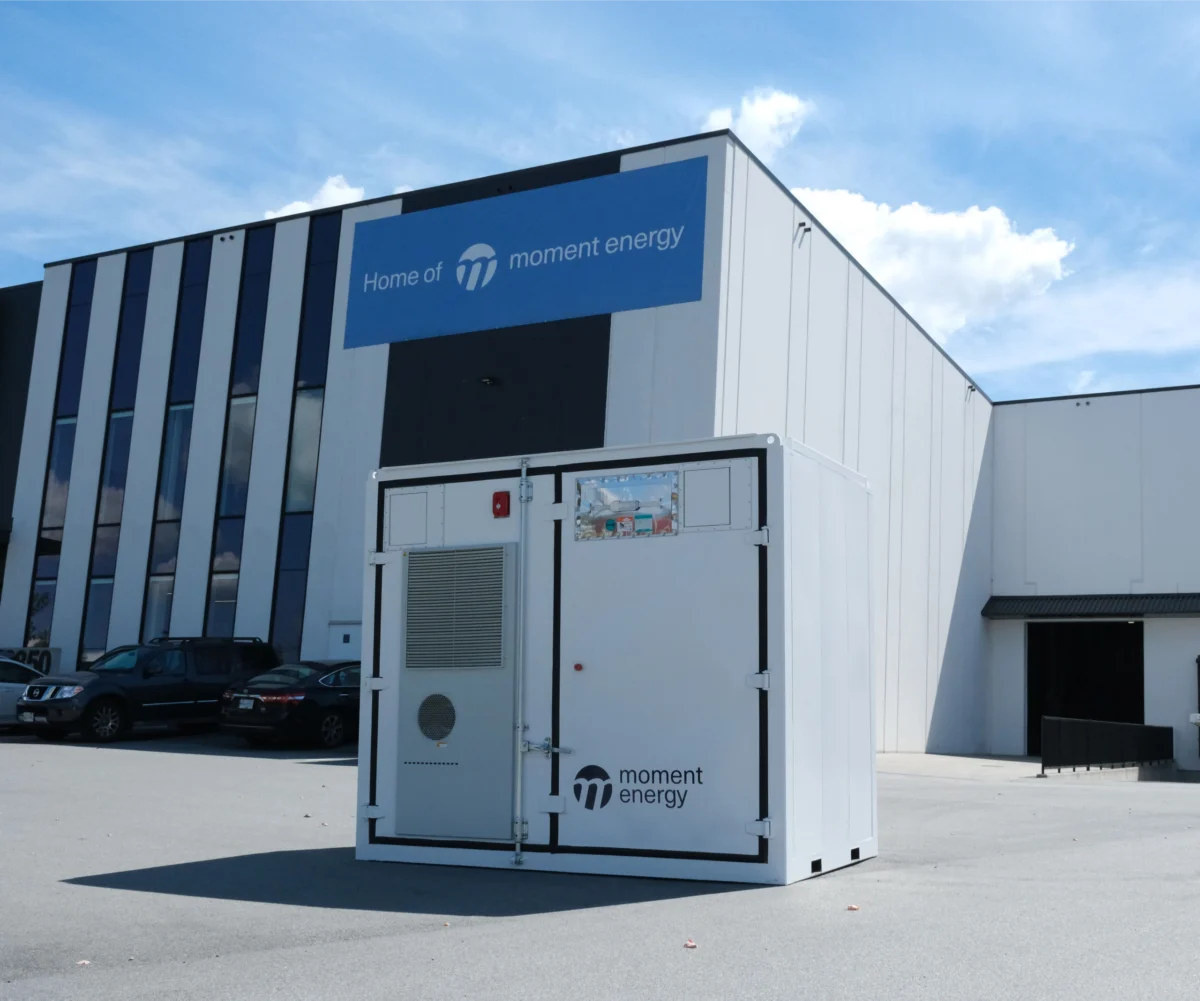
Moment Energy, a North American leader in sustainable energy solutions, has officially introduced Nova, its latest battery energy storage system (BESS) engineered specifically from repurposed electric vehicle (EV) batteries. The company has opened the order books for the Nova platform, with the first commercial deliveries scheduled to commence in the first quarter of 2027. This announcement marks a significant milestone in the circular economy for the automotive and energy sectors, providing a second-life application for high-performance lithium-ion cells that have completed their primary service in transportation but retain substantial capacity for stationary storage.
The Nova system is distinguished as the first BESS utilizing repurposed EV batteries to secure both UL 1973 and UL 9540 certifications. These rigorous safety standards are essential for the integration of storage systems into commercial, industrial, and utility-scale infrastructure. By achieving these benchmarks, Moment Energy aims to resolve long-standing concerns regarding the safety and reliability of second-life battery technology, positioning it as a viable alternative to newly manufactured "first-life" systems.
Strategic Response to North American Power Constraints
The launch of Nova arrives at a critical juncture for the North American energy landscape. As the continent moves toward greater electrification and the onshoring of manufacturing, the existing electrical grid is facing unprecedented strain. Industrial growth in sectors ranging from semiconductor fabrication to data centers is frequently hampered by localized power capacity constraints, where the grid is unable to supply the peak demand required for new operations.
Edward Chiang, co-founder and CEO of Moment Energy, emphasized that access to affordable and reliable power is now a primary determinant of regional economic development. Chiang noted that many businesses are currently "throttled" by these infrastructure limitations. The Nova platform is designed to alleviate these pressures by acting as a buffer, storing energy during periods of low demand and discharging it during peak intervals, thereby effectively "supercharging" an aging grid without the need for immediate and costly transmission upgrades.
Technical Specifications and Modular Architecture
The Nova platform is built on a modular "block" design, where each individual unit delivers 200 kW of power and 500 kWh of energy capacity. The physical footprint of a single Nova block is 2.94 meters by 1.80 meters (approximately 9.65 feet by 5.9 feet), a compact size intended to accommodate commercial sites where real estate is at a premium. Despite its small footprint, the system is highly scalable; multiple blocks can be interconnected to create large-scale installations reaching into the tens of megawatt-hours (MWh).
One of the most innovative aspects of the Nova system is its swappable architecture. Unlike traditional BESS units that often require the replacement of an entire system once the batteries degrade, Nova allows for the replacement of individual battery packs. This design ensures that the durable infrastructure of the installation—including the weather-rated enclosure, concrete mounting pads, and electrical interconnects—can remain in place for decades. Moment Energy estimates that through its capacity augmentation service, the operational lifespan of a Nova installation can exceed 20 years.

To manage the complexities of using batteries from diverse EV models and various states of health, Moment Energy utilizes a proprietary, AI-powered Battery Management System (BMS). This software layer continuously monitors and optimizes each battery pack, ensuring that the system as a whole maintains peak efficiency and reliability. The BMS is capable of balancing the load across cells with different degradation profiles, a technical hurdle that has previously limited the commercial scalability of second-life battery systems.
Navigating Domestic Content and Federal Incentives
A major hurdle for the adoption of energy storage in the United States has been the regulatory environment surrounding "Foreign Entities of Concern" (FEOC). Under current federal guidelines, projects seeking to maximize benefits from the Investment Tax Credit (ITC) must adhere to strict requirements regarding the sourcing of components.
Nova has been independently verified as fully compliant with these FEOC requirements, making it the only third-party verified BESS of its kind eligible for the U.S. federal ITC in 2027 and beyond. Gurmesh Sidhu, co-founder and Chief Product Officer of Moment Energy, addressed the complexities of this compliance during the RE+ 2026 conference. Sidhu explained that while the underlying battery cells may have originated in overseas markets, the extensive re-engineering, domestic assembly, and the addition of North American-made components allow the total system to meet the necessary thresholds for non-FEOC status.
This eligibility is a critical financial lever for project developers. By qualifying for the ITC, Nova systems become significantly more cost-competitive with traditional grid-tied solutions, providing an economic incentive for businesses to adopt sustainable, repurposed technology. Furthermore, Moment Energy’s status as a non-Prohibited Foreign Entity provides long-term regulatory certainty for its partners and investors.
Manufacturing and Safety Certifications
Production of the Nova system is centered at Megafactory 1, Moment Energy’s primary manufacturing facility located in Surrey, British Columbia, Canada. The facility itself has achieved UL 1974 certification, which is the standard for the evaluation of the process for sorting, grading, and repurposing EV batteries. This ensures that every battery pack entering the Nova supply chain has undergone a standardized and rigorous vetting process before being integrated into a stationary storage block.
In addition to the process-oriented UL 1974, the Nova hardware has undergone UL 9540A testing. This specific testing protocol evaluates the potential for thermal runaway fire propagation, a key safety concern for indoor and dense urban battery installations. By passing these tests, Nova meets the stringent electrical codes required in both the United States and Canada.
Jeff Smidt, Senior Vice President of Testing, Inspection, and Certification at UL Solutions, highlighted the importance of these milestones. Smidt remarked that repurposing EV batteries introduces unique technical considerations that require careful evaluation. The UL certification serves as third-party evidence that Moment Energy has met the necessary safety requirements, providing confidence to insurers, fire marshals, and end-users.

Chronology of Development and Market Context
The development of Nova is the culmination of years of iterative engineering at Moment Energy. Founded by four University of British Columbia graduates, the company initially focused on small-scale pilot projects to prove the viability of second-life batteries in off-grid and remote applications.
- 2020-2022: Moment Energy established partnerships with major automotive OEMs (Original Equipment Manufacturers) to secure a steady supply of retired EV batteries.
- 2023: The company opened Megafactory 1, significantly increasing its production capacity and focusing on achieving UL certifications for its processes.
- 2024: Extensive field testing of the Nova prototypes was conducted, focusing on the AI-driven BMS and thermal management systems.
- Late 2024: Official unveiling of Nova and the opening of the order book for 2027 delivery.
The market context for this launch is bolstered by the rapid growth of the EV market. As the first generation of mass-market electric vehicles begins to reach the end of its typical 8-to-10-year automotive lifespan, a "tsunami" of retired batteries is expected to hit the market. Industry analysts project that by 2030, there will be millions of watt-hours of retired EV batteries available annually. Without a robust repurposing industry, these batteries would represent a significant recycling challenge; however, through systems like Nova, they represent a massive, low-carbon resource for grid stabilization.
Environmental and Economic Implications
The environmental benefits of the Nova system extend beyond the reduction of waste. By giving batteries a second life, the carbon-intensive process of mining and refining new raw materials—such as lithium, cobalt, and nickel—is deferred. This "circular" approach significantly lowers the total lifecycle carbon footprint of the battery compared to manufacturing new stationary storage units.
Economically, the Nova system offers a pathway for "onshoring" the battery supply chain. While North America is currently building out its first-life battery manufacturing capacity, the second-life market provides an immediate opportunity to utilize existing assets within the continent. This supports the broader goal of energy independence and the strengthening of domestic manufacturing.
The scalable nature of the Nova block also opens doors for diverse applications. Beyond industrial peak-shaving, the system is being marketed for:
- EV Charging Infrastructure: Buffering high-power DC fast chargers to prevent spikes in grid demand.
- Hospital and Emergency Services: Providing reliable back-up power for critical infrastructure.
- Renewable Energy Integration: Storing excess solar or wind energy for use during non-productive hours.
As the energy sector moves toward a more decentralized and resilient model, the introduction of certified, high-performance second-life systems like Nova is likely to set a new standard for how the industry views the lifecycle of energy storage assets. With orders now open, the transition of EV batteries from the road to the grid is poised to accelerate, providing a dual solution to the challenges of automotive waste and grid instability.
