

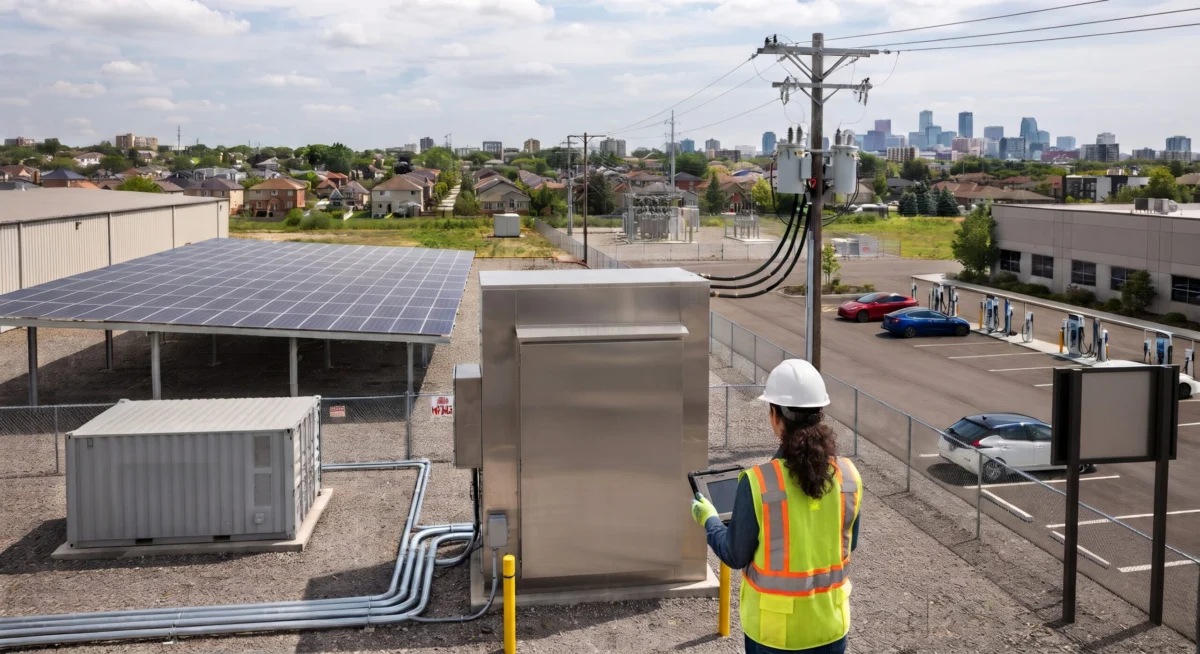
The stability of the electric grid has historically been the primary metric of success for the global utility sector, yet this very reliability has often served as a barrier to innovation. For decades, the "if it isn’t broken, don’t fix it" mentality dominated utility boardrooms, where the status quo of centralized power generation was sufficient to meet predictable load profiles. However, a convergence of escalating energy demand—driven largely by the electrification of transport and the proliferation of data centers—and the increasing frequency of volatile weather events has shattered this old paradigm. The modern grid is no longer just a delivery mechanism for power; it is becoming a complex, multi-directional ecosystem where distributed energy resources (DERs) are transitioning from fringe experiments to essential components of infrastructure planning.
Central to this transition is the evolution of the Virtual Power Plant (VPP). While the concept of aggregating small-scale energy resources to support the grid is not new, the sophistication required to make these assets as reliable as traditional peater plants is immense. Currently, the utility industry faces a significant "visibility gap," where approximately 80% of behind-the-meter capacity remains unenrolled in active grid-support programs. Bridging this gap requires navigating a labyrinth of legacy hardware, regulatory friction, and shifting market dynamics.
Shikhar Pandey, the founder and managing partner of GridCo Group, has emerged as a leading voice in this transformation. With a background spanning the Department of Energy (DOE) and senior leadership at Commonwealth Edison (ComEd), Pandey’s perspective provides a technical and operational roadmap for utilities seeking to integrate decentralized assets into the heart of their long-term resource adequacy strategies.
The Evolution of Grid Flexibility: A Chronological Perspective
To understand the current state of grid modernization, one must look at the technological trajectory of the last decade. In the early 2010s, the conversation around the grid was primarily focused on "smart meters" and basic automated meter infrastructure (AMI). These tools provided utilities with better data but did little to change the fundamental flow of electricity.
By 2020, the rise of solar photovoltaics (PV) and residential battery storage began to create localized challenges for distribution systems. During his tenure as the senior manager of DER planning and engineering at ComEd, Shikhar Pandey helped spearhead a pioneering flexible interconnection framework. This initiative was a response to a growing bottleneck: the grid was reaching its "hosting capacity," and traditional upgrades—such as replacing transformers or reconductoring lines—were becoming prohibitively expensive and time-consuming.
The ComEd framework allowed the utility to integrate high volumes of renewable energy by using software-based controls to manage output during peak times, rather than relying solely on physical hardware upgrades. This shift marked the beginning of a new era where "virtuality" became a tool for grid engineering. Pandey’s journey eventually led him to the IEEE task force on grid flexibility, where he now focuses on jurisdictions ranging from the high-renewables markets of California and Massachusetts to the resiliency-focused grid of Puerto Rico.
Defining the VPP: Beyond Simple Demand Response
One of the primary hurdles in modernizing the grid is the terminological confusion surrounding Virtual Power Plants. For years, the industry used the terms "demand response" and "VPP" interchangeably, but Pandey argues that the distinction is critical for utility planners.
Traditional demand response is often passive and behavioral. It relies on a consumer choosing to turn down their air conditioning during a heatwave in exchange for a rebate. Because this relies on human behavior, it is inherently unpredictable. From a utility planner’s perspective, an unpredictable resource cannot be used to defer a multi-million-dollar substation upgrade.
In contrast, a true VPP is characterized by being controllable, dispatchable, and optimized. It treats a fleet of smart thermostats, residential batteries, and electric vehicle (EV) chargers as a single, cohesive asset that can be dispatched with the same precision as a natural gas turbine. By positioning these assets as "virtual" versions of physical plants, utilities can begin to include them in their long-term distribution system planning (DSP) and resource adequacy calculations.
The Economic and Market Barriers to Scaling
Despite the technical feasibility of VPPs, the economic reality often lags behind. The market for DERs is highly fragmented, and what works in one regulatory environment may fail in another. According to Pandey, "A California problem is not an Illinois problem." In California, the grid faces a "duck curve" issue with an oversupply of solar during the day and a massive ramp-up requirement in the evening. In the Midwest, the challenges are more often related to aging infrastructure and localized capacity constraints.
The "market piece" remains the most significant barrier to widespread VPP adoption. For a VPP to be viable, the compensation offered to a homeowner to enroll their battery must be lower than the cost for the utility to procure wholesale capacity or build new peaking plants. However, it must also be high enough to incentivize the customer to participate.
Data suggests that the "break-even" point for these assets is highly sensitive to localized tariffs. In regions with high capacity prices, VPPs are already competitive. In regions with low energy costs, the business case is harder to build. Furthermore, scaling a program from a 10-megawatt (MW) pilot to a 100-MW enterprise-level operation introduces massive operational friction. Utilities must manage thousands of individual customer communication threads, debug software anomalies across different hardware brands, and ensure 24/7 reliability across entire regions.
Utility-Private Partnerships: A New Operational Model
The question of who should own and control these assets is a point of ongoing debate. Pandey suggests a hybrid model that leverages the strengths of both regulated utilities and private third-party aggregators.
Utilities are historically excellent at maintaining grid stability and managing high-voltage infrastructure. However, they are often less equipped for the "retail" side of DERs—going door-to-door, marketing to homeowners, and providing technical support for residential equipment. This is where third-party aggregators excel. By partnering with private companies that handle customer acquisition and device management, utilities can gain the "visibility" they need into the grid’s edge without taking on the administrative burden of managing thousands of individual accounts.
Innovative models are already emerging. For example, Xcel Energy in Minnesota has explored utility-controlled edge devices, such as substation-level batteries. These assets provide the utility with direct control for "transformer deferral"—the practice of using a battery to shave peak load so that an aging transformer doesn’t need to be replaced immediately.
Data Analysis: The Untapped Potential of Behind-the-Meter Assets
The sheer scale of the opportunity is reflected in recent energy sector data. As EV adoption continues to climb, the total storage capacity parked in American garages is expected to dwarf the capacity of the nation’s dedicated stationary battery projects. If even 20% of these vehicles were integrated into VPP programs via "Vehicle-to-Grid" (V2G) technology, the resulting flexibility could eliminate the need for dozens of fossil-fuel-burning peaking plants.
Currently, the "80% unenrolled" statistic represents a massive lost opportunity for decarbonization. Most residential solar and storage systems operate in "self-consumption" mode, meaning they help the homeowner save money but provide no benefit to the wider grid. Moving this capacity into the "enrolled" category requires more than just better software; it requires clear, state-mandated VPP tariffs that establish standardized rules for how customers are compensated and how their data is used.
Implications for the Future: A Call for Radical Collaboration
The path forward for the utility sector is not merely a technological one but a cultural one. The heavily regulated nature of the industry has historically discouraged the "difficult conversations" necessary to solve complex problems. Pandey emphasizes that stakeholders—including developers, regulators, and utility executives—must be willing to move past "the perfect being the enemy of the good."
The implementation of FERC Order 2222 in the United States is a major step in this direction, as it mandates that regional grid operators allow DER aggregations to participate in wholesale energy markets. This regulatory shift will likely force a standardization of communication protocols, making it easier for different brands of hardware to "talk" to the grid.
In the long term, the transition to a VPP-integrated grid will have profound implications for energy costs and climate goals. By suppressing aggregate peak load, VPPs can lower the clearing price of energy for all consumers, not just those with batteries. Furthermore, they provide a "soft landing" for the grid as it integrates more intermittent wind and solar power.
As Shikhar Pandey noted, the technology is no longer the primary constraint. The challenge lies in the "market piece"—the creation of sustainable, localized valuation models that treat the consumer not just as a ratepayer, but as an active participant in the nation’s energy security. To reach this future, the industry must move beyond the pilot phase and institutionalize grid flexibility as a foundational pillar of the 21st-century electric system.
