

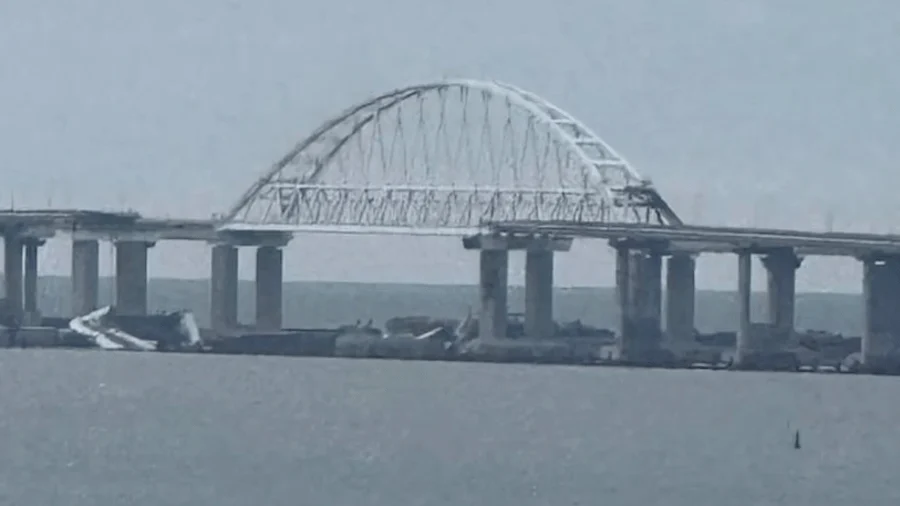
Ukraine has asserted responsibility for a meticulously planned and executed multi-stage operation that has significantly damaged a vital Russian military crossing point into occupied Crimea. The operation, described as unprecedented, represents a direct response to sustained Russian strikes on Ukrainian infrastructure. The Security Service of Ukraine (SBU) and the General Staff of the Armed Forces of Ukraine are credited with developing and coordinating the extensive effort, which involved a systematic dismantling of Russian air defense, radar, and electronic warfare systems leading up to the final objective.
The primary target of this operation was identified as the Kerch Bridge, also known as the Crimean Bridge, a critical artery for Russian military logistics and personnel movement into the annexed peninsula. Ukrainian officials stated that the operation’s seventh stage culminated in significant damage to both the road and railway sections of the bridge, effectively disrupting its functionality. This action is framed by Ukraine as a strategic retaliatory measure against Russia’s ongoing attacks on Ukrainian civilian and military infrastructure, including bridges in regions such as Zaporizhzhia, Dnipro, Kyiv, and Odesa.
President Volodymyr Zelenskyy, in a statement released via his official X (formerly Twitter) account, expressed profound gratitude to all entities involved in the operation. This included the Security Service of Ukraine, various units of Ukraine’s Defense Forces, the Minister of Defense, the Commander-in-Chief of the Armed Forces, the General Staff, and domestic weapons manufacturers. Zelenskyy emphasized that the operation was a direct consequence of Russia’s consistent targeting of Ukrainian infrastructure, highlighting that while Ukraine focuses on restoration, it also serves as a reminder that "war will always return to where it began."
The Ukrainian president’s statement also reiterated Ukraine’s previous attempts at de-escalation, which he claimed were met with "loud rejection" by Russia. He assured that Ukraine’s defensive capabilities are robust and will remain so, vowing that acts of terror against Ukrainian cities and people will not go unanswered.
A Chronology of Strategic Dismantling
The operation, as detailed by Ukrainian officials, was not a singular event but rather a prolonged campaign executed over several weeks. This phased approach allowed for the gradual neutralization of Russian defensive capabilities in the vicinity of the target.
- Early Stages (Weeks Prior): The initial phases focused on intelligence gathering and the systematic degradation of Russian air defense networks. This likely involved reconnaissance missions and precision strikes aimed at identifying and destroying key components of Russia’s layered defense system around the Crimean Bridge. The objective was to create windows of opportunity for subsequent, more direct attacks.
- Mid-Stages: As air defense systems were weakened, Ukrainian forces reportedly targeted radar installations and electronic warfare (EW) equipment. Disrupting these systems is crucial for preventing early detection and jamming of incoming Ukrainian assets, thereby increasing the probability of mission success.
- Culminating Stage (Present): The most recent phase, described as the "key stage," involved direct strikes on the bridge infrastructure. Ukrainian officials specified the use of a variety of indigenous and potentially foreign-supplied weapons.
Arsenal of Denials: Ukrainian Weaponry in Focus
President Zelenskyy’s statement provided a detailed, albeit cryptically named, list of the weaponry employed in the operation. This list suggests a sophisticated blend of drone technology, missile systems, and potentially other specialized munitions. The named systems include:
- Drones: "Dovbush," "Vendetta," "Da Vinci," "Sichen," "Mich-2000," "Ruta," "Palianytsia," "An-197," "FP-1," and "FP-5 Flamingo." The "Palianytsia" drones were specifically credited with striking the road section of the bridge, while "Ruta" and "FP-5" drones, alongside "Neptune" missiles, targeted the railway section. The "Flamingo" drone was highlighted for a precision-guided strike.
- Missiles: "R-360 Neptune." This Ukrainian-developed anti-ship missile system has been adapted and is believed to be capable of land-attack roles, potentially contributing to the strikes on the bridge.
The mention of specific drone names, some of which have become emblematic of Ukrainian resilience and innovation, underscores the nation’s growing domestic defense industry capabilities. The "Palianytsia" (a Ukrainian bread) and "Vendetta" drones, for instance, have gained recognition in previous engagements. The coordinated use of these varied assets suggests a high degree of tactical planning and integration.
Strategic Implications and Broader Context
The reported damage to the Kerch Bridge carries significant strategic implications for Russia. The bridge is not merely a transportation link; it is a potent symbol of Russia’s annexation of Crimea in 2014 and a vital logistical lifeline. Its disruption:
- Military Logistics: Hinders the rapid movement of troops, heavy equipment, and supplies to and from the Crimean peninsula, potentially impacting Russian operations in southern Ukraine.
- Morale and Propaganda: The bridge has been a key element of Russian national pride and propaganda. Damage to it can serve as a major blow to Russian morale and undermine their narrative of control and invincibility.
- Economic Impact: While primarily a military target in this context, the bridge also supports economic activity. Significant damage could have ripple effects on trade and tourism.
- Deterrence and Retaliation: This operation demonstrates Ukraine’s increasing capacity to strike deep into Russian-controlled territory and on strategically vital infrastructure. It signals a shift towards a more offensive posture in response to persistent Russian aggression.
The context of the operation is crucial. Russia has been engaged in a full-scale invasion of Ukraine since February 2022, characterized by widespread destruction of Ukrainian cities, energy infrastructure, and civilian facilities. Ukraine has consistently argued that its defensive actions, including strikes on military targets in Russian-occupied territories or directly related to Russian aggression, are legitimate responses to these attacks.
Reactions and Analysis
While official statements from Moscow regarding this specific incident were not immediately available at the time of reporting, Russia has historically condemned Ukrainian strikes on its territory and infrastructure as acts of terrorism. Previous incidents involving the Kerch Bridge have led to heightened tensions and retaliatory measures from Russia.
Independent military analysts suggest that the successful neutralization of Russian air defenses and the precision of the strikes indicate a significant advancement in Ukraine’s intelligence, targeting, and strike capabilities. The sustained nature of the operation further points to a deliberate and well-resourced effort, likely involving extensive reconnaissance and planning.
The mention of "Dovbush," "Vendetta," and other named drones by President Zelenskyy highlights the growing role of unmanned aerial systems in modern warfare. These systems, when used in coordinated swarms or for precision strikes, can offer significant advantages in terms of reconnaissance, target acquisition, and direct engagement, often with reduced risk to personnel compared to manned missions.
The Ukrainian government’s emphasis on restoring its own infrastructure while simultaneously striking Russian military assets underscores a dual strategy of resilience and retaliation. The statement that "war will always return to where it began" serves as a stark warning to Russia, suggesting that the conflict’s consequences will extend beyond Ukraine’s borders.
Future Outlook
The implications of this operation for the ongoing conflict are substantial. It reinforces Ukraine’s commitment to defending its sovereignty and territorial integrity through all available means. It also signals a potential escalation in Ukraine’s ability to project force and degrade Russia’s logistical and military capabilities.
The effectiveness of the Ukrainian-developed weaponry, particularly the drones and Neptune missiles, will likely be scrutinized by international observers and defense analysts. Successes in operations like this can bolster domestic production and potentially attract further international military assistance.
As Ukraine continues to rebuild and defend its territory, actions like the reported strike on the Crimean Bridge serve as critical markers of its evolving military strength and strategic resolve in the face of relentless aggression. The international community will be closely watching Russia’s response and the broader ramifications for regional security. The continuous efforts by Ukraine to counter Russian attacks and reclaim its occupied territories remain a central narrative of the protracted conflict.
