

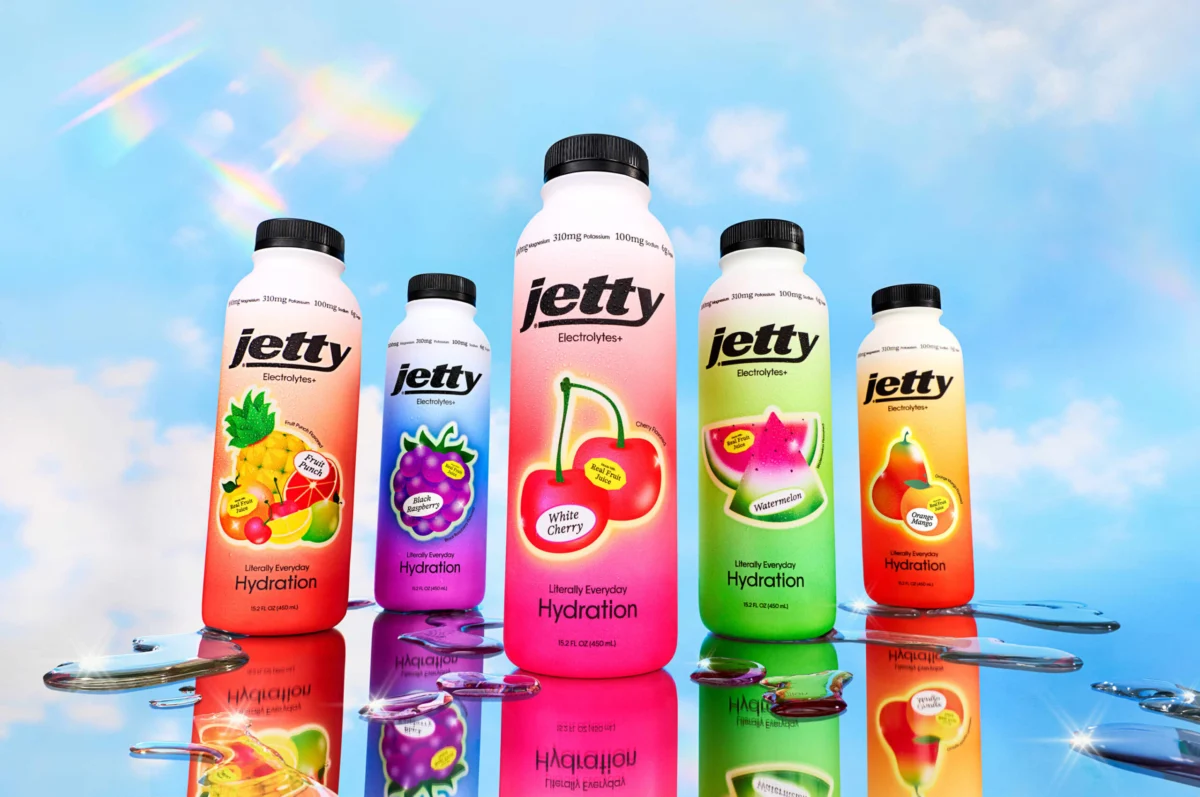
After orchestrating a significant disruption in the carbonated soft drink sector with their innovative prebiotic soda brand, Poppi, founders Allison and Stephen Ellsworth are now setting their sights on revolutionizing the hydration category. Their new venture, Jetty, is poised for a market debut, bringing five distinct flavors to shelves at Whole Foods grocery stores and online platforms like Target and Amazon, starting this Monday. This self-funded initiative marks a direct challenge to established beverage behemoths, most notably PepsiCo, which acquired Poppi for $1.95 billion in 2025 and commands a dominant position in the sports drink market with its Gatorade brand.
The Genesis of Jetty: From Poppi’s Success to Personal Insight
The Ellsworths’ journey to Jetty is rooted in a proven track record of identifying and capitalizing on unmet consumer needs. Poppi, launched from a farmer’s market concept, rapidly ascended to prominence by offering a healthier, more functional alternative to traditional sodas. Its success was fueled by a unique blend of prebiotic fiber, low calorie and sugar counts, and a vibrant, engaging marketing strategy that resonated deeply with Generation Z and millennial consumers. This approach not only garnered a loyal following but also caught the attention of industry giants, culminating in the lucrative acquisition by PepsiCo. The deal, valued at $1.95 billion, underscored the massive potential of functional beverages and the founders’ acumen in brand building and market penetration.
Following the acquisition, Allison Ellsworth remained involved with Poppi in an advisory capacity, stepping back from day-to-day operations. This period of transition, she recounts, provided her with unprecedented free time, leading to a pivotal personal health journey. After a decade focused on building Poppi, Ellsworth sought medical consultation and began using a GLP-1 medication, leading to a significant weight loss of 60 pounds. It was during this time that the conceptual seeds for Jetty were sown. Her husband, Stephen Ellsworth, now CEO of Jetty, observed her struggle with adequate hydration, even after physical activity. This personal challenge, coupled with the known side effects of GLP-1 medications such as reduced thirst, nausea, and headaches, highlighted a critical gap in the market for effective, appealing hydration solutions tailored for everyday use.
"No one has really created a product for just everyday hydration — literally everyday hydration for normal people," Allison Ellsworth, Jetty’s chief brand officer, told CNBC, emphasizing the brand’s core mission. "Like I woke up this morning, I didn’t run a marathon." This statement encapsulates Jetty’s departure from the traditional high-intensity, athlete-focused messaging of existing sports drinks.
Targeting the "Everyday Hydration" Gap: A New Market Segment
Jetty aims to carve out a significant niche by targeting consumers who require a hydration boost beyond plain water but without the excessive electrolytes or sugar found in conventional sports drinks. This strategy directly contrasts with the decades-long marketing approach of brands like Gatorade, which have historically positioned their products for strenuous athletic recovery. While many consumers consume these drinks daily, often without intense physical exertion, Jetty identifies a broader, underserved demographic seeking functional hydration for routine wellness.
The emergence of GLP-1 medications like Ozempic and Mounjaro has inadvertently amplified the need for accessible and appealing hydration. These drugs, while effective for weight management, can diminish thirst, making intentional fluid intake more challenging yet simultaneously more crucial for mitigating side effects. A recent EY-Parthenon survey, encompassing over 3,600 current or former GLP-1 users, revealed that approximately 44% reported increased consumption of functional beverages, underscoring a clear demand for palatable and beneficial liquid intake beyond plain water. Jetty positions itself as an ideal solution for this growing demographic.
Beyond GLP-1 users, Ellsworth envisions a wider appeal for Jetty, particularly among the demographics that propelled Poppi to success. "Our core audience is going to be millennial moms and Gen Z," she stated, noting a generational disconnect with legacy brands. "Gen Z just isn’t relating to these old school brands, the legacy of the Gatorades and the Powerades. They’re just not cool." This insight suggests a strategic play to capture a younger, health-conscious consumer base that prioritizes natural ingredients, functional benefits, and authentic brand messaging over traditional, often sports-centric, endorsements.
A Shifting Beverage Landscape: The Rise of Functional Hydration and Electrolytes
The launch of Jetty comes at a time of robust growth and dynamic shifts within the broader hydration and electrolyte market. Consumer interest in proactive health management and functional benefits has spurred remarkable expansion in this category. According to SPINS data, dollar sales of hydration and electrolyte products surged by 20% to $2.6 billion over the 52 weeks ending October 4. This impressive growth is further supported by a strong repeat buyer rate of 62%, indicating sustained consumer engagement and loyalty within the segment.
This trend has not gone unnoticed by major food and beverage corporations, leading to an increasingly crowded and competitive landscape. Kraft Heinz, for instance, has introduced electrolyte-enhanced versions of its Capri Sun juice pouches and Kool-Aid packets. PepsiCo, recognizing the evolving consumer preferences, initiated a comprehensive overhaul of its Gatorade brand in April, aiming to broaden its appeal beyond athletes to everyday consumption occasions, such as a "fresh morning start" or an "afternoon walk." Meanwhile, Electrolit has emerged as a top performer for its distributor, Keurig Dr Pepper, reporting a robust 40% retail sales growth in the company’s third quarter. These developments highlight the intense battle for "share of throat," an industry term for beverage market share, and the urgency with which companies are adapting to changing consumer demands.
The market is also witnessing a significant divergence in product formats. While ready-to-drink (RTD) sports beverages represent a much larger market segment, their sales have shown signs of contraction. Numerator data indicates a 9.1% decline in unit sales of sports drinks from 2022 to 2026. This trend is exemplified by Coca-Cola’s decision to write down the value of BodyArmor by over $1.7 billion, following its $5.6 billion acquisition of the brand in late 2021. Conversely, single-use electrolyte mixes, propelled by the success of brands like Unilever’s Liquid I.V. and upstarts such as LMNT, are experiencing rapid growth. Allison Ellsworth notes that electrolyte powders alone constitute a $1 billion category on Amazon, signaling a strong consumer preference for convenient, customizable hydration solutions.
Intense Competition and Strategic Market Entry
Despite the shrinking unit sales in the overall RTD sports beverage category, Jetty’s founders remain undeterred. "Me and my husband know how to do RTD," Allison Ellsworth confidently stated, leveraging their extensive experience with Poppi’s bottled format. Their strategy for Jetty encompasses both powders and bottles, aiming to maximize visibility and convenience across various retail touchpoints and consumer preferences. The initial launch will see Jetty available at Whole Foods, a key retailer for health-conscious consumers, and online via Target and Amazon, ensuring broad accessibility from day one.
Jetty will debut with five distinct flavors: watermelon, orange mango, fruit punch, black raspberry, and white cherry. Each 15.2-ounce bottle or 15-gram packet is formulated to contain 100 milligrams of sodium, 310 milligrams of potassium, and 100 milligrams of magnesium, alongside B vitamins, 3 grams of fiber, and 6 grams of sugar. A crucial aspect of Jetty’s product philosophy is the conscious avoidance of artificial sweeteners and dyes, aligning with the clean label trend favored by its target demographic.
For comparison, a standard 20-ounce bottle of traditional Gatorade Thirst Quencher typically contains approximately 270 milligrams of sodium, 80 milligrams of potassium, and a significantly higher 34 grams of sugar. While Gatorade has begun phasing out artificial colors and promoting lower-sugar options in response to market shifts, Jetty’s formulation positions it as a lighter, more balanced alternative for everyday hydration. "What’s really interesting about this product and this opportunity is we now can capture all those lapsed drinkers — or that generation that didn’t even ever drink it in the first place," Ellsworth articulated, highlighting Jetty’s potential to attract consumers alienated by traditional sports drinks.
Lessons Learned and Future Outlook
The Ellsworths approach Jetty with the accumulated wisdom and strategic insights gained from building and selling Poppi. This includes a heightened awareness of potential pitfalls and a more refined approach to brand development and legal compliance. Notably, three different claims lawyers have reviewed and signed off on Jetty’s packaging, a direct response to past challenges. Poppi, it was revealed, paid $8.9 million to settle class-action litigation alleging false advertising related to its "gut healthy" claims. This experience underscores the importance of stringent regulatory adherence in the functional beverage space.
Financially, Jetty is launching as an entirely self-funded venture, backed by $2.5 million. While Allison Ellsworth anticipates seeking external investment in 2027, she indicates a preference for a different kind of investor than traditional venture capitalists. "I want to bring in investors that bring value," she explained, suggesting a shift towards partners who can offer strategic advantages beyond capital, such as access to celebrities and talent, thereby securing endorsements and marketing leverage on more favorable terms. This approach reflects a sophisticated understanding of brand building in the digital age, where influencer marketing and celebrity partnerships can be powerful accelerators.
The competitive dynamic with PepsiCo, the new owner of their previous brand, Poppi, remains a notable backdrop to Jetty’s launch. Allison Ellsworth openly expressed her belief that PepsiCo may be misinterpreting the evolving consumer landscape. "I don’t think [Pepsi] gets it, but what they do get is that the movement is changing, and they think that just by taking dyes out or doing 90% less sugar, they’re going to capture this audience," she remarked. "But that is very big corporate thinking." She further critiqued PepsiCo’s advertising strategies for younger demographics, citing campaigns for brands like Starry as examples where she believes they have missed the mark.
Indeed, Poppi’s performance under PepsiCo’s ownership has been a subject of scrutiny. A regulatory filing in October revealed that PepsiCo now estimates the fair value of potential performance-based payments to Poppi’s prior owners at $12 million. This is a significant reduction from the initial deal’s promise of an additional $300 million if Poppi met specific targets by the third quarter of 2027, suggesting that the brand’s growth trajectory may not have met initial projections under the conglomerate’s stewardship. The Ellsworths declined to comment on this filing.
Despite the indirect rivalry, Jetty is also learning from the long-standing success of its competitors. The brand is already developing a lemon-lime version, a nod to Gatorade’s iconic original flavor. "We’ll eventually do it," Ellsworth confirmed, highlighting the strategic importance of catering to classic tastes while initially focusing on unique, appealing flavor profiles.
Broader Industry Implications
Jetty’s entry into the market represents more than just another beverage launch; it symbolizes a broader paradigm shift in the consumer packaged goods industry. It underscores the increasing demand for functional, health-oriented products that cater to nuanced lifestyle needs, moving beyond generalized "wellness" to address specific health challenges and preferences. The brand’s focus on everyday hydration, its appeal to specific demographics like GLP-1 users, millennials, and Gen Z, and its commitment to clean ingredients reflect a mature understanding of modern consumer values.
Furthermore, the Ellsworths’ journey from Poppi to Jetty offers a compelling case study in entrepreneurial resilience and strategic evolution. Their ability to self-fund, leverage past experiences, and articulate a clear vision for market disruption positions Jetty as a formidable challenger, even against industry titans. As the lines between traditional sports drinks, enhanced waters, and functional beverages continue to blur, Jetty’s launch will undoubtedly contribute to the ongoing transformation of the hydration category, forcing both established players and emerging brands to innovate and adapt at an accelerated pace. The battle for the modern consumer’s thirst is far from over, and Jetty is poised to make a significant splash.
