

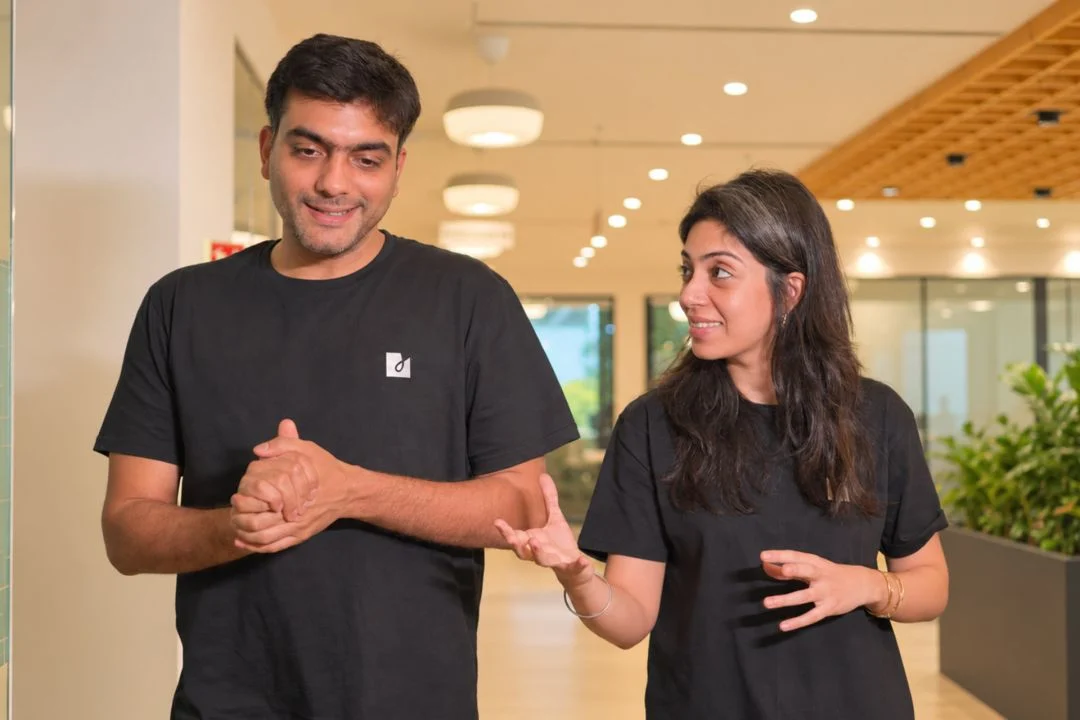
New Delhi, India – Bharat Semi, a burgeoning Indian semiconductor startup, has successfully raised $24 million in a seed funding round, earmarking the capital to accelerate the development of its innovative AI-enabled image sensors. This significant investment underscores growing confidence in India’s potential to emerge as a formidable player in the global semiconductor landscape, as Bharat Semi strategically positions itself to capture customers in the United States and other international markets. The funding arrives at a pivotal moment for the nearly five-year-old, pre-revenue company, which has already achieved crucial design wins with prominent entities such as the U.S. defense technology giant General Atomics and India’s Kaynes Semicon, despite its proprietary image sensors remaining under active development with an ambitious target for initial commercial production set for 2027.
A New Paradigm in Visual Data Processing: From Sensors to Sense-Making
At the heart of Bharat Semi’s value proposition lies its pioneering approach to image sensing. The New Delhi-based startup is meticulously crafting programmable image sensors designed to integrate image capture, advanced processing, and sophisticated AI capabilities onto a single, compact chip. This revolutionary "system-on-sensor" architecture significantly reduces the traditional reliance on transmitting raw visual data to separate, external processors for analysis. According to co-founder Vrinda Kapoor, this integrated methodology promises substantial cost efficiencies, potentially slashing system costs by at least 70% when compared to conventional setups that typically necessitate a discrete image sensor, a separate image signal processor (ISP), and an overarching system-on-chip (SoC). Kapoor emphasized the company’s transformative vision, stating, "Our aim here is to move from sensors to sense-making solutions," highlighting a shift towards intelligent, autonomous visual comprehension at the edge.
The technological leap offered by Bharat Semi’s sensors has profound implications across a spectrum of industries. By embedding AI directly into the sensor, the need for robust, power-intensive computing hardware elsewhere in the system is drastically diminished. This makes advanced visual intelligence accessible and economically viable for a broader array of applications. For instance, in smart homes, these sensors could empower air conditioning units to intelligently detect room occupancy and adjust settings automatically, optimizing energy consumption. In the burgeoning drone market, the integrated sensors could enable sophisticated visual information processing directly on board, even on smaller, more cost-sensitive platforms that cannot accommodate expensive, dedicated computing hardware. Other target sectors include industrial automation, where precise, real-time visual analysis can enhance operational efficiency and safety, and surveillance, where intelligent edge processing can reduce bandwidth requirements and improve response times. The aerospace sector also stands to benefit from robust, efficient, and intelligent sensing solutions for critical applications.
Leadership and Strategic Expansion: Building a Global Footprint
The foundational strength of Bharat Semi is rooted in its experienced leadership team. Vrinda Kapoor, a distinguished South Park Commons fellow with a prior background in healthcare technology, co-founded the venture in late 2021. She is joined by Vinayak Dalmia, the startup’s managing director, whose extensive experience includes stints at McKinsey and in private equity, bringing crucial business acumen to the enterprise. Complementing their leadership is Chief Technology Officer Boyd Fowler, a veteran of the image-sensor industry who previously held the same pivotal role at OmniVision, a globally recognized leader in image sensor technology. This trifecta of diverse expertise in technology, business strategy, and specialized engineering provides a robust framework for Bharat Semi’s ambitious trajectory.
The company’s strategic vision extends beyond India’s borders, aiming to establish a significant global presence. Currently, Bharat Semi maintains a distributed workforce of approximately 75 employees across India and the United States. Its American operations, headquartered in Santa Clara, California – a nexus of semiconductor innovation – comprise 10 to 12 professionals focused on engineering and business development. Reflecting its growth ambitions, Kapoor indicated plans to expand the U.S. headcount to around 20 by mid-2027. Concurrently, the startup has initiated hiring efforts for engineering talent in Europe, further solidifying its international reach and diverse talent pool. Kapoor articulates this global aspiration succinctly: "It’s a story of can we build a global technology company out of India."
Funding Landscape and Product Roadmap
The $24 million all-equity seed round saw robust participation from a consortium of prominent investors. The round was co-led by Info Edge Group, South Park Commons (reflecting Kapoor’s affiliation), and Indus Bridge Ventures. Additional strategic investments came from Valour Capital, Micromax (an Indian consumer electronics giant), Gaingels, and a syndicate of individual investors. This diverse investor base not only injects crucial capital but also provides a network of strategic guidance and market access. According to Kapoor, the newly secured funding will be judiciously allocated to several key areas: expanding the engineering team to accelerate development, completing the intricate product development cycles for its advanced sensors, and ultimately, bringing these innovative sensors to market.
Bharat Semi’s product development roadmap is structured into distinct generations. The company’s first-generation sensors are currently in the prototyping phase, a critical step towards validating their design and functionality. Looking ahead, the second-generation sensors, which are slated to incorporate even more advanced AI capabilities and potentially broader application versatility, are projected to reach the prototype stage by mid-2027. Following successful prototyping and refinement, the startup aims to deliver these newer, highly advanced sensors into the hands of its customers by the end of 2027, aligning with its target for initial commercial production.
India’s Semiconductor Ascent: A National Imperative
Bharat Semi’s emergence and funding success are intrinsically linked to India’s burgeoning ambition to establish a robust domestic semiconductor industry. The Indian government has made an unprecedented commitment, pledging billions of dollars through initiatives like the India Semiconductor Mission (ISM) and various Production Linked Incentive (PLI) schemes. These policies are designed to attract global and domestic investments in chip manufacturing, design, and packaging. The overarching vision is multifaceted: to reduce India’s reliance on imported chips, foster technological self-reliance (Atmanirbhar Bharat), create high-skilled employment opportunities, and crucially, position India as a viable alternative manufacturing hub in a global landscape increasingly seeking to diversify supply chains beyond China.
The global semiconductor industry, valued at over half a trillion dollars, has historically been dominated by a few key players and regions, primarily Taiwan, South Korea, and the United States. The geopolitical tensions, the COVID-19 pandemic-induced supply chain disruptions, and the escalating demand for chips across virtually every sector have underscored the strategic importance of semiconductor self-sufficiency. India’s foray into this complex and capital-intensive industry is thus not merely an economic endeavor but a strategic imperative. While India has yet to solidify its position as a major chip manufacturing hub, its strengths in design, software engineering, and a vast talent pool offer a unique advantage. The global AI boom, in particular, is creating a significant demand for specialized, efficient chips tailored for AI workloads, presenting an unparalleled opportunity for Indian startups like Bharat Semi to innovate and carve out niches in global markets.
The Broader Context: Geopolitics, AI, and Supply Chain Resilience
The timing of Bharat Semi’s rise aligns perfectly with several macro-economic and geopolitical trends. The intensifying U.S.-China technology rivalry has prompted American and allied companies to actively de-risk their supply chains, seeking manufacturing and design partners in diverse geographies. India, with its democratic institutions, large workforce, and strategic partnership with the U.S., is a natural contender to fill part of this void. The Indian government’s proactive engagement, including a technology partnership with the U.S. Space Force for a semiconductor fabrication project, as announced by Bharat Semi in 2024, signals a strong commitment to fostering an advanced technology ecosystem. Kapoor clarified that this proposed fabrication facility, which remains under development with efforts to identify domestic partners for construction and operation, is distinct from Bharat Semi’s core image-sensor business. For its image sensor products, Bharat Semi intends to remain a fabless company, focusing its expertise on semiconductor design and software, while outsourcing the capital-intensive manufacturing processes. The recent seed funding, Kapoor confirmed, will not be allocated to financing this proposed fabrication facility.
The explosive growth of Artificial Intelligence is another critical tailwind. AI, particularly at the "edge" – processing data closer to its source rather than in distant cloud data centers – demands highly specialized, power-efficient, and performant hardware. Conventional general-purpose processors are often inefficient for these tasks. This creates a fertile ground for companies like Bharat Semi, which are developing purpose-built AI accelerators and integrated sensing solutions. The global market for AI in edge devices is projected to grow exponentially, driven by the proliferation of smart devices, IoT, autonomous systems, and advanced robotics. Bharat Semi’s AI-enabled image sensors, by performing complex processing on-chip, directly address the challenges of latency, bandwidth, power consumption, and data privacy inherent in edge AI applications.
Implications and Future Outlook
The success of Bharat Semi holds significant implications, both for India’s domestic technology landscape and for the global semiconductor ecosystem. For India, it represents a tangible step towards realizing its "Make in India" and "Design in India" ambitions, demonstrating the capability of Indian entrepreneurs to innovate at the cutting edge of hardware technology. It will undoubtedly inspire a new generation of deep-tech startups and attract further venture capital into the country’s burgeoning hardware sector. The expansion of its engineering teams in India, the U.S., and Europe will contribute to skill development and knowledge transfer, elevating India’s position in the global tech hierarchy.
Globally, Bharat Semi’s entry could introduce new efficiencies and capabilities across various sectors. The prospect of dramatically reducing system costs and power consumption for AI-driven visual applications could democratize advanced sensing technologies, enabling their deployment in a wider range of products and services. While the road to commercial production in 2027 is still some years away and fraught with challenges inherent in semiconductor development, the early design wins with significant partners like General Atomics validate the potential and market interest in Bharat Semi’s innovative approach. The company will need to navigate fierce competition from established players in the image sensor market, ensure timely and cost-effective production, and continuously innovate to stay ahead in a rapidly evolving technological landscape. However, with solid funding, experienced leadership, and a clear vision, Bharat Semi is poised to make a meaningful contribution to the future of intelligent sensing, embodying India’s aspiration to build global technology leaders.
