

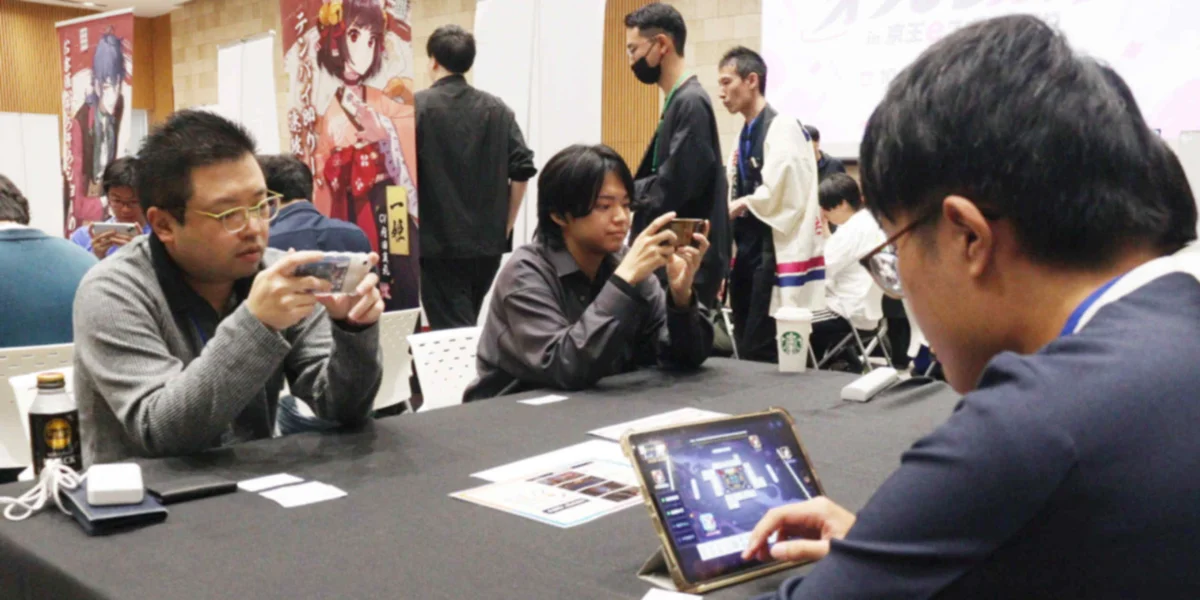
The traditional avenues for fostering professional relationships – after-work drinks, golf outings, or even informal office gatherings – are increasingly met with a collective shrug, particularly among younger generations. As businesses grapple with cultivating camaraderie, client loyalty, and a sense of shared purpose in an evolving professional landscape, an unexpected yet potent solution is emerging: competitive games. From the strategic intricacies of mahjong to the kinetic energy of battling tops, companies are discovering that well-organized competitions, both online and in person, offer a compelling and engaging alternative for forging connections.
This trend gained significant traction during the COVID-19 pandemic, when remote work and social distancing necessitated novel ways to maintain team cohesion and external relationships. While physical meetups were curtailed, digital platforms enabled a surge in online gaming. As Daiji Tsugane, a representative of Toppan Holdings’ esports business, noted, “online games took off during the pandemic.” This surge wasn’t merely about leisure; it represented a fundamental shift in how individuals, including professionals, interacted and found common ground. The infrastructure and familiarity with online gaming built during this period have now laid the groundwork for its continued application in professional contexts.
The Rise of Competitive Engagement in the Professional Sphere
The appeal of competitive gaming in the business world stems from several key factors. Firstly, it provides a level playing field, where hierarchies can temporarily dissolve, and individuals can engage based on skill and strategy rather than title or tenure. This can foster a more authentic and egalitarian environment for interaction. Secondly, games inherently involve collaboration, problem-solving, and strategic thinking, skills that are highly transferable to the workplace. Participating in a competition can therefore offer a low-stakes environment to observe and develop these crucial professional attributes.
Furthermore, the inherent excitement and engagement of competitive activities can break down social barriers and create memorable shared experiences. For instance, a mahjong tournament, with its blend of luck and skill, offers a nuanced social dynamic that can spark conversation and foster rapport. Similarly, the fast-paced, visually stimulating nature of battling top competitions can create a sense of shared excitement and friendly rivalry.
Case Study: Toppan Holdings and the Esports Ecosystem
Toppan Holdings, a diversified printing and information communications company, has been actively exploring the potential of esports and gaming in business. Their involvement in the esports business underscores a broader industry recognition of the power of competitive gaming. The company’s participation in and promotion of online gaming events, particularly during the pandemic, has provided valuable insights into the engagement levels and potential of these platforms for professional networking.
The pandemic catalyzed a dramatic increase in online gaming participation globally. According to data from Newzoo, a leading games market intelligence firm, global games market revenue was projected to reach $175.8 billion in 2021, with a significant portion of this growth driven by mobile and PC gaming. While these figures primarily represent consumer spending, they highlight the widespread adoption and engagement with digital gaming environments. This widespread adoption means that a significant portion of the professional workforce is already familiar with and comfortable participating in online gaming.
The adoption of online mahjong competitions, as evidenced by the photograph from Tokyo in October, demonstrates a targeted approach to leveraging this trend. Mahjong, a game with deep cultural roots in East Asia, offers a unique blend of strategy, social interaction, and a touch of chance. For business professionals, it presents an opportunity to engage in a familiar yet challenging pastime that can foster strategic thinking and interpersonal dynamics. The fact that these competitions are occurring in a business context suggests a deliberate effort to use the game as a tool for relationship building.
The Strategic Advantages of Gaming in Business
Beyond simple recreation, the integration of competitive gaming into business practices offers tangible strategic advantages.
1. Enhanced Team Building and Morale: For in-house competitions, the sense of shared challenge and accomplishment can significantly boost team morale and camaraderie. Teams that learn to strategize and communicate effectively in a game environment are often better equipped to collaborate on complex work projects. Companies can organize internal tournaments for popular online games or even physical games like battling tops. This fosters a sense of shared identity and mutual support within teams.
2. Client Engagement and Relationship Management: For external engagements, gaming competitions can serve as a powerful icebreaker and a unique way to build rapport with clients and partners. Offering clients the opportunity to participate in a friendly mahjong tournament or a virtual reality gaming event can create memorable experiences that strengthen business relationships. This can be particularly effective in industries where traditional networking events may feel stale or overdone. For example, a financial services firm might host an online chess tournament for its high-net-worth clients, positioning themselves as innovative and client-centric.
3. Talent Acquisition and Development: In the highly competitive landscape of talent acquisition, offering unique and engaging experiences can differentiate a company. Organizing gaming events can attract a younger, tech-savvy demographic. Furthermore, observing candidates’ performance in competitive gaming scenarios can provide insights into their problem-solving skills, strategic thinking, and ability to perform under pressure – qualities that are difficult to assess through traditional interviews alone.
4. Fostering Innovation and Creativity: The process of problem-solving within games often requires out-of-the-box thinking and experimentation. By encouraging employees to engage in competitive gaming, companies can inadvertently foster a more innovative and creative mindset. The iterative nature of game design and play, where players learn from failures and adapt their strategies, mirrors the innovation cycle in business.
The Evolution of Professional Competitions: From Boardrooms to Virtual Arenas
The evolution of these professional competitions is noteworthy. While board games and card games have long been associated with strategic thinking, the digital revolution has opened up a vast new frontier. Online multiplayer games, from strategy-based titles like "League of Legends" to more casual yet competitive experiences, offer scalable and accessible platforms for engagement.
The use of battling tops, a seemingly simple toy, in a professional context highlights the adaptability of competitive formats. These physical competitions, often characterized by quick reflexes and strategic placement, can be surprisingly engaging and provide a low-barrier-to-entry activity that can unite diverse groups. Imagine a tech company hosting a battling top tournament during a company retreat, offering a fun and lighthearted break from intensive work sessions.
Background and Chronology of the Trend
The seeds of this trend were sown long before the pandemic. Professional sports have always served as a model for competitive engagement and fan loyalty. However, the democratization of technology and the rise of the internet have fundamentally altered the landscape of what constitutes a "competition" and how it can be accessed.
- Pre-2000s: Traditional in-person social gatherings and individual hobbies like golf or chess were the primary means of informal professional networking.
- 2000s-2010s: The proliferation of online gaming platforms began to shift engagement patterns. Early online multiplayer games fostered communities, but their application in a strictly professional context remained nascent.
- 2010s: The rise of esports as a spectator sport and a viable career path began to influence corporate thinking. Companies started sponsoring esports teams and events, recognizing the significant viewership and engagement.
- 2020-2022 (Pandemic Era): This period saw an unprecedented surge in online gaming participation across all demographics, including professionals. Remote work necessitated digital solutions for team building and client interaction, accelerating the adoption of online gaming as a viable tool. Companies began experimenting with virtual game nights and online tournaments.
- 2023-Present: The trend continues to mature. Companies are moving beyond ad-hoc game nights to more structured and strategic competitive events, recognizing their value in talent acquisition, client relationship management, and internal culture building. The inclusion of traditional games like mahjong alongside digital esports signifies a broader acceptance of competitive engagement as a professional tool.
Supporting Data and Market Insights
The global esports market is a testament to the commercial viability and engagement potential of competitive gaming. Reports from industry analysts consistently show robust growth. For instance, Statista projected the global esports market to generate revenues exceeding $1.5 billion in 2023, with projections indicating continued expansion in the coming years. This growth is driven by increasing viewership, sponsorship deals, and the professionalization of the industry.
Beyond dedicated esports, the broader casual gaming market also plays a crucial role. Mobile gaming, in particular, has achieved massive penetration, with billions of users worldwide. This ubiquity means that a significant portion of the professional workforce likely engages with casual games on a regular basis, making them an accessible entry point for professional gaming initiatives.
The return on investment for companies engaging in these activities, while not always directly quantifiable in terms of sales figures, can be measured through metrics such as employee retention rates, improved team performance, and enhanced client satisfaction. A survey by Deloitte on employee engagement found that companies with highly engaged employees outperform those with lower engagement by significant margins in terms of profitability and productivity. Competitive gaming, by fostering a sense of fun, connection, and shared purpose, can be a powerful driver of such engagement.
Reactions and Broader Implications
The increasing adoption of competitive gaming in professional settings has garnered attention from various stakeholders.
- HR Professionals: Many HR departments are recognizing the potential of gaming to address challenges related to employee engagement, team cohesion, and the development of soft skills. They are increasingly exploring how to integrate gaming initiatives into their talent management strategies.
- Marketing and Sales Teams: For these departments, competitive gaming offers a novel and engaging way to connect with clients, build brand loyalty, and generate leads. It provides a departure from traditional marketing tactics, offering a more interactive and memorable experience.
- Employees: While some may initially be skeptical, the inherent fun and competitive nature of these activities often leads to positive reception. The opportunity to engage with colleagues and clients in a less formal setting can be highly appealing, particularly for younger generations who grew up with gaming.
The broader implication of this trend is a redefinition of what constitutes professional interaction and relationship building. As the workforce diversifies and generational preferences evolve, companies are compelled to innovate in how they foster connection and cultivate a positive organizational culture. Competitive gaming, in its various forms, offers a dynamic and effective pathway to achieving these goals. It taps into universal human desires for challenge, mastery, and social connection, translating them into tangible benefits for businesses. The strategic use of these games moves beyond mere entertainment, positioning them as valuable tools for organizational development and competitive advantage in the modern business landscape.
