

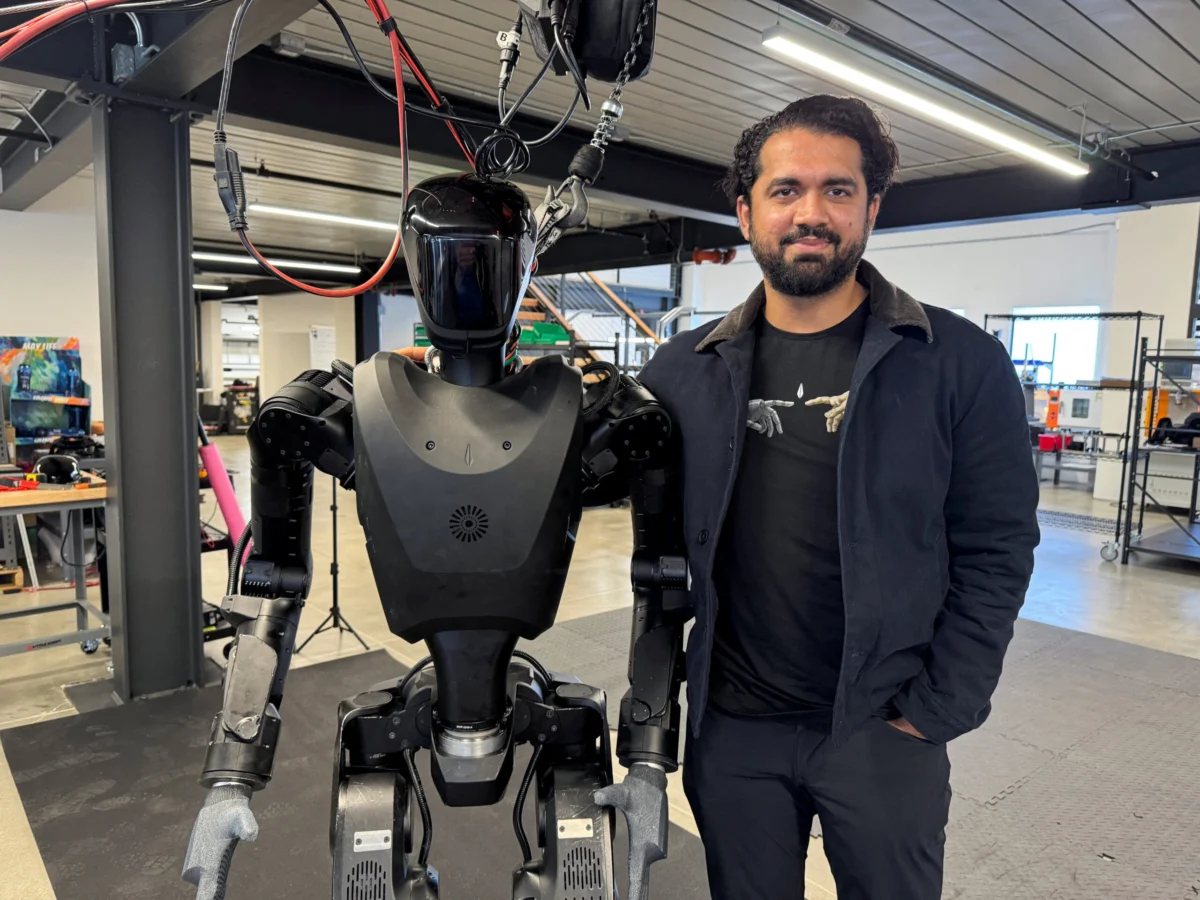
Foundation Future Industries, a San Francisco-based startup aiming to revolutionize military applications with its humanoid robot, Phantom-01, is grappling with severe financial instability, having failed to meet payroll for its employees last month. This marks the second instance of missed payroll in recent months, raising critical questions about the company’s viability, its leadership under CEO and co-founder Sankaet Pathak, and the controversial backing it has received from figures like Eric Trump. The unfolding crisis comes as Pathak attempts to secure hundreds of millions in new funding at an ambitious $3 billion valuation, even as his prior fintech venture, Synapse, left over 100,000 Americans locked out of their savings accounts in a dramatic collapse.
Mounting Financial Woes and Leadership Scrutiny
Employees of Foundation Future Industries, the developer of the highly anticipated "weapons-ready" Phantom-01 robot, have not received their paychecks after the company missed payroll on October 30, 2026. This is not an isolated incident; the startup also experienced a cash crunch in August 2026, where payroll was delayed for approximately two days before a bridge loan from an existing investor temporarily alleviated the issue. The recurring financial difficulties have sparked significant anger and concern among the company’s workforce, many of whom were recruited from industry giants like Tesla and Amazon-owned Zoox, lured by the promise of pioneering work in advanced robotics and artificial intelligence.
At the heart of the controversy surrounding Foundation’s financial management is its CEO, Sankaet Pathak. Insiders familiar with the company’s operations, who requested anonymity due to the private nature of the firm, have highlighted a particularly galling detail: Pathak reportedly borrowed $4.6 million from Foundation in late 2025 to purchase a luxury home in Sausalito, California. Public records corroborate that an LLC with Pathak as its sole principal acquired a $4.6 million property with "sweeping, cinematic views" of the San Francisco Bay in October 2025. This substantial personal loan, which Pathak reportedly characterized as short-term, has infuriated some employees and observers, who argue the funds could have been vital in stabilizing the company’s payroll and operational expenses during its current cash crisis. A spokesman for Pathak acknowledged receiving detailed inquiries regarding these allegations but declined to provide a comment.
A Troubling Chronology of Financial Instability
The timeline of Foundation’s challenges, intertwined with Pathak’s previous business endeavors, paints a picture of recurring financial turbulence:
- April 2024: Foundation Future Industries is co-founded by Sankaet Pathak, Arjun Sethi (CEO of Tribe Capital), and Mike LeBlanc (co-founder of Cobalt Robotics). The company begins aggressively recruiting top robotics and AI talent.
- Mid-2024: CNBC reports on Pathak’s previous startup, Synapse, and Foundation’s marketing materials containing exaggerated claims, including an "imminent investment and $300 million purchase order from General Motors," which GM later refuted. Co-founder Mike LeBlanc publicly expressed embarrassment over these materials.
- Late 2024: Foundation acquires Florida-based Boardwalk Robotics. This acquisition is significant as the government research contracts won by Boardwalk Robotics—totaling $24 million—later become the basis for Foundation’s public claims of securing substantial Pentagon deals. Boardwalk’s robot Alex serves as the foundation for Phantom MK-1. However, sources indicate that performance milestones tied to the Boardwalk deal remain unmet.
- Late 2024: Pathak’s previous fintech venture, Synapse, collapses, leaving over 100,000 customers unable to access an estimated $265 million in their FDIC-insured accounts. Pathak himself withdrew $320,000 in loans from Synapse as it spiraled towards bankruptcy.
- October 2025: An LLC controlled by Sankaet Pathak purchases a $4.6 million luxury home in Sausalito, California, reportedly funded by a loan from Foundation Future Industries.
- February 4, 2026: Sankaet Pathak poses for a photo during an interview with Reuters at Foundation’s factory, showcasing the Phantom-01 robot.
- January 2026 onward: Foundation begins actively seeking hundreds of millions of dollars in new funding, targeting a $3 billion valuation, a figure that has raised eyebrows given the company’s intermittent financial issues.
- April 2026: In a high-profile television interview, Eric Trump, son of the U.S. President, is introduced as an investor and chief strategy advisor for Foundation. During the interview, Pathak boldly claims Foundation is close to unveiling the "strongest humanoid robot that exists anywhere in the world."
- April 23, 2026: Senator Elizabeth Warren (D-Mass.) publicly criticizes Eric Trump’s involvement, questioning whether Foundation secured U.S. defense contracts through nepotism, labeling it "corruption in plain sight."
- August 2026: Foundation experiences its first known payroll delay, though employees are paid after two days due to a bridge loan.
- October 30, 2026: Foundation misses payroll for its employees, leading to the current financial crisis and heightened internal and external scrutiny. Pathak sends a memo to employees this week, stating he is working to source funds for back wages.
The Shadow of Synapse: A Precedent of Financial Mismanagement
Sankaet Pathak’s current struggles with Foundation are amplified by the lingering specter of his previous venture, Synapse. Before pivoting to military robotics, Pathak was known as the founder of Synapse, a fintech middleware provider that enabled other fintech firms to offer banking services like savings accounts and credit cards through partnerships with smaller community banks. The company’s collapse in late 2024 was catastrophic, impacting over 100,000 Americans who found their combined $265 million in deposits effectively frozen.
Despite FDIC insurance covering individual accounts up to $250,000, the complex and opaque nature of Synapse’s operations—acting as a conduit between fintechs and partner banks—complicated the recovery process. Thousands of customers remain without full access to their funds more than two years later. A bankruptcy trustee, former FDIC chair Jelena McWilliams, reported that as much as $96 million in customer funds went missing. While Synapse blamed its banking partner Evolve, and Evolve pointed fingers at Synapse, federal regulators initially delayed intervention. It wasn’t until the Consumer Financial Protection Bureau (CFPB) sued Synapse in 2025 that a $55 million fund was established for customer relief, a fraction of the total missing amount. Compounding the issue, reports by independent journalist Jason Mikula revealed that Pathak himself withdrew $320,000 in loans from Synapse as the company hurtled towards bankruptcy amid ledger disputes. The Wall Street Journal also reported a grand jury investigation into possible criminal misconduct at Synapse, though Pathak was not specifically named.
This history raises serious questions about Pathak’s financial stewardship and accountability, concerns that are now resurfacing as Foundation faces its own solvency issues.
High Ambitions and the Military Robotics Frontier
Despite the financial turmoil and his controversial past, Sankaet Pathak has consistently presented Foundation Future Industries as a trailblazer on the cusp of a technological breakthrough. The company’s flagship product, Phantom-01, is touted as a next-generation, weapons-ready humanoid robot designed to give the U.S. a decisive edge against rivals like China in the rapidly evolving landscape of military AI. Pathak has made bold claims about Phantom-01’s potential, suggesting it could soon undertake battlefield tasks in Ukraine or patrol the U.S. border with Mexico.
The market for military robotics and AI is indeed a burgeoning sector, with global spending projected to reach tens of billions of dollars annually in the coming years. Nations are increasingly investing in autonomous systems for reconnaissance, logistics, and even direct combat, driven by advancements in AI, sensor technology, and mechanical engineering. Companies worldwide, from defense contractors to agile startups, are vying for dominance. Foundation’s claims of developing the "strongest humanoid robot that exists anywhere in the world" tap into this strategic imperative.
However, the assertion that Foundation has won $24 million in Pentagon contracts, widely reported across news outlets, has been clarified. While true that contracts of that value are associated with the company, they were not directly awarded to Foundation for its proprietary technology. Instead, these government research contracts were initially secured by Florida-based Boardwalk Robotics, which Foundation acquired in late 2024. This distinction is crucial, suggesting that Foundation’s direct success in securing new, large-scale defense contracts for its own Phantom-01 platform may not be as robust as publicly portrayed.
Political Connections and Nepotism Allegations
The visibility of Foundation Future Industries received a significant boost in April 2026 when Eric Trump was introduced as an investor and chief strategy advisor. While the exact size of his stake remains undisclosed, Eric Trump and his brother, Donald Trump Jr., have a documented history of investing in defense firms, including those developing military drones and autonomous weapons. A July 2026 Washington Post investigation revealed that startups backed by investment vehicles linked to the Trump brothers had collectively secured at least $3.2 billion in government business, raising concerns about potential conflicts of interest and the appearance of nepotism during their father’s administration.
Eric Trump, in his April interview, enthusiastically praised Pathak and Foundation, stating, "We have to win robotics in the United States of America… When you go up and interact with these robots… they fist bump you, they high five you, they follow your commands."
This high-profile endorsement and the subsequent claims of defense contracts immediately drew the ire of Senator Elizabeth Warren (D-Mass.). On April 23, 2026, Senator Warren took to social media, tweeting, "Eric Trump went on FOX to brag about winning ANOTHER multimillion-dollar contract from the Trump administration. This looks like corruption in plain sight." These allegations fueled speculation within Foundation itself that a Democratic-led Congress might initiate investigations into the company’s dealings.
Eric Trump did not respond to requests for comment regarding the current financial crisis. His spokesperson, however, previously told the Financial Times that Eric Trump had "no involvement in Foundation’s management, operations, strategic decisions or commercial activities, including the solicitation, negotiation, procurement or execution of any government contracts." This statement aims to distance him from the operational controversies, yet his public association and strategic advisory role inevitably link him to the company’s fortunes and ethical questions.
Corporate Governance and Investor Confidence
Foundation’s corporate governance structure has also become a focal point of concern for prospective investors. Sankaet Pathak is reportedly the sole board member of Foundation, and he also owns the majority of the firm’s shares. This highly concentrated power structure, while common in very early-stage startups, becomes problematic as a company seeks significant institutional funding and aims for a multi-billion dollar valuation. Sources familiar with investor discussions indicate that this lack of independent oversight has raised "red flags" among potential backers.
"This is what happens in a company with no governance," remarked one anonymous source, questioning the accountability mechanisms within Foundation. The absence of a diverse board with independent directors who can provide checks and balances is seen as a significant risk, particularly given Pathak’s history and the substantial personal loan he secured from the company. Existing investors were reportedly made aware of the $4.6 million loan through company financial disclosures, but the implications of such a transaction without robust board approval are starkly evident in the current crisis.
Furthermore, Foundation has a prior record of making ambitious claims that later proved to be exaggerated. The 2024 CNBC report detailing Pathak’s previous startup’s issues and Foundation’s marketing materials falsely citing a $300 million purchase order from General Motors underscores a pattern that could erode investor trust. In the competitive and high-stakes world of venture capital, especially in advanced technology sectors like AI and robotics, transparency and credible governance are paramount. The current financial turmoil, coupled with past misrepresentations and questionable internal financial practices, makes Foundation’s goal of raising hundreds of millions at a $3 billion valuation increasingly challenging.
Broader Implications and the Future of Military AI
The predicament of Foundation Future Industries has broader implications for the nascent military robotics and AI industry. While the potential for humanoid robots to augment human capabilities in defense is immense—from reconnaissance and logistics to hazardous duty and even combat—the ethical, regulatory, and financial frameworks governing their development are still evolving. The controversy surrounding Foundation could lead to increased scrutiny from government agencies, investors, and the public regarding the companies operating in this sensitive space.
The push for "weapons-ready" robots also reignites debates about autonomous weapons systems, often referred to as "killer robots." International organizations and civil society groups have long advocated for bans or strict regulations on such systems, fearing an arms race and the erosion of human control over lethal force. Any missteps by companies like Foundation could inadvertently accelerate calls for more stringent oversight, potentially stifling innovation or shifting development to less transparent environments.
For Foundation, the immediate future hinges on Sankaet Pathak’s ability to secure emergency funding to cover outstanding payroll and operational expenses. Without a rapid injection of capital, the company risks a complete collapse, similar to Synapse, which would leave employees jobless and investors with significant losses. The ongoing financial difficulties, the shadow of Synapse, the corporate governance concerns, and the political entanglements present a formidable challenge for a company that once promised to redefine military technology. The journey from ambitious startup to industry leader is fraught with peril, and Foundation Future Industries now finds itself at a critical crossroads, its vision of humanoid robot soldiers overshadowed by a very human financial crisis.
