

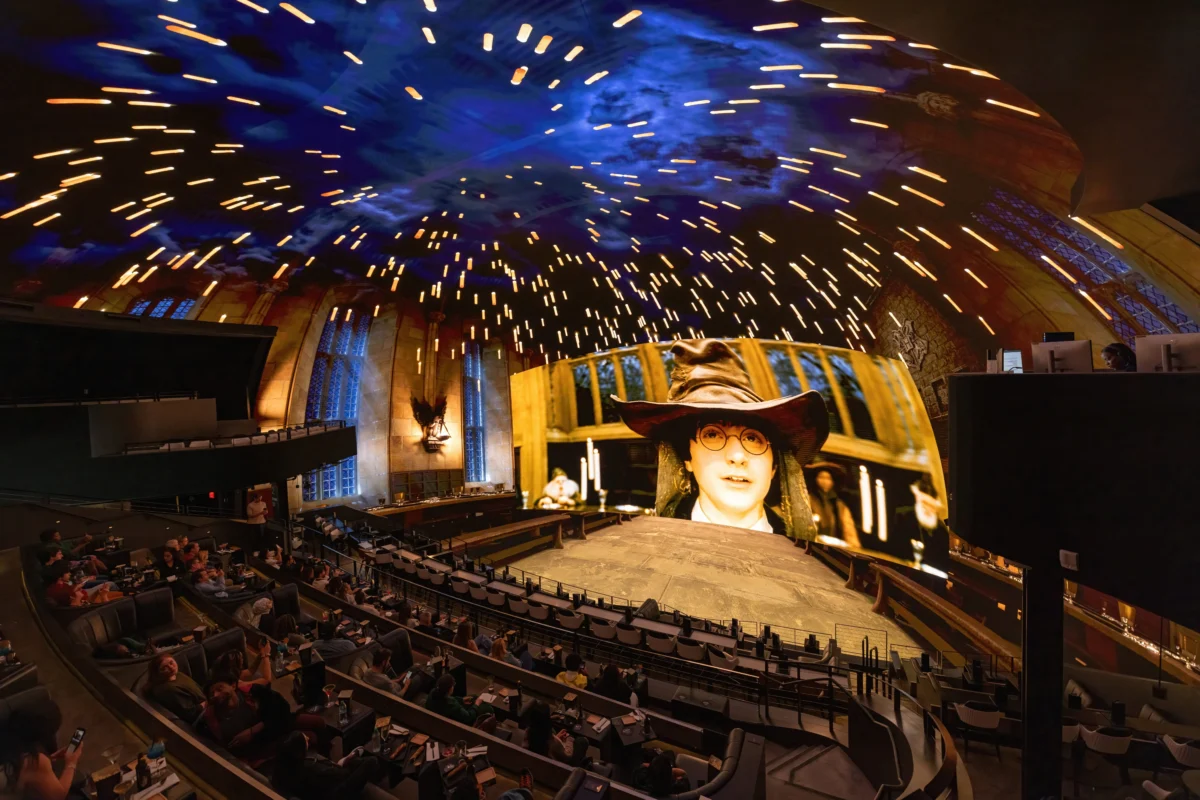
In a rapidly evolving entertainment landscape increasingly defined by novel consumer experiences, Cosm is carving out a significant niche, pioneering an innovative approach to premium large format (PLF) theatrical viewing that transcends traditional cinema. This immersive entertainment technology company, whose very name, a portmanteau of "cosmos" and "colosseum," hints at its expansive vision, is rapidly expanding its footprint and content library, drawing substantial investment and capturing the attention of both sports fans and film enthusiasts. Born from the sophisticated world of planetarium programming, Cosm’s signature massive, domed screens initially transported guests across the universe. Today, they place viewers courtside at global sporting events and plunge film audiences directly into the heart of Hollywood’s most iconic narratives, marking a pivotal shift in how out-of-home entertainment is consumed.
From Celestial Views to Shared Realities: Cosm’s Origins and Vision
Cosm’s journey began with a foundation in advanced projection and dome technology, honing its expertise in crafting compelling visual experiences within planetariums. This unique heritage provided the technical bedrock for its current iteration: a company focused on creating "shared reality" experiences that are both deeply immersive and communal. Recognizing a burgeoning demand for elevated entertainment experiences beyond the confines of conventional movie theaters or home viewing, Cosm embarked on an ambitious strategy to leverage its technological prowess. The company’s core offering revolves around its colossal, concave screens, which range from 87 feet in diameter to an even larger 100 feet planned for its Cleveland venue. These domes are designed to fill a significant portion of the viewer’s peripheral vision, effectively blurring the lines between the audience and the on-screen action. This design philosophy is central to Cosm’s mission: to not just present content, but to fully envelop the audience within it, creating a visceral sense of presence.
Rapid Expansion and Strategic Market Penetration
The company has demonstrated an aggressive expansion strategy since 2024, reflecting both market confidence and a clear vision for growth. In a relatively short period, Cosm has inaugurated four state-of-the-art venues in key metropolitan areas across the United States: near Los Angeles, Dallas, Atlanta, and Detroit. This strategic placement in major urban centers allows Cosm to tap into diverse consumer bases, from dedicated sports aficionados to cinephiles seeking a fresh cinematic encounter. The momentum is set to continue with a fifth hub slated to open in Cleveland in 2027, promising an even grander scale with its 100-foot diameter dome. These experimental venues have quickly garnered a reputation for unique, high-demand experiences, with live sports matchups often selling out, underscoring the strong consumer appetite for Cosm’s distinctive offering. The success of these initial locations provides a strong proof of concept for the company’s model and signals potential for further domestic and international expansion, an objective previously hinted at by the company in earlier funding rounds.
A Content Powerhouse: Marrying Sports and Hollywood IP
Cosm’s success is not solely predicated on its groundbreaking technology but equally on its astute content strategy. Initially making waves by screening live sporting events in an arena-like environment, the company has successfully translated the thrill of live sports into an immersive dome experience. This involves deploying specialty cameras mounted within actual sports arenas, which broadcast directly back to the Cosm domes, creating the vivid illusion of being on the field of play. This "courtside" experience has resonated strongly with fans, offering a premium alternative to traditional sports bars or home viewing.
More recently, Cosm has strategically broadened its content portfolio by forging significant partnerships with major Hollywood studios. Collaborations with Warner Bros., now part of Skydance, have brought beloved cinematic classics and cult favorites to the immersive domes, including "The Matrix," "Willy Wonka & the Chocolate Factory," "Harry Potter and the Sorcerer’s Stone," and the horror hit "It." This move into feature films marks a lucrative new chapter for the privately held company, expanding its audience reach and viewing opportunities beyond timed, live events. The content pipeline continues to grow, with a recently inked deal with Universal Pictures set to bring the popular animated feature "Shrek" to Cosm’s domes in December, diversifying its genre offerings and appealing to family audiences. This expansion into a broad array of film genres – from horror and fantasy to science fiction and animation – demonstrates Cosm’s versatility and its ability to adapt diverse content for its unique format.
The Technology Behind the Immersion: Shared Reality and Creative Adaptation
What truly sets Cosm apart is its "shared reality" technology and the meticulous process of adapting content for its immersive domes. Unlike traditional cinema, where a film is projected onto a flat screen, Cosm’s theatrical features are displayed as a large rectangle in the center of the dome, while the surrounding dome space is dynamically transformed to extend and enhance the scene. This innovative approach is exemplified in "Harry Potter and the Sorcerer’s Stone," where the iconic scene of thousands of Hogwarts acceptance letters flooding through the fireplace sees the dome’s background swarmed with animated envelopes, deepening the sense of wonder and immersion.
This intricate adaptation process is a collaborative effort involving Cosm Studios, experiential production company Little Cinema, and creative studio MakeMake. From initial storyboarding to post-production, this demanding endeavor can take up to a year per film. The teams work closely with the participating studios and visual effects artists to meticulously craft and render each moment, ensuring the immersive elements complement, rather than detract from, the original narrative. Alexis Scalice, head of Cosm Studios, emphasizes this delicate balance: "We really work hard not to take away from the story, so the film remains the hero in the narrative… We’re enhancing those moments for more elevated emotional response."
The selection of films, predominantly older titles with established fan bases (with the exception of 2017’s "It"), is a deliberate strategy to leverage "that nostalgia factor." Scalice notes, "parents coming in that… grew up on this, and they want to share it with their children." This strategy not only reinvigorates legendary films but also taps into intergenerational appeal, creating a unique communal experience that cannot be replicated at home. The robust attendance rates and high fill rates for these cinematic presentations, as observed by Sony’s Jay Levine, further validate this content strategy, proving that the immersive format resonates across diverse genres and demographics.
A Robust Business Model and Significant Investor Confidence

As a privately held entity, Cosm does not publicly disclose its financials. However, the company’s business model appears robust, supported by premium pricing and strong investor confidence. Tickets for Cosm events range from approximately $18 for a matinee to around $70 for prime seats or highly demanded showings, reflecting a significant premium over average standard movie ticket prices, which hover around $13. These prices do not include additional fees for concessions or special, themed menus designed to complement screenings, providing additional revenue streams. The stadium-style seating within each dome, featuring booths and tables on each level, enhances the premium experience, with venues like Los Angeles and Dallas accommodating around 350 seats, while newer domes in Atlanta and Detroit boast up to 500 seats.
The company’s financial strength is underscored by substantial investments from high-profile entities. In a significant show of confidence, Sony invested $100 million in Cosm in June, acquiring a minority stake and securing a board seat for Sony Pictures Entertainment Chairman and CEO Ravi Ahuja. This investment is part of a broader strategic play by Sony, as articulated by Jay Levine, chief strategy and business operations officer at Sony. Levine highlighted the opportunity to partner with Cosm "at a very important stage in its development," citing their "significant rollout" goals and the exposure to a "growing distribution and what we deem an experiential platform that we think has long-term potential."
Beyond Sony, Cosm’s impressive roster of investors includes its own chairman, Steve Winn’s firm Mirasol Capital; former Milwaukee Bucks co-owner Marc Lasry’s Avenue Sports Fund; Rocket Mortgage co-founder Dan Gilbert’s Rock; and David Blitzer, managing partner of the New Jersey Devils and Philadelphia 76ers, through his firm Bolt Ventures. This diverse group of investors, with strong ties to sports, real estate, and finance, signals broad belief in Cosm’s disruptive potential and its ability to capitalize on the burgeoning experiential entertainment market.
Sony’s Broader Strategic Play in Experiential Entertainment
Sony’s substantial investment in Cosm is not an isolated incident but rather a strategic piece within a larger puzzle to solidify its position in the evolving theatrical and experiential entertainment space. In 2024, Sony Pictures Entertainment acquired Alamo Drafthouse, a beloved cinema chain known for its unique programming, in-theater dining, and commitment to the movie-going experience. Furthermore, in July of the current year, Sony entered a long-term lease to reopen and restore the iconic Cinerama Dome in Los Angeles, a historic landmark in cinematic exhibition.
These moves collectively illustrate Sony’s commitment to "differentiated experiences," a strategy articulated by Jay Levine. "Our experiences strategy is around tech, it’s around fandom, and it’s around new and innovative approaches to content distribution," Levine stated. For Sony, Cosm represents a cutting-edge distribution platform that aligns perfectly with its broader vision of creating unique, high-value out-of-home entertainment options that leverage technology and cultivate strong fan engagement. The combination of Alamo Drafthouse, the Cinerama Dome, and Cosm positions Sony as a significant player in shaping the future of theatrical exhibition, focusing on quality, innovation, and distinctiveness rather than sheer volume.
The Future is Premium: Cosm in the Evolving PLF Landscape
Cosm’s emergence coincides with a critical juncture for the theatrical industry, which has seen its most significant growth stemming from the sale of premium large format (PLF) tickets. In the post-pandemic era, while the overall number of screens and moviegoers has generally declined, these downturns have often been offset by higher ticket prices, particularly for PLF experiences. Offerings from industry giants like Imax, Dolby Cinema, ScreenX, and 4DX — which boast bigger screens, superior sound, or introduce unique sensory elements like moving seats and environmental effects — have become increasingly popular, especially among Gen Z and millennial audiences who are willing to pay a premium for a truly memorable outing.
According to data from EntTelligence, while an average standard movie ticket costs around $13, premium tickets average more than $18 each. Cosm’s pricing, often significantly higher, yet achieving impressive attendance and fill rates, suggests it is positioned at the apex of this premium market. Mike Polydoros, CEO at cinema marketing firm PaperAirplane Media, encapsulates the appeal: "They have no problem selling these tickets because people want to experience these things, like an immersive format. That is something they can’t get at home." This sentiment highlights the core value proposition of Cosm: delivering experiences that are inherently resistant to replication by in-home entertainment systems, no matter how advanced.
While the Sphere in Las Vegas has garnered headlines since its 2023 opening for its high-profile concerts and events, offering a similarly awe-inspiring immersive experience, Cosm presents a more scalable and content-agnostic model. Its focus on adapting existing, beloved intellectual property for both sports and film, combined with a rapidly expanding physical footprint, positions it as a formidable force in the broader experiential entertainment market. The ability to reinvigorate classic films and provide a novel perspective on live sports ensures a diverse and appealing content pipeline, catering to a wide array of consumer preferences.
Challenges and the Road Ahead
Despite its impressive trajectory, Cosm, like any rapidly expanding innovator, will face challenges. Maintaining a consistent pipeline of high-quality, adapted content requires significant investment in creative talent and technological infrastructure. The year-long adaptation process for films, while ensuring quality, means a relatively slower rollout of new cinematic titles compared to traditional exhibition. Furthermore, the high capital expenditure required for building and outfitting these massive domes necessitates continued strong financial backing and strategic site selection to ensure profitability. Competition from other immersive venues, as well as the ever-present threat of evolving home entertainment technology, will also require continuous innovation and differentiation.
However, Cosm’s strategic partnerships with Hollywood studios, its robust investor base, and its demonstrated ability to attract and satisfy a premium audience suggest a promising future. By offering a compelling blend of cutting-edge technology, curated content, and a truly unique "shared reality" experience, Cosm is not merely participating in the premium large format market; it is actively redefining it. The company’s vision extends beyond simply showing content; it aims to immerse audiences, foster community, and create indelible memories, ensuring its place at the forefront of the next wave of out-of-home entertainment. As it continues its global rollout and expands its content horizons, Cosm is poised to cement its legacy as a pivotal player in the ongoing evolution of how the world experiences sports, film, and beyond.
