

TOKYO — The United States has formally requested Japan to significantly increase its financial contribution towards hosting American forces stationed in the country, proposing a five-year budget exceeding 3 trillion yen (approximately $18.8 billion USD). This substantial request, nearly triple the current spending level, marks a pivotal moment in the long-standing alliance between the two nations and signals a potential reshaping of defense burden-sharing arrangements in the Indo-Pacific region. The negotiations, which are ongoing, are expected to be complex, involving delicate diplomatic maneuvering and careful consideration of Japan’s domestic economic and political landscape.
The proposed increase reflects a broader strategic recalibration by Washington, driven by evolving geopolitical realities and the escalating assertiveness of China in the Indo-Pacific. The U.S. military presence in Japan is a cornerstone of its regional security architecture, providing a critical forward-deployed capability to deter aggression and respond to crises. However, maintaining this extensive footprint, including personnel, infrastructure, and operational readiness, entails significant costs. The U.S. is increasingly looking to its allies to shoulder a greater share of these expenses, a sentiment that has been articulated by defense officials in recent years.
Background: The Evolution of Host-Nation Support
Japan’s host-nation support (HNS) program, formally known as the "Special Measures Agreement" (SMA), has been a key component of the U.S.-Japan security alliance since its inception. The SMA allows Japan to defray costs associated with the stationing of U.S. forces, including personnel expenses (such as salaries for Japanese employees working on U.S. bases), utilities, facility maintenance, and training exercises. The current SMA, which has been renegotiated periodically, has seen Japan contribute billions of yen annually.
The genesis of the SMA can be traced back to the post-World War II era, when the U.S. assumed primary responsibility for Japan’s defense under the U.S.-Japan Security Treaty. As Japan’s economy grew and its own Self-Defense Forces (SDF) capabilities expanded, the concept of shared responsibility gained traction. The SMA evolved to acknowledge Japan’s growing capacity and willingness to contribute to the collective security of the region. However, the scale and scope of this support have always been subject to negotiation, reflecting the dynamic nature of the alliance and the geopolitical environment.
Historically, Japan’s HNS contributions have been significant, demonstrating its commitment to the alliance. For instance, in recent years, Japan has been contributing roughly 1 trillion yen over a five-year period. The current request, therefore, represents a dramatic escalation, moving from approximately 200 billion yen per year to an average of 600 billion yen per year. This jump is indicative of the U.S. administration’s perceived need for greater financial commitment from its allies to sustain its global military posture.
The Balikatan Exercise: A Symbol of Joint Operations
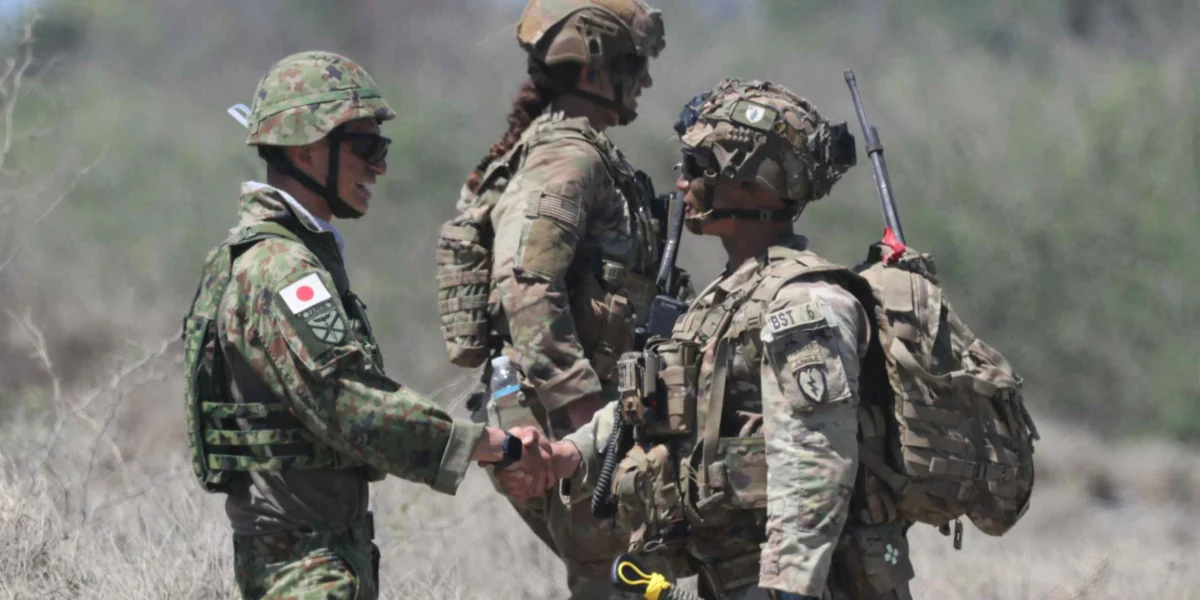
The image accompanying this report, depicting members of the Japan Self-Defense Forces and American soldiers during the joint Balikatan exercise in the Philippines, serves as a potent visual representation of the deepening military cooperation between the U.S., Japan, and other regional partners. Balikatan, meaning "shoulder-to-shoulder" in Tagalog, is an annual multilateral military exercise that aims to enhance interoperability and readiness among participating forces. While this specific exercise was held in November 2026, the broader context of such joint drills underscores the increasing emphasis on combined operations and strategic alignment in the face of regional security challenges.
The U.S. military presence in the Indo-Pacific, of which Japan is a critical hub, is designed to project power, deter potential adversaries, and reassure allies. The cost of maintaining this presence, encompassing personnel, advanced weaponry, logistical support, and infrastructure development across multiple bases, is substantial. The request for a threefold increase in Japan’s HNS contribution suggests that the U.S. is seeking to significantly offload a portion of these direct operational and maintenance costs.
Key Drivers Behind the U.S. Request
Several factors are likely contributing to the magnitude of the U.S. request:
- Shifting Strategic Priorities: The U.S. has publicly declared a strategic pivot towards the Indo-Pacific, viewing it as the primary theater for future geopolitical competition. This shift necessitates a robust and sustainable military presence, which in turn requires significant financial investment.
- Increased Operational Tempo: The U.S. military’s operational tempo in the Indo-Pacific has been steadily increasing, driven by heightened tensions with China and the need to support allies like Taiwan and South Korea. This increased activity translates to higher operational and maintenance costs.
- Defense Budget Pressures: While the U.S. defense budget remains substantial, there are ongoing discussions and pressures to optimize spending and ensure allies are contributing equitably to collective security. The request for increased HNS from Japan can be seen as part of this broader effort to recalibrate burden-sharing.
- Technological Advancements: The modernization of military equipment and the adoption of advanced technologies also incur significant costs, which the U.S. may be looking to share with its key allies.
Timeline of Negotiations and Potential Implications
The precise timeline for the negotiation of this new host-nation support budget is not yet fully public, but such discussions typically involve multiple rounds of high-level talks between defense and foreign ministry officials from both countries. The current SMA is expected to expire at some point in the coming years, creating a natural deadline for reaching an agreement. Given the substantial increase proposed, these negotiations are likely to be protracted and complex.
The implications of a successful negotiation, resulting in Japan agreeing to the requested increase, would be far-reaching:
- Strengthened Alliance: A significant increase in HNS would be viewed as a strong signal of Japan’s unwavering commitment to the U.S.-Japan alliance, further solidifying its role as a linchpin of regional security.
- Enhanced Japanese Defense Capabilities: The increased financial contribution could indirectly lead to further enhancements in Japan’s own defense capabilities, as resources are potentially reallocated or new joint initiatives are undertaken.
- Economic Impact on Japan: The substantial financial outlay would represent a significant commitment for Japan’s national budget. This could lead to debates within Japan about resource allocation, potential trade-offs with other domestic spending priorities, and the long-term sustainability of such a commitment.
- Regional Security Dynamics: A more robustly funded U.S. military presence in Japan, supported by increased Japanese HNS, could enhance deterrence capabilities in the region. This might be viewed positively by some allies, while potentially provoking concern or a heightened response from potential adversaries.
- Precedent for Other Allies: The outcome of these negotiations could set a precedent for other U.S. allies in the Indo-Pacific, potentially influencing future discussions on burden-sharing arrangements.
Official Responses and Public Discourse
While specific official statements on the exact figures of the U.S. request have not yet been released by either government, it is expected that both Tokyo and Washington will engage in careful diplomatic messaging. Japanese officials are likely to emphasize the ongoing nature of the discussions and the commitment to a strong alliance, while also highlighting the need for careful consideration of Japan’s domestic circumstances. U.S. officials will likely underscore the importance of equitable burden-sharing and the evolving security landscape in the Indo-Pacific.
Public discourse in Japan surrounding this issue is expected to be robust. While there is broad public support for the U.S.-Japan alliance, the significant financial commitment will undoubtedly spark debate regarding its necessity, economic impact, and potential implications for Japan’s foreign policy and defense posture. Parliamentarians, defense analysts, and civil society groups will likely weigh in on the merits and drawbacks of such an increased HNS contribution.
Looking Ahead: A New Era of Burden-Sharing?
The U.S. request for over 3 trillion yen in host-nation support over five years is a significant development that underscores the evolving nature of the U.S.-Japan alliance and the broader security environment in the Indo-Pacific. It signals a potential new era of burden-sharing, where allies are expected to contribute more substantially to the costs of maintaining regional security. The outcome of these negotiations will have profound implications not only for the bilateral relationship between the U.S. and Japan but also for the broader strategic landscape of the Indo-Pacific region for years to come. The delicate balance between alliance commitments and domestic responsibilities will be at the forefront of these critical discussions.
