

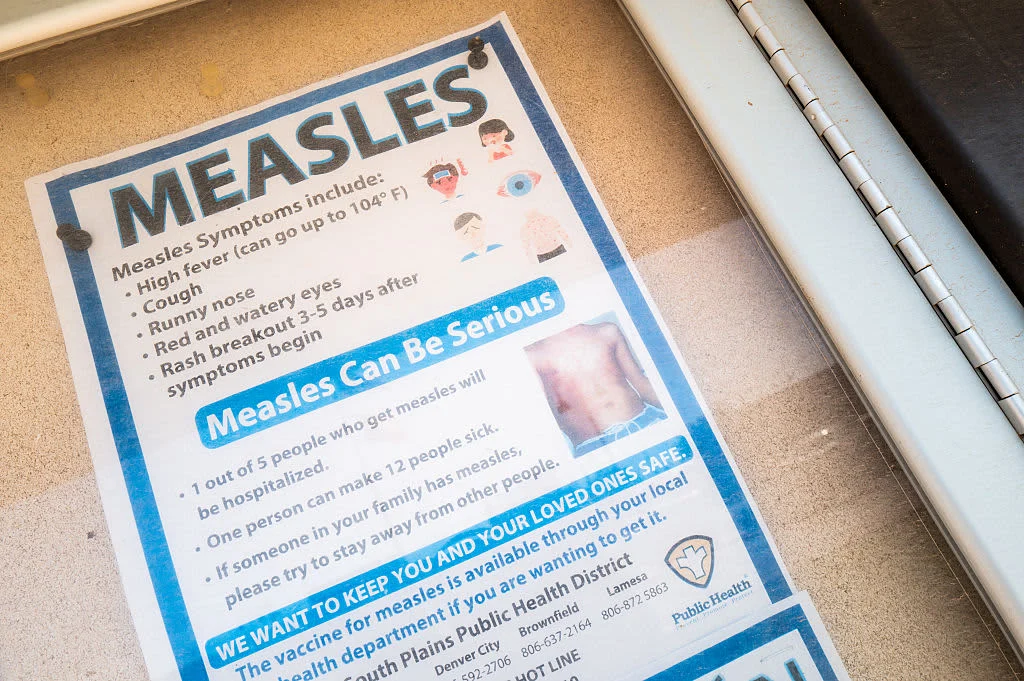
The resurgence of measles in the United States is not merely a public health crisis; it represents a significant and escalating financial burden on the nation, a cost that analysts warn could deepen dramatically as the once-eliminated disease spreads more widely. This year, the U.S. is poised to lose its official measles elimination status, a designation held proudly since 2000, following a comprehensive review by the Pan American Health Organization (PAHO) this week. This impending downgrade comes in the wake of a dramatic surge in cases, reaching levels unseen in over three decades, highlighting critical vulnerabilities within the country’s public health infrastructure and immunization landscape.
As of early November 2026, the U.S. has reported more than 5,100 measles cases nationwide, marking the most severe outbreak in more than 30 years. The human cost has also been tragic, with eight deaths confirmed across several states: six in Pennsylvania, one in New York, and one in Wisconsin. Beyond the immediate health impacts and fatalities, these outbreaks carry a substantial economic toll. Researchers at Johns Hopkins University have developed a new analytical tool to quantify this burden, estimating the economic cost of the 2026 outbreaks at nearly $83 million. This staggering figure encompasses approximately $56 million in public health response expenditures, close to $25 million in lost productivity due, and over $1.8 million in direct medical expenses for treatment. The preceding year, 2025, saw 2,289 confirmed cases and an estimated economic cost exceeding $37 million, underscoring a concerning upward trend in both incidence and financial impact.
The Chronology of a Resurgence: From Elimination to Crisis
The United States declared measles eliminated in 2000, a monumental achievement attributed to robust vaccination programs that began with the introduction of the measles vaccine in 1963. Elimination status signifies the absence of continuous, endemic measles transmission for at least 12 months. Occasional cases, or even small outbreaks, were expected due to international travel bringing the virus into the country, but these were typically quickly contained thanks to high population immunity. However, the current situation represents a drastic departure from this successful containment model.
The seeds of the current crisis were sown over several years, with a gradual decline in childhood immunization rates in certain communities, often fueled by vaccine hesitancy and misinformation. While national vaccination rates for the Measles, Mumps, and Rubella (MMR) vaccine have generally remained high, localized pockets of under-vaccinated individuals have created susceptible populations, allowing the highly contagious virus to find footholds and spread.
The year 2025 saw a significant increase in measles activity, with outbreaks occurring in various states. Texas emerged as a particular epicenter, reporting 803 cases that year. While concerning, these outbreaks were initially viewed as challenges to be managed within the existing public health framework. However, the trajectory dramatically worsened in 2026. Case counts began to climb sharply in the spring and continued through the summer and fall, overwhelming local public health resources in some areas. The confirmation of multiple measles-associated deaths in states like Pennsylvania signaled a more severe public health emergency, prompting renewed calls for vaccination and intensified containment efforts.
The accumulation of over 5,100 cases in 2026, alongside evidence of sustained transmission chains in multiple regions, triggered the PAHO review. The organization, responsible for monitoring disease elimination status in the Americas, assesses countries based on strict epidemiological criteria. The sheer volume of cases and the protracted nature of the outbreaks in the U.S. indicate a breakdown in the containment strategies necessary to maintain elimination status. The formal announcement of the U.S. losing this designation is expected to be a significant blow to public health achievements and a stark reminder of the fragility of disease control when vaccination rates falter.
The Economic Toll Unveiled: A Deeper Dive into the Costs
The economic consequences of these measles outbreaks are multifaceted, extending far beyond the direct medical treatment of infected individuals. The Johns Hopkins University tool provides a crucial lens into these broader costs, distinguishing between public health response efforts, productivity losses, and direct medical expenses. Bryan Patenaude, a health economist at the International Vaccine Access Center at the Johns Hopkins Bloomberg School of Public Health and a co-developer of the tool, emphasizes that these costs highlight the "hefty bill tied to the spread of a disease that can be prevented through vaccination, and the potential economic consequences of falling childhood immunization rates."
The largest component of the 2026 estimated cost, $56 million, is attributed to public health response. This category encompasses a wide array of activities undertaken by state and local health departments, including epidemiological investigations, contact tracing, notification of potentially exposed individuals, coordination with healthcare facilities and schools, and sometimes organizing emergency vaccination clinics. These efforts are labor-intensive and require significant diversion of staff and resources from other critical public health priorities, such as chronic disease management, maternal and child health programs, or other infectious disease surveillance.
Lost productivity accounts for nearly $25 million of the total cost. This includes wages lost by individuals who become ill and cannot work, as well as those who are exposed to measles and must quarantine, even if they never develop symptoms. Parents or caregivers who need to take time off work to care for sick children or children who are quarantined also contribute to this economic drain. This ripple effect of lost work hours and reduced economic output is a significant, often underappreciated, component of outbreak costs.
Direct medical expenses, estimated at over $1.8 million, cover the costs associated with diagnosing and treating measles cases. While measles can be a mild illness for some, it can also lead to severe complications such as pneumonia, encephalitis (brain inflammation), and even death, requiring hospitalization and intensive care. The average cost of an inpatient hospital stay for measles can vary significantly by state, with factors like the length of stay and the severity of complications playing a major role. Patenaude notes, "We’re starting to see a whole bunch of people who decided not to get vaccinated as kids or have never gotten exposed to measles because they benefited from herd immunity, who now make it into adulthood and risk potentially getting quite seriously ill and requiring very significant medical expenses, or dying at the hospital."
The Johns Hopkins tool’s methodology incorporates more recent, state-specific cost and financing data, making its estimates more granular and accurate than previous models that relied on historical averages. For instance, the tool estimated that the 48 cases reported in New York in 2025 carried an estimated $1.1 million in costs. This included nearly $749,000 for public health responses, $333,000 in productivity losses, and roughly $24,500 in direct medical expenses. This reflects New York’s higher average inpatient hospital costs (approximately $4,200 per day) and a minimum wage of $16 per hour, both factors influencing the overall economic impact. In contrast, the 803 cases in Texas in 2025, which constituted the largest U.S. outbreak that year, resulted in estimated costs of nearly $13 million, with $9 million in public health costs, $4 million in productivity losses, and around $288,000 in direct medical expenses. These state-specific breakdowns underscore how regional variations in healthcare costs and economic structures can influence the overall financial burden of outbreaks.

Beyond Treatment: The Hidden Costs of Containment
The costs of containing measles outbreaks are substantial, even when a large proportion of exposed individuals do not become sick. The highly contagious nature of measles means that a single case can trigger an extensive and resource-intensive public health response. Upon identification of a confirmed case, public health officials initiate a meticulous process of investigation, which includes identifying the source of infection, tracing all contacts of the infected individual, and notifying those potentially exposed. This requires significant human labor for interviews, data collection, and communication.
Further complicating matters, health departments must coordinate with a multitude of entities, including hospitals, clinics, schools, childcare centers, and workplaces, to ensure appropriate isolation measures are in place and to facilitate further testing or vaccination. In some instances, health officials may even organize mass vaccination campaigns in affected communities to prevent wider dissemination of the virus. These efforts are not only costly in terms of direct expenditures but also by diverting staff and financial resources from other essential public health programs, potentially weakening the system’s capacity to address other health challenges. As Patenaude explains, "A lot of this is incurred up front, and that’s because of the human labor that’s involved in contact tracing and all of the different actors that sort of need to be mobilized to deal with the fact that there’s an outbreak. It’s a largely labor-driven cost."
An earlier study co-authored by Patenaude, published in August, reviewed historical measles outbreaks across 18 states, estimating an average cost of nearly $59,000 per case solely for the public health response. This research also established a cost model that differentiates fixed upfront response expenses from the additional costs associated with each new case. This model estimated roughly $298,000 in fixed costs for initiating an outbreak response and approximately $16,300 for each additional case identified. While this historical model provided valuable insights, it primarily focused on public health response costs and did not consistently account for productivity losses, which the newer Johns Hopkins tool now integrates.
The Broader Economic Landscape: Productivity Losses and Ripple Effects
The economic burden of measles extends significantly beyond the healthcare system and direct public health interventions. The impact on individual productivity and community-level economic activity is substantial. Individuals exposed to measles, even if asymptomatic, may be required to quarantine for an extended period (typically 21 days from exposure) to prevent potential spread, leading to lost wages. Parents are often compelled to miss work to care for sick or quarantined children, further impacting household income and broader economic output.
A 2025 study by Joey Mattingly, a pharmacist and health economist at the University of Utah, meticulously modeled the potential economic burden of a hypothetical 1,500-case outbreak. His comprehensive analysis, which included direct medical expenses, public health spending, and lost productivity, estimated that such an outbreak could cost approximately $90 million, with roughly $26 million attributable to productivity losses alone.
Mattingly’s research powerfully illustrates the "multiplication or exponential growth on the economic side" that occurs with highly contagious diseases like measles. A single infected person can expose dozens of others, triggering a cascade of quarantines and associated costs, even if none of the contacts ultimately fall ill. Mattingly estimated that each person required to quarantine could incur roughly $300 in lost productivity. This means that if one measles case leads to 40 to 50 contacts needing to quarantine, the lost productivity alone could range from $12,000 to $15,000 – a significant sum that quickly adds up across multiple outbreaks. "Even if you don’t get the infection, the contact costs you," Mattingly explained. This "ripple effect" underscores why the economic costs of outbreaks can rapidly overshadow the investment required for preventative measures like vaccination.
The financial burden also tends to fall disproportionately on local health departments, which are often the first responders to outbreaks. While state and federal agencies may offer support, the immediate strain on local budgets and personnel is immense. As Mattingly noted, "It’s not like your health department is sitting around waiting for measles outbreaks. They’re working, doing all these other things, and imagine having to just drop what you’re doing because there’s been a huge outbreak in the community." This diversion of resources can weaken the overall resilience of the public health system, making it less prepared for future emergencies.
A Vulnerable Public Health System and the Imperative of Vaccination
The return of measles in the U.S. and its mounting economic costs expose profound weaknesses within the nation’s public health system, weaknesses that raise serious concerns about the potential re-emergence of other eliminated diseases. The infrastructure built to maintain high vaccination rates and swiftly contain outbreaks has been eroded in some areas by underfunding, staffing shortages, and a growing tide of vaccine misinformation.
The loss of measles elimination status is a stark reminder that public health achievements are not permanent and require continuous vigilance and investment. It signals a regression that could have broader implications for global health security, as the U.S. has historically been a leader in disease eradication efforts. The lessons from measles could apply to other vaccine-preventable diseases like polio, mumps, and rubella, which could also resurface if immunization rates continue to decline.
Experts emphasize that the solution to this escalating crisis is clear and cost-effective: vaccination. The MMR vaccine is highly safe and effective, providing long-lasting immunity against measles. The economic analyses presented by Johns Hopkins and the University of Utah powerfully demonstrate that the upfront investment in maintaining high vaccination coverage is far less costly than managing the aftermath of outbreaks. As Patenaude aptly puts it, "It’s not super expensive to treat and deal with a single case of measles compared to a single case of cancer. But if you have these outbreaks popping up and you’re having to constantly divert resources that could be spent elsewhere by state and local health departments on measles, then you’re going to wind up spending a lot of money very quickly."
Looking Ahead: Policy Implications and Prevention
The new cost-estimation tools developed by researchers like Patenaude and Mattingly are vital resources for public health agencies. They provide a data-driven basis for state and local health departments to better anticipate the resources required to contain outbreaks, advocate for necessary funding, and make a compelling economic case for robust immunization programs.
Policy makers at all levels – federal, state, and local – are now faced with the urgent task of addressing the underlying factors contributing to the measles resurgence. This includes combating vaccine misinformation, strengthening public health infrastructure, ensuring equitable access to vaccination services, and implementing strategies to improve vaccination coverage in vulnerable communities. The potential for the U.S. to lose its measles elimination status serves as a critical alarm, urging immediate and sustained action to protect public health and prevent further economic drain. The financial and human costs of inaction are simply too high. The collective effort to reinforce vaccination programs is not just a health imperative, but an economic one, crucial for safeguarding the nation’s well-being and preventing a return to an era of preventable disease outbreaks.
