

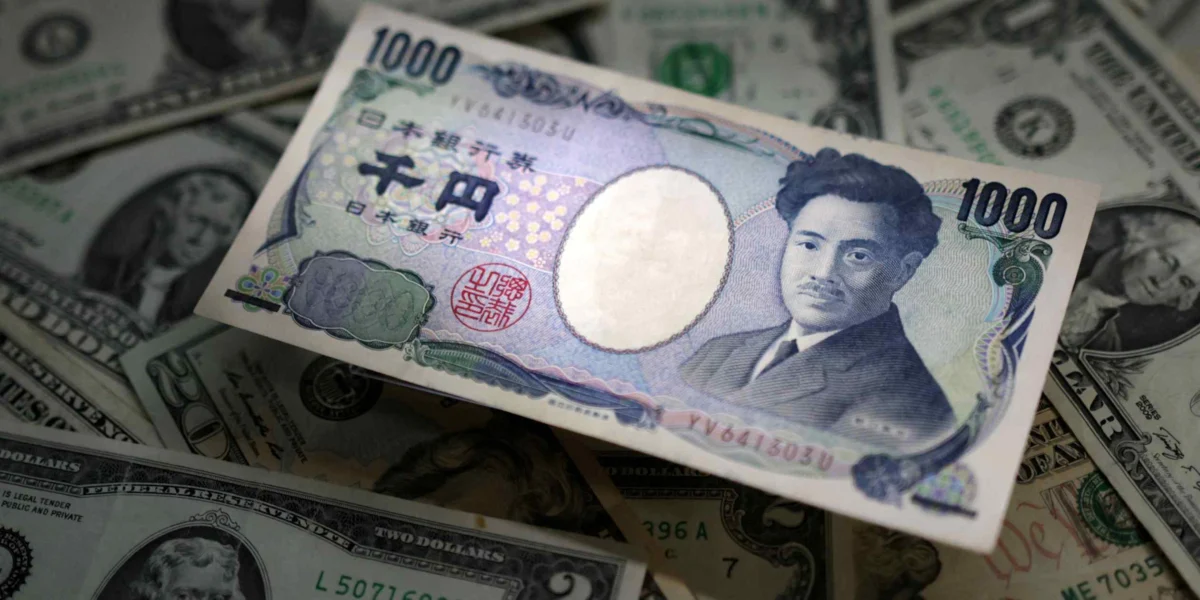
Asian currencies, including the Japanese yen and the Australian dollar, experienced a significant downturn against the U.S. dollar on Thursday. This decline was primarily driven by investors factoring in the likelihood of further interest rate hikes by the U.S. Federal Reserve, a move that consequently amplified demand for the greenback. The prevailing sentiment in currency markets reflects a palpable shift in investor strategy, with a pronounced pivot towards the safety and yield offered by U.S. dollar-denominated assets in the face of persistent inflationary pressures and a more aggressive monetary policy stance from the Fed.
Inflationary Pressures Ignite Fed Rate Hike Speculation
The catalyst for this market movement can be traced back to the release of recent U.S. inflation data. While specific figures were not detailed in the initial report, the implication was clear: inflation remains stubbornly elevated, exceeding economists’ expectations and signaling that the Federal Reserve’s efforts to curb rising prices have yet to yield the desired results. This persistent inflation necessitates a more robust response from the central bank, leading market participants to anticipate a prolonged period of interest rate tightening.
The Federal Reserve has been engaged in a campaign to rein in inflation since early 2022, a period marked by a series of aggressive rate hikes. The initial goal was to cool an overheating economy that had experienced a surge in demand following the COVID-19 pandemic, coupled with supply chain disruptions and geopolitical factors contributing to price increases. However, the persistence of inflation, particularly in core components that exclude volatile food and energy prices, has forced the Fed to recalibrate its strategy. The latest data suggests that inflationary forces are more deeply entrenched than previously believed, prompting a reassessment of the peak interest rate and the duration of the tightening cycle.
Hawkish Fed Commentary Reinforces Rate Hike Expectations
Adding fuel to the fire were hawkish remarks from several Federal Reserve officials. These statements, often delivered at economic forums or in interviews, serve to underscore the central bank’s commitment to its inflation-fighting mandate. Officials have repeatedly emphasized that their primary objective is to bring inflation back down to the Fed’s 2 percent target, even if it means enduring a period of slower economic growth. The consensus among these remarks was that the fight against inflation is far from over, and that further monetary policy tightening would be necessary to achieve price stability.
This hawkish rhetoric directly impacts investor sentiment. When Fed officials signal a willingness to raise rates further and maintain them at elevated levels for an extended period, it increases the attractiveness of U.S. dollar-denominated assets. Higher interest rates generally translate into higher yields on U.S. Treasury bonds and other fixed-income securities, drawing capital away from markets offering lower returns. This capital outflow from other regions, particularly emerging markets and economies with less aggressive monetary policies, puts downward pressure on their respective currencies.
Yen and Australian Dollar Face Significant Weakness
The Japanese yen, which has been particularly sensitive to interest rate differentials, has been under considerable pressure. As of late August and early September, the yen had already been trading around the 160 mark against the dollar, a level influenced by factors such as rising oil prices that impact Japan’s import costs. The renewed prospect of higher U.S. interest rates exacerbates this trend by widening the yield gap between U.S. and Japanese assets. Japan has maintained an ultra-loose monetary policy for years, with the Bank of Japan aiming to stimulate economic growth and achieve sustainable inflation. This divergence in monetary policy between the U.S. and Japan creates a powerful incentive for investors to sell yen and buy dollars in pursuit of higher yields.
The Australian dollar also experienced a notable depreciation. Australia, while having seen some inflationary pressures, has not necessarily mirrored the intensity of the U.S. situation, leading the Reserve Bank of Australia (RBA) to adopt a less aggressive rate hike path compared to the Fed. This policy divergence, coupled with global risk aversion often triggered by aggressive Fed tightening, makes the Australian dollar a less attractive investment. Furthermore, Australia’s economic performance is closely tied to global commodity prices, and any signs of a global economic slowdown, which could be a consequence of sustained high U.S. interest rates, can negatively impact demand for Australian exports and, consequently, its currency.
Data Supporting the Trend: U.S. Dollar Index and Yield Spreads
To understand the magnitude of this shift, one can look at key market indicators. The U.S. Dollar Index (DXY), which measures the dollar’s strength against a basket of six major currencies, has shown a consistent upward trend in recent weeks, reflecting the broad-based demand for the greenback. This index’s ascent is a direct consequence of the factors driving capital into the U.S. market.
Furthermore, the widening of U.S. Treasury yields relative to those of other major economies provides a quantitative basis for the currency movements. For instance, the yield on the U.S. 10-year Treasury bond has been steadily climbing, outpacing yields on Japanese government bonds and even Australian government bonds. This widening yield spread is a primary driver of currency appreciation for the U.S. dollar, as it offers investors a more attractive return on their investments. The difference in yields can be substantial, making the U.S. dollar a compelling option for those seeking income.
Historical Context: The Yen’s Vulnerability
The yen’s current weakness is not an isolated incident. Throughout history, the yen has often acted as a barometer for global risk sentiment and interest rate differentials. During periods of global economic uncertainty or when U.S. interest rates are on an upward trajectory, the yen has historically tended to weaken. This is partly due to Japan’s status as a net creditor nation, meaning it holds significant foreign assets. When global interest rates rise, the return on these foreign assets increases, making it more attractive for Japanese investors to deploy capital abroad rather than invest domestically.
The period in late August and early September, when the yen was trading around 160 to the dollar, was also influenced by external factors such as elevated oil prices. As a net importer of energy, Japan’s trade balance can be significantly affected by fluctuations in global oil markets. Higher oil prices lead to a greater demand for foreign currency (primarily U.S. dollars) to pay for these imports, thereby weakening the yen. The current situation, however, is more fundamentally driven by monetary policy divergences and inflation expectations.
Broader Implications for Asian Economies
The sustained strength of the U.S. dollar has significant implications for Asian economies. For countries that are net importers of dollar-denominated goods, such as commodities and energy, a stronger dollar translates into higher import costs, potentially exacerbating their own inflation problems. This can lead to a difficult balancing act for their central banks, who may be forced to consider raising interest rates to defend their currencies, even if their domestic economies are not yet strong enough to withstand such tightening.
Conversely, for Asian economies that are significant exporters to the U.S. market, a stronger dollar can make their goods more competitive. However, this benefit can be offset by a potential slowdown in U.S. demand if the Fed’s aggressive rate hikes lead to a recession. The interconnectedness of the global economy means that shifts in U.S. monetary policy have ripple effects far beyond its borders.
Expert Analysis and Future Outlook
Market analysts are closely watching the Federal Reserve’s pronouncements and incoming economic data for further clues on the future direction of monetary policy. The prevailing view is that the Fed is unlikely to pivot away from its hawkish stance until there is clear and sustained evidence of inflation moderating towards its target. This suggests that the period of dollar strength could persist, continuing to put pressure on other currencies.
However, there are also factors that could temper the dollar’s ascent. A significant and unexpected slowdown in the U.S. economy, or signs of financial market stress, could prompt the Fed to reconsider its aggressive approach. Additionally, other central banks may eventually be forced to follow the Fed’s lead more closely, narrowing the yield differentials. For now, though, the narrative of higher-for-longer U.S. interest rates appears to be firmly in place, dictating the direction of currency markets. The sustained demand for the greenback reflects a calculated risk assessment by investors, prioritizing perceived safety and yield in an increasingly uncertain global economic landscape.
