

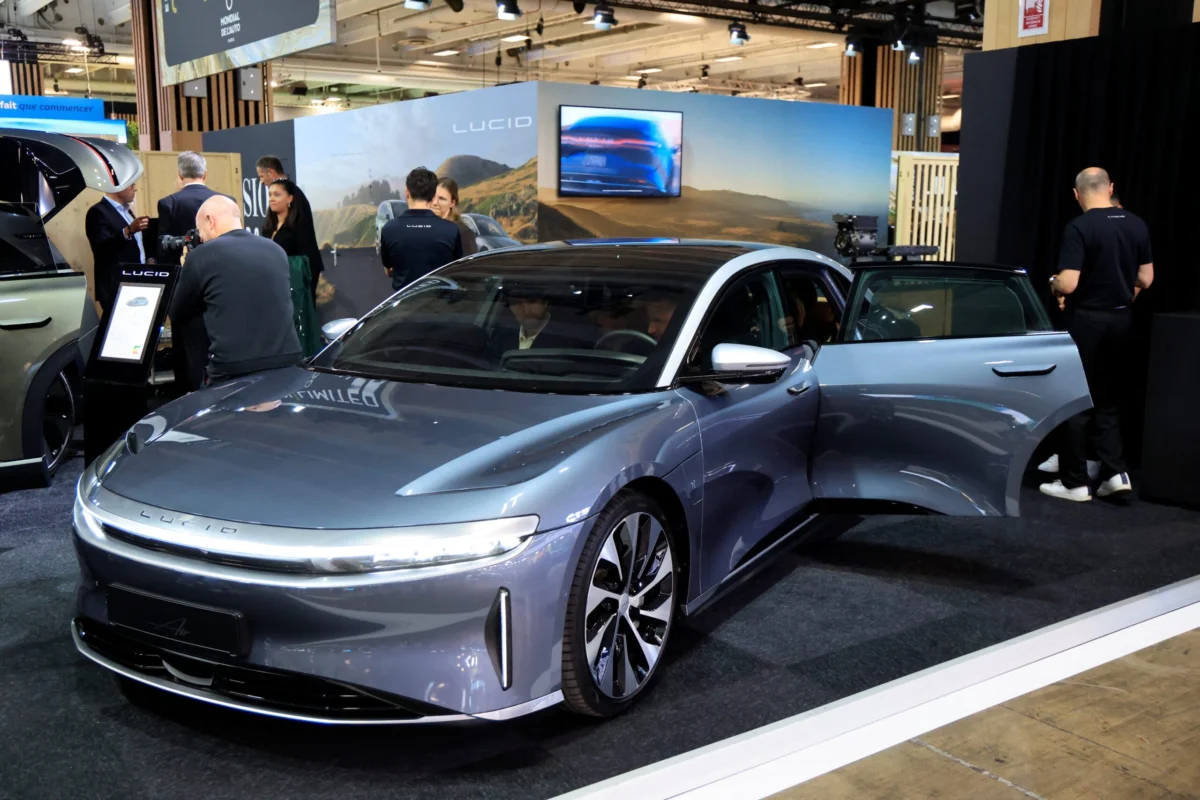
Lucid Group, the luxury electric vehicle manufacturer, found itself once again at a critical juncture, reporting third-quarter results that largely fell short of Wall Street’s expectations as the company aggressively pursues an "operational reset" designed to curb substantial losses and streamline its path to profitability. The pivotal announcement on Monday also included a significant financial lifeline: a $1.75 billion increase in a delayed draw term loan from Saudi Arabia’s Public Investment Fund (PIF), Lucid’s primary and most influential shareholder. Following the news, Lucid’s stock (LCID) experienced a roughly 5% decline in aftermarket trading, reflecting investor apprehension despite the influx of capital.
Financial Performance Under Scrutiny
For the third quarter of 2026, Lucid reported revenues of $336.6 million, a figure that analysts had anticipated would be closer to $350 million, signaling a slight but impactful miss on the top line. The company also posted a net loss of $830.9 million, translating to a loss of $3.31 per share. This compares to a net loss of $978.4 million in the same quarter of the previous year (Q3 2025), indicating a narrowing of losses year-over-year, which offered a glimmer of positive trend amidst the overall underperformance. However, the per-share loss still exceeded average analyst estimates compiled by LSEG, which had predicted a narrower deficit.
A notable point of divergence from expectations came in the company’s adjusted earnings before interest, taxes, depreciation, and amortization (EBITDA). Lucid reported an adjusted EBITDA loss of $726 million, which, paradoxically, was a "beat" against Wall Street’s consensus expectation of a $611 million loss. This seemingly counterintuitive outcome means that while the company’s operational cash burn was still significant, it was less severe than the worst-case scenario projected by some analysts, suggesting that initial cost-cutting measures might be having some effect, albeit nascent. The reported adjusted EBITDA loss for the quarter was $717.7 million, further solidifying the narrative of substantial operational expenses despite a lower-than-anticipated cash burn rate compared to the most pessimistic forecasts.
Lucid’s production and delivery figures for the quarter, while not explicitly detailed in the initial release, are implicitly reflected in the revenue numbers. Industry observers had estimated deliveries to be in the range of 2,000 to 2,500 units of its flagship Lucid Air sedan, a volume considered modest given the company’s significant manufacturing capacity at its Arizona facility. The gap between production capability and actual deliveries, coupled with the high fixed costs associated with a nascent automotive manufacturing operation, continues to be a primary driver of the company’s substantial cash burn and losses. This challenge is common among new entrants in the automotive sector, particularly in the capital-intensive electric vehicle space, where scaling production efficiently is paramount.
A New Helm and a Strategic Reset
The third-quarter results mark the first financial reporting period under the leadership of CEO Silvio Napoli, who officially assumed the helm in June 2026. Napoli’s tenure began with an immediate mandate for change, culminating in the announcement of a comprehensive restructuring plan aimed at fundamentally reshaping Lucid’s operational efficiency and financial trajectory. This plan, dubbed an "operational reset," encompasses a multi-pronged approach to cost reduction, resource reallocation, and a disciplined focus on core strategic initiatives.
Key elements of this ambitious turnaround program include aggressive cost-cutting efforts across all departments. While specific details were not fully disclosed, these measures are understood to involve workforce adjustments, optimization of the supply chain, renegotiation of supplier contracts, and a critical re-evaluation of non-essential expenditures. The goal is to achieve $1.4 billion in cash flow improvements throughout 2026, a target that underscores the urgency and scale of the financial challenges Lucid faces.
One of the most significant strategic decisions under Napoli’s leadership was the deferral of the company’s highly anticipated midsize vehicle. Initially slated for launch by the end of 2026, the introduction of this crucial model, expected to compete in a more accessible segment of the EV market, has now been pushed back to the second half of 2027. This delay, while potentially impacting short-term market share growth and revenue diversification, is framed by management as a necessary step to ensure the vehicle’s successful and cost-efficient launch, learning from the production complexities encountered with the Lucid Air. The midsize vehicle, often referred to internally by project names such as "Project Gravity" or "Project Everest," is seen as vital for Lucid’s long-term viability, enabling it to tap into a broader consumer base beyond the ultra-luxury segment.
CEO Napoli expressed cautious optimism regarding the initial signs of progress: "Our transformation is beginning to show progress. We are acting with urgency, strengthening the fundamentals and driving greater discipline, while continuing to invest in the priorities to deliver profitable long-term growth," he stated in a release accompanying the earnings report. This sentiment highlights a delicate balancing act: cutting costs aggressively while simultaneously safeguarding critical investments in future products and technologies.
The Enduring Commitment of Saudi Arabia’s PIF
A cornerstone of Lucid’s financial stability and long-term strategy is the unwavering support from Saudi Arabia’s Public Investment Fund. The announcement of an additional $1.75 billion in a delayed draw term loan underscores the PIF’s deep commitment to Lucid, reinforcing its position as the company’s anchor shareholder. This latest injection of capital significantly boosts Lucid’s total liquidity to $3.75 billion, a substantial increase from the $2 billion reported at the close of the third quarter.
The PIF’s investment in Lucid is a strategic pillar of Saudi Arabia’s Vision 2030, an ambitious plan to diversify the kingdom’s economy away from its reliance on oil. The fund aims to transform Saudi Arabia into a global industrial and technological hub, with electric vehicle manufacturing identified as a key sector. Lucid’s presence, including the construction of a manufacturing facility in King Abdullah Economic City (KAEC) in Saudi Arabia, aligns perfectly with these national objectives. This factory is not only expected to serve regional markets but also to play a crucial role in Lucid’s global production footprint, eventually complementing its Arizona operations.
The increased financial flexibility provided by the PIF is expected to fund Lucid’s operations and key investments into the fourth quarter of 2027. Critically, this includes the essential capital expenditure required for the start of production of the delayed midsize vehicle. Without this robust financial backing, Lucid’s ability to navigate its current operational challenges and execute its long-term product roadmap would be severely constrained.
"We are grateful for the continued financial support from our anchor shareholder, which further energizes us to remain focused on execution and on our commitments as we build a stronger, sustainable Lucid," Napoli reiterated, emphasizing the strategic importance of the PIF relationship. This ongoing partnership provides Lucid with a longer runway to achieve economies of scale, refine its manufacturing processes, and expand its product portfolio without immediate existential financial pressure that often plagues startup EV manufacturers.
Broader Strategic Initiatives and Future Outlook
Beyond the immediate financial and operational resets, Lucid’s turnaround plan hinges on several key strategic pillars. The company is intensifying its focus on its robotaxi program, a collaboration with industry players Uber and Nuro. This venture aims to explore the lucrative autonomous ride-hailing and delivery markets, potentially opening new revenue streams and leveraging Lucid’s advanced EV platform and software capabilities. While still in its early stages, success in this area could significantly enhance Lucid’s valuation and market position by diversifying its business beyond direct consumer sales.
The progress of the Saudi Arabian manufacturing facility is another critical component. The factory, once fully operational, is expected to reduce production costs, facilitate market access in the Middle East and potentially Europe, and enhance supply chain resilience. Its phased ramp-up will be closely watched as a bellwether for Lucid’s ability to scale manufacturing efficiently outside its home market.
Looking ahead, Lucid has committed to communicating its midterm plan and targets early next year. This follows the company’s decision in May 2026 to suspend its previous guidance and many long-term targets, citing the need for new leadership to develop a comprehensive and realistic turnaround plan. The upcoming midterm plan is anticipated to provide investors and the market with clearer visibility into Lucid’s production goals, delivery forecasts, revenue projections, and a more detailed roadmap to profitability, including specific milestones for cost reduction and product launches.
Market Reaction and Analyst Perspectives
The 5% drop in aftermarket trading after the earnings announcement reflects a complex sentiment among investors. While the PIF’s increased funding provides much-needed liquidity and validates Saudi Arabia’s long-term belief in Lucid, the continued operational losses and the delay of the midsize vehicle raise concerns about the pace of the turnaround and the company’s ability to compete effectively in an increasingly competitive and capital-intensive EV market.
Industry analysts have offered mixed reactions. Many acknowledge the necessity of the operational reset and the strategic value of the PIF’s support. However, skepticism remains regarding the execution risk associated with such an ambitious transformation. "Lucid is in a race against time and capital burn," noted one analyst from a major investment bank, who requested anonymity. "The PIF’s backing buys them more time, but the underlying challenges of scaling production, controlling costs, and introducing new models in a highly competitive market are immense. The delay of the midsize vehicle, while perhaps prudent, means they miss out on a critical window of opportunity to capture market share from competitors who are moving faster into that segment."
Other observers highlighted the broader challenges facing the luxury EV market. While demand for electric vehicles continues to grow, the pace has moderated, and price competition, particularly from established players like Tesla and increasingly from traditional automakers like Mercedes-Benz and Porsche, is intensifying. Lucid’s premium positioning makes it vulnerable to economic downturns and shifts in consumer sentiment towards more affordable EV options. Its primary competitors, such as the Tesla Model S and X, Mercedes-Benz EQS, and Porsche Taycan, have well-established production lines and broader brand recognition.
Implications for the EV Landscape
Lucid’s journey is emblematic of the broader challenges faced by new entrants in the electric vehicle industry. Building an automotive company from the ground up requires colossal capital, impeccable execution, and unwavering resilience. The company’s struggles underscore that while innovation in battery technology and powertrain design is crucial, mastering the intricacies of high-volume manufacturing, efficient supply chain management, and effective cost control are equally, if not more, vital for long-term success.
The strategic pivot towards robotaxi programs and the significant investment in international manufacturing facilities reflect a growing trend among EV startups to diversify revenue streams and globalize their operational footprint. For Saudi Arabia, the continued investment in Lucid represents a high-stakes bet on becoming a key player in the future of mobility, leveraging its vast financial resources to build an indigenous advanced manufacturing sector.
Ultimately, the coming quarters will be critical for Lucid. The success of CEO Silvio Napoli’s operational reset, the efficient deployment of the PIF’s enhanced funding, and the timely and successful launch of the midsize vehicle will determine whether Lucid can transition from an embattled startup to a sustainable, profitable luxury EV powerhouse, or if it will continue to struggle against the formidable currents of a rapidly evolving automotive landscape. The midterm plan, expected early next year, will be scrutinized for tangible evidence of progress and a credible path forward.
