

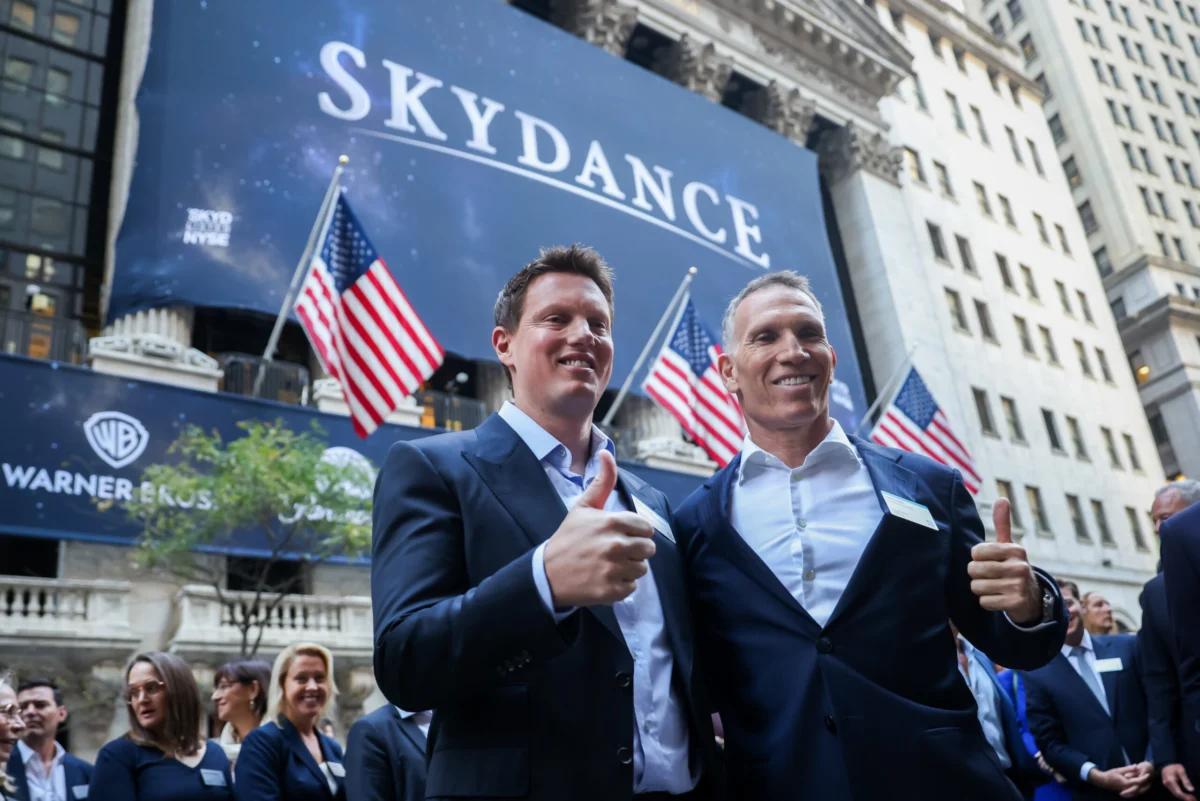
Skydance Corp., the newly formed media titan resulting from the merger of Paramount Skydance and Warner Bros. Discovery, has pulled back the curtain on its comprehensive strategy to achieve at least $6 billion in cost savings over the next three years. This ambitious plan, detailed in a letter to shareholders on Monday as part of Paramount Skydance’s third-quarter earnings release, outlines a multi-pronged approach aimed at streamlining operations, optimizing content spending, and leveraging advanced technologies like artificial intelligence to navigate a rapidly evolving and competitive media landscape.
The Rationale Behind the Mega-Merger and Cost Optimization
The formation of Skydance through the combination of two major global entertainment entities – Paramount Skydance and Warner Bros. Discovery – represents a significant consolidation play in an industry grappling with the high costs of content creation, intense competition from tech giants, and the transition to direct-to-consumer (DTC) streaming models. The combined entity now commands an expense base exceeding $50 billion, a figure that underscores the sheer scale of the operation and the potential for substantial efficiencies.
Co-Chief Executive Officer Ynon Kreiz, speaking to investors during the company’s earnings call, emphasized the strategic imperative behind these actions. "By combining two global streaming services, two film and TV studio groups, two television portfolios, and overlapping corporate functions, we can reduce duplicative spend across an expense base of more than $50 billion," Kreiz stated, articulating a clear vision for operational synergy. The merger itself was driven by a need for scale to compete with industry behemoths like Netflix, Disney, Amazon, and Apple, all of whom have poured billions into content and technology. The combined might of Skydance is intended to create a more formidable player, capable of investing strategically while also operating more leanly.
A Detailed Breakdown of the $6 Billion Savings Plan
Skydance’s cost-saving initiatives are meticulously segmented across four primary areas, each targeting specific operational redundancies and inefficiencies:
1. Eliminating Redundant Back-Office and Corporate Functions ($2.2 Billion)
The largest single component of the projected savings, approximately $2.2 billion, is earmarked for the elimination of redundant back-office and corporate functions. This includes a strategic reduction in management layers, a common outcome of large-scale mergers as companies seek to flatten organizational structures and improve decision-making velocity. Crucially, Skydance plans to significantly ramp up the use of artificial intelligence (AI) in these functions, signaling a broader industry trend towards automation and data-driven operational improvements. The company also anticipates rationalizing its vast office footprint, consolidating physical locations to reduce overheads associated with real estate, utilities, and facility management. This move is consistent with broader post-pandemic trends of optimizing physical workspaces.
2. Streamlining Marketing and Promotional Spending ($1 Billion)
With two distinct marketing and promotional apparatuses now under one roof, Skydance expects to realize at least $1 billion in savings by streamlining these efforts. This involves consolidating advertising buys, harmonizing brand messaging, and leveraging a unified data strategy to target audiences more efficiently across its diverse portfolio of content and platforms. The objective is to achieve greater impact with a reduced overall spend, moving away from potentially competing campaigns for similar audiences.
3. Unifying Streaming Businesses and Broadcast Architecture ($1.4 Billion)
A critical aspect of the integration involves the unification of Skydance’s streaming businesses and broadcast architecture, projected to yield around $1.4 billion in savings. This entails integrating back-end technology infrastructure, content delivery networks, and user experience platforms. The company has previously stated its intention to eventually merge the Paramount+ and HBO Max streaming services into a single, cohesive platform. As a precursor to this full integration, Skydance announced plans to offer a bundled subscription of the two services early next year, promising consumers "even greater value." This incremental step allows the company to test market reception and gradually transition subscribers while the underlying technological integration proceeds.
4. Optimizing Third-Party Spend and Consolidating Purchasing ($1.4 Billion)
The final $1.4 billion in savings will come from "optimizing third-party spend," eliminating overlapping expenses with external vendors, and consolidating purchasing decisions under a single, centralized group. This category includes everything from software licenses and cloud services to production equipment rentals and external legal or consulting fees. By leveraging the combined purchasing power of the merged entity, Skydance aims to negotiate more favorable terms with suppliers and reduce overall procurement costs, a classic synergy often sought in large corporate mergers.
Drawing from a Proven Playbook: The Paramount Precedent
Skydance expressed strong confidence in achieving these ambitious targets, drawing on its "playbook from Paramount." The company highlighted that the prior efficiency program at Paramount was "on track to achieve over $2.7 billion in run-rate efficiencies by the end of 2026." This internal benchmark provides a tangible example of the management team’s experience in executing large-scale cost-reduction initiatives, lending credibility to the current $6 billion target. The Paramount program likely involved similar strategies, such as workforce rationalization, technology integration, and vendor consolidation, providing a template for the broader Skydance integration.
Early Actions and Organizational Shifts
Even prior to the detailed announcement, Skydance had already initiated several concrete steps signaling its commitment to these cost-saving measures. Last month, the company began offering voluntary buyouts to employees, a common tactic to reduce headcount proactively and manage the transition process ahead of potential official layoffs. Simultaneously, Skydance adopted a new five-day-per-week in-office policy, a significant cultural shift for many employees accustomed to hybrid or remote work arrangements, which could also be linked to optimizing office space utilization and fostering collaboration during the integration phase.
Further evidence of the ongoing restructuring came last week with the departure of eight executives – four from the legacy Warner Bros. side and four from Paramount. These high-level exits often precede broader organizational changes, as new leadership structures are established for the combined entity. Such moves are typically aimed at streamlining decision-making, eliminating redundant roles at senior levels, and aligning the leadership team with the new strategic vision.
Optimizing Content Budget and AI in Production
Beyond operational efficiencies, Skydance is also strategically reviewing its massive annual content budget, which exceeds $30 billion. Co-CEO Ynon Kreiz indicated that the company is "looking for ways to optimize its content budget." This is a critical area for savings, as content creation is the single largest expense for most media companies. "As one company, we can make smarter choices about how we distribute and monetize both new content and library content," Kreiz noted, suggesting a more coordinated approach to commissioning, licensing, and distributing films and series across its various platforms, both linear and streaming.
Co-CEO and Chairman David Ellison further elaborated on the role of technology, particularly AI, in content production. "We think these tools will help unlock more original storytelling by being able to make the budget more digestible to be able to take that amount of risk," Ellison said. This highlights an emerging trend where AI isn’t just for back-office functions but is increasingly seen as a tool to speed up production workflows, reduce post-production costs, and potentially even aid in script development or visual effects, thereby making riskier, more ambitious creative projects financially viable.
Third-Quarter Performance and Future Outlook
The cost-saving revelations accompanied the third-quarter results for the legacy Paramount Skydance company. The company reported revenue of $7.03 billion, which was largely in line with StreetAccount estimates of $7.04 billion. Adjusted earnings before interest, taxes, depreciation, and amortization (EBITDA) reached $1 billion, surpassing StreetAccount estimates of $913.5 million. However, adjusted earnings per share (EPS) of 45 cents were not immediately comparable to StreetAccount estimates. It is crucial to note that these results do not include the impact of the Warner Bros. Discovery acquisition, which officially closed after the end of the third quarter, meaning the full financial picture of the combined entity is yet to be revealed.
Skydance acknowledged a near-term challenge, expecting a $200 million headwind in the fourth quarter due to theatrical underperformances at the Warner Bros. studio related to already launched titles and upcoming releases. This underscores the volatility of the theatrical market and the ongoing pressures on traditional revenue streams.
Looking ahead, Skydance detailed the business units of the combined entity, including studios, direct-to-consumer and TV, and committed to providing full-year guidance during its fourth-quarter earnings report early next year. The company also announced a shift in its reporting philosophy. "Going forward, we will provide guidance on an annual basis, as we prioritize long-term value creation, which we believe will be more consistent with our strategic approach," the company informed shareholders. While promising continued quarterly updates and forward-looking commentary to offer investors visibility into near-term progress, this move suggests a strategic emphasis on sustained growth and profitability over shorter-term quarterly fluctuations, aligning with the long-term nature of the $6 billion savings plan.
Broader Industry Implications and Analyst Reactions
The Skydance merger and its aggressive cost-cutting strategy are being closely watched across the media industry. Analysts generally view consolidation and efficiency drives as necessary steps for traditional media companies to compete effectively in the streaming era. The scale achieved by Skydance could provide significant leverage in content negotiations, advertising sales, and technological development.
However, the implementation of such vast savings also presents challenges. Employee morale during periods of extensive workforce reductions and cultural integration can be a concern. The balance between cost-cutting and maintaining creative excellence is delicate; overly aggressive cuts could inadvertently stifle innovation or impact content quality, which is paramount in attracting and retaining subscribers.
Industry observers will also be keen to see how Skydance manages the transition of its streaming services. Merging platforms like Paramount+ and HBO Max, each with its own brand identity, subscriber base, and content library, is a complex technological and marketing endeavor. The success of the initial bundle offering will be a key indicator of consumer acceptance and the company’s ability to execute its integration roadmap. The reliance on AI for both back-office and production efficiencies is another area of intense scrutiny, as companies explore the practical applications and ethical considerations of this rapidly advancing technology.
Ultimately, Skydance’s $6 billion cost-saving plan represents a bold declaration of intent: to transform two legacy media powerhouses into a leaner, more agile, and technologically advanced entertainment leader, ready to navigate the complexities and capitalize on the opportunities of the 21st-century media landscape. The coming years will reveal the full impact of this ambitious undertaking on its financial performance, its workforce, and the broader entertainment ecosystem.
