

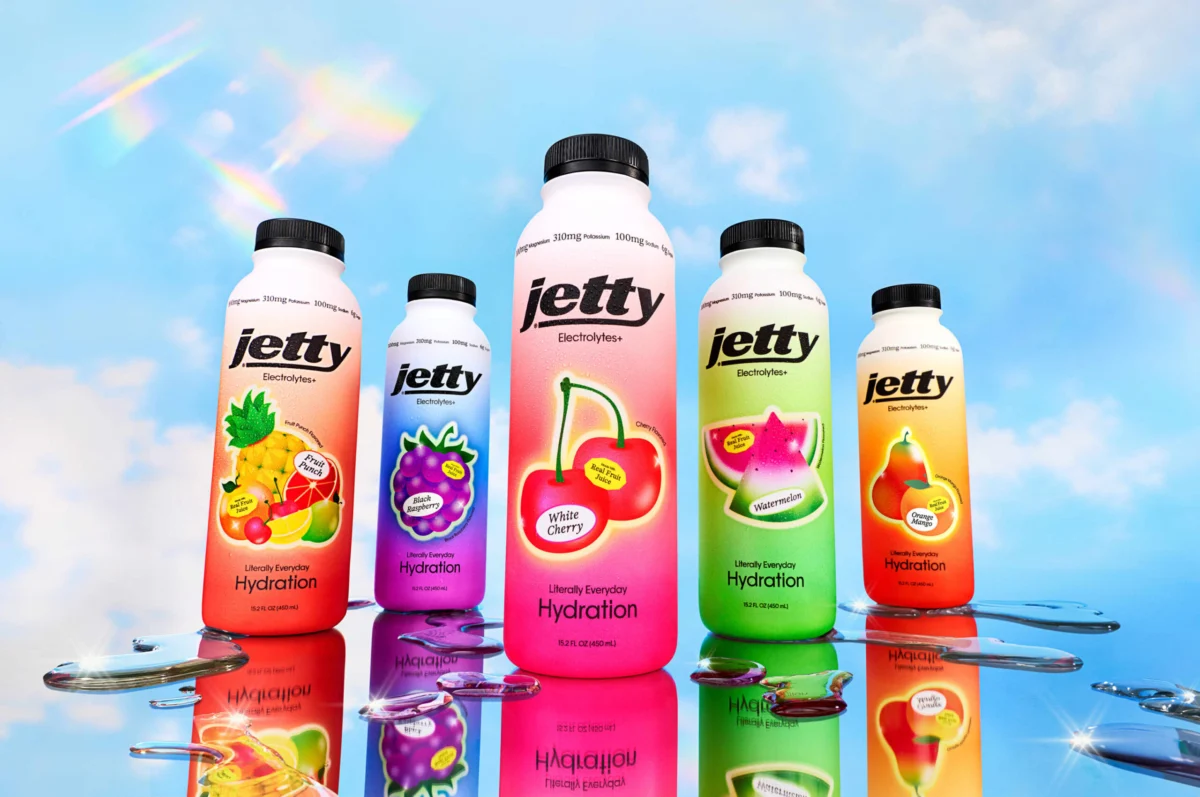
Allison and Stephen Ellsworth, the entrepreneurial duo behind the wildly successful prebiotic soda brand Poppi, are once again setting their sights on revolutionizing the beverage industry with the launch of their new hydration venture, Jetty. This self-funded initiative marks a direct challenge to established giants, most notably PepsiCo, which acquired Poppi in 2025 for an estimated $1.95 billion. Jetty aims to carve out a distinct niche in the burgeoning hydration category, offering both ready-to-drink beverages and electrolyte packets designed for "everyday hydration" rather than intense athletic recovery.
The Genesis of Jetty: From Poppi’s Success to a New Horizon
The Ellsworths’ journey began with Poppi, a brand that ingeniously combined the nostalgic appeal of soda with the functional benefits of apple cider vinegar and prebiotic fiber. Through savvy marketing, a focus on low sugar and calorie counts, and a vibrant brand identity, Poppi captivated a new generation of consumers, particularly Generation Z and millennials, disrupting a category long dominated by traditional sugary sodas. Its rapid ascent culminated in the lucrative acquisition by PepsiCo, a testament to its market impact and the growing consumer demand for functional beverages.
Following the sale, Allison Ellsworth remained involved with Poppi in an advisory capacity, stepping back from day-to-day operations. This period of transition and newfound free time inadvertently laid the groundwork for Jetty. As Ellsworth recounts, a personal health journey involving GLP-1 medication, which led to a significant 60-pound weight loss, also brought an unexpected challenge: persistent dehydration. GLP-1 medications, such as Ozempic and Mounjaro, are known to suppress appetite and can also diminish thirst, making consistent hydration a critical, yet often overlooked, component of managing side effects like nausea and headaches. This personal struggle, observed by her husband Stephen, sparked the idea for a product specifically formulated to encourage consistent, appealing hydration for individuals facing similar challenges, and indeed, for anyone seeking a better daily hydration solution.
Stephen Ellsworth, now CEO of Jetty, recognized the broader market potential beyond the GLP-1 user base. While plain water often lacks appeal, especially for those experiencing reduced thirst, flavorful options with added benefits can significantly enhance compliance. This insight aligns with recent data from EY-Parthenon’s third annual survey, which reported that approximately 44% of GLP-1 users increase their consumption of functional beverages. The Ellsworths quickly identified a gap in the market for a product that offered a balanced approach to hydration, distinct from the high-electrolyte, high-sugar formulations of traditional sports drinks.
A New Front in the Hydration Wars: Challenging Giants
Jetty’s official launch on Monday, featuring availability at Whole Foods grocery stores and online via Target and Amazon, immediately positions it in direct competition with established beverage behemoths. PepsiCo’s Gatorade, for instance, commands an imposing 60% share of the U.S. sports drink market, according to Numerator data. For decades, Gatorade, along with rivals like Coca-Cola’s Powerade, has targeted athletes requiring rapid electrolyte and fluid replenishment after strenuous activity. However, a significant portion of their consumer base now includes everyday drinkers who consume these beverages without intense physical exertion, often driven by taste or a general perception of health benefits.
Jetty’s strategy is to differentiate by targeting "everyday hydration" for "normal people." Allison Ellsworth emphasized this distinction, stating, "No one has really created a product for just everyday hydration — literally everyday hydration for normal people… Like I woke up this morning, I didn’t run a marathon." This approach seeks to capture a broad demographic, from health-conscious millennials and Gen Z consumers to individuals managing specific hydration needs, such as those on GLP-1 medications.
The competitive landscape is, however, far from open. The hydration and electrolyte product category has witnessed robust growth, with dollar sales climbing 20% to $2.6 billion over the 52 weeks ending October 4, based on SPINS data. This surge has attracted a "swarm of other upstarts" alongside established players. Kraft Heinz, for example, recently introduced Capri Sun juice pouches and Kool-Aid packets infused with electrolytes. PepsiCo itself has been working to broaden Gatorade’s appeal beyond athletics, promoting usage occasions like a "fresh morning start" or an "afternoon walk." Furthermore, Electrolit has emerged as a top performer for Keurig Dr Pepper, reporting 40% retail sales growth in the company’s third quarter.
This fierce competition underscores the challenge Jetty faces in securing precious shelf space and consumers’ "share of throat." To maximize accessibility and convenience, Jetty is launching in both ready-to-drink (RTD) bottled form and ready-to-mix electrolyte packets. The founders recognize the significant growth in the single-use electrolyte mix segment, spearheaded by Unilever’s Liquid I.V. and smaller innovators like LMNT, with powders representing a reported $1 billion category on Amazon alone. While the RTD sports beverage market is considerably larger, it has seen a decline in unit sales, falling 9.1% from 2022 to 2026, as consumers increasingly explore alternative hydration options. This trend is further evidenced by Coca-Cola’s decision to write down the value of BodyArmor by over $1.7 billion after its $5.6 billion acquisition in late 2021. Despite these market shifts, the Ellsworths remain confident in their ability to navigate the RTD space, leveraging their prior experience with Poppi.
Targeting the Modern Consumer: GLP-1 and Beyond
Jetty’s target demographic extends beyond GLP-1 users to encompass a broader segment of the modern consumer base, primarily millennial moms and Gen Z. Allison Ellsworth articulates a generational disconnect with legacy brands: "Our core audience is going to be millennial moms and Gen Z… Gen Z just isn’t relating to these old school brands, the legacy of the Gatorades and the Powerades. They’re just not cool." This observation points to a significant opportunity, as these younger consumers often prioritize transparency, natural ingredients, and a brand aesthetic that resonates with their values and lifestyle.
The functional beverage market has exploded in recent years, driven by a consumer base increasingly seeking products that offer benefits beyond basic nutrition. From gut health to cognitive enhancement, immunity support, and now, targeted hydration, consumers are willing to pay a premium for beverages that align with their wellness goals. Jetty positions itself squarely within this trend, offering a product that delivers essential electrolytes, vitamins, and fiber in an appealing format, without artificial sweeteners or dyes.
This focus on modern preferences is critical, especially when considering the evolving definition of "health" and "wellness." Traditional sports drinks, while effective for intense activity, are often perceived as high in sugar and less suitable for daily consumption. Jetty aims to fill this void with a formulation designed for regular intake, providing a gentler balance of electrolytes and a moderate sugar content. This strategic alignment with contemporary health trends and consumer expectations is poised to attract those who have "lapsed" from traditional sports drinks or who never engaged with them in the first place.
Product Formulation and Strategic Positioning
Jetty is launching with an initial lineup of five flavors: watermelon, orange mango, fruit punch, black raspberry, and white cherry. Each 15.2-ounce bottle or 15-gram packet contains a carefully calibrated blend of electrolytes: 100 milligrams of sodium, 310 milligrams of potassium, and 100 milligrams of magnesium. In addition to these crucial minerals, Jetty products incorporate B vitamins, 3 grams of fiber, and 6 grams of sugar. A key differentiator highlighted by the founders is the absence of artificial sweeteners or dyes, a direct response to consumer demand for cleaner labels and more natural ingredients.
Comparing Jetty’s nutritional profile to that of a traditional sports drink like a 20-ounce bottle of Gatorade Thirst Quencher reveals a clear strategic distinction. Gatorade typically contains around 270 milligrams of sodium, 80 milligrams of potassium, and a much higher 34 grams of sugar. While Gatorade has initiated efforts to phase out artificial colors and promote lower-sugar versions, its core offering remains geared towards high-intensity rehydration. Jetty’s lower sugar and sodium content, combined with added fiber and B vitamins, signals its intent to cater to a different physiological need and consumer preference – consistent, gentle hydration for daily well-being.
The inclusion of fiber is particularly noteworthy, aligning with the broader trend of gut health awareness that Poppi so successfully capitalized on. By integrating fiber into a hydration product, Jetty offers an additional functional benefit, further differentiating it from the pure electrolyte focus of many competitors. This multi-benefit approach caters to the holistic wellness mindset prevalent among its target audience.
Lessons Learned and Future Ambitions
The Ellsworths approach Jetty with the accumulated wisdom from building and selling Poppi. One significant lesson involves navigating regulatory scrutiny and claims validation. Poppi faced class-action litigation regarding its "gut healthy" claims, ultimately settling for $8.9 million. Learning from this experience, the founders have taken proactive steps with Jetty, ensuring that three different claims lawyers have reviewed and approved the brand’s packaging and messaging. This meticulous attention to detail underscores their commitment to transparency and legal compliance, aiming to build consumer trust from the outset.
Financially, Jetty is launching as an entirely self-funded venture, starting with $2.5 million. While Allison Ellsworth anticipates raising capital in 2027, she indicates a departure from traditional venture capital models. Instead, Jetty plans to seek investors who can bring strategic value beyond monetary contributions, such as access to celebrity endorsements or influential networks. "I want to bring in investors that bring value," Ellsworth stated, explaining that Jetty would prioritize investors who can offer "access to talent on a cheaper level and people that are invested in the brand" over those merely writing large checks. This approach reflects a sophisticated understanding of brand building and influencer marketing, a strategy that proved highly effective for Poppi.
Interestingly, despite their critique of "big corporate thinking," the Ellsworths acknowledge the enduring power of certain legacy aspects. Jetty is already developing a lemon-lime flavor, the iconic original flavor of Gatorade. "We’ll eventually do it," Ellsworth remarked, emphasizing the initial focus on launching with flavors they genuinely loved and believed tasted excellent. This nod to a classic suggests a strategic blend of innovation and an understanding of foundational consumer preferences.
The performance of Poppi under PepsiCo’s ownership has also provided an unexpected backdrop for Jetty’s launch. Recent regulatory filings from PepsiCo indicate a downward revision of the fair value of potential performance-based payments to Poppi’s prior owners, from an initial $300 million to $12 million. This suggests that Poppi may not be meeting certain ambitious targets set at the time of the acquisition. While the Ellsworths declined to comment on this specific filing, it underscores the complexities of integrating innovative, disruptive brands into large corporate structures and the distinct challenges of scaling within a new ecosystem. This experience likely reinforces the Ellsworths’ independent vision for Jetty and their desire to maintain agile, consumer-centric decision-making.
Industry Reactions and Future Outlook
Jetty’s entry into the hydration market is poised to intensify competition and further accelerate innovation within the functional beverage space. Established players like PepsiCo are undoubtedly aware of the threat posed by nimble, consumer-focused upstarts. While Allison Ellsworth believes some large corporations may "miss the mark on advertising to Gen Z consumers across its portfolio" and underestimate the depth of the generational shift, their responses, such as Gatorade’s reformulation efforts and broader usage campaigns, demonstrate an awareness of the changing landscape.
The broader implications of Jetty’s launch extend to the evolution of the entire beverage industry. It signifies a continued shift away from undifferentiated, mass-market products towards highly specialized, functional offerings tailored to specific consumer needs and lifestyles. The success of Jetty will not only depend on its product formulation and marketing prowess but also on its ability to sustain consumer engagement in an increasingly crowded and dynamic market.
As Jetty embarks on its journey, it carries the weight of high expectations, stemming from the Poppi phenomenon. The Ellsworths have proven their ability to identify market gaps, connect with consumers, and build a brand that resonates. Their new venture represents not just another drink brand, but a strategic move to redefine everyday hydration, potentially influencing how consumers perceive and choose their daily beverages for years to come. The "Jetty vs. Gatorade" narrative, while simplified, encapsulates a larger battle between established giants and agile innovators in a rapidly evolving marketplace.
