

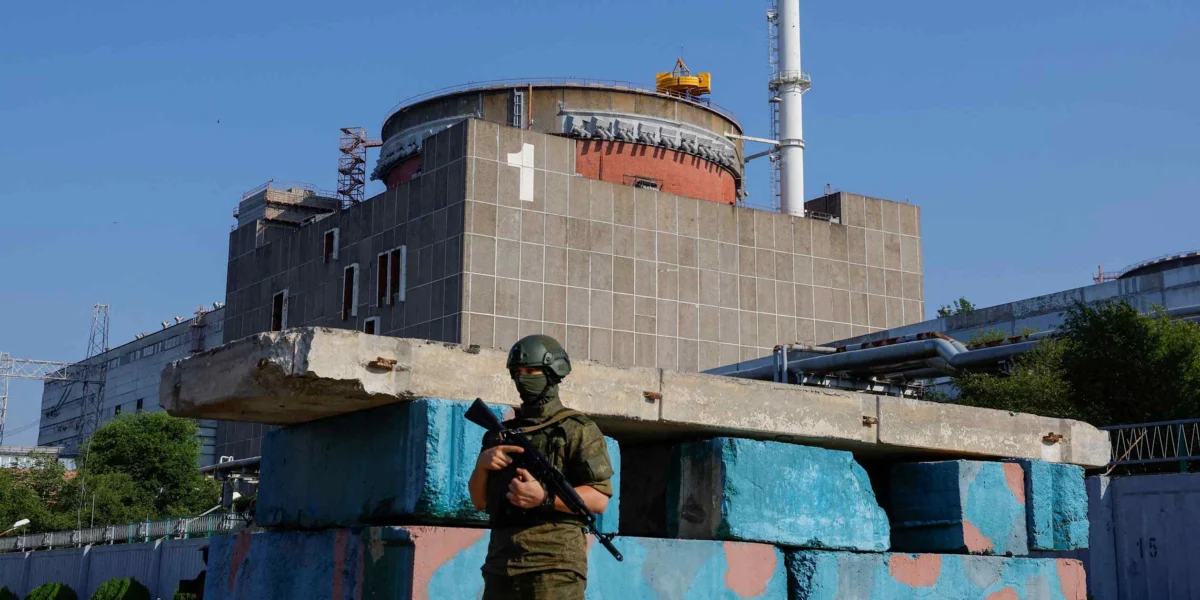
MOSCOW (Reuters) — The Zaporizhzhia nuclear power plant, the largest in Europe and situated in Russian-controlled southeastern Ukraine, has once again experienced a complete loss of its external electricity supply, forcing it to rely on its backup diesel generators for essential reactor cooling. This critical development, reported by the plant’s management and confirmed by the International Atomic Energy Agency (IAEA) on Sunday, marks another alarming chapter in the facility’s precarious existence since the full-scale Russian invasion of Ukraine began in February 2022. The incident underscores the persistent risks posed by the ongoing hostilities in the region to nuclear safety and security.
The Zaporizhzhia Nuclear Power Plant (ZNPP) has been a focal point of international concern due to its strategic location and the inherent dangers of operating a nuclear facility amidst active combat. The plant, which comprises six VVER-1000 pressurized water reactors, has been under Russian occupation since March 2022, despite remaining technically connected to Ukraine’s power grid for a significant period. This complex and precarious situation has led to repeated disruptions in its power supply, each instance triggering fears of a potential nuclear accident.
A Recurring Nightmare: Power Outages at ZNPP
This latest power loss is not an isolated incident. The ZNPP has a grim history of losing its external power, leading to a reliance on emergency diesel generators. These generators, while crucial for maintaining the cooling systems that prevent meltdowns, have a finite fuel supply. Each outage necessitates a swift and complex operation to restore external power or refuel the generators, a process fraught with peril given the constant threat of shelling and damage to infrastructure.
Chronology of Recent Power Disruptions:
- September 2022: Following intensified shelling, the plant was completely disconnected from the Ukrainian power grid for several days, operating solely on diesel generators. This period was particularly tense, with the IAEA establishing a permanent presence at the site to monitor the situation.
- November 2022: A similar event occurred, with the plant losing external power due to Russian shelling that damaged high-voltage power lines. Again, backup generators were activated.
- May 2023: The plant experienced another prolonged period without external power, raising serious safety concerns.
- October 2023: Further shelling led to a temporary loss of power, highlighting the persistent vulnerability of the site.
- November 2023 (Present Incident): The most recent disconnection of external power supply has once again placed the ZNPP in a critical state, necessitating the activation of its emergency diesel generators.
The repeated reliance on backup power systems at ZNPP is a stark indicator of the deteriorating safety environment. While the IAEA has consistently advocated for the establishment of a nuclear safety and security protection zone around the plant, these efforts have yet to yield a lasting solution.
Supporting Data: The Stakes of Nuclear Safety
The Zaporizhzhia Nuclear Power Plant is a significant contributor to Ukraine’s energy needs under normal circumstances. Its six reactors have a combined net electrical capacity of 5,700 MW. The continuous operation of its cooling systems is paramount. Water is circulated through the reactor core to remove decay heat, even after shutdown. Failure to maintain adequate cooling can lead to overheating, fuel damage, and potentially a severe nuclear accident with widespread radioactive contamination.
The IAEA, in its regular reports and assessments, has consistently highlighted the risks associated with the military activities near the plant. These risks include:
- Damage to critical infrastructure: Shelling can damage power lines, substations, and other essential components required for the plant’s external power supply.
- Disruption of personnel access: Military operations can impede the movement of essential personnel, including engineers and maintenance crews, who are vital for the plant’s safe operation and emergency response.
- Compromised communication systems: Military activities can interfere with communication channels, hindering the coordination of safety measures and emergency responses.
- Potential for direct impact: The risk of direct shelling or an explosion in the vicinity of the plant, while not directly impacting the reactors, could trigger safety shutdowns and power losses.
The plant’s management, which is operating under Russian control, has consistently reported the incidents and the measures taken. However, the IAEA’s on-site mission provides an independent assessment of the situation, often confirming the plant’s reliance on backup systems and emphasizing the inherent dangers.
Official Responses and International Concerns
The IAEA, led by Director General Rafael Mariano Grossi, has been a central voice in addressing the Zaporizhzhia situation. Following the latest power loss, the agency reiterated its deep concern.
"The Zaporizhzhia Nuclear Power Plant (ZNPP) has lost its external power supply and is relying on its emergency diesel generators for essential cooling," an IAEA spokesperson stated. "This is a deeply worrying development. The Agency continues to be in close contact with the plant’s management and is monitoring the situation closely."
The IAEA has repeatedly called for the cessation of all military activities that could endanger the plant and has urged for the establishment of a "nuclear safety and security protection zone" around ZNPP. However, the complex geopolitical realities of the conflict have made the implementation of such a zone exceedingly difficult.
Ukraine, which maintains that its forces are not operating in the immediate vicinity of the plant and that the disruptions are a direct consequence of Russian occupation and military actions, has also voiced its alarm. Kyiv has consistently accused Russia of using the nuclear facility as a military outpost and of risking a global catastrophe.
"This repeated loss of power at Zaporizhzhia is a direct consequence of Russia’s irresponsible actions and its continued militarization of the plant," a Ukrainian government official commented in a statement that reflected the nation’s persistent anxieties. "The international community must intensify its efforts to ensure the complete de-occupation and demilitarization of the site before a disaster occurs."
The international community, including the European Union and the United States, has echoed the IAEA’s concerns and has condemned Russia’s actions in and around the nuclear facility. However, diplomatic avenues for a resolution remain largely blocked by the ongoing conflict.
Broader Impact and Implications: A Persistent Nuclear Shadow
The recurring power outages at the Zaporizhzhia Nuclear Power Plant cast a long shadow over regional and global nuclear safety. The incident serves as a potent reminder of the inherent risks of warfare in close proximity to critical civilian infrastructure, especially nuclear facilities.
Potential Implications:
- Escalation of Nuclear Tensions: Each incident at ZNPP heightens the risk of miscalculation or accident, potentially leading to unintended escalations and increasing global anxieties about nuclear security.
- Environmental Catastrophe: A severe accident at ZNPP could result in the release of significant amounts of radioactive material, leading to long-term environmental contamination, displacement of populations, and severe health consequences for millions across a wide geographical area.
- Economic Disruption: The potential for a nuclear accident would have devastating economic repercussions, including the loss of agricultural land, disruption of trade, and immense costs associated with disaster response and long-term remediation.
- Erosion of Nuclear Safety Norms: The ongoing use of a nuclear power plant as a site of military contention risks undermining international norms and conventions governing the safety and security of nuclear facilities during times of conflict.
The situation at Zaporizhzhia is a stark illustration of how the ongoing conflict in Ukraine poses a multifaceted threat, extending beyond immediate battlefield casualties to encompass the potential for a large-scale environmental and humanitarian crisis. The international community continues to grapple with the challenge of ensuring nuclear safety in a war zone, with the repeated reliance on backup generators at ZNPP serving as a continuous alarm bell. The ultimate resolution hinges on the cessation of hostilities and the establishment of a secure environment around this critical nuclear asset.
