

A new frontier in premium large format (PLF) theatrical viewing is rapidly taking shape, drawing inspiration from both the celestial realm and the fervent passion of sports and cinema fandom. At the forefront of this burgeoning sector is Cosm, an immersive entertainment technology company whose origins in programming planetariums have evolved into a sophisticated network of domed venues designed to place audiences at the epicenter of live events and iconic cinematic narratives. The company’s unique approach addresses a growing consumer demand for elevated out-of-home experiences, positioning itself as a significant player in the evolving entertainment landscape.
From Cosmos to Colosseum: Cosm’s Foundational Journey
Cosm’s conceptual foundation is deeply rooted in its name itself—a portmanteau of "cosmos" and "colosseum." This nomenclature aptly reflects its dual heritage and ambitious vision. The company initially carved its niche by programming advanced planetariums, offering guests unparalleled views of the universe on massive, domed screens. This early expertise in large-scale projection and immersive environments provided the technological bedrock for its current expansion into broader entertainment. The transition from stargazing to shared reality experiences for sports and films represents a strategic pivot, leveraging its core technological capabilities to tap into wider commercial markets.
The theatrical industry, in the wake of significant shifts in consumer viewing habits, has witnessed its most substantial growth stemming from the sale of premium large format (PLF) tickets. This trend underscores a clear market preference: while general attendance may fluctuate, audiences are increasingly willing to pay a premium for experiences that transcend the capabilities of home entertainment systems. Cosm has skillfully capitalized on this trend, offering a distinctive take on the elevated viewing experience that goes beyond traditional PLF offerings like IMAX or Dolby Cinema, striving to create a truly enveloping "shared reality."
A Rapid Expansion and Strategic Partnerships
Cosm has embarked on a swift and aggressive expansion strategy, both in terms of its physical footprint and its content library. Since 2024, the company has inaugurated four state-of-the-art theaters across key metropolitan areas: near Los Angeles (Inglewood’s Hollywood Park), Dallas, Atlanta, and Detroit. This initial wave of openings will soon be augmented by a major hub in Cleveland, scheduled to launch in 2027, featuring an even larger dome. These experimental venues have quickly captured the attention of diverse audiences, particularly sports enthusiasts, who flock to experience live matchups in an arena-like, fully immersive environment. The appeal is evident in the company’s reports of frequent sold-out showings for these live sports events.
Beyond live sports, Cosm has strategically forged partnerships with prominent Hollywood studios to broaden its entertainment portfolio. These collaborations mark a lucrative new chapter for the privately held company, significantly expanding its audience reach and viewing opportunities beyond timed, live events. Recent agreements include a partnership with Warner Bros., bringing beloved classics and modern blockbusters such as "The Matrix," "Willy Wonka & the Chocolate Factory," "Harry Potter and the Sorcerer’s Stone," and "It" to its unique dome screens. Furthermore, Cosm recently inked a deal with Universal, promising the debut of the animated hit "Shrek" in its domes starting in December. These partnerships are crucial, allowing Cosm to leverage existing intellectual property with established fan bases, a key component of its content strategy.
The Business of Experience: Investment and Revenue Model
As a privately held entity, Cosm does not publicly disclose its financial performance. However, the company’s rapid expansion and significant investor backing provide strong indicators of its perceived market value and growth potential. Ticket prices for Cosm experiences range from approximately $18 for matinee showings to around $70 for prime seating or high-demand events. These prices, already above the industry average for standard cinema tickets, do not include additional expenditures for concessions or items from special, themed menus often tied to specific screenings, further enhancing potential revenue streams.
Investor confidence in Cosm’s vision is substantial. In June, Sony invested a notable $100 million in the company, acquiring a minority stake and securing a board seat for Sony Pictures Entertainment Chairman and CEO Ravi Ahuja. This strategic investment from a major entertainment conglomerate underscores the industry’s belief in Cosm’s long-term potential. Jay Levine, Chief Strategy and Business Operations Officer at Sony, articulated the rationale behind the investment, stating, "Cosm is really early in its growth trajectory at the moment, and we saw an opportunity to partner with the company at, what I would say is at, a very important stage in its development." Levine highlighted Cosm’s "pretty significant rollout" goal and the exposure it offers to a "growing distribution and what we deem an experiential platform that we think has long-term potential."
Sony’s investment in Cosm aligns with its broader strategy in the theatrical space, which has seen several significant plays in recent years. In 2024, Sony Pictures acquired Alamo Drafthouse, a boutique cinema chain known for its unique dining and programming. Further demonstrating its commitment to differentiated cinema experiences, Sony also entered a long-term lease in July of this year to reopen and restore the iconic Cinerama Dome in Los Angeles, a historic venue synonymous with immersive cinema. Levine emphasized Sony’s overarching strategy: "Our experiences strategy is around tech, it’s around fandom, and it’s around new and innovative approaches to content distribution. For us, we’re all about these differentiated experiences."
Beyond Sony, Cosm boasts an impressive roster of investors, reflecting cross-industry confidence. These include Cosm chairman Steve Winn’s firm, Mirasol Capital; former Milwaukee Bucks co-owner Marc Lasry’s Avenue Sports Fund; Rocket Mortgage co-founder Dan Gilbert’s Rock; and David Blitzer, managing partner of the New Jersey Devils and Philadelphia 76ers, who invested through his firm Bolt Ventures. This diverse group of investors, spanning entertainment, sports, and finance, signals a broad belief in Cosm’s innovative model.
Differentiating the Dome: The Cosm Experience Unpacked
What truly sets Cosm apart is its unique technological and experiential design. The company’s hallmark is its massive, concave screens, typically 87 feet in diameter, which envelop viewers, effectively dropping them into the heart of the action. The forthcoming Cleveland location promises an even grander scale, with a dome measuring 100 feet in diameter. This immersive environment is reminiscent of, yet distinct from, other large-scale entertainment venues like the Sphere in Las Vegas, which has garnered global attention since its 2023 opening for hosting high-profile concerts and events. While both offer unparalleled visual immersion, Cosm aims for a broader, multi-location content distribution model for both sports and film.

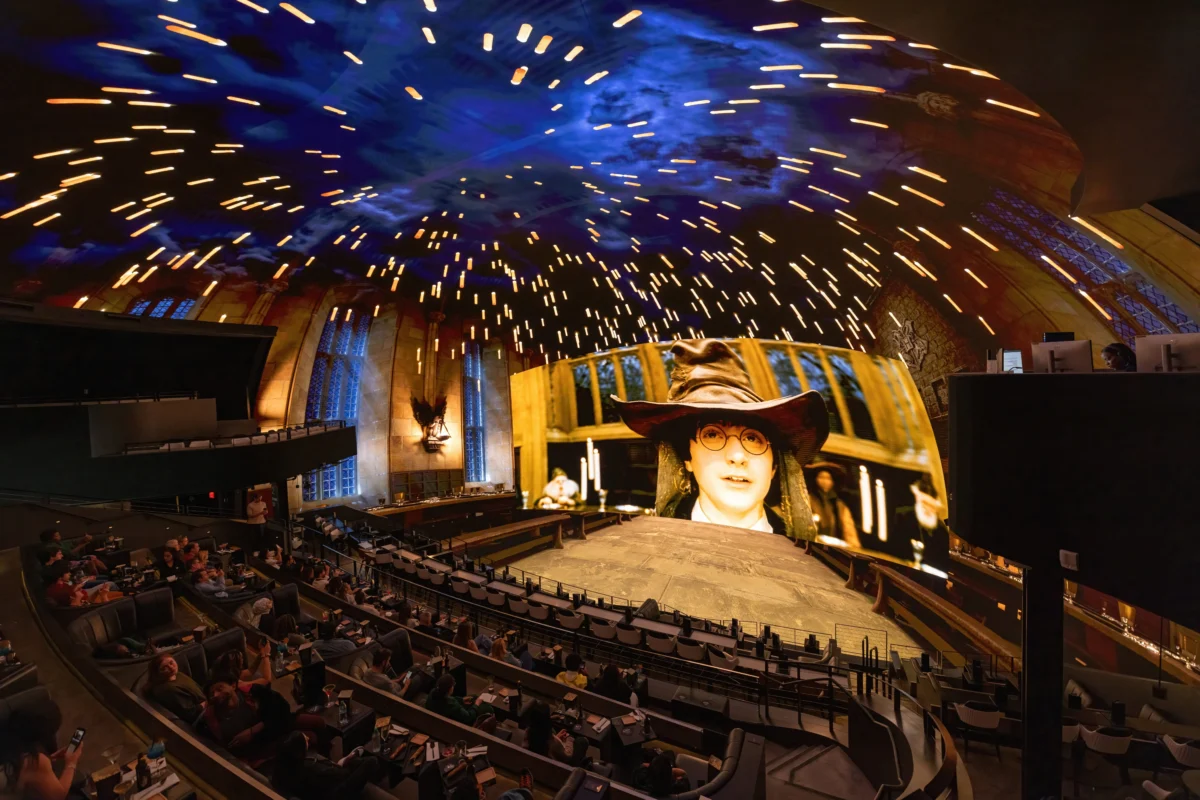
Stadium-style seating configurations are thoughtfully integrated within each Cosm dome, often complemented by booths and tables on each level, enhancing the social aspect of the viewing experience. The expansive width of the dome fills much of the viewer’s peripheral vision, creating a profound sensation of being an integral part of the on-screen environment. For instance, the Los Angeles and Dallas venues each accommodate approximately 350 seats, while the newer Atlanta and Detroit domes offer up to 500 seats. The Cleveland location, with its larger screen, is anticipated to have an even greater capacity.
The technical execution of Cosm’s "shared reality" concept varies depending on the content. For live sports events, specialty cameras are strategically mounted in arenas worldwide, broadcasting real-time footage back to the dome. This innovative camera setup is designed to create the illusion of being directly on the field of play, offering a perspective far beyond traditional television broadcasts. For theatrical features, the film itself is projected in a large rectangular format in the center of the dome, while the surrounding dome space is dynamically transformed to extend and enrich the scene.
A compelling example of this cinematic augmentation is Cosm’s presentation of "Harry Potter and the Sorcerer’s Stone." During the iconic scene where thousands of Hogwarts acceptance letters cascade through the fireplace, the entire dome background is animated with a swarm of magical envelopes, engulfing the audience in the whimsical chaos. To achieve these sophisticated visuals and environments for each film, Cosm collaborates with specialized experiential production companies like Little Cinema and creative studios such as MakeMake. This intricate process, spanning storyboarding through post-production, can take up to a year, involving close coordination between Cosm, the participating studio, and the visual effects artists to meticulously craft and render each moment. Alexis Scalice, Head of Cosm Studios, emphasized the meticulous approach: "We really work hard not to take away from the story, so the film remains the hero in the narrative. Working very closely with Warner Bros. and our creative partners to make sure that we’re not detracting too much from the story, but we’re enhancing those moments for more elevated emotional response."
Content Strategy: Leveraging Nostalgia and Live Action
Cosm’s content strategy for its theatrical offerings is largely centered on leveraging "that nostalgia factor," as Scalice describes it. With the exception of "It," which was released in 2017, the company’s film presentations thus far have primarily focused on films released decades ago that boast long-established and passionate fan bases. This approach aims to attract multiple generations, with "parents coming in that… grew up on this, and they want to share it with their children," thereby reinvigorating these legendary films for new audiences. This strategy capitalizes on the enduring appeal of classics and the communal experience of reliving cherished cinematic moments in a novel format.
The company has deliberately diversified its genre selections, dabbling across horror, fantasy, and science fiction, while also catering to various demographics with both family-friendly and R-rated content. The upcoming debut of "Shrek" in December will mark Cosm’s first foray into animation, further expanding its demographic reach. Sony’s Jay Levine noted the surprising success across genres: "The thing that’s so incredible about it is everybody thought initially it’s just going to be working for sports, and when you look at what they’ve done, a lot of the titles with ‘Harry Potter,’ with ‘Shrek,’ and some of the other ones, I mean, the fill rates are actually incredible." This versatility in programming demonstrates Cosm’s potential to appeal to a wide spectrum of entertainment preferences.
The Broader Theatrical Landscape: Premium’s Ascendance
The rise of Cosm occurs within a broader context of profound shifts in the theatrical exhibition industry. Studios and exhibitors are actively seeking innovative ways to showcase Hollywood’s product and entice moviegoers back into cinemas, particularly in a post-pandemic era defined by the proliferation of streaming services and at-home viewing options. The cinema space has experienced a reduction in both the number of screens and overall moviegoers, yet these declines have often been masked by a corresponding increase in movie ticket prices, particularly for PLF experiences.
Premium offerings—encompassing technologies like IMAX, Dolby Cinema, ScreenX, and 4DX—have become crucial drivers of box office revenue. These formats distinguish themselves through bigger screens, superior sound systems, or unique sensory experiences such as moving seats, wind effects, or fog machines. Data from EntTelligence indicates that while an average standard movie ticket costs around $13, premium tickets average more than $18 each. Cosm’s ticket prices, ranging from $18 to $70, significantly surpass even these premium averages, yet they continue to draw audiences. These elevated experiences are particularly popular with younger demographics, notably Gen Z and millennials, who have shown a strong propensity to embrace and pay for unique, immersive entertainment, undeterred by rising ticket costs.
Mike Polydoros, CEO of cinema marketing firm PaperAirplane Media, encapsulates the appeal: "They have no problem selling these tickets because people want to experience these things, like an immersive format. That is something they can’t get at home." This sentiment highlights the core value proposition of Cosm and similar experiential venues: offering something truly distinct from the increasingly sophisticated home entertainment setups. Unlike Cosm’s sports offerings, where lower-priced viewing options are sometimes available from hall and deck areas outside the main dome, theatrical presentations are exclusively available within the full immersive environment of the dome, reinforcing the premium nature of the film experience.
Future Trajectory and Industry Implications
Cosm’s trajectory suggests a significant role in shaping the future of out-of-home entertainment. With a "pretty significant rollout" goal articulated by Sony, the company is poised for continued expansion, potentially establishing a global network of its distinctive dome theaters. The success of its content strategy, blending live sports with beloved classic films, demonstrates the broad appeal of its "shared reality" platform. The ability to "reinvigorate these legendary films" through an immersive lens provides a powerful draw for audiences seeking both nostalgia and novelty.
However, challenges may arise as the company scales. The intricate process of adapting films for the dome, requiring extensive creative and technical collaboration, could be a limiting factor in quickly expanding the content library for new releases. Maintaining the high quality of the immersive experience across numerous venues and ensuring a consistent flow of captivating content will be critical.
Nevertheless, Cosm’s model represents a compelling answer to the existential questions facing the theatrical industry. By focusing on differentiated, high-value experiences that cannot be replicated at home, Cosm offers a blueprint for how cinemas can thrive in an increasingly competitive entertainment landscape. Its convergence of cutting-edge technology, strategic content partnerships, and a deep understanding of audience desires positions Cosm not just as an entertainment company, but as a pioneer defining the next generation of immersive public experiences. The investment from major players like Sony and the enthusiastic audience response suggest that Cosm is more than just a passing trend; it is a significant evolution in how we consume and engage with shared entertainment.
